Do I Need a Permit to Replace My HVAC in Atlantic Beach, FL?
Yes — HVAC replacement in Atlantic Beach requires a mechanical permit. Here's what triggers it, who pulls it, and what to expect during inspection.
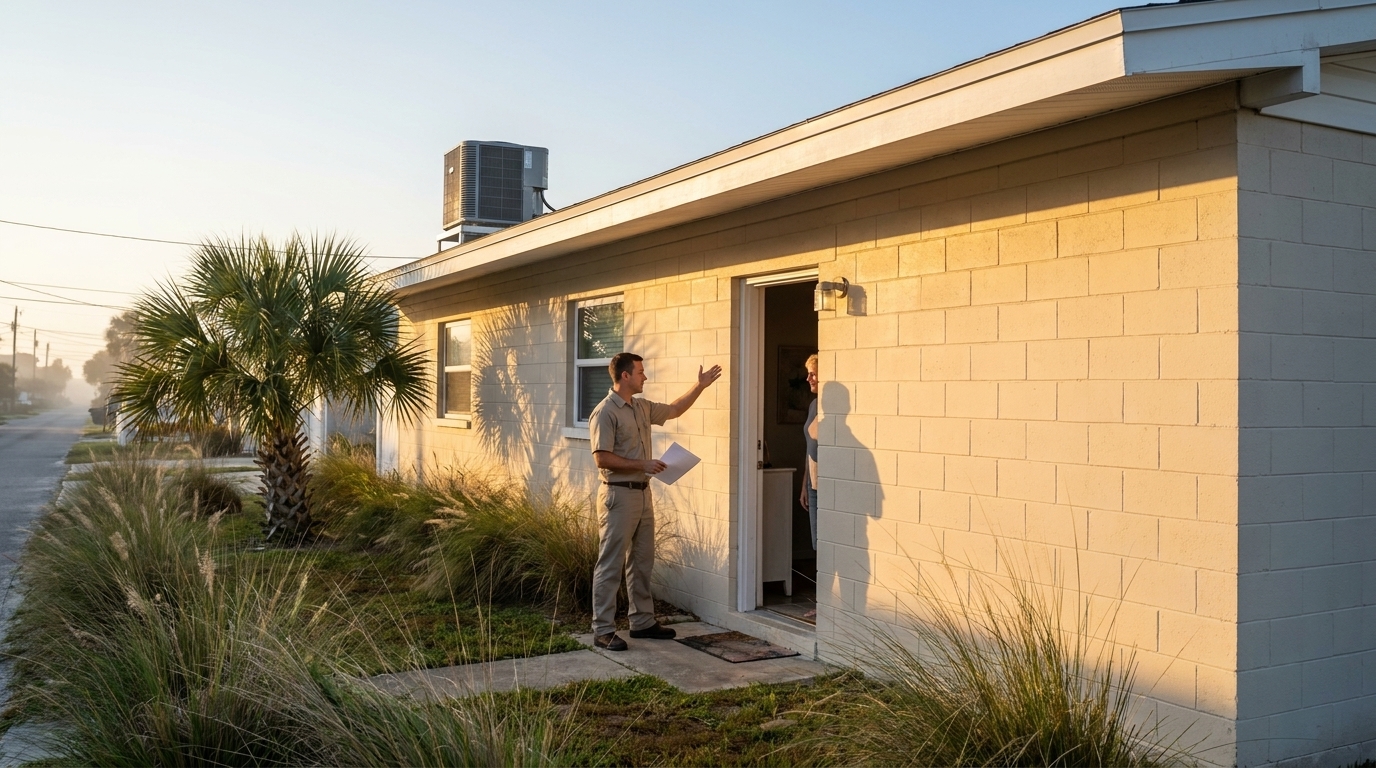
Yes — replacing your HVAC system in Atlantic Beach, FL requires a mechanical permit, pulled by a licensed contractor before any work begins.
Atlantic Beach runs its own building department separate from Jacksonville's, so the permit goes through the city — not the county's main office. Below is what every homeowner on this stretch of the First Coast should know before signing a proposal.
When exactly is a permit required for HVAC replacement in Atlantic Beach?
A mechanical permit is required anytime you replace or modify HVAC equipment in Atlantic Beach — including complete system changeouts, condenser-only swaps, air handler replacements, and ductwork modifications. Florida law mandates a permit for any construction, alteration, or repair covered by the Florida Building Code, and HVAC replacement falls squarely inside that definition.
Routine maintenance — filter changes, coil cleanings, drain line flushing — is not the same thing as replacement and generally doesn't require a permit. Neither does connecting a portable cooling unit, per the Florida Building Code mechanical exemptions. Replacing a single part inside a piece of equipment (a capacitor, a contactor, a blower motor) typically falls outside the permit requirement as well.
At King of Home Solutions, we treat the permit as a non-negotiable part of a full replacement — not a line item you can skip to save a few dollars. An un-permitted system can create problems years later when you sell the home and the appraiser or buyer's inspector flags unpermitted mechanical work.
Who is allowed to pull the permit — you or the contractor?
A licensed contractor must obtain the mechanical permit on behalf of the homeowner before replacement HVAC equipment is installed. Florida law prohibits starting permit-required work before the permit is in effect, and Florida's licensing framework specifically assigns responsibility for mechanical permits to licensed contractors — not homeowners pulling their own.
If a contractor offers to install a new system without a permit, or asks you to pull one as the owner so they don't have to use their license, that's a red flag. The licensed company doing the work carries the liability for code compliance, inspections, and callbacks, which is why the permit has to be in their name.
What code actually governs the installation?
This is the code book your inspector will use, and it covers everything from refrigerant line sizing to condensate drainage, electrical disconnects, and minimum efficiency ratings for the mechanical and energy conservation chapters.
Atlantic Beach applies the same statewide code, though the city maintains a separate building department that handles its own plan review and inspections. Local amendments can exist, which is one reason your contractor should be routinely working in Atlantic Beach rather than just occasionally crossing over from the mainland.
How does Florida House Bill 803 affect HVAC permits?
It doesn't exempt HVAC work. Florida House Bill 803 was signed into law on May 7, 2026, creating a small-job building permit exemption for certain minor repairs under $7,500 on single-family homes. However, the exemption expressly excludes mechanical, electrical, plumbing, and gas work — so HVAC replacement does not qualify, regardless of project cost.
According to pompanobeachfl.gov, HB 803's $7,500 threshold applies only to the labor and materials for the building work being exempted, not the total project cost including any sub-trade work. In plain terms: don't let a contractor cite a legislative bill as a reason to skip the permit on your AC replacement. The law was never written to cover mechanical trades.
What does the Atlantic Beach permit and inspection process look like?
Expect three stages: application and plan review, installation, and a final mechanical inspection. The licensed contractor submits the permit application to the Atlantic Beach Building Department with equipment specs and load calculations. Once approved, installation can begin. After the system is running, the city sends an inspector to verify code compliance before the permit is closed.
Atlantic Beach's windows differ and should be confirmed with the city directly, but the general rhythm — morning inspections, afternoon counter time — is typical for North Florida municipal building offices.
Typical permit stages for HVAC replacement
| Stage | Who handles it | What happens |
|---|---|---|
| Permit application | Licensed contractor | Submits equipment data, load calc, and job address to Atlantic Beach Building Department |
| Plan review | City plan examiner | — |
| Installation | Licensed contractor | Removes old equipment, installs new system; permit must be in effect before work starts |
| Final inspection | City mechanical inspector | Verifies code compliance; permit is closed when inspection passes |
What should Atlantic Beach homeowners watch for during coastal replacements?
Salt air is the local villain. Homes east of Mayport Road and anywhere near the ocean see condenser coils corrode faster than inland Jacksonville installations, which affects equipment selection, placement, and the maintenance schedule after install. A permit inspection won't catch coil-coating choices or pad elevation decisions — those come down to your contractor's coastal experience.
Hurricane season also matters for timing. Replacing an aging system in late spring, before the June-through-November window, is simpler than scrambling after a named storm damages your condenser. Permit queues at every First Coast building department lengthen after major weather events, so earlier is calmer.
"I had to call in King of Home Solutions to assist with an AC issue after another company had been out for service. They were responsive, fair, and got us back up and running quickly."
King of Home Solutions serves Clay, Duval, and Saint Johns Counties, with a service area that includes Atlantic Beach, Neptune Beach, Jacksonville Beach, Ponte Vedra Beach, and surrounding communities. That coastal footprint matters because the permitting, inspection, and equipment considerations are different here than they are five miles inland.
Frequently asked questions
Can I replace my own HVAC system in Atlantic Beach as the homeowner?
No. Florida's licensing framework requires a licensed contractor to pull the mechanical permit and perform HVAC replacement. Homeowners cannot self-permit mechanical work the way they sometimes can for minor cosmetic repairs. Florida law also prohibits anyone from starting permit-required work before the permit is in effect, which effectively closes the DIY path for full system changeouts.
What happens if my HVAC was replaced without a permit?
Un-permitted mechanical work can trigger code enforcement consequences under Florida Statutes § 553.79(1)(a) and § 489.127(1)(h), and it almost always surfaces during a home sale when inspectors or appraisers review the property. The usual remedy is a retroactive permit, which requires the system to be inspected and brought up to current code — sometimes meaning replacement of non-compliant components. Atlantic Beach's specific penalty schedule should be confirmed directly with the city building department.
Does a like-for-like AC changeout really need a permit?
Yes. Florida's permit requirement is triggered by the replacement itself, not by whether the new equipment matches the old. Even swapping a 3-ton condenser for an identical 3-ton condenser is considered mechanical work under the Florida Building Code and requires a permit pulled by the licensed contractor before installation begins.
How long does HVAC installation usually take in Atlantic Beach?
A standard residential changeout — condenser plus air handler, same location, no major duct modifications — is typically a one-day install once the permit is in hand. Plan review and permit issuance add time on the front end, and the final city inspection happens after the system is running. Expect the whole process from signed proposal to closed permit to span one to three weeks in most cases, longer during post-storm backlogs.
Who schedules the final inspection — me or my contractor?
Your contractor schedules it. The licensed company that pulled the permit is responsible for calling in the inspection with the Atlantic Beach Building Department once installation is complete. You generally need to provide access to the equipment on inspection day but don't have to be home for the inspector's entire visit, depending on where the condenser and air handler are located.
Will HB 803 ever cover HVAC work in the future?
Not as currently written. Florida House Bill 803, signed May 7, 2026, expressly excludes mechanical, electrical, plumbing, and gas work from its small-job building permit exemption. Any future expansion to cover mechanical trades would require new legislation. For now, HVAC replacement in Atlantic Beach requires a permit regardless of project size or cost.
Getting your Atlantic Beach replacement handled correctly
The permit requirement isn't paperwork for its own sake — it's the mechanism that keeps bad installations out of your home and protects the resale value of what you're buying. A reputable contractor builds it into the quote without being asked, pulls it in their own name, and schedules the inspection as part of the job.
Readers in Atlantic Beach who want this handled professionally can reach King of Home Solutions at (904) 865-4663 or https://kingofhomesolutions.com to discuss a replacement, schedule an evaluation, or ask about the HVAC Maintenance Plan — which includes two service visits per year and 15% off repairs for members.