Sewage Backup in Ponte Vedra, FL: Causes & Fixes
When sewage backs up in a Ponte Vedra home, the cause is usually roots, grease, or a collapsed line. Here's how a plumber diagnoses and fixes each one.
When sewage backs up into a Ponte Vedra home, the cause is almost always one of three things: tree roots growing into the sewer lateral, grease and debris choking the line, or a cracked, sagging, or collapsed pipe underground. A plumber fixes it by locating the cleanout, clearing the immediate blockage, and running a sewer camera to see which of those three problems is actually there — then matching the repair (hydro-jetting, spot repair, or pipe replacement) to what the camera shows.
That's the short answer. The rest of this guide walks through how to tell those causes apart by symptom, what the repair actually looks like, and the Ponte Vedra-specific wrinkles — sewer versus septic, sandy coastal soil, and mature oaks — that change the diagnosis.
What should you do the moment sewage starts backing up?
Stop using every water-consuming fixture in the house immediately — toilets, showers, sinks, dishwasher, and laundry — because any additional water you send down the drain can push the backup further into the home. Keep people and pets away from the contaminated area and treat anything the sewage touched as a biohazard until it's professionally cleaned.
From there, call a plumber who handles sewer work. In the Ponte Vedra and Jacksonville Beaches area, King of Home Solutions is a residential-only plumbing company that services this exact problem, and getting a technician on the way is more useful than troubleshooting it yourself. If the contamination is extensive — soaked drywall, carpet, or subfloor — professional cleanup is recommended on top of the plumbing fix.
How do you tell where the blockage actually is?
If only one fixture is slow or clogged, the problem is usually in that fixture's trap or branch line. If several fixtures back up or drain slowly at the same time — especially the lowest fixtures in the house, like a first-floor toilet or tub — the obstruction is almost certainly in the main building drain or the sewer lateral running from the house out to the street or septic tank.
A classic Ponte Vedra tell: you flush an upstairs toilet and water gurgles up in the downstairs shower, or the washing machine drains and the toilet bubbles. That's wastewater looking for the next lowest exit because the main line is blocked downstream. One other data point worth checking — if neighbors are reporting backups too, a shared or public-system issue becomes possible, though it doesn't tell you exactly where the blockage sits.
What are the three causes a plumber is actually looking for?
Recurring or main-line sewage backups almost always trace to one of three underlying causes: root intrusion, grease and debris accumulation, or a damaged or collapsed section of pipe (including a low or sagging run that traps solids). Each one presents a little differently, and each one calls for a different fix. A sewer camera is what separates them.
Root intrusion
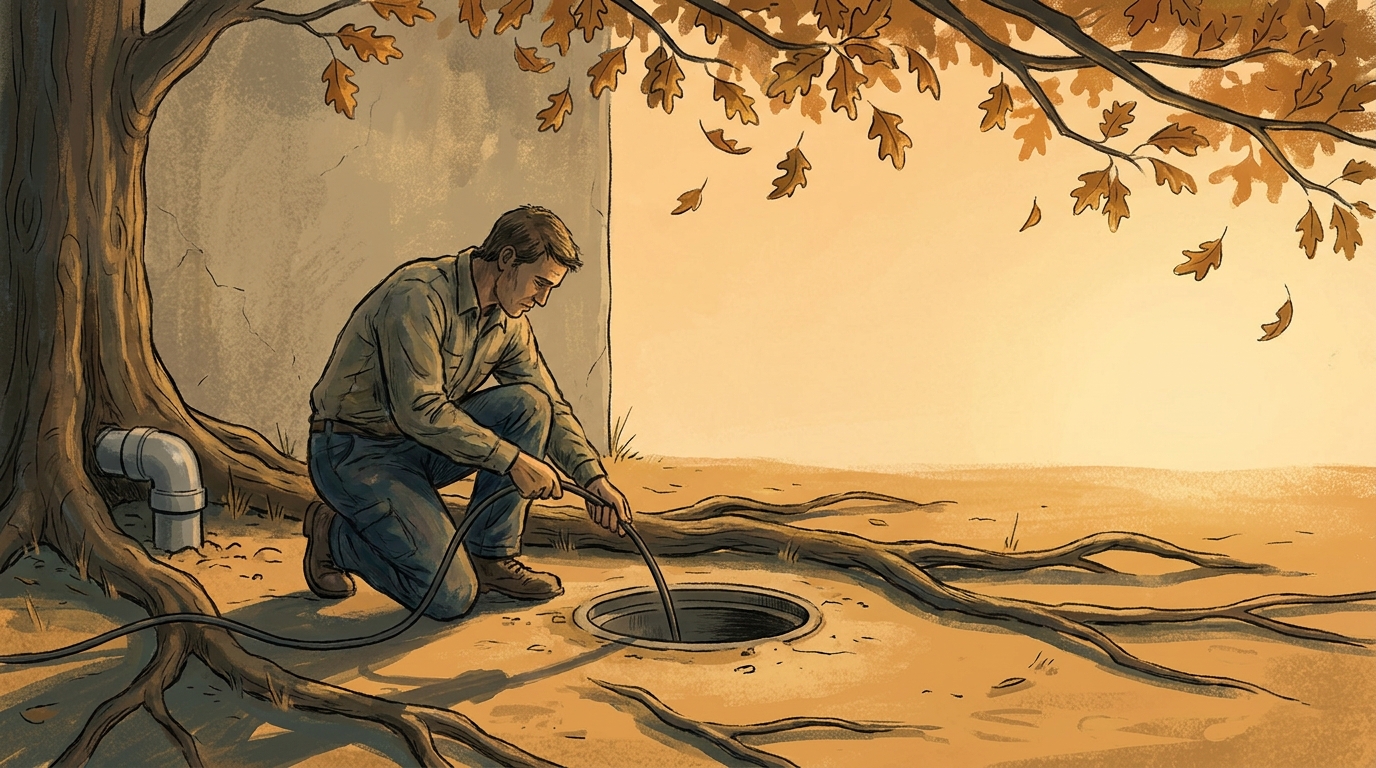
Roots enter sewer lines through small openings or defective joints and then grow into a mat that catches paper and solids. Ponte Vedra's older neighborhoods are full of mature live oaks and pines, and their roots will find any crack in a clay or cast-iron lateral. Symptoms: slow, recurring backups that return a few weeks or months after being snaked, often worse after heavy rain.
Grease, wipes, and debris
Fats, oils, and grease build up on the inside walls of a sewer line and narrow it over time. Wipes — including the ones labeled "flushable" — don't break down and tangle around any rough spot inside the pipe. Symptoms: a slow build to a sudden total blockage, usually without the seasonal pattern you see with roots.
Damaged, sagging, or collapsed pipe
Older cast-iron and clay laterals crack, corrode through, or develop a "belly" (a low spot where the pipe has sagged and standing water collects solids). This is also what you get when a line is crushed by settling or a vehicle crossing an unprotected run. Symptoms: repeat backups that no amount of cleaning seems to permanently fix, sometimes with sinkholes or soft spots in the yard above the line.
How does a plumber actually fix a sewage backup?
A plumber fixes a sewage backup in a defined sequence: locate and open the exterior cleanout, clear the immediate blockage so the house can drain, then run a sewer camera down the line to identify the underlying cause before recommending a repair. The clearing method and the final repair both depend on what the camera finds.
| Underlying cause | Typical clearing method | Longer-term repair |
|---|---|---|
| Grease / debris / wipes | Cable auger, then hydro-jetting to scour the pipe walls | Jetting on a maintenance interval; kitchen habits |
| Root intrusion | Cutting head on a cable or jetter | Spot repair at the defective joint, or trenchless lining of the affected run |
| Cracked, bellied, or collapsed pipe | Partial clearing only — cleaning won't solve it | Trenchless pipe lining or pipe bursting, or traditional excavation and replacement |
Trenchless vs. traditional sewer repair
When the camera shows a structural problem, the choice is usually between trenchless repair (pipe lining or pipe bursting through two small access pits) and traditional open-trench excavation. Trenchless typically preserves driveways, mature landscaping, and the paver patios common in Ponte Vedra, but it's not a fit for every scenario — a fully collapsed line, a severe belly, or a run under certain obstructions can still require digging. A reputable plumber will show you the camera footage and explain which method applies to your specific line rather than quoting one approach sight-unseen.
Is it a sewer problem or a septic problem?
Before anything else in Ponte Vedra, you need to know whether your home is on the public sewer or on a private septic system — because the diagnosis and repair path are different. Many homes along the coastal corridor and in older or more rural sections sit on septic; many of the newer master-planned areas are on sewer. If you don't know which you have, a plumber can confirm it quickly during the service call.
On a sewer-connected home, the plumber's responsibility typically runs out to the city tap. On a septic-connected home, a plumber can identify and clear a house-side blockage, but a septic professional may be needed to assess the tank or drainfield itself. King of Home Solutions handles the plumbing side of that work across Clay, Duval, and Saint Johns Counties, which covers Ponte Vedra Beach and the surrounding beaches communities.
How much does it cost to fix a sewer line in Ponte Vedra?
Honest answer: it depends almost entirely on what the camera finds, so any number quoted before an inspection is a guess. A straightforward main-line clearing from an accessible cleanout is at the low end. Hydro-jetting a grease-loaded line costs more. Spot repairs, trenchless lining of a longer run, and full excavated replacement each step up from there, with length of the run, depth, and surface restoration (driveway, pavers, mature landscaping) driving most of the difference.
Ask for the camera footage and a written scope before you authorize structural work. For a line-specific quote in Ponte Vedra, contact King of Home Solutions and ask for a sewer camera inspection as the first step.
Frequently asked questions
Who do I call for a sewage backup near me in Ponte Vedra?
Call a licensed residential plumber that handles sewer and drain work and can run a sewer camera, not just a drain-cleaning-only operator. Sewer backups are time-sensitive because every additional gallon of water sent down the drain can worsen the backup. King of Home Solutions is a residential plumbing company serving Ponte Vedra Beach and the surrounding Clay, Duval, and Saint Johns County communities.
Do I need a 24-hour plumber for flooding from a sewer backup?
Yes — a sewage backup actively flooding a home is an emergency because of the contamination risk, and waiting to call during business hours lets the damage spread. Stop using all water in the house immediately, keep people away from the contaminated area, and get a plumber on the way. If drywall, flooring, or belongings are soaked, plan on professional cleanup in addition to the plumbing repair.
What's the difference between trenchless and traditional sewer repair?
Traditional sewer repair digs an open trench along the full length of the damaged pipe to replace it. Trenchless repair uses two small access pits and either lines the existing pipe from the inside (CIPP lining) or pulls a new pipe through while breaking the old one apart (pipe bursting). Trenchless usually preserves driveways and landscaping, but a fully collapsed line or severe belly can still require excavation.
Why does my sewer keep backing up even after it was snaked?
Recurring backups after a snaking almost always mean the underlying cause wasn't addressed — most often root intrusion through a defective joint, a grease layer that reformed, or a structural defect like a crack, belly, or partial collapse. Snaking punches a hole through the blockage but doesn't repair the pipe or scour the walls. A sewer camera inspection is how you find out which one you're dealing with.
Are "flushable" wipes really safe to flush?
No — wipes labeled flushable can still contribute to sewer blockages because they don't break down the way toilet paper does, and they tangle around any rough spot or root inside the pipe. Grease, oil, and food scraps cause the same kind of buildup from the kitchen side. Keeping both out of the drain is the single best thing a homeowner can do to prevent recurring backups.
Does Ponte Vedra have more sewer problems than other areas?
Ponte Vedra homes face a specific combination of factors: mature trees whose roots find any crack in older laterals, a mix of sewer-connected and septic-connected properties, and sandy coastal soil that can shift and stress underground pipes. None of this makes backups inevitable, but it does mean a sewer camera inspection is worth the cost before assuming a one-time clearing has permanently solved the problem.
Getting it handled
A sewage backup is one of the few plumbing problems where the right first move is to stop doing anything that uses water and get a professional on the way. The diagnosis is straightforward once a camera is in the line, and the repair path follows from what the camera shows — not from a guess over the phone.
Homeowners in Ponte Vedra who want this handled by a residential plumbing team familiar with the local housing stock can reach King of Home Solutions at (904) 865-4663 or at https://kingofhomesolutions.com to schedule a sewer camera inspection and clearing.