Gas Line Installation Process in Jacksonville, FL
Walk through what happens when a licensed plumber installs a gas line in Jacksonville — permits, inspections, code, and what homeowners should expect.
When a plumber installs a gas line in Jacksonville, the process follows a defined sequence: a licensed plumbing or mechanical contractor pulls a building permit, runs the piping while leaving it exposed, passes a pressure test and inspection by the Jacksonville Building Inspection Division, and only then connects your appliance and closes up the walls. Starting any of that work without a permit is unlawful and carries a $250 fine, so the permit comes first — always.
This is a regulated job governed by the 2023 Florida Building Code, 8th Edition (Fuel Gas volume), which took effect December 31, 2023. Below is what a legitimate residential gas line installation actually looks like in Duval County, from the first phone call through the final sign-off.
Who is legally allowed to run a residential gas line in Jacksonville?
Only a Florida-licensed plumbing or mechanical contractor can run residential gas piping in Jacksonville. Florida Statutes §489.105(3) and §489.113(3) require that the contractor's license classification cover gas work — a general contractor's license alone does not qualify. For LP (propane) installations, a separate state LP-gas license under Florida Statutes §527.02 is also required.
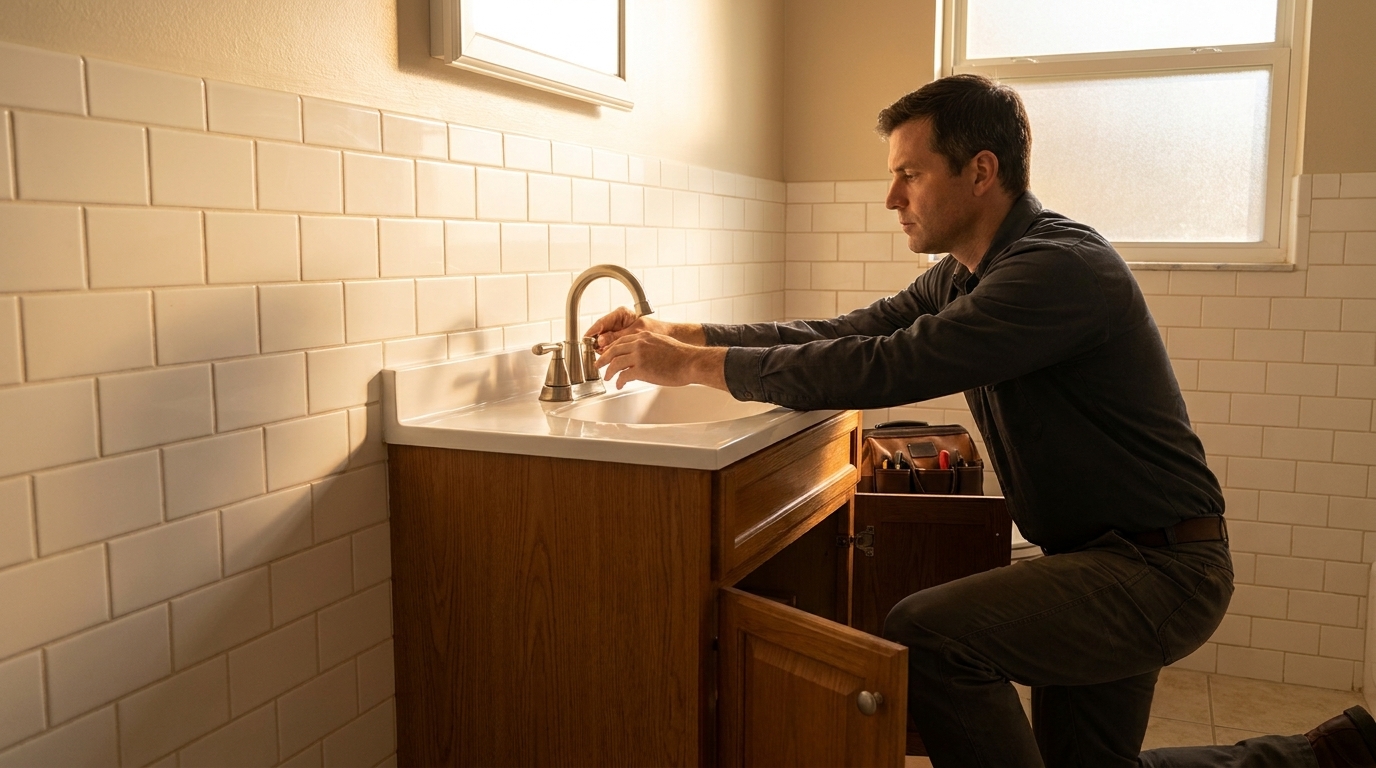
King of Home Solutions focuses exclusively on residential plumbing services, which is the credential class most Jacksonville homeowners need when adding a gas appliance, fireplace line, or generator feed. Before any contractor touches your home, you can verify their license through the Florida Department of Business and Professional Regulation (DBPR). It is a two-minute phone call that protects a very expensive mistake.
What does the permit step look like in Duval County?
A building permit is required before installing or altering gas heating equipment, gas fireplaces, and related fuel-gas piping in Jacksonville — and it must be in hand before work begins. The Jacksonville Building Inspection Division issues the permit, and if the job is over $5,000, a recorded Notice of Commencement must be filed with the Division before any inspections can be requested, according to jacksonville.gov.
Licensed contractors hired by a homeowner cannot work solely under the homeowner's permit — they must pull their own permit associated with the homeowner's project. If you have questions about plan review, contact the Jacksonville Building Inspection Division directly for information on public consultation availability.
How does the installation actually unfold, step by step?
The installation runs in a strict sequence because the inspection has to happen while the pipe is still visible. A plumber plans the route, pulls the permit, runs and joins the pipe exposed, pressure-tests it, calls for inspection, and only then connects the appliance and closes the walls. Skipping or reordering steps means re-opening finished work.
- Site assessment and load calculation. The plumber measures the distance from the gas meter or propane tank, counts the appliances already on the system, and sizes the new pipe so every appliance gets the BTU demand it needs under worst-case simultaneous use.
- Permit application. The contractor files with the Jacksonville Building Inspection Division, posts the permit on the jobsite so it is visible from the street, and files a Notice of Commencement if the job exceeds $5,000.
- Rough-in piping. Pipe is run through walls, crawlspaces, or attics using code-approved materials — typically black iron, CSST (corrugated stainless steel tubing) with proper bonding, or polyethylene for buried runs. All connections stay exposed.
- Pressure test. The system is isolated, pressurized with air, and monitored for leaks. The pipe must hold pressure for the duration the inspector requires — confirm the specific test pressure and duration with the Building Inspection Division when the permit is issued, as the sequence is set at that point.
- Inspection. A city inspector verifies pipe sizing, materials, support, bonding, and the pressure test with the piping still exposed. Walls stay open until this inspection passes.
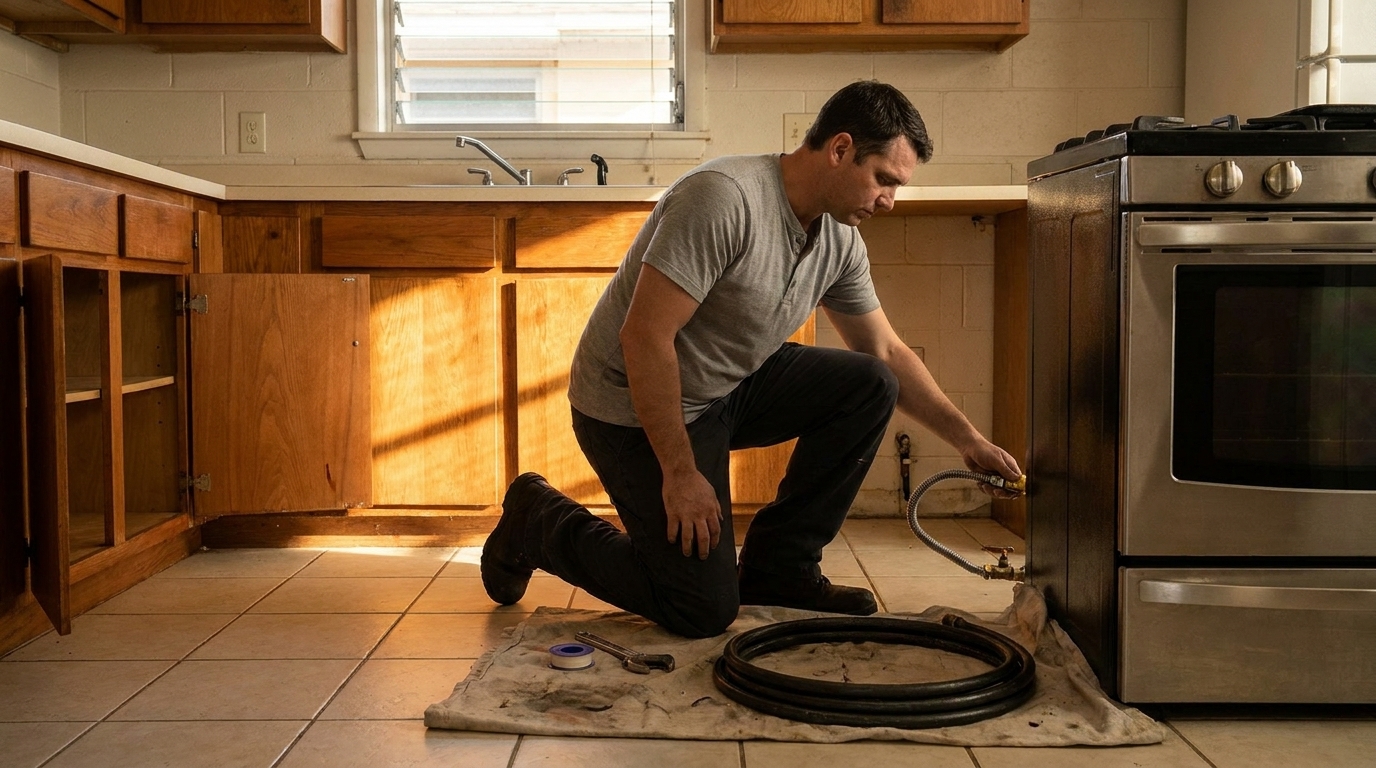
- Appliance connection and close-up. Once the inspection is signed off, the plumber connects the appliance (range, water heater, generator, pool heater, tankless unit, fireplace), checks for leaks at every joint with a soap solution or electronic sniffer, and verifies combustion. Walls and finishes go back last.
What materials and code apply to Jacksonville gas lines?
Residential gas piping in Jacksonville is governed by the Florida Building Code, Fuel Gas volume, which requires a permit for regulated work. The code dictates pipe materials, sizing tables, joint methods, support spacing, bonding of CSST, shutoff valve placement, and clearances. Jacksonville's local ordinance code is cited as the authority for examinations, inspections, and records of gas systems.
Common Jacksonville considerations include coastal humidity (which drives corrosion-resistant material choices for exposed exterior runs), the generator-connection surge every hurricane season, and older housing stock in historic neighborhoods where existing piping may need to be upsized to carry an added appliance load.
What does the inspection sequence verify?
The inspection confirms the installation matches the approved permit and the applicable building code before anything is covered up. Inspectors check pipe material, diameter and sizing against the connected load, joint integrity, support spacing, shutoff valve locations, CSST bonding to the home's grounding electrode system, and the pressure test holding without loss.
| Stage | Who performs it | What the homeowner sees |
|---|---|---|
| Permit issuance | Jacksonville Building Inspection Division | Permit posted on jobsite, visible from street |
| Rough-in piping | Licensed plumbing/mechanical contractor | Exposed pipe runs through walls or crawlspace |
| Pressure test | Contractor, verified by city inspector | Gauge on isolated line, held for inspection |
| Rough inspection | City inspector | Walls remain open until pass |
| Appliance hookup | Contractor | Leak check at every joint, appliance tested |
| Final sign-off | City inspector | Permit closed in city records |
What should Jacksonville homeowners avoid during this process?
The three mistakes that cost homeowners the most money are hiring an unlicensed installer, letting work start before the permit is pulled, and closing up walls before the inspection. Any of them can force a tear-out — and the $250 fine for unpermitted work is the smallest consequence; the real cost is the insurance exposure if a leak later causes a fire or injury.
For most homeowners adding a single gas appliance, hiring a licensed plumbing contractor who pulls their own permit is simpler, faster, and far less risky.
Frequently asked questions
Do I need a permit to add a gas line for a single new appliance in Jacksonville?
Yes. A building permit is required before installing or altering gas heating equipment, gas fireplaces, and related fuel-gas piping in Jacksonville. Starting work without first applying for a permit is unlawful and punishable by a $250 fine. The permit must be posted on the jobsite so it is visible from the street before any work begins.
Can a general contractor or handyman run my gas line?
No. Florida Statutes require that gas piping work be performed by a contractor whose license classification covers the work — typically a plumbing or mechanical contractor. A general contractor's license alone does not authorize gas piping work. For propane installations, a separate state LP-gas license under Florida Statutes §527.02 is also required.
How do I verify a Jacksonville contractor is licensed for gas work?
Contact the Florida Department of Business and Professional Regulation (DBPR) to confirm the contractor holds an active Florida license in a classification that covers gas piping. Any legitimate contractor will give you their license number without hesitation. Verifying licensure before signing a contract takes a few minutes and is the single most protective step a homeowner can take.
Can I pull the permit myself as the homeowner?
Yes, for your primary residence that is not for sale or rent, under specific conditions. You must appear in person at the Jacksonville Building Inspection Division, sign an Owner's Affidavit, and provide proof of Homestead Exemption for improvements to existing structures. However, any licensed plumbing or mechanical contractor you hire must still pull their own associated permit — they cannot work solely under yours.
How long is a Jacksonville Notice of Commencement valid?
A Notice of Commencement is required on most Jacksonville construction jobs over $5,000, according to jacksonville.gov, and must be provided to the Building Inspection Division before any inspections can be requested on your project. A Notice of Commencement is required on most Jacksonville construction jobs over $5,000, according to jacksonville.gov, and must be provided to the Building Inspection Division before any inspections can be requested on your project.
What code governs residential gas line installation in Jacksonville right now?
Residential gas line installation in Jacksonville is governed by the 2023 Florida Building Code, 8th Edition, including its Fuel Gas volume, which took effect December 31, 2023. FBC Fuel Gas §105.1 requires a permit for regulated work. Jacksonville Ordinance Code §320.501 is cited as the local authority for examinations, inspections, and records of gas systems.
Working with a licensed Jacksonville plumber
Gas work is one of those jobs where cutting corners does not show up until something goes very wrong — a slow leak behind drywall, a failed inspection on a home sale, an insurance denial after a claim. Doing it right the first time means a licensed contractor, a posted permit, exposed pipe through inspection, and a documented sign-off in city records.
Jacksonville homeowners who want this handled professionally can reach King of Home Solutions at (904) 865-4663 or https://kingofhomesolutions.com to start the conversation about adding a gas appliance, generator connection, or fireplace line to their home.