Slab Leak Causes in Atlantic Beach, FL: 2026 Guide
Why slab leaks happen under Atlantic Beach homes, how coastal soil and salt air accelerate corrosion, and what repair options actually cost in 2026.
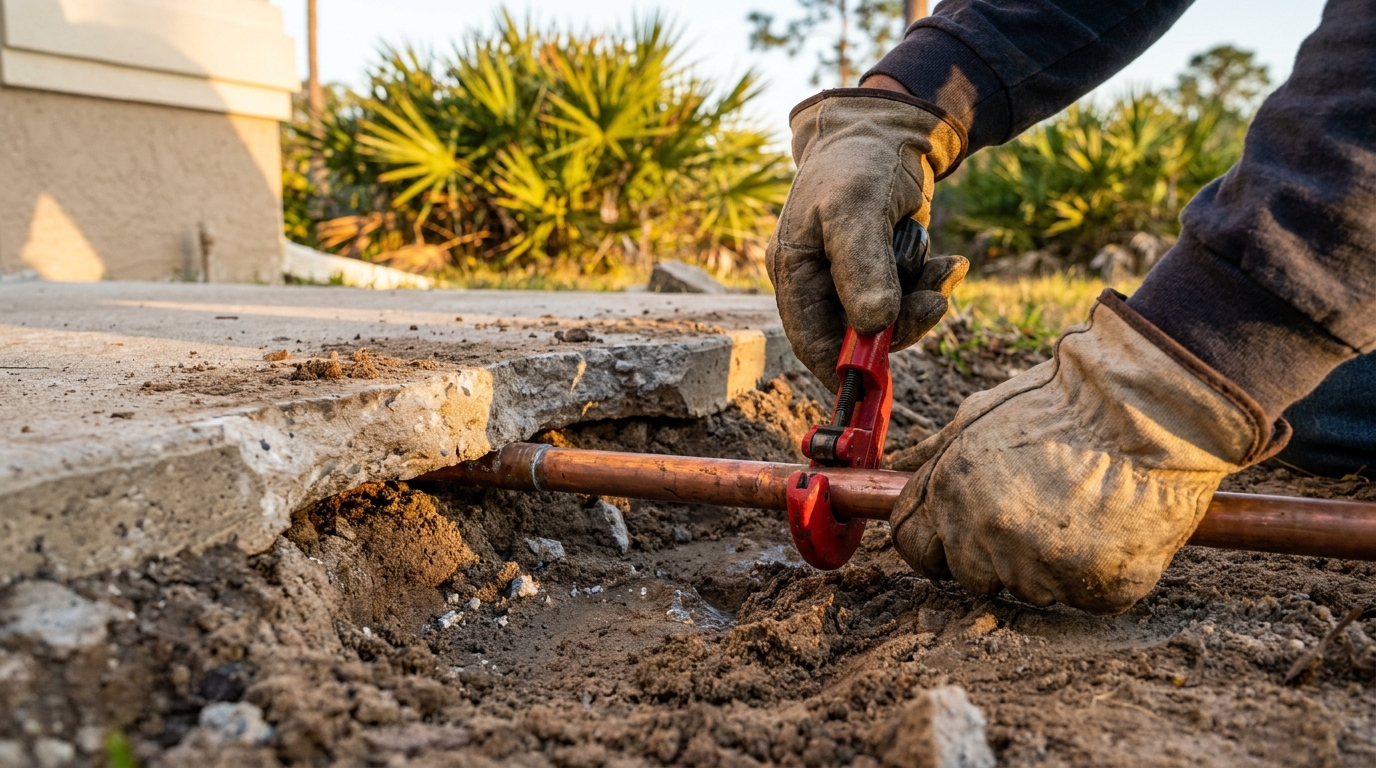
Slab leaks in Atlantic Beach homes are usually caused by one of three things: corrosion of copper water lines running under the concrete slab, shifting sandy soil that stresses those pipes, or mechanical damage from poor installation. The barrier-island setting — with salty air, high groundwater, and heavy seasonal rainfall — accelerates every one of these failure modes compared to inland Jacksonville.
If you're hearing water running when nothing's on, seeing warm spots on your floor, or watching your water bill creep up, you're likely dealing with a pressurized line leaking somewhere beneath your foundation. Here's what actually causes it in this specific stretch of the First Coast, and what fixing it looks like in 2026.
What actually causes a slab leak in Atlantic Beach homes?
The primary cause is corrosion of copper supply lines embedded in or running beneath the concrete slab, made worse by soil movement under the foundation. Atlantic Beach's sandy coastal soils, salt-laden air, high water table, and humid subtropical climate combine to attack pipes from both inside and outside — which is why slab leaks show up here more often than in drier inland markets.
Copper is the usual victim. Water chemistry and soil conditions eat at the pipe wall over decades, while any grit or abrasion under the slab wears through the protective coating. Once a pinhole forms in a pressurized line, water escapes 24 hours a day until someone finds it.
Corrosion from water chemistry and salt air
Older Atlantic Beach homes were typically plumbed with soft copper tubing beneath the slab. In a coastal environment, that copper faces mineral-heavy water on the inside and salt-influenced humidity around any exposed fittings. National plumbing cost guides consistently identify copper corrosion as the leading cause of residential slab leaks, and the coastal First Coast climate compresses the timeline.
Sandy soil movement and voids
Atlantic Beach sits on a barrier island with well-drained sandy fill. That sand is great for hurricane drainage, but it also lets small leaks migrate laterally, wash out the compacted base under a slab, and create voids. When the slab shifts even a fraction of an inch, rigid copper joints bend, shear, or pull apart. Heavy rain events during the June-through-November tropical season accelerate this cycle.
Poor installation and mechanical stress
Pipes that weren't properly sleeved where they pass through the slab rub against concrete every time the home experiences thermal expansion. Given decades of that friction, pinholes are practically inevitable. Our team at King of Home Solutions sees this pattern regularly in homes built during the beaches' major growth eras.
Why do Atlantic Beach homes leak more than inland Jacksonville?
Three location-specific factors put Atlantic Beach ahead of inland Duval County for slab leak risk: proximity to salt air that accelerates metal corrosion, sandy coastal soil that shifts more readily than inland clay, and a high water table that keeps under-slab conditions perpetually damp. Homes just a few miles west in Jacksonville don't face the same combined pressure.
The city's location east of the Intracoastal, sharing the shoreline with Neptune Beach and Jacksonville Beach, means every home is within reach of salt-laden marine air. Combine that with the flat, low elevation and the frequent heavy rainfall of hurricane season, and you get a below-slab environment that's tougher on plumbing than what you'd find in Mandarin, Arlington, or Southside.
How do you know if you have a slab leak?
The most common signs are an unexplained jump in your water bill, the sound of running water when everything is off, warm or damp spots on the floor, unexplained mildew smells, and low water pressure. Even a small leak flowing at half a gallon per minute wastes roughly 700 gallons per day, so bills climb fast.
Other clues include cracks appearing in tile or drywall (from slab movement over a wet void), a water heater that seems to run constantly if the leak is on the hot line, and grass that stays suspiciously green in one patch of the yard. If two or more of these show up together, it's time for professional leak detection before the damage compounds.
How is a slab leak actually fixed?
There are three standard repair paths: spot repair (jackhammer the slab, fix the pipe, patch the concrete), reroute (abandon the slab line and run new pipe through walls or the attic), or whole-home repipe (replace all supply lines so no water runs under the slab). The right choice depends on pipe age, number of leaks, and how accessible the failed section is.
Spot repair
Best for a single, well-located leak in an otherwise healthy plumbing system. A plumber opens a small section of slab, replaces the damaged pipe segment, and patches everything back. It's the least invasive option, but if the rest of your copper is the same age, you may see another leak within a year or two.
Reroute
When only one line has failed but the rest looks serviceable, running a new line overhead or through wall cavities avoids opening the slab entirely. This is a popular middle-ground choice for Atlantic Beach homes where opening a tile floor would be costly.
Whole-home repipe
The definitive fix. If you've had multiple leaks, or your copper is uniformly old, replacing the entire supply system with PEX eliminates future slab-leak risk. It's the biggest project up front but usually the last plumbing decision the home will need for a generation.
What does slab leak repair cost in Atlantic Beach in 2026?
Expect leak detection alone to run about $150 to $600, and total repair projects to fall in the $2,000 to $7,500 range for most single-leak situations. Complex jobs involving tunneling, multiple leaks, or a whole-home repipe can reach $10,000 to $15,000 or more, according to current national and Florida cost data.
| Service | Typical 2026 Range | When It Applies |
|---|---|---|
| Basic leak detection (acoustic/meter test) | $150 – $350 | Straightforward single-leak diagnosis |
| Advanced detection (acoustic + thermal imaging) | $300 – $600 | Multiple suspected leaks or difficult access |
| Spot slab repair | $500 – $3,500+ | Single leak, accessible location |
| Reroute (bypass the slab line) | $800 – $2,700+ | One failed line, rest of system healthy |
| Whole-home repipe | $4,500 – $15,000+ | Aging copper throughout, multiple prior leaks |
Restoration — replacing tile, hardwood, or drywall damaged by the leak or the repair — is usually quoted separately and can add thousands. Ask any plumber upfront whether their estimate covers restoration or just plumbing.
Who is licensed to do this work in Duval County?
Slab leak repair falls under Florida's plumbing contractor scope, defined by Fla. Stat. §489.105(3)(m) as an unlimited plumbing trade covering water supply, drainage, and related piping. Any contractor opening your slab or altering potable water lines in Atlantic Beach must hold the appropriate state plumbing license and pull permits through the local building department, with work meeting the Florida Building Code – Plumbing.
Verify the license before hiring. Unpermitted slab work can create insurance headaches later and may surface during a home sale inspection. King of Home Solutions handles the permitting and inspection process as part of the job.
Frequently asked questions
Can a slab leak fix itself?
No. A slab leak is a break in a pressurized water line, and pressure keeps pushing water out until the line is repaired or shut off. The leak may seem to slow if soil packs around it temporarily, but the underlying failure — corroded copper or a sheared joint — doesn't heal. Ignoring it wastes water, damages the foundation, and grows the repair bill.
Does homeowners insurance cover slab leaks in Florida?
Coverage varies by policy. Many Florida homeowners policies cover the water damage caused by a sudden slab leak but not the cost of accessing and repairing the pipe itself. Some carriers offer service-line or slab-leak endorsements. Read your policy before a leak happens, and ask your insurer specifically about detection costs, tear-out coverage, and pipe repair.
How long does slab leak repair take?
A straightforward spot repair typically takes one to two days, including detection, opening the slab, replacing the section, and patching concrete. A reroute usually runs two to three days. A full repipe on an average Atlantic Beach home can take three to five days. Flooring restoration is separate and depends on the material.
Is a slab leak an emergency?
Treat it as one. Continuous pressurized water under your foundation erodes soil, undermines the slab, feeds mold, and inflates your water bill every hour. Shut off the main water supply as soon as you suspect a leak, then call a licensed plumber for detection. The longer it runs, the more the repair — and the collateral damage — will cost.
What's the difference between a slab leak and a sewer line problem?
A slab leak is a break in a pressurized potable water line under the concrete slab. A sewer line problem is a blockage, break, or root intrusion in the drain line carrying wastewater away from the home. Symptoms differ: slab leaks show up as running water sounds and high bills; sewer issues show up as slow drains, backups, and odor.
How do I choose a plumber for slab leak work in Atlantic Beach?
Look for a state-licensed Florida plumbing contractor with local experience in coastal slab-on-grade homes, non-invasive detection equipment (acoustic and thermal imaging), transparent flat-rate or itemized pricing, and permit handling included. Check recent reviews — King of Home Solutions holds a 4.9 star rating across 55 Google reviews as of July 2026, with customers frequently citing communication and fair pricing.
Getting the leak found and fixed
Slab leaks in Atlantic Beach aren't random bad luck — they're the predictable result of aging copper meeting salty coastal air, sandy soil, and a high water table. Once you know a home in this market is exposed to those conditions, the sensible move is to act on the first warning signs rather than wait for water to reach the flooring.
Atlantic Beach homeowners who want the leak found accurately the first time — and repaired to code with the permits handled — can reach King of Home Solutions at https://kingofhomesolutions.com or (904) 865-4663 to schedule detection and get a written estimate before any slab is opened.