Slab Leak Warning Signs Atlantic Beach Homeowners Should Know
Learn the warning signs of a slab leak in Atlantic Beach, FL homes, why they're common here, and what to do before the damage gets expensive.
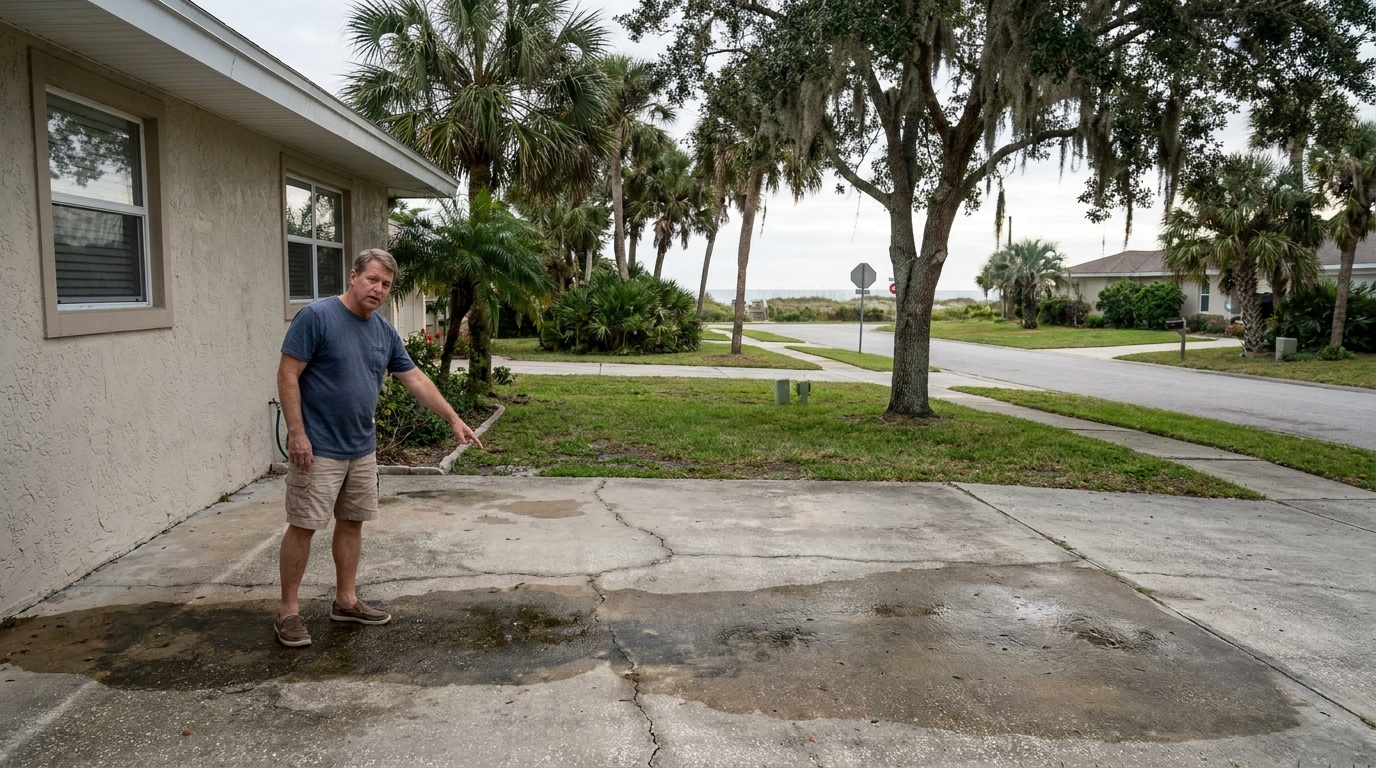
You walk barefoot across the tile in your Atlantic Beach home one morning and notice a warm spot near the kitchen. Or maybe your water bill jumped for no obvious reason. Or you hear a faint hiss when the house is quiet. These small clues are often the first hints of something bigger happening underneath your feet — a slab leak.
Slab leaks are more common in coastal Florida than most homeowners realize. Between our sandy, shifting soil, high water table, and the age of many slab-on-grade homes east of Mayport Road, the plumbing running through or beneath your concrete foundation takes a beating over time. Catching a leak early is the difference between a targeted repair and a full-floor renovation.
Here's what to watch for, why Atlantic Beach homes are especially vulnerable, and what a responsible response looks like.
What Exactly Is a Slab Leak?
A slab leak is a water leak in one of the pipes running underneath or through the concrete foundation of your home. In most Atlantic Beach houses built on slab foundations — which is the majority of homes from Selva Marina to the neighborhoods south of Atlantic Boulevard — copper or PEX supply lines are embedded in or beneath the concrete.
When those pipes corrode, shift, or develop a pinhole, the water has nowhere to go but into your foundation, up through your flooring, or out into the surrounding soil. Left alone, a slab leak can undermine the concrete itself, damage flooring, feed mold, and spike your water bill dramatically.
Why Atlantic Beach Homes Are Especially Vulnerable
A few local factors stack the deck against your plumbing:
- Sandy, shifting soil. Coastal soil moves. Over years, that subtle shifting stresses copper joints and rigid pipe runs.
- High water table and salt air. Homes closer to the ocean — think the streets east of East Coast Drive or up around Seminole Road — deal with humidity and salt intrusion that accelerates corrosion on older copper.
- Aging housing stock. Many Atlantic Beach homes were built between the 1950s and 1980s. If original copper is still in the slab, it's well past the point where pinhole leaks become likely.
- Freeze events. The occasional hard freeze — like the cold snaps North Florida sees every few winters — can stress lines that were already borderline.
None of this means your home has a slab leak today. It does mean the warning signs deserve attention rather than a wait-and-see approach.
Signs You Have a Slab Leak in Atlantic Beach, FL
Slab leaks rarely announce themselves with a dramatic burst. They whisper first. Here are the signals we see most often in Atlantic Beach homes.
1. A Sudden Spike in Your Water Bill
If your JEA water bill jumps significantly with no change in household use, that's often the first measurable clue. A slab leak can waste hundreds of gallons a day without any visible pooling inside the home.
2. Warm or Hot Spots on the Floor
Because hot water lines fail more often than cold (heat accelerates corrosion), you may feel a warm patch on tile or laminate — usually in a kitchen, bathroom, or hallway. If you can feel it through your shoes, the leak has likely been active for a while.
3. The Sound of Running Water When Everything Is Off
Turn off every faucet, appliance, and ice maker. Stand still and listen. A faint hissing, trickling, or rushing sound in the walls or floor is a classic slab leak signal.
4. Damp Carpet, Warped Flooring, or Buckling Tile
Moisture wicking up through the slab shows up as unexplained damp carpet, cupping wood floors, or tiles that pop loose. In humid Atlantic Beach summers, this can be misread as normal humidity damage — but if it's localized, suspect the slab.
5. Musty Odors or Visible Mold
Persistent moisture under flooring feeds mildew. If a specific room smells musty even with the AC running, that's worth investigating.
6. Cracks in Walls, Floors, or the Foundation
Water eroding soil beneath the slab can cause the foundation to shift. Hairline cracks in drywall around doorframes, or new cracks in tile grout lines, sometimes trace back to a leak rather than settling.
7. Low Water Pressure With No Clear Cause
If pressure drops throughout the house and you've ruled out the water heater and main shutoff, a slab leak may be bleeding pressure out of the system.
8. The Water Meter Keeps Moving
Shut off every fixture and check your water meter. If the dial is still turning, water is going somewhere it shouldn't.
What to Do If You Suspect a Slab Leak
Don't panic, and don't start breaking up concrete. The right sequence looks like this:
- Shut off the main water valve if the leak seems active or your bill has spiked dramatically.
- Document what you're seeing — photos of damp spots, meter readings, recent bills.
- Call a licensed plumber who does leak detection. Not every plumber has the acoustic and thermal equipment needed to pinpoint a slab leak without demolition.
- Notify your homeowner's insurance carrier. In Florida, sudden and accidental water damage from a slab leak is often covered, but the leak repair itself usually isn't. Document early.
At King of Home Solutions, we approach slab leaks by locating first and repairing second — using electronic leak detection to find the exact spot before any concrete is touched. That keeps the repair contained and the cost predictable.
How Much Does It Cost to Fix a Water Leak in Atlantic Beach?
Costs vary widely because slab leak repair depends on three things: how quickly the leak is found, where it's located under the slab, and which repair method makes sense.
In general, Atlantic Beach homeowners see three tiers:
- Spot repair — cutting through concrete at the leak location. Usually the least invasive option when the leak is isolated and accessible.
- Reroute — abandoning the failed line and running a new pipe through walls or ceilings. Often a smart choice for older copper that's likely to fail elsewhere soon.
- Whole-home repipe — the right call when the entire supply system is aging and multiple leaks are likely.
A reputable plumber should walk you through all three, explain the tradeoffs in plain language, and give you a written estimate before work begins. If someone quotes a repair without first locating the leak, that's a red flag.
Frequently Asked Questions
Can a slab leak fix itself?
No. Slab leaks worsen over time as corrosion expands or soil erosion around the pipe grows. Ignoring one turns a targeted repair into foundation and flooring work.
Does homeowner's insurance cover slab leaks in Florida?
Coverage varies by policy. Most Florida policies cover the resulting water damage (flooring, drywall) from a sudden leak but not the plumbing repair itself or the cost of accessing the pipe. Review your policy or ask your agent directly.
How long does slab leak repair take?
A spot repair is often completed in a day. A reroute typically takes one to two days. A full repipe can run three to five days depending on home size.
How do I find an emergency plumber near me in Atlantic Beach?
Look for a licensed Florida plumber with electronic leak detection experience and clear reviews from local homeowners. The best plumber for a slab leak is one who can locate the leak precisely before recommending a repair method — not one who leads with demolition.
The Bottom Line for Atlantic Beach Homeowners
Slab leaks are quiet, common in coastal Florida, and expensive if ignored. The homeowners who come out ahead are the ones who trust the small signals — the warm floor, the hissing sound, the unexplained bill — and get a professional opinion before the damage spreads.
Homeowners in Atlantic Beach, FL who want a slab leak located and repaired properly can reach King of Home Solutions at https://kingofhomesolutions.com for an estimate. The 4.9-star rating from local customers reflects the kind of clear communication and workmanship that matters when the problem is underneath your floor and out of sight.