Garage Door Off Track Repair in Jacksonville, FL
A step-by-step look at what Jacksonville homeowners can expect when a garage door jumps the track — from the first safety call to final testing.
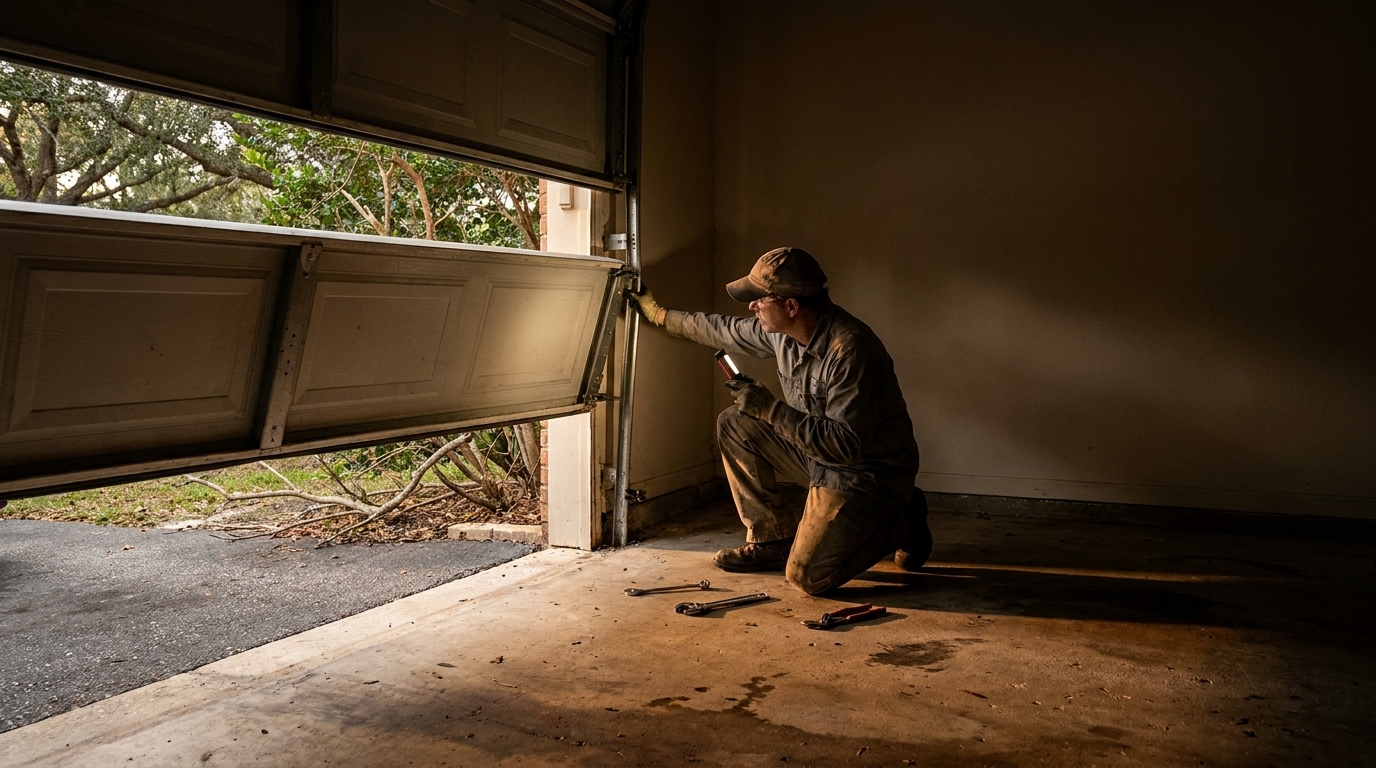
When your garage door jumps the track in Jacksonville, here's what happens next: a technician secures the door in place, finds out why it derailed, resets the rollers into the metal tracks, replaces any bent or broken hardware, and tests the full travel cycle before leaving. Most single-door repairs are handled in one visit the same day you call, as long as the opener is unplugged and nobody tries to force the door in the meantime.
An off-track garage door is one of those problems that looks small and feels urgent. One roller pops out of the rail, the door hangs crooked, and suddenly a 150-to-250-pound slab of steel and wood is leaning against your tracks with nothing holding it the way it should. That is why the process matters. Below is what a Jacksonville repair call actually looks like — start to finish — so you know what you are agreeing to when you pick up the phone.
What does "off track" actually mean on a garage door?
An off-track garage door is one where one or more rollers have slipped out of the metal tracks on either side of the opening. The door may hang crooked, jam partway open, or refuse to move at all. Once a roller leaves the rail, the spring no longer supports the door's weight evenly, and the panel can shift or drop without warning.
This is a structural failure, not a cosmetic one. Even if the door looks "mostly fine," the load path has changed. The springs and cables that normally share the weight are now pulling against a door that is no longer square in its frame, and every attempt to run the opener makes the situation worse. That is why the first instruction from every reputable Jacksonville repair outfit — including our team at King of Home Solutions — is the same: stop using it.
What should you do in the first five minutes?
In the first five minutes, do four things: stop pressing the opener, pull the plug on the opener motor, keep people and pets out of the garage, and call a technician. Do not try to pry the roller back in, loosen a bracket, or lift the door by hand. An off-track door weighs 150 to 250 pounds and can fall without warning.
Every cycle on an off-track door can pull more rollers loose, bend the track, or put dangerous strain on the cables and springs. A door that would have been a straightforward roller-and-track repair early in the morning can become a full cable, spring, and panel job within hours if someone keeps hitting the wall button "just to see if it'll close."
What causes a garage door to go off track in Jacksonville?
Six causes account for almost every off-track call in the Jacksonville area: impact damage (usually a vehicle bumper), a broken lift cable, worn or broken rollers, a bent track, loose track hardware, and spring failure. Coastal humidity and salt air accelerate roller wear and bracket corrosion, which makes the last three especially common in seaside and waterway-adjacent neighborhoods.
A few of these are worth understanding before the technician arrives:
- Impact damage. Bumping the door with a vehicle, even at low speed, can knock a section or roller out of alignment and bend the track.
- Broken lift cable. When one cable snaps, that side of the door drops while the other stays up, pulling rollers out of the track on the dropped side.
- Worn or broken rollers. A roller that cracks or seizes no longer rides smoothly and can jump the rail. Nylon rollers in salt-air zip codes rarely make it to the manufacturer's full life expectancy.
- Bent track. Vibration from thousands of cycles gradually pulls horizontal track sections out of alignment, especially on a door that was never properly balanced.
- Loose track hardware. The brackets holding the track to the wall can loosen over time, and a shifted track lets rollers slip out.
- Obstruction in the track. A stone, hardened grease, debris, or a bent spot can force a roller off course.
What are the early warning signs you missed?
Most off-track doors give warning for days or weeks before they actually derail. The common early signs are: the door hanging slightly crooked or one side sitting higher than the other, a roller visibly outside the track, the door jamming partway up or down, grinding or scraping sounds during operation, and the door rubbing against the frame as it moves.
If any of those show up on your door, treat them as a scheduled service call rather than an emergency. A roller adjustment on a door that is still on its tracks is a completely different job from a recovery on a door that has already fallen off them.
What does the technician actually do on-site?
A Jacksonville off-track repair visit follows a predictable sequence: assess and stabilize the door, diagnose the cause, present the repair plan and price, perform the repair, then test the door's full travel and the opener's safety features. On a standard residential door with no cable or spring damage, the on-site work usually takes between one and two hours.
Here is the sequence step by step:
| Stage | What happens | Typical time |
|---|---|---|
| 1. Assess & stabilize | Door is secured with clamps or vise grips so it cannot fall further; opener is disconnected. | 5–15 min |
| 2. Diagnose | Technician identifies which rollers left the track, inspects cables, springs, hinges, and track for secondary damage. | 10–20 min |
| 3. Explain & quote | You get a plain-English explanation of what failed, what needs replacing, and a written price before any work begins. | 5–10 min |
| 4. Repair | Rollers are reseated, bent track sections straightened or replaced, failed cables or springs swapped, hardware re-torqued. | 45–90 min |
| 5. Balance & test | Door is manually balanced, then run through full open/close cycles. Opener auto-reverse is tested per CPSC guidance using a 2x4 on the floor. | 10–20 min |
That last stage is non-negotiable on a properly done repair. Federal regulations at 16 CFR Part 1211 set the safety standard for residential garage door operators, including entrapment-protection requirements and external photoelectric sensors in specified circumstances. The U.S. Consumer Product Safety Commission recommends testing the reverse function by placing a flat board on the floor in the door's path — the closing door should reverse when it contacts the board. If your technician leaves without doing that test, the job is not finished.
Why not just DIY it back onto the track?
Because the cables and springs on a residential garage door are under extreme tension, and an uneven door makes that tension unpredictable. Homeowners should not pull cables, loosen brackets, or try to force a roller into place while the door is hanging unevenly. The door can shift or drop suddenly once rollers leave the track, and a spring under load can release with enough force to cause serious injury.
The other reason is diagnostic. The visible symptom — a roller out of the rail — is almost never the whole problem. A bent track, a stretched cable, or a worn hinge usually came first; shoving the roller back without addressing the cause means the door will derail again within days.
How soon can you get same-day service in Jacksonville?
Most off-track calls placed before early afternoon can be handled the same day across the Jacksonville metro, including its southern, eastside, riverside, and northern neighborhoods. A door that is fully off the tracks or stuck in the open position is treated as an emergency and is typically dispatched ahead of scheduled maintenance calls.
At King of Home Solutions we handle off-track doors alongside broken springs, worn cables, opener issues, and routine maintenance, so a single visit usually resolves both the derailment and whatever underlying failure caused it. Here is one Jacksonville homeowner's experience with a recent install:
King of Home Solutions was great! I had them come out and install a new garage door and I couldn’t be happier. I knew exactly when they were on their way and they showed up on time. The quality of craftsmanship was outstanding!!!
Frequently asked questions
Is an off-track garage door an emergency?
Yes. An off-track garage door weighs 150 to 250 pounds and can fall without warning, and every cycle on it can pull more rollers loose, bend the track, or strain the cables and springs. Treat it as same-day service: unplug the opener, keep people and pets clear, and call a technician rather than waiting for a scheduled appointment slot.
Can I still close my garage door if it is off track?
No. Running the opener on a derailed door almost always makes the damage worse — bending the track, snapping cables, or dropping the door onto whatever is below it. If you need to secure your garage before the technician arrives, leave the door where it is, lock the interior door between the garage and the house, and wait. Do not try to lower the door by hand.
How long does an off-track repair take?
A straightforward off-track repair on a residential door usually takes one to two hours on-site, including diagnosis, the repair itself, and safety testing. If a cable or spring also failed, or if a track section needs to be replaced, expect additional time on top of the standard repair window. Most jobs are finished in a single visit.
Will my homeowner's insurance cover an off-track garage door?
Coverage varies by policy and cause. Damage from a vehicle impact or a covered peril like a storm is often eligible for a claim, while wear-and-tear failures (worn rollers, loose brackets, old cables) typically are not. Check with your insurer before scheduling repairs if you believe the cause was a covered event, and ask the technician for an itemized invoice.
Do I need a permit to repair a garage door in Jacksonville, FL?
Permit requirements for garage door work vary based on whether the door is being replaced, whether the opening is being modified, and whether the work affects wind-load compliance. For a straightforward off-track repair that reuses the existing door and tracks, a permit is usually not required. Confirm with the City of Jacksonville Building Inspection Division or your contractor before any replacement work begins.
How do I prevent my door from going off track again?
Schedule a yearly tune-up that includes balance testing, roller inspection, track-bracket tightening, hinge lubrication, and cable and spring inspection. In Jacksonville's coastal and humid climate, nylon rollers and galvanized hardware wear faster than in drier regions, so an annual service is more useful here than a biennial one. Address grinding sounds or crooked travel the week you notice them, not the month after.
Getting the door back on track
An off-track garage door is unsettling, but the repair itself is routine when it is handled quickly and in the right order: stabilize, diagnose, repair, test. The two things that turn a one-hour fix into a half-day project are running the opener after the derailment and attempting a DIY reseat with the springs still loaded. Avoid both, and most Jacksonville homeowners are back to normal by the end of the same day they called.
Homeowners in Jacksonville who want this handled professionally can reach King of Home Solutions at (904) 865-4663 or https://kingofhomesolutions.com to schedule a repair.