Clogged Toilet Plumber in Jacksonville, FL: What to Expect
Plunger didn't work on your Jacksonville toilet? Here's the exact diagnostic path a plumber follows — tank check, auger, pull-and-inspect, sewer camera.
When a Jacksonville toilet won't flush and the plunger has failed, a plumber works through a specific diagnostic order: check the tank mechanism first, then run a toilet auger through the trap, then pull the toilet to inspect from below, and finally — if other fixtures are also slow — scope the main drain or sewer line with a camera. The order matters because each step rules out a different failure point, and skipping ahead usually wastes money.
That sequence is the short answer. The rest of this guide walks through what each step actually looks like in a Jacksonville home, where you might be on JEA sewer or a private septic system, and why the fix for your toilet might not even be in the toilet.
Why won't my toilet flush even after plunging?
If plunging failed, the obstruction is either past the toilet's trap (where a plunger can't generate pressure) or the problem isn't a clog at all — it's inside the tank. A bowl that fills with water and drains slowly over several minutes, letting liquids through but not solids or paper, points to a drain obstruction rather than a tank issue.
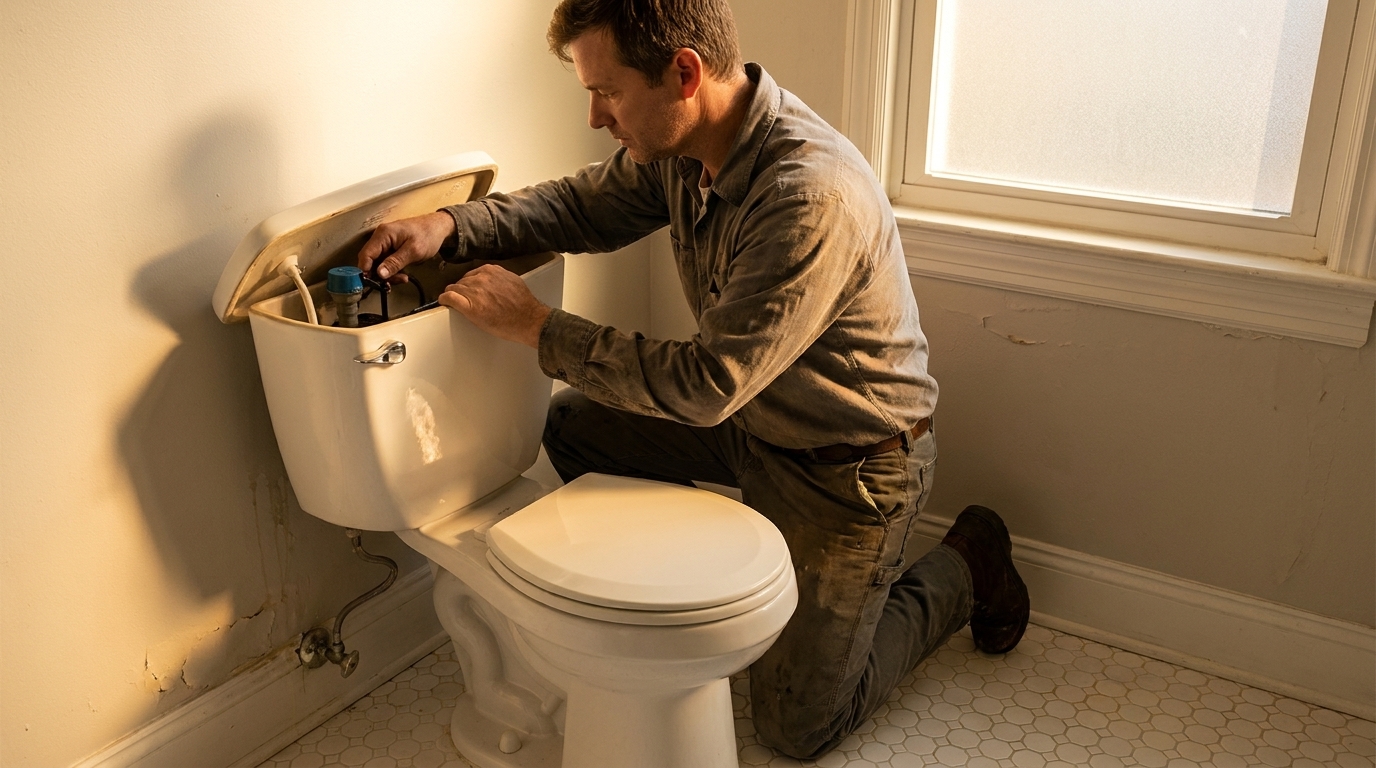
Before anything else, we lift the tank lid and look. Is the flapper sealing? Is the fill valve bringing water to the correct line? Is the chain to the flush lever too tight or too loose? A flapper that closes too soon due to chain slack forces you to hold the handle down for a full flush, which mimics a clog but isn't one. Fix the tank first, and the "clog" may disappear.
What does a plumber do after the plunger fails?
The next step is a toilet auger (a closet auger). It's a flexible cable with a protective sleeve designed to reach through the toilet's trap and either break up or hook the obstruction — something a plunger physically can't reach. This is the recommended move once plunging has stopped making progress.
At King of Home Solutions, our residential plumbers run the auger from the bowl, feeding it through the trap and rotating it to catch whatever's lodged downstream. Many clogs that defeat a plunger — a wad of thick paper, a flushed wipe, a kid's toy — give up at this stage. The auger also tells us something diagnostic: if the cable moves freely but the bowl still won't drain, the blockage is deeper than the toilet.
What if the auger doesn't clear it?
When the auger can't clear the obstruction, the next step is to disconnect and lift the toilet off the floor so we can inspect the trap and the drain opening from below. The toilet is then reset on a new wax ring (or equivalent seal), re-bolted, and tested for leaks before we leave. This is a bigger job than plunging, but it's often the fastest way to find a hard object — a toothbrush, a bottle cap, a child's small toy — stuck in the trap.
Pulling the toilet also lets us look straight down the flange into the drain line. If the line is clear from that vantage point and the toilet itself is unobstructed, the problem is further downstream — which changes the whole approach.
How do I know if the clog is in the sewer line, not the toilet?
If other drains and toilets in the house are working normally while only one toilet is affected, the blockage is almost certainly isolated to that fixture. But if the kitchen sink gurgles when the washing machine drains, if a shower backs up when another toilet flushes, or if multiple fixtures are slow at once, the obstruction is in a shared drain or the main sewer line — not the toilet.
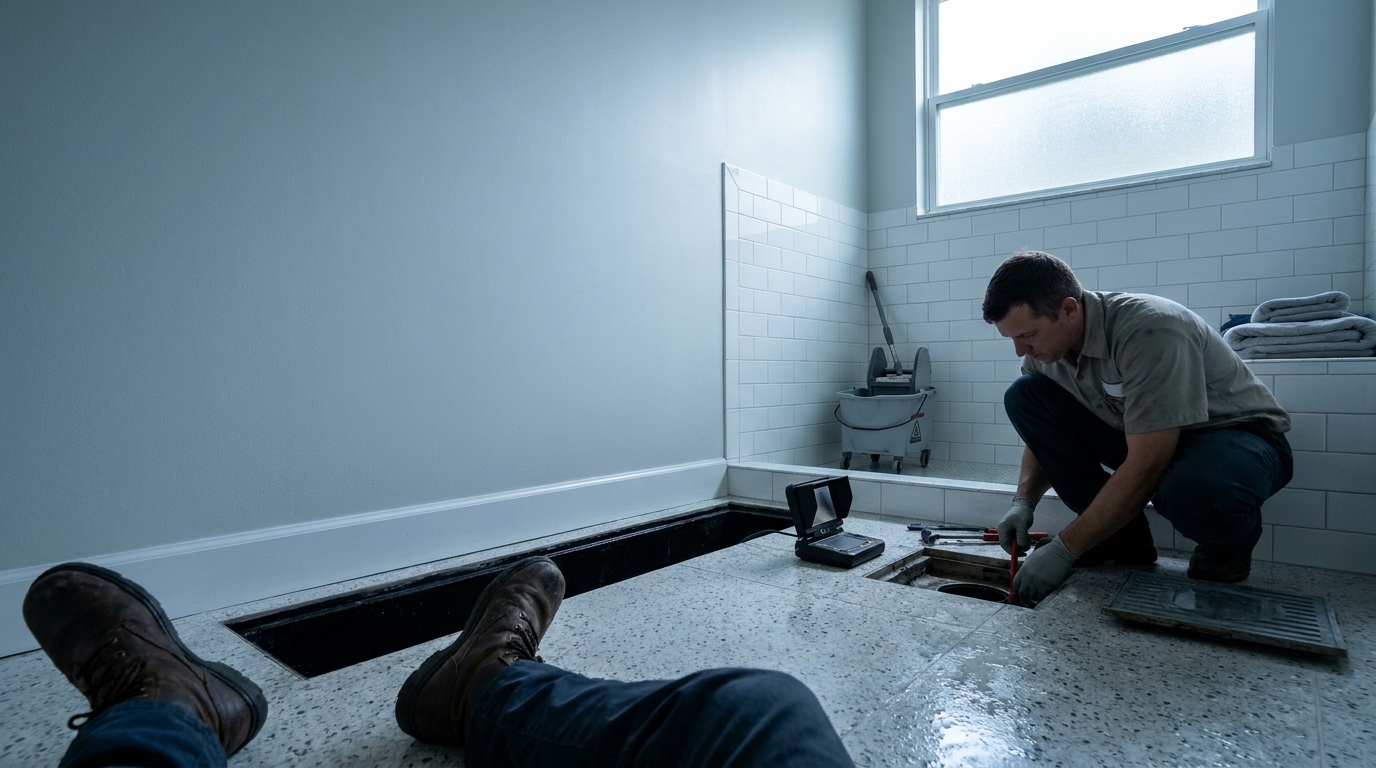
At that point a camera inspection is the right call. We feed a waterproof camera down the line to locate the blockage, see what it is (roots, grease, a collapsed section, a foreign object), and know exactly where to work. In Jacksonville, this matters because what happens next depends on where your waste goes.
JEA sewer vs. septic in Jacksonville
Most Jacksonville homes are on JEA's municipal water and sewer service, but plenty of properties — especially in outer areas like parts of the Westside, Mandarin's edges, and rural Duval — are on private septic systems. The county health department handles septic and well questions. The distinction matters: a backup on a JEA-served home may involve the house's lateral line out to the city main, while a septic backup points toward the tank, the drain field, or the line to the tank.
Permits and the public right-of-way
If a repair requires excavation in a public road, right-of-way, or easement — for example, a collapsed sewer lateral under the street — the local municipality requires a written permit to disturb or excavate in that area. Utility construction involving water or sewer in Jacksonville must be performed by a licensed contractor. For homeowners, that's a reminder to verify licensing before anyone opens the ground on your property.
When should the toilet be replaced instead of repaired?
Replacement makes sense in a few specific cases: a cracked bowl or tank, a chronically weak flush on an older high-volume toilet, or repeated clogs with no identifiable obstruction. Older high-volume designs frequently required a double flush, while modern low-flow toilets are engineered to clear the bowl in a single pass. If you're double-flushing an older toilet every day, replacement often pays back quickly in water bills.
Design matters too. Some modern toilets have elongated, rectangular drain openings that a standard plunger simply won't seal against — a specialty plunger or an auger becomes the only way to clear them. If your toilet is one of these and clogs regularly, that's a design conversation, not a plumbing failure.
What does a plumber check, in order?
| Step | What's checked | What it rules out |
|---|---|---|
| 1. Tank inspection | Flapper seal, fill level, chain slack (even 1/4 inch matters) | Flush-mechanism failure masquerading as a clog |
| 2. Plunger (correct type) | Seal against the drain opening; some bowl shapes need a specialty plunger | Surface-level obstruction in the trap |
| 3. Toilet auger | Cable fed through the trap to break up or retrieve the blockage | Obstruction just past the trap |
| 4. Pull the toilet | Inspect trap and flange from below; reset with new seal | Hard object lodged in trap; damaged flange |
| 5. Camera the drain line | Locate blockage in the lateral or main sewer | Fixture-level issue vs. shared-line issue |
What does a Jacksonville homeowner's experience with this look like?
Beyond the diagnostic path, what matters is working with plumbers who show up when they say they will and explain what they're finding as they go. Here's how one Jacksonville homeowner described their experience with our team:
Another wonderful fix by BJ and Brian. These two have been lifesavers! Ever since we moved into our new house we’ve had a few major plumbing issues and these two have helped us with everything. They are on time (even early!), professional and kind. We will continue using them for all future issues. Thank you both so much!!
King of Home Solutions focuses exclusively on residential plumbing, which means toilet diagnostics like the sequence above are routine work rather than an occasional job squeezed between commercial projects.
Frequently asked questions
How long should I keep plunging before giving up?
If a correctly-sealed plunger hasn't moved the water level after about two minutes of firm, consistent pumping, further plunging usually won't help. The obstruction is likely past the trap, where a plunger can't reach. The next step is a toilet auger, not more plunging — and if you don't have one or aren't comfortable using one, that's the point to call a plumber.
Can one clogged toilet mean a bigger sewer problem?
Yes, if other fixtures are also acting up. A single affected toilet while the rest of the house drains normally points to a local blockage. But if sinks gurgle, showers back up, or multiple toilets are slow at the same time, the problem is in a shared drain or the main sewer line. A camera inspection is the fastest way to confirm which situation you're in.
Does Jacksonville require a permit for sewer repair?
If the repair involves excavating a public road, right-of-way, or easement, the local municipality requires a written permit, and the work must be performed by a licensed contractor. Repairs confined to your own property's drain line inside the house don't require that specific right-of-way permit, but a licensed plumber should still be the one doing the work.
What's the difference between a plunger and a toilet auger?
A plunger uses air and water pressure to dislodge an obstruction near the top of the trap. A toilet auger (closet auger) is a short, flexible cable with a protective sleeve that physically reaches through the trap to break up or hook a clog beyond the plunger's range. If plunging didn't work, an auger is the correct next tool — not a bigger plunger.
Should I replace my old toilet if it clogs often?
If your toilet is an older high-volume model that routinely needs a second flush, replacement with a modern low-flow toilet often solves the chronic weak-flush problem. Replacement also makes sense if the bowl or tank is cracked, if the drain opening design makes it hard to clear, or if clogs recur with no obvious obstruction. A plumber can tell you which situation applies.
Am I on JEA sewer or septic in Jacksonville?
Most Jacksonville homes are on JEA's municipal water and sewer service, but outlying and rural areas of Duval County often have private septic systems. If you're unsure, JEA can confirm whether your address is on municipal sewer; septic and well questions are handled by the county health department. The distinction matters because a backup on a septic system involves the tank and drain field, not a city line.
Getting it handled
A toilet that won't flush after a solid plunging attempt almost always has a cause a homeowner can't see — a tank component out of adjustment, an obstruction past the trap, or a shared drain-line issue affecting more than one fixture. The diagnostic order above is how a plumber narrows it down without guessing. Readers in Jacksonville who want this handled professionally can reach King of Home Solutions at (904) 865-4663 or https://kingofhomesolutions.com to get started.
"