How to Clear a Slow Drain in Jacksonville, FL (2026)
Learn safe, pipe-friendly steps to clear a slow drain in your Jacksonville home — plus the warning signs that mean it's time to call a plumber.
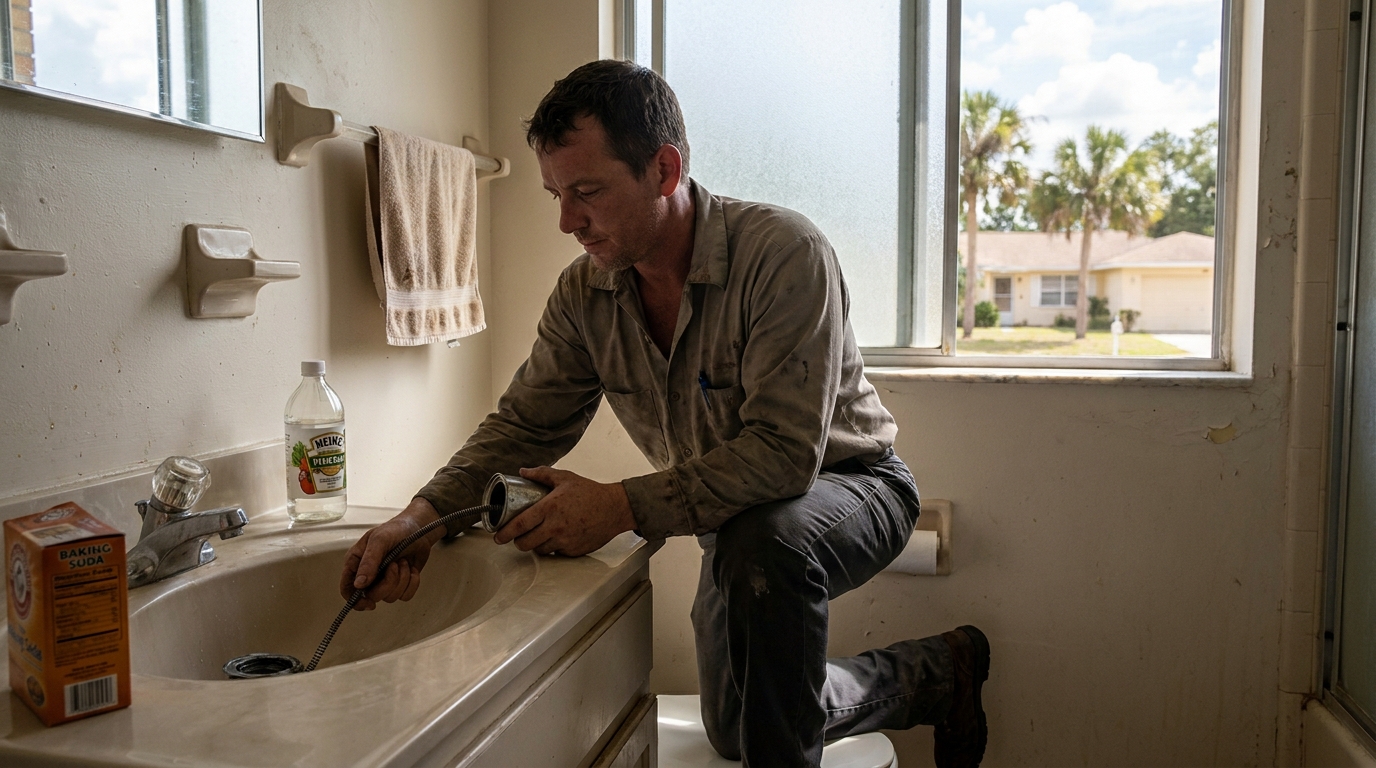
To clear a slow drain without damaging your pipes, start with the gentlest methods first: pull out visible hair and debris, flush with hot (not boiling) water, then try a baking soda and vinegar treatment followed by a plunger or hand-cranked drain snake. Skip chemical drain cleaners — they corrode pipe walls and seals — and stop DIY attempts if water backs up in multiple fixtures, which points to a deeper line issue.
Slow drains are one of the most common calls we hear about from Jacksonville homeowners, especially in older neighborhoods like Riverside, Avondale, and Springfield where cast iron drain lines are still in service. The good news is that most slow drains can be cleared safely at home. The trick is knowing which methods protect your plumbing — and which ones quietly wreck it.
Why is your drain slow in the first place?
Slow drains almost always come from a partial blockage inside the pipe — usually hair and soap scum in bathroom drains, grease and food particles in kitchen lines, or mineral buildup from Jacksonville's hard water. A truly clogged drain stops water entirely; a slow drain means water still moves, which gives you time to fix it gently before it becomes a full backup.
Jacksonville's water hardness runs high, averaging around 8-10 grains per gallon according to JEA water quality reports. That mineral load coats the inside of pipes over years, narrowing the flow path and giving hair and grease something to cling to. It's why homes in areas like Mandarin and San Marco often see recurring slow drains even without any obvious clog.
What's the safest first step to try?
Start by removing what you can see and reach. Pop off the drain stopper or strainer, pull out hair and gunk with a bent wire or a plastic hair snake tool, and rinse the assembly. This single step clears a large share of bathroom sink and tub slowdowns and puts zero stress on your pipes.
Follow that with a hot water flush. Run the tap at its hottest setting for two to three minutes. Do not pour boiling water directly down the drain — boiling water can warp PVC joints, soften glue, and crack older porcelain traps. Hot tap water is safe; boiling water is not.
Does the baking soda and vinegar method actually work?
Yes, for mild organic buildup. Pour half a cup of baking soda into the drain, follow with half a cup of white vinegar, cover the drain for 10-15 minutes, then flush with hot tap water. The reaction loosens soap scum and light grease without harming pipe walls, gaskets, or septic systems — a real concern in outlying Jacksonville areas like the Northside where septic is still common.
This is not a miracle fix. If the drain is still slow after two treatments, the blockage is further down or denser than a mild reaction can handle. Move on rather than repeating it endlessly.
When should you use a plunger or a hand snake?
Reach for a plunger when the baking soda approach hasn't worked and water is still pooling. Use a cup plunger for sinks and tubs (flange plungers are for toilets), seal any overflow openings with a wet rag, and give it 15-20 firm pumps. For deeper clogs, a hand-cranked drain auger (also called a snake) with a 15-25 foot cable will reach most P-trap and branch-line clogs safely.
Two rules protect your pipes: never force the snake past resistance, and never use a powered auger on older cast iron or galvanized lines without knowing their condition. Aggressive augering can punch through corroded pipe walls, turning a $200 clog into a $2,000 repair.
Which methods should you avoid?
Skip chemical drain cleaners. Sulfuric acid and lye-based products generate heat that softens PVC, degrades rubber seals and gaskets, and eats away at older metal pipes from the inside. They also make any follow-up plumbing work hazardous — a technician arriving at a home full of caustic standing water has to neutralize it before touching anything.
Also avoid: coat-hanger wires (they scratch pipe interiors and can lodge in traps), high-pressure garden hose tricks (they blow out joints), and repeated boiling water pours. Each of these has caused Jacksonville homeowners we've worked with more damage than the original clog would have.
Safe vs. risky methods at a glance
| Method | Safe for Pipes? | Best Used For |
|---|---|---|
| Manual debris removal | Yes | Hair, visible gunk in bathroom drains |
| Hot tap water flush | Yes | Grease and soap film |
| Baking soda + vinegar | Yes | Mild organic buildup |
| Cup plunger | Yes | Sink and tub clogs with standing water |
| Hand-cranked drain snake | Usually yes | P-trap and branch-line clogs |
| Boiling water | No | Avoid — damages PVC and porcelain |
| Chemical drain cleaner | No | Avoid — corrodes pipes and seals |
| Powered auger (DIY) | Risky | Leave to a licensed plumber |
When should you stop and call a plumber?
Stop DIY work and call a licensed plumber if multiple fixtures drain slowly at once, if water backs up into a tub when you flush a toilet, if you smell sewer gas, or if the slowdown returns within a week of clearing it. These are signs the problem is in the main line or vent stack, not the fixture — and pushing further with home tools risks cracking pipes or driving the clog deeper.
Florida requires plumbing work on drain and waste lines beyond simple fixture clearing to be performed by a state-licensed plumbing contractor under Chapter 489 of the Florida Statutes. That licensing exists specifically because improper drain work can contaminate water supplies and violate the Florida Building Code. King of Home Solutions handles this category of work throughout Duval County and holds a 4.9-star rating across 55 Google reviews, with customers regularly noting responsive scheduling and clear communication.
How can you prevent slow drains going forward?
Prevention is mostly about what doesn't go down the drain. Use hair catchers in every shower and tub, wipe grease into the trash instead of rinsing it, run cold water when using the garbage disposal, and flush each drain monthly with hot tap water and a baking soda rinse. In Jacksonville's humid climate, mold and biofilm grow quickly in wet drain lines — the monthly flush keeps that in check.
If you're in an older home with cast iron drains — common throughout Ortega, Murray Hill, and much of the urban core — consider having your main line camera-inspected every few years. Cast iron installed before the 1980s is at the tail end of its service life, and catching corrosion early is far cheaper than emergency replacement.
Frequently asked questions
Can I pour boiling water down my drain to clear it?
No, boiling water can damage most modern plumbing. It softens PVC pipe joints, degrades the glue holding them together, and can crack porcelain traps or older ceramic fixtures. Use hot tap water instead — it's warm enough to dissolve grease and soap scum without stressing your pipes. If you have PEX or copper lines, boiling water is less risky but still not recommended as a routine practice.
Are enzyme drain cleaners safe for my pipes?
Yes, enzyme-based drain cleaners are safe for pipes and septic systems because they use bacteria to digest organic material rather than caustic chemicals. They work slowly — usually overnight — so they're better for maintenance than emergency clogs. Look for products labeled bio-enzymatic or septic-safe. Avoid anything containing sulfuric acid, sodium hydroxide (lye), or bleach if pipe protection is your priority.
How often should Jacksonville homeowners have drains professionally cleaned?
Most Jacksonville homes benefit from a professional drain cleaning every two to three years, more often for older homes with cast iron pipes or households with heavy grease and hair use. Because Jacksonville's water is hard and humidity accelerates biofilm growth, drains here scale up faster than in drier climates. A camera inspection every five years is also worth considering for homes built before 1990.
Why do multiple drains get slow at the same time?
When multiple drains slow down together, the blockage is usually in the main sewer line or a shared branch line, not the individual fixtures. Common causes include tree root intrusion — a frequent issue in older Jacksonville neighborhoods with mature oaks — collapsed pipe sections, or grease buildup in the main line. This situation calls for a licensed plumber with a camera and a powered auger, not DIY tools.
Is it safe to use a drain snake myself?
A hand-cranked drain snake up to about 25 feet is generally safe for DIY use on sink, tub, and shower drains if you feed it slowly and never force it past resistance. Powered augers and longer cables carry real risk of punching through corroded pipe walls or damaging fittings, especially in older Jacksonville homes with cast iron. When in doubt, hand tools only — leave powered equipment to a licensed plumber.
What does same-day plumbing repair typically cost in Jacksonville?
Same-day drain clearing in Jacksonville typically runs $150-$450 depending on access, severity, and whether a camera inspection is included. Main-line clearing or hydro-jetting can range from $400 to $900 or more. Reputable local plumbers, including King of Home Solutions, provide upfront quotes before starting work — one recent reviewer described the pricing as fair with excellent communication throughout the job.
Closing thoughts
Most slow drains in Jacksonville homes can be cleared safely with patience, the right order of gentle methods, and the discipline to stop before you cause damage. Manual removal, hot tap water, baking soda and vinegar, a plunger, and a hand snake will handle the vast majority of cases without a professional. When those don't work — or when the warning signs point to a deeper issue — that's the moment to bring in a licensed plumber rather than push harder. Homeowners in Jacksonville, FL who'd rather have this handled professionally can reach King of Home Solutions at https://kingofhomesolutions.com to schedule a visit.