AC Unit Lifespan in Ponte Vedra Beach, FL: The Truth
How long does an AC unit last in Florida? Coastal humidity and constant runtime shorten lifespans in Ponte Vedra Beach. Here's what to expect and when to replace.
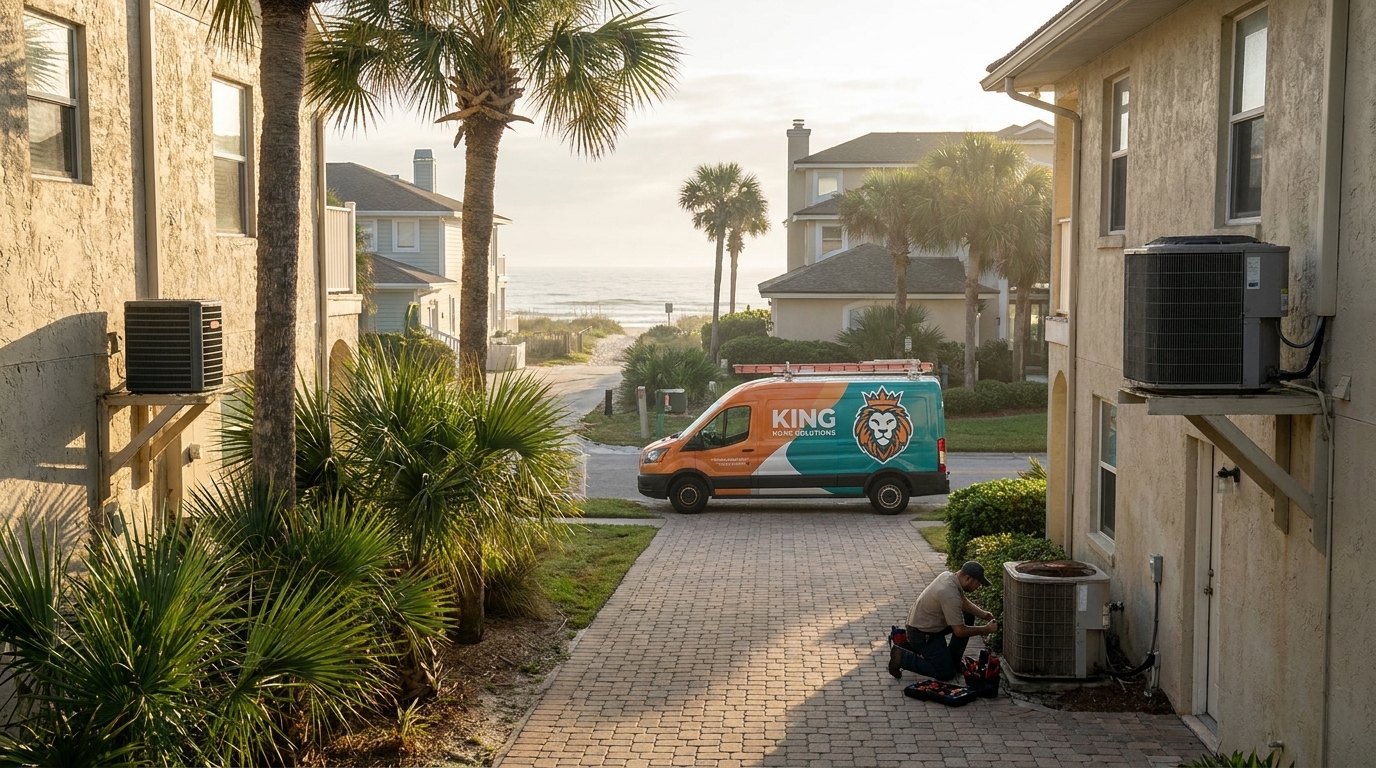
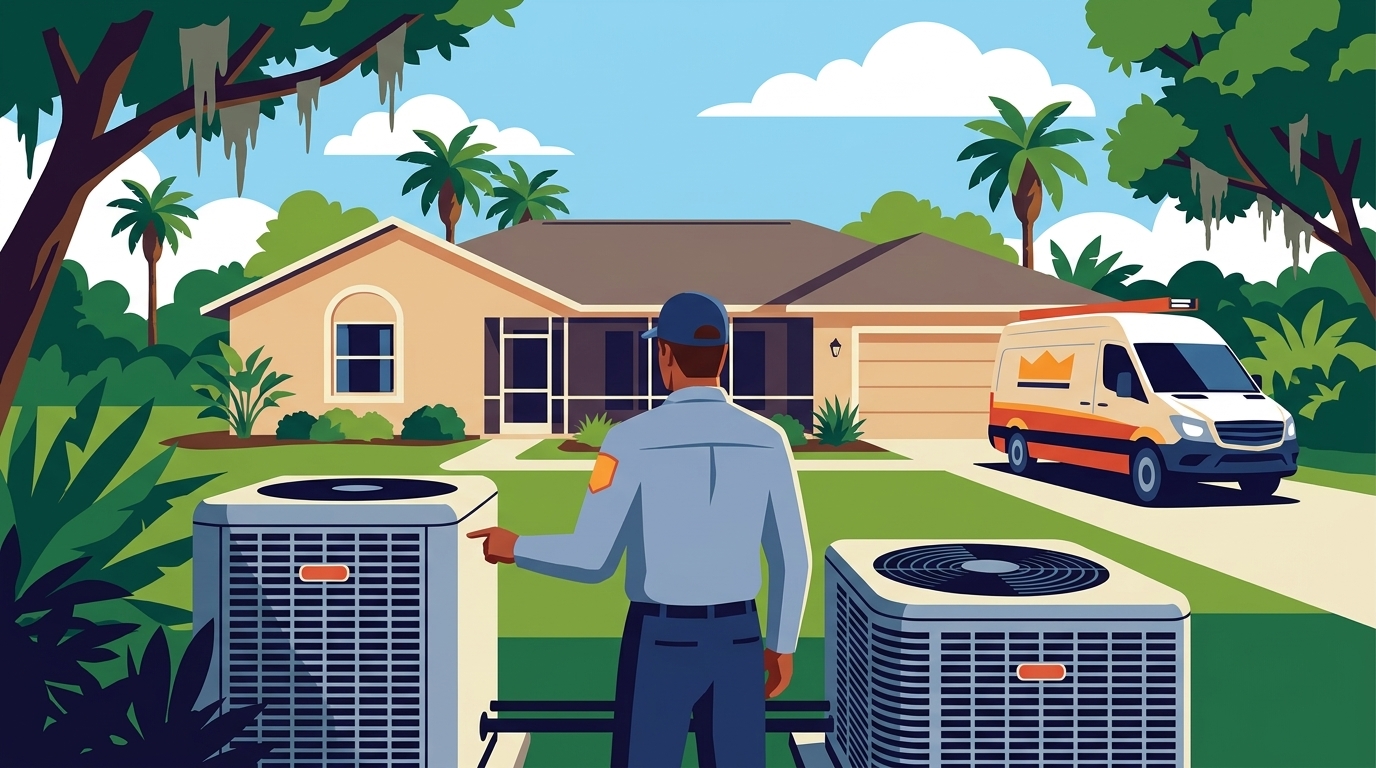
Most air conditioners in Ponte Vedra Beach, FL last 10 to 15 years — noticeably shorter than the 15 to 20 years manufacturers advertise. Coastal salt air, near-year-round humidity, and runtimes that stretch from March through October wear systems out faster than the national average. If your unit is pushing a decade, it's worth paying attention.
Here's what shapes AC lifespan on Florida's First Coast, how to tell when yours is nearing the end, and what you can do to squeeze more years out of the equipment you already own.
How Long Does an AC Unit Last in Florida?
In Florida, most residential AC systems last 10 to 15 years. That's roughly 3 to 5 years shorter than what you'd see in a milder climate like the Carolinas or the Pacific Northwest. Well-maintained units can push past 15, but they're the exception, not the rule.
The reason is simple: your AC works harder here. A system in Ohio might run five months a year. A system in Ponte Vedra Beach runs eight or nine — sometimes ten if we get a warm winter. That's nearly double the operating hours on the same equipment.
Typical Lifespan by Component
- Central AC condenser: 10–15 years in Florida (15–20 nationally)
- Heat pump: 8–12 years (they run year-round here, so wear is faster)
- Air handler / evaporator coil: 10–15 years
- Ductwork: 15–25 years, depending on humidity exposure and installation quality
- Thermostat: 10+ years for modern smart units
Why Florida's Climate Shortens AC Longevity
Three local factors chip away at your system every year: salt, humidity, and runtime. Together, they're the reason a Florida AC rarely hits the manufacturer's rated lifespan.
Coastal Salt Air
Homes east of the Intracoastal — think Sawgrass, Old Ponte Vedra, and the neighborhoods along A1A — sit close enough to the Atlantic that salt-laden air is a daily reality. Salt corrodes the aluminum fins on your condenser coil, eats at copper refrigerant lines, and shortens the life of electrical contacts inside the outdoor unit.
We see condensers within a mile of the ocean lose 3 to 5 years off their expected life if they aren't rinsed and treated regularly. Coastal-rated coil coatings help, but they don't make the problem disappear.
Humidity That Never Really Leaves
Ponte Vedra Beach averages relative humidity above 70% most of the year. Your AC isn't just cooling air — it's constantly removing moisture. That extra latent load means longer cycles, more condensate, and more strain on the compressor and blower motor.
Humidity also encourages microbial growth inside evaporator coils and drain pans, which is why we see mold issues in older systems here that you'd rarely encounter in a drier climate.
Near-Constant Runtime
Because our cooling season stretches from roughly March through late October — and heat pumps often run in mild winter months too — a Florida AC accumulates operating hours at nearly twice the rate of a system up north. Every compressor start, every blower rotation, every relay click adds up.
Signs Your AC Is Nearing the End
You don't need a technician to tell you an aging system is struggling. The signs show up in your comfort, your power bill, and the noises coming from the closet.
- Rising electric bills without a change in usage — a sign efficiency is dropping
- Rooms that won't cool evenly, especially upstairs bedrooms in the afternoon
- Sticky, humid air even when the thermostat says the target temp is met
- Frequent repairs — capacitors, contactors, or refrigerant leaks piling up
- Loud startups or rattling from the outdoor unit
- Ice on the refrigerant lines or standing water near the air handler
- Age past 10 years combined with any of the above
A useful rule of thumb: if a single repair costs more than half the price of a new system, and the unit is over 10 years old, replacement usually makes more financial sense than another patch.
When to Replace an AC Unit in Florida
The right time to replace is before your system fails during peak season. In Ponte Vedra Beach, that means making the decision in late fall or early spring — not in July when every HVAC company in St. Johns County is booked out two weeks.
Key Replacement Triggers
- Age of 12+ years with declining performance
- R-22 refrigerant systems — production stopped in 2026, and remaining stock is expensive when leaks happen
- Repair costs exceeding 50% of replacement value
- Efficiency below current standards — Florida now requires a minimum SEER2 of 14.3 for new installations in the southeast region, and older 10-13 SEER units cost noticeably more to run
- Recurring humidity problems a properly sized modern system would resolve
How to Extend the Life of Your AC in Ponte Vedra Beach
You can realistically add 2 to 4 years to a Florida AC with consistent maintenance. It's the single highest-return investment you can make in the equipment.
- Twice-yearly tune-ups — spring before humidity peaks, and fall after the cooling season winds down
- Rinse the condenser with fresh water monthly if you're within a couple miles of the coast
- Change filters every 30–60 days, more often if you have pets
- Keep the condensate drain clear — a clogged drain is the #1 cause of emergency calls we see in August
- Consider a coastal coil coating at installation if you're near the ocean
- Watch your thermostat setpoint — running 68°F all summer is hard on the compressor
King of Home Solutions has seen firsthand that homeowners who commit to seasonal maintenance regularly get 13 to 15 years out of systems their neighbors replace at 9 or 10. The math is that straightforward.
Frequently Asked Questions
How long does an AC unit last in Florida on average?
Most Florida AC units last 10 to 15 years, compared to 15 to 20 years in cooler, drier climates. Coastal locations like Ponte Vedra Beach often trend toward the lower end because of salt exposure and long cooling seasons.
Does salt air really shorten AC life that much?
Yes. Homes within a mile of the Atlantic can lose 3 to 5 years off condenser lifespan from corrosion alone. Regular fresh-water rinses and coil coatings help, but they don't fully eliminate the wear.
Should I repair or replace an AC that's 12 years old?
If the repair costs more than half the price of a new system, replacement is almost always the better choice at 12+ years. Newer systems also run 30–40% more efficiently, which shows up quickly on your summer power bill.
What's the best time of year to replace an AC in Ponte Vedra Beach?
Late fall through early spring. Scheduling is easier, prices are more competitive, and you're not gambling on your old system surviving one more Florida summer.
Do heat pumps last as long as traditional AC units here?
Generally no. Because heat pumps handle both heating and cooling, they accumulate more runtime, typically lasting 8 to 12 years in Florida versus 10 to 15 for a straight AC paired with a gas or electric furnace.
The Bottom Line
If your AC is a decade old and you live in Ponte Vedra Beach, it's already outlasted many of its peers. Planning ahead — rather than reacting to a mid-August breakdown — is what separates a smooth transition from an expensive emergency.
Homeowners in Ponte Vedra Beach, FL who want an honest assessment of where their system stands can reach King of Home Solutions at kingofhomesolutions.com for a free estimate. A 4.9★ rating across dozens of Google reviews reflects the professionalism and communication local homeowners consistently mention — one recent reviewer described the team as "professional, knowledgeable, and very thorough," which is the standard we aim for on every visit.