Annual Home Maintenance Checklist for Jacksonville, FL
A Jacksonville, FL homeowner's yearly checklist covering HVAC, plumbing, and garage door maintenance tuned to humidity, salt air, and storm season.
Every Jacksonville, FL home needs an annual maintenance rhythm that covers three systems most homeowners forget until they fail: HVAC, plumbing, and the garage door. At minimum, schedule two HVAC tune-ups (spring and fall), a whole-house plumbing inspection once a year, and a garage door safety check every 12 months — with extra attention paid before hurricane season starts on June 1 and after any named storm passes through.
That's the short answer. The longer answer — the one shaped by our salt air, our humidity, and the way St. Johns River storms roll in — is what follows. This checklist is built for the way houses actually age in Duval County, from Riverside bungalows to newer builds out in Nocatee.
What should a Jacksonville, FL homeowner service every year?
Every year, a Jacksonville, FL homeowner should service the HVAC system twice (spring and fall tune-ups), inspect plumbing supply lines and water heater once, test the garage door's safety features and lubricate hardware, clear gutters ahead of hurricane season, and check attic insulation and ductwork for humidity damage. These five categories cover roughly 90% of preventable home repair calls.
Jacksonville sits in a humid subtropical climate zone with average summer humidity above 75%, according to the National Weather Service Jacksonville office. That single fact drives almost every maintenance priority on this list. Moisture is the enemy — of coils, of drywall, of wood framing, of galvanized fittings, and of garage door springs exposed to salt-laden air along the Intracoastal.
At King of Home Solutions, we build our annual service plans around that reality. The checklist below is the same framework our technicians use when they walk a home for the first time.
How should you schedule HVAC maintenance in Jacksonville, FL?
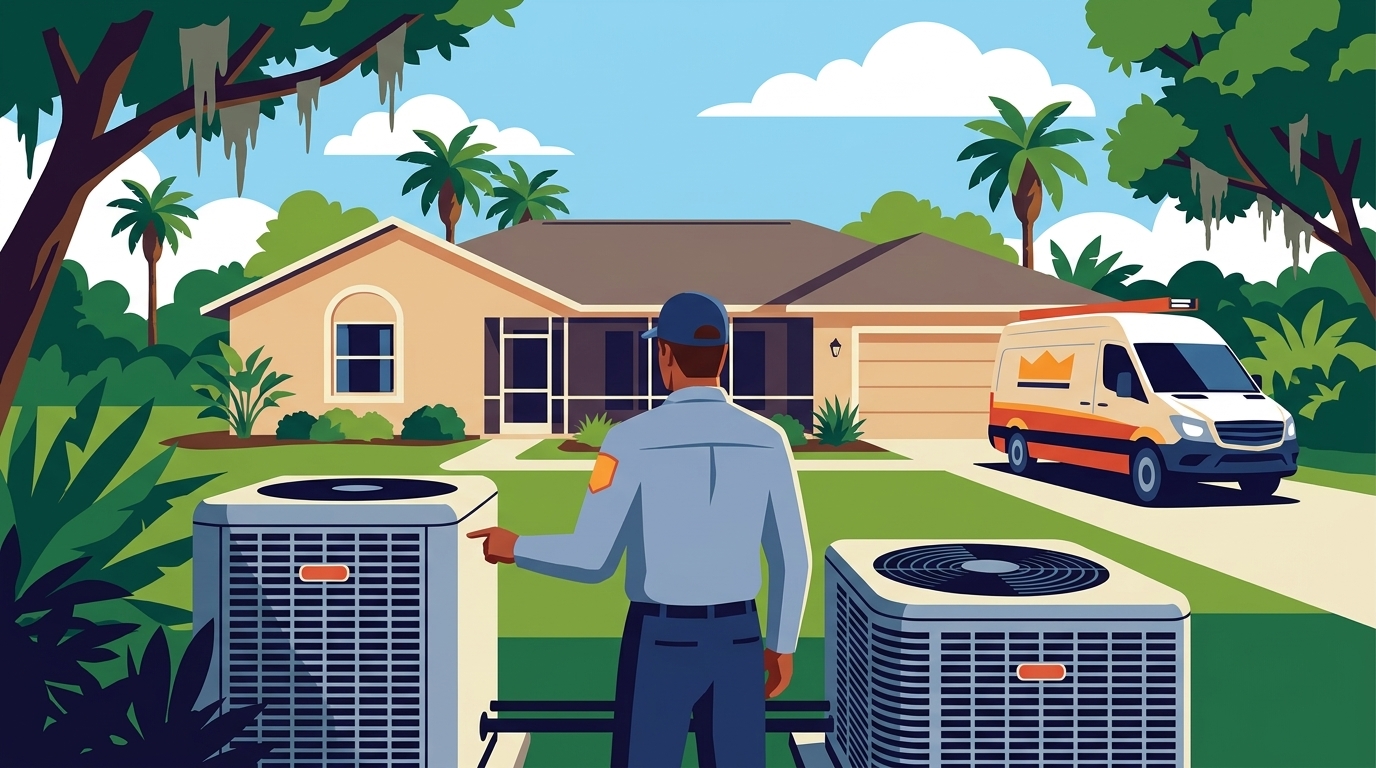
Schedule HVAC maintenance twice a year in Jacksonville, FL: once in March before cooling demand ramps up, and once in October before the first cool nights. Each visit should include coil cleaning, refrigerant check, condensate line flush, blower inspection, and thermostat calibration. Systems that run nine or more months a year — as most Jacksonville units do — wear faster than the national average.
Spring HVAC checklist (March–April)
- Flush the condensate drain line — clogged lines are the #1 cause of ceiling water damage in Jacksonville homes during summer.
- Clean the outdoor condenser coil (salt residue is a real issue east of I-95 and anywhere near the beaches).
- Check refrigerant charge and inspect for leaks.
- Replace the air filter and inspect ductwork for sweating or mold growth.
- Test capacitors — they fail faster in extreme heat.
Fall HVAC checklist (October–November)
- Inspect heat strips or heat pump reversing valve before the first cold snap.
- Check thermostat programming for the shoulder season.
- Verify emergency heat function — Jacksonville sees occasional freeze events, and the January 2026 hard freeze caught a lot of homeowners off guard.
- Inspect attic ductwork for rodent damage or insulation displacement.
One recent reviewer described our HVAC team as "professional, knowledgeable, and very thorough throughout the entire process" — that's the standard a proper tune-up should meet, whether you use us or someone else.
What plumbing maintenance do Jacksonville, FL homes need each year?
Jacksonville, FL homes need an annual plumbing inspection covering the water heater (flush sediment, test pressure relief valve, check anode rod), supply lines under every sink, toilet fill valves, the main shutoff, and any exterior hose bibs. Hard water from the Floridan Aquifer accelerates scale buildup, and older homes in neighborhoods like Riverside, Avondale, and San Marco often still have galvanized pipe worth inspecting.
A few specifics worth flagging:
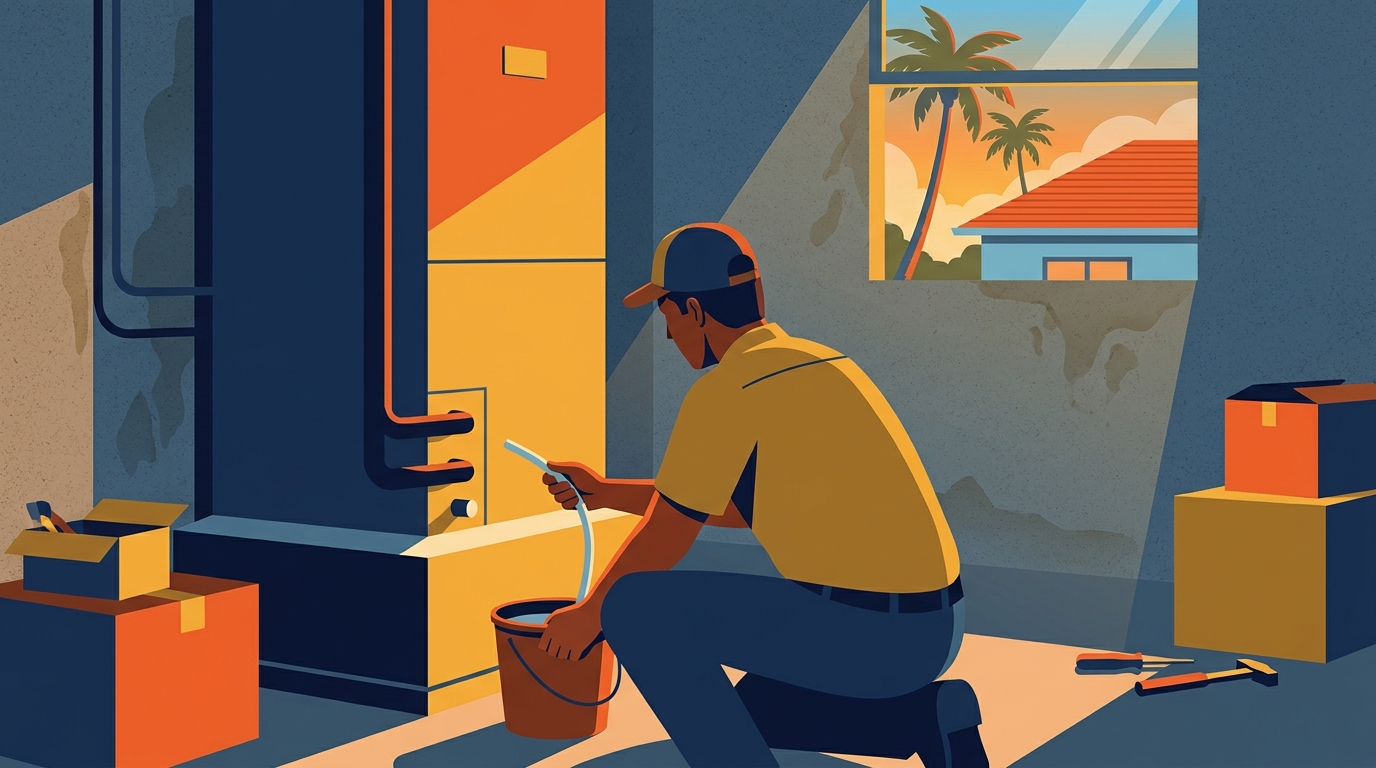
- Water heater flush: Sediment builds up faster here because of mineral content. Tank heaters should be flushed annually; tankless units need a vinegar descale roughly every 12 months.
- Pressure regulator check: JEA's water pressure can run high in some service areas. If your incoming pressure exceeds 80 PSI, you're stressing every fixture and appliance in the house.
- Pre-storm plumbing prep: Before hurricane season, know where your main shutoff is and test it. If it's seized (common in homes over 20 years old), replace it.
- Backflow preventer testing: If you have irrigation on city water, Florida requires annual backflow testing by a certified tester.
How do you maintain a garage door in Jacksonville, FL's climate?
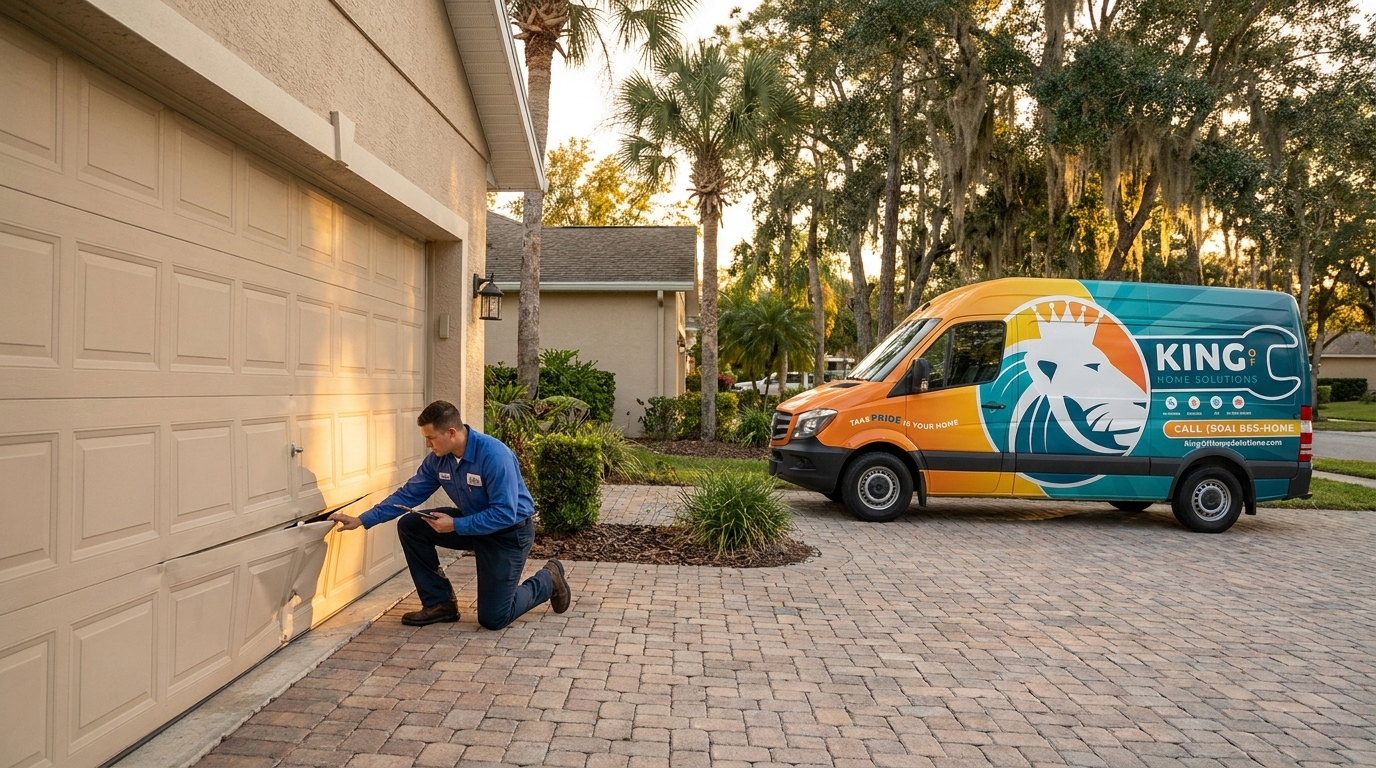
Maintain a Jacksonville, FL garage door annually by lubricating springs, hinges, and rollers with a silicone-based lubricant (not WD-40), testing the auto-reverse safety feature, inspecting cables for salt corrosion, balancing the door manually, and checking weather seals. Salt air from the St. Johns River and Atlantic accelerates spring fatigue — most torsion springs in this market last 7–10 years rather than the 15-year national average.
Homeowners east of the Intracoastal — Atlantic Beach, Neptune Beach, Jacksonville Beach — should inspect more aggressively. Salt spray reaches inland further than most people realize, and we regularly see corrosion on garage hardware two or three miles west of the shoreline.
A quick annual garage door check:
- Pull the emergency release with the door closed. Lift manually. It should move smoothly and stay put around waist height.
- Place a 2x4 flat on the ground in the door's path and close it. It should reverse on contact.
- Visually inspect springs and cables for rust, fraying, or gaps in the coil.
- Lubricate all moving metal-on-metal contact points.
- Check that the wall-mounted opener button is at least 5 feet off the ground (a federal safety requirement).
One customer who had us install a new garage door wrote that "the quality of craftsmanship was outstanding" — the same attention applies to annual service work.
What's the ideal annual maintenance schedule by month?
The ideal annual home maintenance schedule for a Jacksonville, FL homeowner spreads tasks across the calendar so nothing bunches up before hurricane season or the summer heat peak. Front-loading HVAC and plumbing work into spring, saving cosmetic and exterior tasks for fall, and reserving May for storm prep produces the smoothest year.
| Month | Primary Task | Why This Timing |
|---|---|---|
| February | Plumbing inspection, water heater flush | Before spring rains and irrigation season |
| March | HVAC spring tune-up | Before cooling load ramps up |
| April | Garage door service, gutter cleaning | Ahead of storm season |
| May | Hurricane prep: shutters, generator, tree trimming | Season starts June 1 |
| July | Mid-summer filter change, condensate line flush | Peak humidity strain on HVAC |
| October | HVAC fall tune-up | Before first cold nights |
| November | Attic and insulation check | Post-storm inspection window |
| January | Freeze prep: pipe insulation, hose bib covers | Occasional hard freezes |
What Jacksonville-specific issues get missed most often?
The most-missed annual maintenance items in Jacksonville, FL are attic humidity control, condensate line treatment, salt-air corrosion on outdoor equipment, and pre-storm inspection of soffits and roof vents. These four issues drive a disproportionate share of expensive emergency repairs — often thousands of dollars — and all four are preventable with routine attention.
Attic humidity in particular is under-appreciated. A properly sealed and ventilated attic in Jacksonville should stay within 10–15% of outdoor humidity. When it runs higher, you get mold on the underside of roof decking, insulation compression, and duct sweating that eventually stains ceilings. If you've ever seen brown rings around your bedroom ceiling registers, that's the culprit.
Frequently asked questions
How much does annual home maintenance typically cost in Jacksonville, FL?
A full annual maintenance package covering two HVAC tune-ups, one plumbing inspection, and one garage door service typically runs $400–$700 in the Jacksonville, FL market, depending on home size and equipment count. Homes with multiple HVAC systems, tankless water heaters, or salt-air exposure often land at the higher end. Bundling services with a single provider usually saves 15–25% versus scheduling each separately.
When should Jacksonville homeowners start hurricane season prep?
Jacksonville homeowners should start hurricane season prep by May 15 at the latest. Atlantic hurricane season officially runs June 1 through November 30. Prep includes trimming trees back from the roof, testing generators, clearing gutters, securing outdoor HVAC units, and confirming your main water shutoff works. Peak storm risk for Northeast Florida typically falls between mid-August and mid-October.
Do I need permits for HVAC or plumbing work in Duval County?
Yes, most HVAC replacements, water heater replacements, and re-pipes in Duval County require permits through the City of Jacksonville Building Inspection Division. Any licensed contractor pulls these on your behalf. Work done without permits can cause problems at resale and may void manufacturer warranties. Filter changes, minor repairs, and cosmetic work generally do not require permits.
How often should I change my HVAC filter in Jacksonville?
Change your HVAC filter every 30–60 days in Jacksonville, FL, with 30 days being appropriate during peak summer humidity and pollen-heavy spring months. Homes with pets, smokers, or ongoing construction should stay on a 30-day cycle year-round. High-MERV filters (11 or above) can restrict airflow if not sized correctly, so match filter rating to your system's specifications.
What's the biggest maintenance mistake Jacksonville homeowners make?
The biggest annual maintenance mistake Jacksonville, FL homeowners make is ignoring the HVAC condensate drain line. Clogged lines cause the drain pan to overflow, damaging ceilings, drywall, and flooring — often thousands of dollars in repairs from a preventable $5 problem. Pouring a cup of distilled vinegar down the line every three months and flushing it during annual service prevents nearly all of it.
Can I do annual home maintenance myself or should I hire a pro?
Homeowners can safely handle filter changes, gutter cleaning, garage door lubrication, and visual inspections themselves. Refrigerant work, gas line service, water heater repair, and garage door spring replacement require a licensed pro — both for safety and to keep manufacturer warranties valid. A hybrid approach (DIY monthly checks plus one annual professional visit) is what most Jacksonville homes actually need.
Getting started
The point of an annual checklist isn't to turn homeownership into a second job — it's to keep small problems from turning into big ones during a Jacksonville summer or a September storm. If you'd rather have one company handle HVAC, plumbing, and garage door maintenance on a coordinated schedule, King of Home Solutions works with Jacksonville, FL homeowners across all three systems and holds a 4.9-star rating across 55 Google reviews. You can reach the team at https://kingofhomesolutions.com to set up your annual plan.