Broken Garage Door Spring Repair in Jacksonville, FL
Spring snapped mid-cycle? Learn exactly what's happening, what's safe to do, and when to call a pro in Jacksonville — plus why coastal humidity matters.
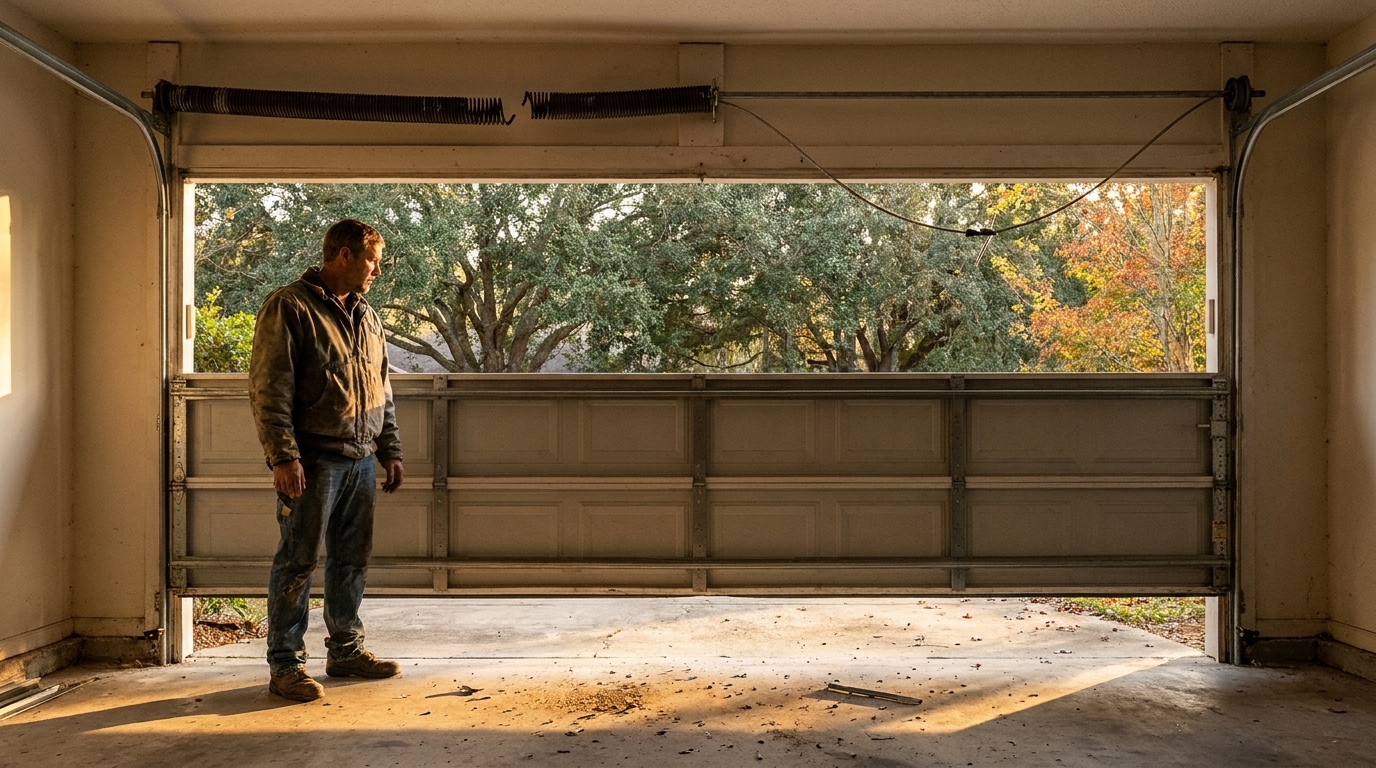
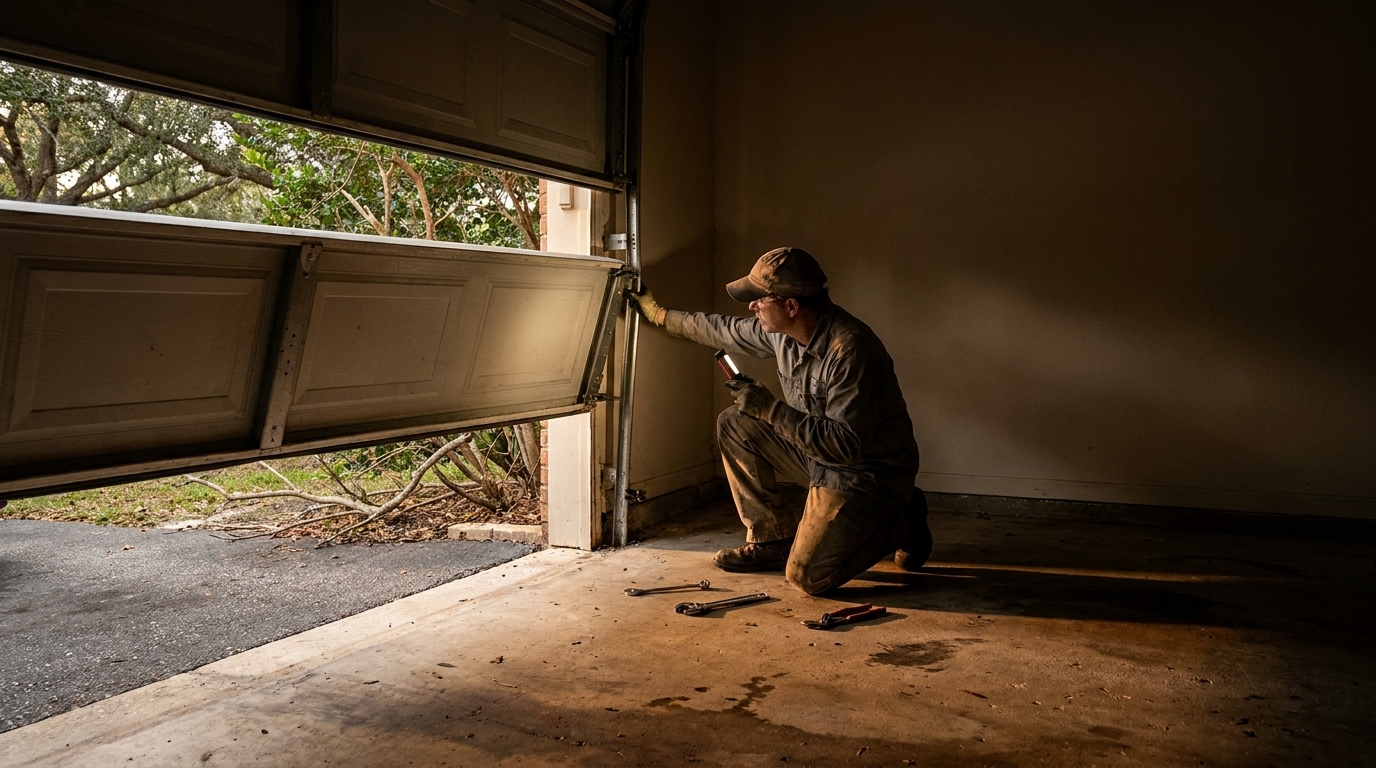
When a garage door spring breaks mid-cycle, the door loses its counterbalance and stops wherever it was — often part way up, hanging crooked, with the opener straining or refusing to move it. Do not try to force it, do not keep hitting the remote, and do not try to lift it by yourself. A qualified technician needs to replace the spring before the door is operated again.
That is the short answer. The rest of this guide explains why it happens that way, what you should and shouldn't touch while you wait, and what makes spring failures particularly common in Jacksonville homes.
Why did the spring snap in the middle of opening?
Garage door springs do most of the heavy lifting every time the door cycles, and they fail from accumulated metal fatigue — not from one bad push of a button. When they finally let go, it usually happens mid-cycle because that's when the coil is under its highest working load. You'll typically hear a loud bang or notice a visible gap in the spring above the door.
Springs are rated for a finite number of cycles. Every open-and-close uses one. Add in Jacksonville's coastal humidity and salt-tinged air drifting inland from nearby waterways and the Atlantic, and the steel inside those coils corrodes a little faster than it would in a dry climate. Over years, that pits the metal and shortens the spring's working life.
Is it safe to use the opener or lift the door myself?
No. With a broken spring, the door can become too heavy for the opener to move, and an unbalanced door can drop rapidly without warning. Federal safety guidance (16 CFR § 1211.16) warns that a weak or broken spring may allow an open door to fall, causing serious injury or death, and requires that springs and related hardware be repaired by a qualified service person.
Here is what that means in practical terms for your morning:
- Stop pressing the wall button or remote. The opener wasn't built to hoist the full weight of the door, and you can burn out the motor or bend the top panel trying.
- Do not pull the red emergency release cord while the door is partway up. Federal guidance advises using the emergency release only when the door is closed, if possible — pulling it on a raised door can let it crash down.
- Keep kids, pets, and cars out from under the door until it has been secured.
How heavy is a garage door without its spring?
Heavier than most homeowners expect. Without the counterbalance of a functioning spring, a single-car steel door typically runs 100 to 150 pounds, and a double-car door can reach 250 pounds or more — especially if it is insulated or made of solid wood. That is the dead weight your opener (and your back) would be fighting.
| Door size | Approx. weight without springs |
|---|---|
| Single-car, 8 ft x 7 ft steel | 100–130 lbs |
| Single-car, 9 ft x 7 ft | 120–150 lbs |
| Double-car, 16 ft x 7 ft | 180–220 lbs |
| Double-car, 16 ft x 8 ft | 200–250 lbs |
If your car is trapped inside and you absolutely must get the door up before the technician arrives, it takes two adults — one on each side of the door — lifting with their legs, not their backs. Once the door is up, C-clamps or locking pliers should be clamped onto each track just below the bottom rollers to hold it in place. Do not close it and try to reopen it; a broken spring door should be opened once, propped, and left alone until it's repaired.
What does a mid-cycle failure actually look and sound like?
Most homeowners describe it the same way: a sharp bang like a firecracker from inside the garage, then the door either stalls part way or refuses to budge the next time they hit the remote. The giveaway is a visible gap in the coil of the spring mounted above the door — the two halves have separated, often by an inch or more.
Other symptoms worth knowing:
- The opener hums or strains but the door doesn't move, or it jerks a few inches and stops.
- The door looks crooked or uneven on the tracks. A door that has come off its tracks will usually jam and look visibly tilted — forcing it from here causes more damage.
- You see a loose cable dangling. Cables often fail alongside the spring and are under their own tension.
Why do spring failures cluster in certain Jacksonville seasons?
Thermal cycling plays a real role. Jacksonville's seasonal temperature swings put steel coils through repeated expansion-and-contraction cycles while they are already carrying significant residual tension. Add high humidity, and corrosion accelerates in the micro-cracks that fatigue has already opened.
That's why we see call volume spike in Jacksonville in the shoulder seasons — late winter into spring, and again as summer humidity peaks. If your door is on its original springs, a seasonal inspection before hurricane season is a smart move. A door that fails during a storm-prep rush is a door you can't close against incoming weather.
What should you do in the next hour?
Call a qualified garage door technician and leave the door alone until they get there. That's genuinely it. A broken spring is not a DIY job — the stored tension in a replacement spring is enormous, and homeowner injuries from attempted spring replacements are a well-documented category of ER visits.
When you call, be ready to share: single-car or double-car door, whether it's stuck open or stuck closed, whether a car is trapped inside, and whether you heard a bang. That lets the dispatcher send a technician with the right spring size on the truck instead of making two trips. King of Home Solutions handles broken-spring repairs across Jacksonville along with the related cable, roller, and opener issues that often surface at the same time.
5 starsKing of Home Solutions came through for us when we needed it most. Our AC went down, and they had it diagnosed and fixed quickly with zero hassle. On top of that, they were able to jump in and handle a plumbing issue for us on short notice, which saved us a lot of stress.Professional, responsive, and efficient from start to finish. Highly recommend them if you need reliable work done right the first time.
Frequently asked questions
Can I just replace one spring if my door has two?
Technicians almost always replace both springs at the same time, even if only one has broken. Both springs were installed on the same day and have gone through the same number of cycles, so the surviving spring is close to the end of its life. Replacing only the broken one usually means a second service call within months, which costs more than doing both at once.
Will my homeowner's insurance cover a broken garage door spring?
Typically no. Standard homeowner policies in Florida treat spring failure as normal wear and tear, which is excluded from coverage. Insurance generally only comes into play if the spring broke because of a covered event — storm damage, a tree impact, or a vehicle hitting the door. For an everyday fatigue failure, plan on paying for the repair out of pocket.
How long does a professional spring replacement usually take?
Most straightforward spring replacements on a residential door take under an hour once the technician is on site, assuming the right spring is on the truck. Jobs that run longer usually involve replacing cables and rollers at the same time, converting an older extension-spring setup to torsion springs, or dealing with a door that came off its tracks when the spring broke.
Is it okay to leave the door stuck open overnight?
It isn't ideal. An open garage is a security and weather exposure risk, and in Jacksonville's humidity it also invites pests. If the door is stuck part way up and the repair can't happen until the next day, two adults can lift it fully open and secure it with C-clamps on both tracks below the bottom rollers, then shut the interior door into the house and arm any alarm sensors you have.
How often should Jacksonville homeowners have their springs inspected?
An annual inspection is a reasonable baseline, and homes within a few miles of the coast benefit from a check every six months because of accelerated corrosion. The technician looks for coil gaps, rust pitting, cable fraying, and balance — a properly balanced door should stay in place when manually raised halfway with the opener disengaged. Catching a tired spring early is far cheaper than catching it mid-cycle.
Can a broken spring damage the opener itself?
Yes, and this is one of the main reasons technicians say to stop pressing the remote. Garage door openers are sized to overcome a few pounds of imbalance, not to lift 150 to 250 pounds of dead door weight. Repeatedly firing the opener against a broken spring can strip the plastic drive gear, bend the rail, or burn out the motor — turning a spring repair into a spring-plus-opener repair.
Where to go from here
A spring that snaps mid-cycle is loud, inconvenient, and genuinely dangerous — but it's also one of the most routine repairs a garage door technician handles. The right move is almost always the simplest one: step back from the door, keep people and vehicles clear, and get a qualified pro on the schedule.
Readers in Jacksonville who want this handled professionally can reach King of Home Solutions at (904) 865-4663 or https://kingofhomesolutions.com to get a technician dispatched and the door back in working order.