Garage Door Grinding Noise in Jacksonville, FL: Causes
Grinding garage door in Jacksonville? Learn what's causing the noise — rollers, opener gears, springs — and when to call a pro before it fails completely.
If your garage door is making a grinding noise in Jacksonville, FL, the most common culprits are worn or dry rollers, a stripped nylon gear inside the opener, misaligned tracks, or a failing torsion spring and bearing plate. Grinding is almost always a warning sign — the door is still moving, but a part is wearing against metal it shouldn't be touching. Catching it now is dramatically cheaper than catching it after the door quits mid-cycle.
At King of Home Solutions here in Jacksonville, we handle this call constantly, and the pattern is predictable: a homeowner hears a new noise for a week or two, ignores it, and then calls when the door is stuck halfway open with the car trapped inside. This guide walks you through what's actually grinding, why Jacksonville's climate makes it worse, and how to tell a quick fix from a safety-critical repair.
What does a grinding garage door actually mean?
Grinding means metal is rubbing against metal — or a plastic gear is chewing itself apart — somewhere in the system. Grinding is one of the most common issues homeowners put off, and that delay is what turns a minor roller problem into a far more costly cable or spring repair. The sound tells you something is already failing; the door hasn't broken yet, but it is on the way.
King of Home Solutions offers repair for noisy, stuck, damaged, or off-track doors, including broken springs, worn cables, and opener issues, so the first step is always diagnosis — pinpointing which component is the source before anyone starts replacing parts.
Is the grinding coming from the opener or the door itself?
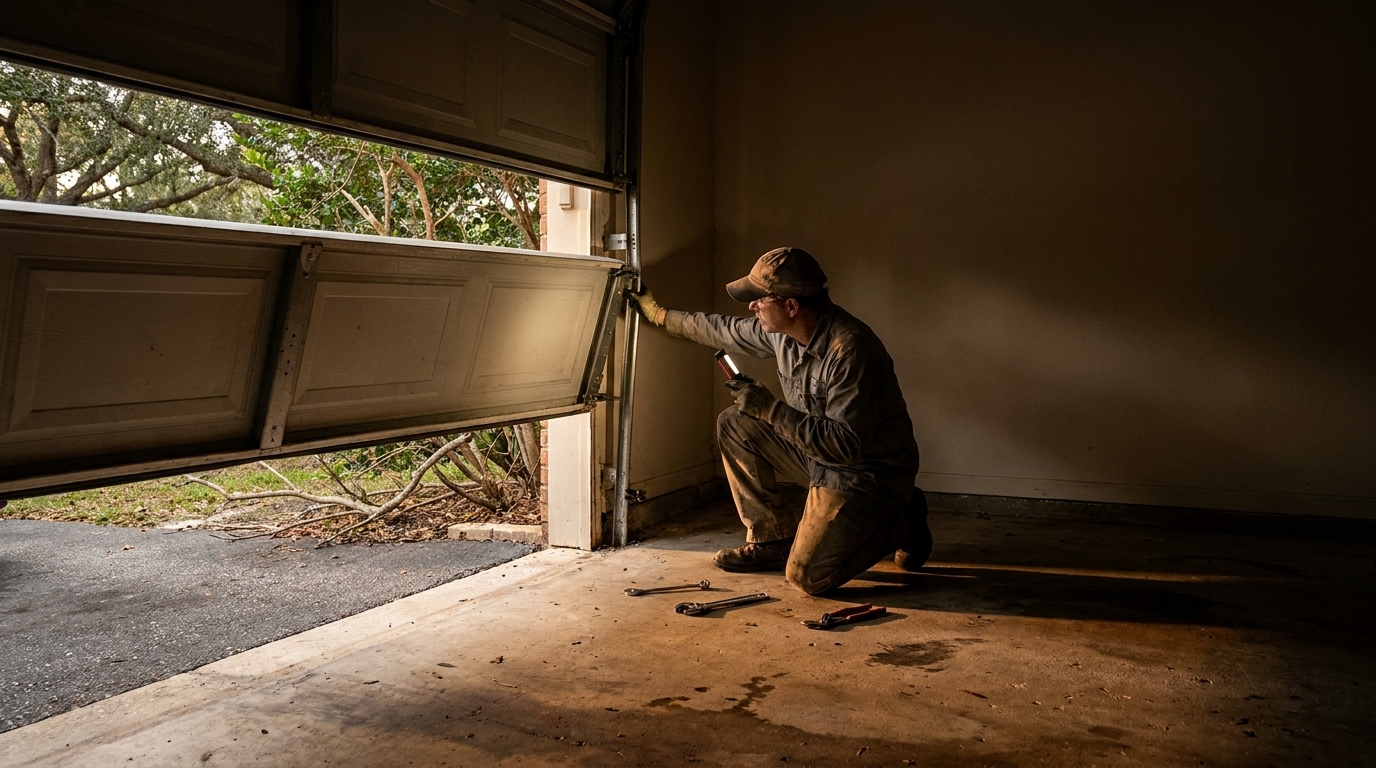
Stand inside the garage during a cycle and listen. If the grinding is clearly inside the plastic motor housing on the ceiling and the door barely moves (or doesn't move at all), it's almost certainly a stripped main drive gear inside the opener. If the grinding travels up the tracks with the door, it's a roller, hinge, spring, or track issue.
Most modern garage door openers use a sacrificial white nylon helical gear designed to protect the motor — meaning the gear is engineered to fail first so the expensive motor survives. A chewed-up nylon gear is a repair, not a reason to replace the whole opener.
Why do rollers cause so many grinding noises?
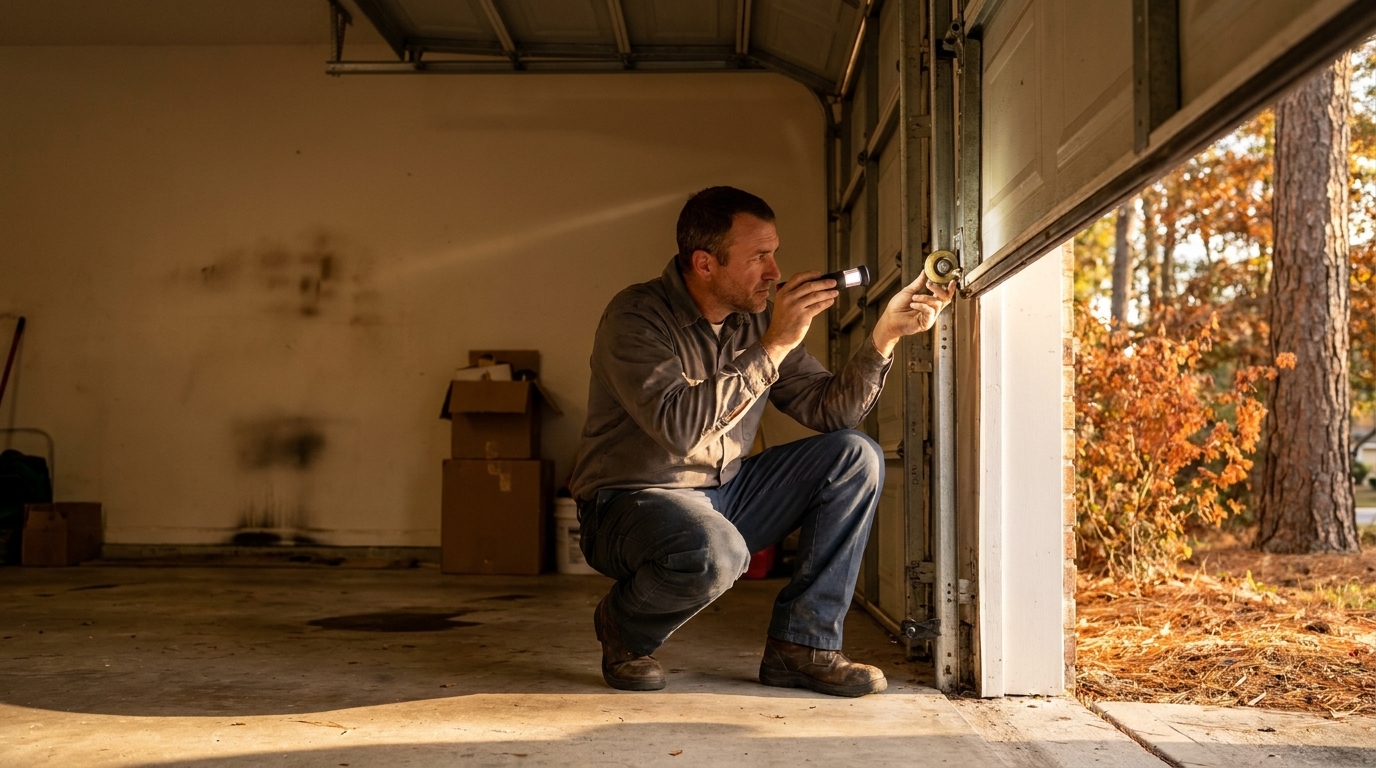
Rollers are the single most common grinding source because they do the most work. A typical garage door opens and closes more than 1,000 times per year, and most doors carry 10 to 12 rollers, each spinning inside a track every cycle. When the bearings dry out or the sleeve wears, the roller stops rolling and starts dragging — producing a steel-on-steel grind as the door moves.
Rollers should be replaced as a complete set so they wear evenly, not one at a time. Mixing a fresh roller with eleven worn ones just means the new one carries uneven load and fails sooner.
Could it be the springs or cables?
A grinding or scraping noise paired with a door that feels unusually heavy, lifts crookedly, or slams down fast often points to a torsion spring, bearing plate, or cable issue. Note the distinction: a broken spring makes a loud bang that sounds like a car backfiring — that's a different symptom. Grinding from the spring assembly usually means a dry bearing plate or a cable fraying as it slips off the drum.
Torsion and extension springs are under extreme tension and are not a DIY repair. This is the category where homeowners get seriously injured trying to save a service call. If you suspect a spring or cable, stop using the door and have a qualified technician look at it.
Why does Jacksonville's climate make this worse?
Jacksonville's coastal, humid air accelerates rust and corrosion on every metal part of your door — rollers, springs, hinges, tracks, and bearing plates. Homes in humid or coastal areas experience accelerated wear on metal garage door parts due to salt and moisture, and Jacksonville checks both boxes. Neighborhoods closer to the beaches and the water — think Atlantic Beach, Neptune Beach, Mayport — see this fastest, but even inland areas like Mandarin, Riverside, and the Southside aren't immune.
Hurricane season adds another layer. After a storm, debris impact and wind pressure can knock tracks slightly out of alignment, and that small deviation shows up weeks later as a grinding noise. A post-storm inspection catches these issues before they become structural.
How often should a Jacksonville garage door be lubricated and inspected?
Lubrication is generally recommended every six months for typical households, but moving parts should be lubricated every three months with heavy use or in specific climates — and Jacksonville's salt-and-humidity combination qualifies. Lubricating garage door parts every six to twelve months prevents nearly all squealing noise, and quarterly inspections are the published standard for doors that get heavy use.
Lubrication acts as a protective barrier against moisture and environmental contaminants, which matters more here than in dry climates. Two rules to remember: WD-40 is not a lubricant and should not be used on garage doors, and tracks should not be lubricated because lubricant attracts dirt. Use a garage-door-specific silicone or lithium spray on rollers, hinges, and springs — not the tracks.
Grinding noise diagnosis in Jacksonville, FL: quick reference
| What you hear | Likely cause | Urgency |
|---|---|---|
| Grinding from motor housing, door won't move | Stripped nylon drive gear in opener | Schedule within days |
| Grinding that travels with the door | Worn rollers (replace full set of 10–12) | Schedule within 1–2 weeks |
| Grinding plus heavy, uneven lift | Spring, cable, or bearing plate | Stop using the door, call a pro |
| Grinding at specific point in travel | Misaligned or dented track, loose hardware | Schedule within 1–2 weeks |
| Loud bang, then door is heavy | Broken torsion spring | Stop immediately, call a pro |
What do grinding-noise repairs typically cost in Jacksonville?
No verified Jacksonville-specific price survey exists, so these are national benchmarks and your actual quote will depend on the diagnosed fault. Jacksonville's size means technician travel time can also affect the final cost depending on your neighborhood.
Any written estimate should spell out the diagnosed fault, parts, labor, any trip or after-hours fee, and whether additional worn parts are included — not just a lump sum.
What one Jacksonville homeowner's experience looks like
I'm so glad that I called King of Home Solutions for my garage door! I had it fixed by another company not even a year ago, and they didn't put the care into the work to make sure that it was a lasting repair. That was not the case with King of Home Solutions; they came out the same day I called and even price-matched another garage door repair quote. I will be calling them for all my home needs moving forward! Thank you, Brian, for your amazing customer service, and to Gail in the office!
Same-day response and a lasting repair are the two things that matter most when a door is grinding and you don't know if it'll open tomorrow morning.
Frequently asked questions
Is it safe to keep using my garage door if it's grinding?
If the grinding is mild and the door still operates smoothly, it's usually safe for a short period while you schedule service. If the door moves unevenly, feels heavy, slips, or the grinding is coming from the opener and the door barely moves, stop using it. Continuing to run a failing door can snap a cable or spring, and both are dangerous under tension.
Can I just spray lubricant on everything and make the grinding stop?
Lubrication fixes squealing from dry rollers, hinges, and springs, and it's worth trying first. But do not spray the tracks — lubricant attracts dirt and makes things worse. And skip WD-40, which is a solvent, not a lubricant. If the grinding persists after proper lubrication, the issue is a worn part (roller bearing, nylon gear, cable, spring) that lubricant can't fix.
How do I know if my opener gear is stripped?
Press the wall button. If the motor runs and grinds but the door doesn't move — or moves only an inch or two before the motor keeps whirring — the main drive gear inside the opener is almost certainly stripped. Most modern openers use a sacrificial nylon helical gear specifically so this part fails before the motor does. It's a common, relatively affordable repair.
Why do my rollers wear out faster in Jacksonville than they would elsewhere?
Jacksonville's humidity and coastal salt air corrode metal roller bearings and sleeves faster than drier inland climates. Combined with 1,000-plus annual cycles on a typical door, bearings dry out, rust, and seize. Homes closer to the ocean see the fastest wear, which is why maintenance intervals as tight as every three months are reasonable for exposed or heavily used doors here.
Do I need a permit to repair a grinding garage door in Jacksonville?
Minor repairs such as lubrication, roller replacement, or hardware tightening generally do not require a permit, but Florida's building-code framework does require replacement garage doors to meet wind-load requirements, and a permit is typically required for installing a new door. Confirm the current rules with your local permitting office for your specific scope of work.
Should I replace one worn roller or all of them?
Replace all of them. Most garage doors carry 10 to 12 rollers, and they should be replaced together so they wear evenly. Swapping just the noisy one means the new roller carries uneven load against eleven worn neighbors and fails prematurely. A full set replacement is also faster per-roller for a technician, which usually makes it the better value.
The bottom line
A grinding garage door is your door telling you something is already failing — not a quirk to tune out. The fix is usually straightforward (rollers, a nylon gear, lubrication, hardware tightening), but the diagnosis matters, and spring or cable work is strictly for qualified technicians. In Jacksonville's humid, salt-air climate, acting on grinding noises early is the difference between a maintenance call and an emergency one.
Readers in Jacksonville, FL who want this diagnosed and handled professionally can reach King of Home Solutions at (904) 865-4663 or https://kingofhomesolutions.com to get started.