Garage Door Maintenance Checklist in Ponte Vedra, FL
A homeowner's seasonal garage door maintenance checklist for Ponte Vedra, FL — spot wear early, avoid costly repairs, and keep your door running smoothly.
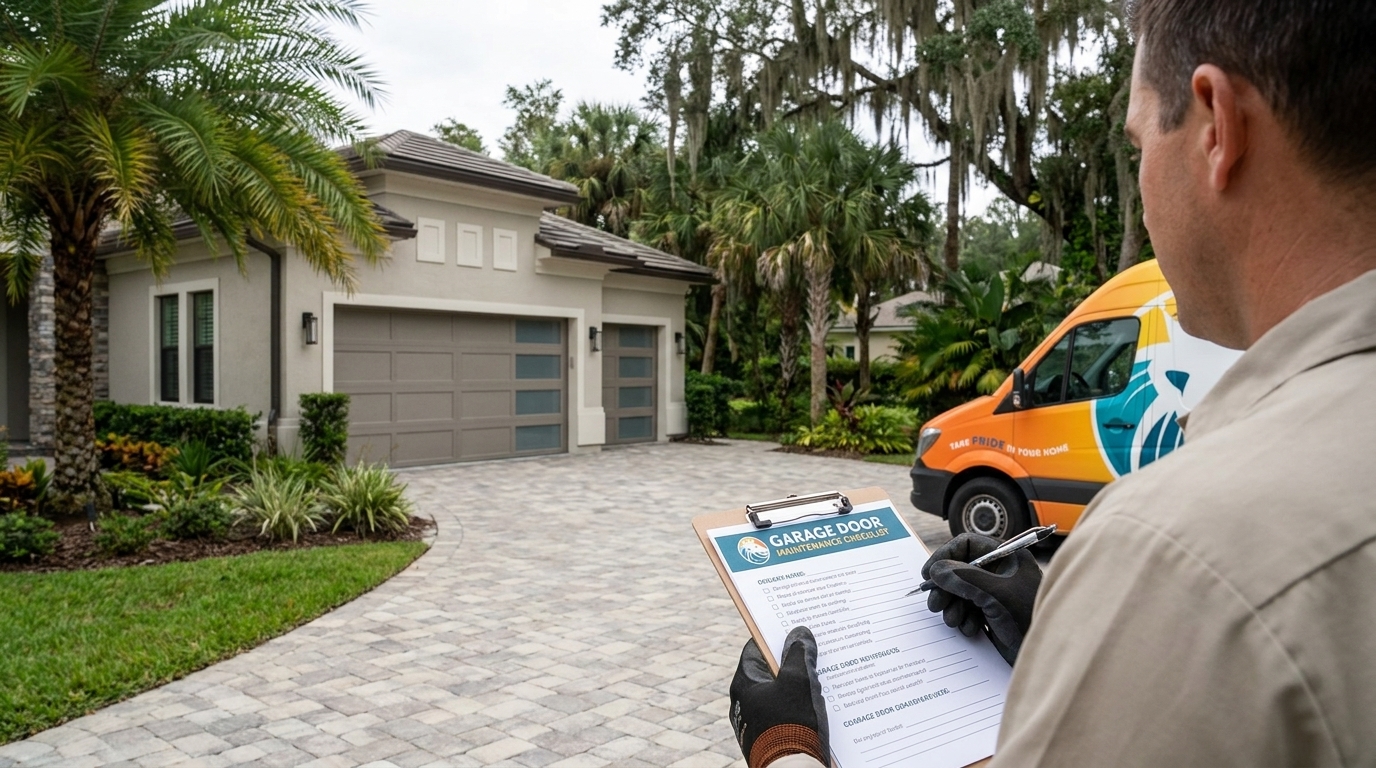
The fastest way to avoid a $600 garage door repair is to spend 30 minutes on maintenance twice a year. A garage door is the largest moving part of your home — hundreds of pounds cycling up and down thousands of times a year — and in Ponte Vedra's salt air and summer humidity, small issues become expensive ones faster than most homeowners expect.
This checklist walks you through exactly what to inspect, when to inspect it, and which problems mean it's time to call a professional. Follow it, and you'll dramatically reduce the odds of a broken spring, snapped cable, or dead opener catching you off guard.
Why Garage Door Preventive Maintenance Matters in Ponte Vedra
Coastal Northeast Florida is uniquely tough on garage doors. Salt-laden air from the Atlantic, high humidity most of the year, and the freeze-thaw threats during winter cold snaps all accelerate corrosion on springs, hinges, rollers, and hardware.
Homes in neighborhoods like Sawgrass, Old Ponte Vedra, and Nocatee also see wind-driven rain and hurricane-season pressure changes that stress door panels and tracks. Florida's building code requires wind-rated garage doors in coastal zones like ours, and a poorly maintained door can lose its wind-load integrity long before you'd notice a cosmetic problem.
Preventive maintenance keeps the door safe, quiet, and code-compliant — and it extends the life of every component by years.
Your Seasonal Garage Door Maintenance Schedule for 2026
We recommend a two-tier schedule: a quick monthly visual check, and a deeper inspection twice a year — ideally in spring (before hurricane season) and fall (after peak humidity).
Monthly (5 minutes)
- Watch and listen as the door opens and closes. Note any grinding, popping, or jerky movement.
- Look at the springs, cables, and rollers for visible rust, fraying, or gaps.
- Test the auto-reverse safety feature by placing a roll of paper towels in the door's path.
- Test the photo-eye sensors by waving an object across the beam while the door closes.
Twice a year (30–45 minutes)
- Tighten all hardware — hinges, brackets, and track bolts.
- Lubricate rollers, hinges, springs, and the opener chain or screw with a garage-door-specific lubricant (not WD-40).
- Inspect and clean the tracks.
- Check the bottom weather seal for cracks or gaps.
- Test the door's balance by disconnecting the opener and lifting manually.
- Inspect springs and cables for wear.
The Full Garage Door Maintenance Checklist
1. Inspect and Tighten Hardware
Vibration from daily use loosens bolts and brackets over time. Grab a socket wrench and snug up every visible fastener on the door and track — but don't overtighten, which can strip holes in the metal.
2. Check the Springs
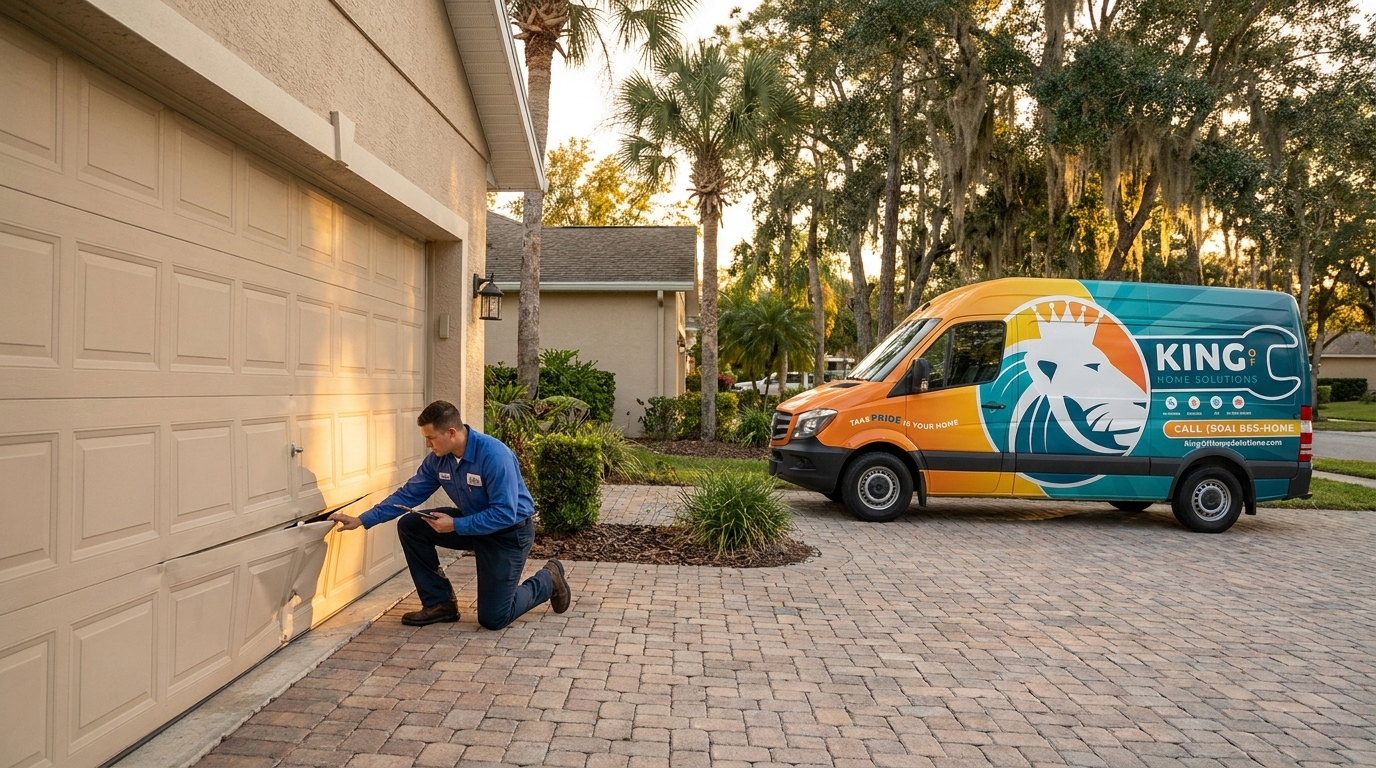
Torsion springs (mounted above the door) and extension springs (running along the tracks) do the heavy lifting. Look for gaps in the coils, rust, or stretching. A broken spring is the single most common garage door failure — and it's not a DIY fix. If a spring looks compromised, stop using the door and call a technician.
3. Examine Cables and Rollers
Lift cables should be smooth and intact. Frayed strands or broken wires mean the cable is close to failing. Rollers should spin freely; worn nylon or chipped steel rollers cause the door to bind and put extra load on the opener.
4. Lubricate Moving Parts
Use a lithium-based or silicone spray designed for garage doors. Apply lightly to hinges, roller bearings, springs, and the opener's rail. Skip the tracks — those should be clean, not lubricated. In Ponte Vedra's humidity, lubricating twice a year is more important than in drier climates because corrosion sets in faster.
5. Test the Door's Balance
Close the door, pull the red emergency release cord, and lift the door manually to about waist height. It should stay in place. If it drops or shoots up, the springs are out of balance — a professional adjustment is needed.
6. Test Safety Features
Federal law has required auto-reverse and photo-eye sensors on residential openers since 1993. Place a 2x4 flat on the ground where the door closes; the door should reverse on contact. Wave a broom through the photo-eye beam while closing; the door should stop and reverse. If either test fails, the opener needs service.
7. Inspect Weather Seals and Panels
The bottom seal keeps out water, pests, and salt air. Replace it if it's cracked or flattened. Check door panels for rust bubbles, dents, or delamination — coastal conditions make cosmetic damage a preview of structural damage.
8. Clean the Tracks and Photo Eyes
Wipe tracks with a dry cloth to remove debris. Clean the photo-eye lenses gently — spider webs and dust are a common cause of doors that won't close.
Signs You Should Call a Pro Instead of DIYing
Some issues are safe to handle yourself. Others aren't. Call a garage door technician if you notice:
- A broken or visibly stretched spring
- Frayed lift cables
- The door falls or slams when you release the opener
- Loud grinding from the opener motor
- The door is off-track or panels are misaligned
- Auto-reverse or photo-eye tests fail after cleaning
Torsion springs in particular store enormous energy and cause serious injuries every year when homeowners attempt DIY replacement. It's not worth it.
Frequently Asked Questions
How often should I have my garage door professionally serviced?
Once a year is the standard recommendation for most homes. In Ponte Vedra, we suggest annual professional service because salt air and humidity accelerate wear on springs and hardware compared to inland Florida homes.
What's the average lifespan of a garage door in coastal Florida?
A well-maintained residential garage door typically lasts 15–30 years, and the opener 10–15 years. Coastal exposure shortens both ranges, but consistent maintenance and prompt seal replacement can push a door to the higher end.
Can I use WD-40 to lubricate my garage door?
No — WD-40 is a solvent, not a lubricant, and it can strip existing grease. Use a lithium or silicone-based spray labeled specifically for garage doors.
What does a professional maintenance visit typically include?
A full tune-up covers hardware tightening, lubrication, spring tension check, cable and roller inspection, safety-feature testing, balance adjustment, and a detailed report on any parts nearing end of life.
Getting Help in Ponte Vedra
A thoughtful maintenance routine prevents most of the failures homeowners assume are inevitable. Spend the 30 minutes twice a year, watch and listen every month, and address small issues before they cascade — your door, opener, and wallet will all last longer.
Homeowners in Ponte Vedra, FL who'd rather have this handled by a technician can reach King of Home Solutions at https://kingofhomesolutions.com for a maintenance visit or a free estimate. The company's 4.9★ rating on Google reflects the kind of on-time, communicative service one recent reviewer summed up as "professional, on time, excellent communication and great price" — a reasonable bar to set for any contractor you invite into your home.