Garage Door Weatherstripping Replacement in St Augustine, FL
What garage door weatherstripping replacement costs in St. Augustine, FL in 2026, the signs it's failing, and when to bundle it with a tune-up.
DIY material-only costs for a bottom seal land near $50 if you're comfortable fitting it yourself. Final pricing depends on seal type (rubber, vinyl, or silicone), door width, and whether a threshold seal is added.
How much does garage door weatherstripping replacement cost in St. Augustine, FL in 2026?
These are general market estimates, not St. Augustine-specific published rates, and the final number depends on door size, seal material, and whether a threshold seal is included. Florida's 6% state sales tax plus any applicable St. Johns County surtax applies to taxable portions of the work.
What drives the price up or down
Door width is the biggest variable — a standard single door uses far less linear footage than a wide double. Material choice matters too: silicone bottom seals are usually more expensive than rubber or vinyl, according to Clopay's buyer's guide, but they hold up better to extreme heat and UV. Adding a threshold seal to the floor increases both parts and labor.
| Scope | Typical cost | What's included |
|---|---|---|
| DIY materials only (bottom seal) | ~$50 | T- or U-style rubber or vinyl seal; no labor |
| Pro bottom seal replacement | ~$150 | Parts and labor for the bottom seal |
| Pro full perimeter replacement | ~$300 | Bottom, side jambs, and top seal |
| Add-on: threshold seal | Varies | Floor-mounted seal against water and debris |
Why does St. Augustine's climate wear seals out faster?
St. Augustine garage doors sit through year-round humidity, strong coastal UV, salt-laden air, and hurricane-season wind-driven rain. That mix accelerates seal degradation compared to inland Florida or northern climates, which is why many homeowners here replace weatherstripping every few years rather than every decade.
Rubber bottom seals can stiffen and crack over time, especially under thermal stress, per Clopay's materials guidance. Vinyl is more resistant to moisture and UV and generally lasts longer in sunny conditions, while silicone stays flexible across temperature extremes and resists cracking and fading. For St. Johns County homes, vinyl is often the practical middle ground and silicone is the upgrade worth considering on sun-exposed doors.
What are the signs it's time to replace your garage door weatherstripping?
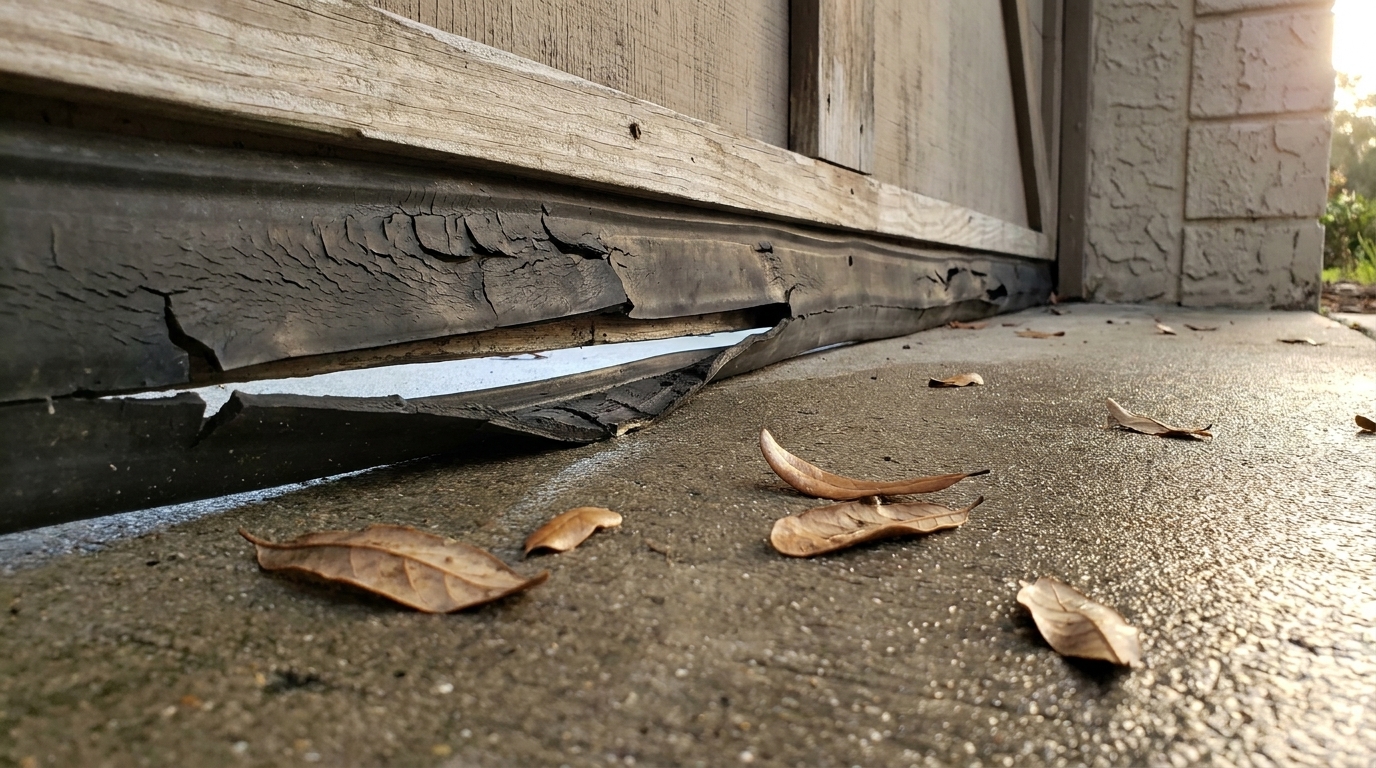
Replace the weatherstripping when you can see daylight along the bottom or sides of a closed door, when the rubber feels brittle or cracked, when water or leaves blow into the garage during storms, or when the seal no longer compresses evenly against the door and frame. Even compression is what makes weather stripping work — a gap anywhere along the line defeats the whole seal.
- Visible daylight at the bottom corners or along the jambs when the door is shut
- Cracks, splits, hardening, or chunks missing from the rubber or vinyl
- Water pooling just inside the door after heavy rain or tropical storms
- Insects, lizards, or rodents finding their way in
- A noticeably warmer or more humid garage than last summer
- The seal is flattened, torn, or hanging loose from its retainer
Worn weather stripping allows moisture intrusion, temperature swings, and pest access, which can raise utility costs and cause damage inside the garage, according to Cheney Door's weatherstripping guide. In a coastal climate, that moisture problem compounds quickly — damp drywall, rusted tools, and musty cars follow fast.
What parts of a garage door actually get sealed?
A complete seal system has three or four components: the bottom seal that attaches to the base of the door, the jamb and header seals (perimeter weatherstripping) that run along the sides and top of the door frame, and often a threshold seal mounted to the garage floor. Each addresses a different gap, and in St. Augustine's wind-driven rain, you usually want all of them working together.
Jamb seals are made from vinyl, PVC, or heavy-duty rubber and are designed to flex as the door opens and closes, per Clopay's guidance. A threshold seal attaches directly to the floor where the door meets the ground, adding protection against standing water, windblown debris, and rodents — particularly useful for driveways that slope slightly toward the garage, which is common in older St. Augustine neighborhoods near the historic district.
DIY or hire a pro in St. Augustine?
DIY makes sense for a straightforward bottom-seal swap on a standard-width door if you own a utility knife, lubricant, and some patience — budget around $50 for materials. Hire a professional when the job involves full perimeter weatherstripping, a non-standard door size, a threshold seal, or if your door is also due for a tune-up. Improper installation can shorten a seal's lifespan significantly, so a crooked DIY attempt often costs more over time than hiring it out.
King of Home Solutions handles garage door repair and maintenance across St. Johns, Clay, and Duval Counties, including St. Augustine, Nocatee, Ponte Vedra Beach, and World Golf Village. Bundling weatherstripping replacement with a tune-up — spring tension check, cable inspection, opener and track service — is usually the better value than booking two separate visits, especially before hurricane season.
When should St. Augustine homeowners schedule this work?
The best windows are late spring, before hurricane season intensifies in August and September, and early fall, once the worst heat and storms have passed. Scheduling a garage door tune-up and weatherstripping check together ahead of hurricane season gives you the most protection when wind-driven rain is most likely to find any gap. Mid-storm emergency calls cost more and get booked out quickly after a named system passes through.
Frequently asked questions
How much does a professional charge to replace just the bottom seal on a garage door?
The final price depends on door width, the specific seal profile (T-style vs. U-style), and the material chosen. Silicone seals cost more than rubber or vinyl but offer better heat and UV resistance, which matters in St. Augustine's climate.
How long does garage door weatherstripping last in Florida?
In St. Augustine's humid, sunny, salt-air environment, rubber bottom seals often need replacement every few years, while vinyl can last noticeably longer because it resists moisture and UV better. Silicone generally outlasts both. Coastal doors facing direct afternoon sun or regular wind-driven rain wear fastest, so visual inspections once or twice a year are smart.
Can I replace garage door weatherstripping myself?
Yes, a bottom seal swap on a standard door is a reasonable DIY project with about $50 in materials. You slide the old seal out of its retainer, clean the track, and feed the new seal through with soapy water as a lubricant. Full perimeter and threshold work is trickier — improper installation can shorten the seal's life significantly, so many homeowners hire it out.
What's the difference between a bottom seal and a threshold seal?
A bottom seal attaches to the base of the garage door itself and moves with it. A threshold seal is mounted directly to the garage floor where the door meets the ground, adding protection against standing water, windblown debris, and rodents. Many St. Augustine homes benefit from using both, especially if the driveway slopes toward the garage.
Does Florida sales tax apply to garage door weatherstripping replacement?
Yes. Florida's state sales tax, plus any applicable county discretionary surtax, applies to the taxable portions of the service, which typically include the materials and sometimes labor depending on how the invoice is structured. Ask your contractor for an itemized quote so you can see what's taxed and what isn't.
Should I replace weatherstripping and get a garage door tune-up at the same time?
Usually yes. Bundling weatherstripping replacement with a tune-up — spring check, cable and roller inspection, opener service, and track lubrication — is more efficient than two separate service calls. It also catches related issues: a door that isn't closing squarely often shreds a new seal within months because the weatherstripping no longer compresses evenly against the frame.
Getting it handled in St. Augustine
Weatherstripping is one of the cheapest, highest-return repairs you can make to a garage before hurricane season — a few hundred dollars of seal work can prevent thousands in water, pest, and humidity damage inside. Readers in St. Augustine who'd rather have it inspected, quoted, and installed in one visit can reach King of Home Solutions at (904) 865-4663 or https://kingofhomesolutions.com to get started.