How Long Does an HVAC System Last in Tiger Hole/Secret Woods, Jacksonville?
How long does an HVAC system last in Jacksonville? Tiger Hole/Secret Woods homeowners — here's what Florida's climate does to AC lifespan and when to replace.
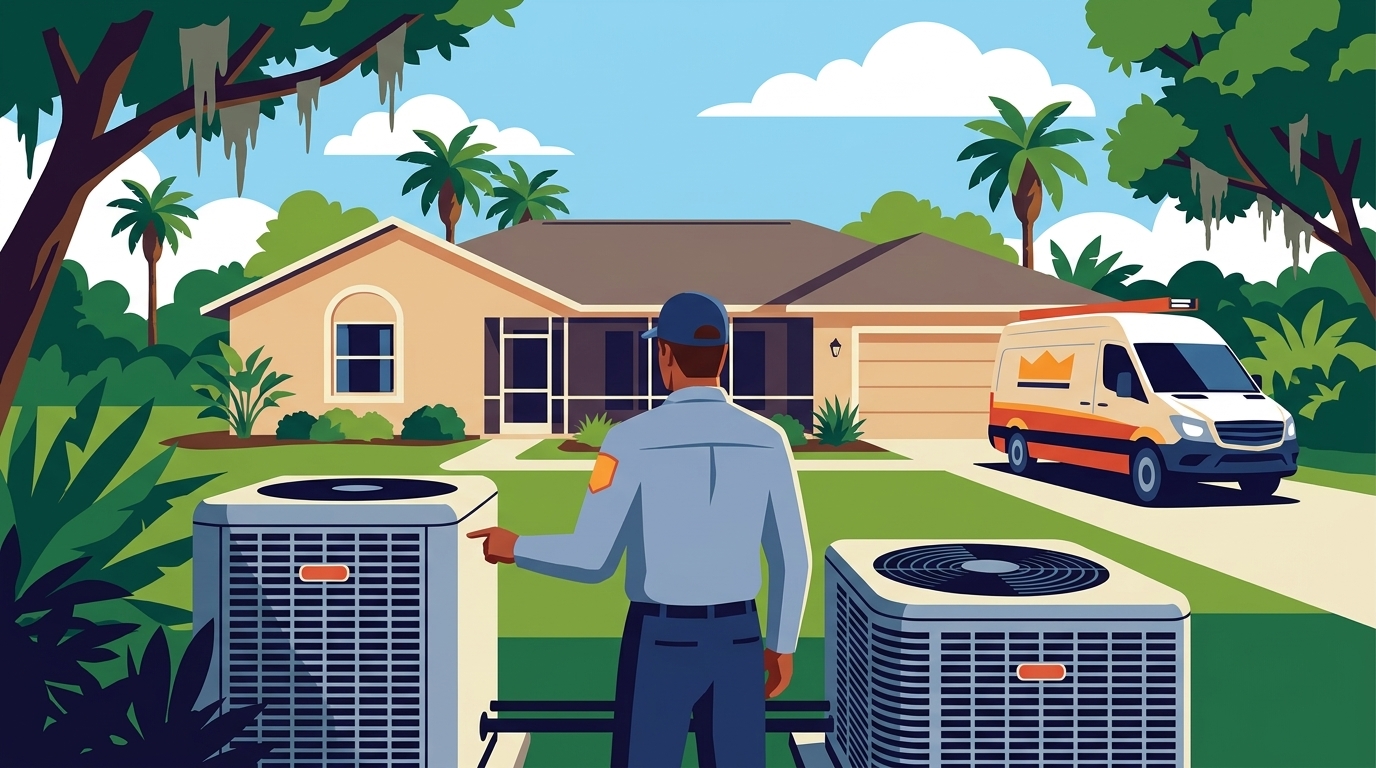
If you live in Tiger Hole/Secret Woods and your air conditioner is starting to sound like it's training for a marathon every August, you're probably wondering the same thing most of your neighbors are: how much longer will this thing actually last?
It's a fair question. HVAC systems aren't cheap, and the heat-and-humidity combo here on Jacksonville's Southside doesn't exactly baby them. So let's walk through what realistic lifespan looks like in this corner of Duval County, when repair stops making sense, and how to plan a replacement without panic.
The Honest Answer: HVAC System Lifespan in Florida's Climate
Nationally, you'll see HVAC manufacturers quote 15 to 20 years for a central air system. That's a clean, lab-friendly number. In Jacksonville, you should mentally subtract a few years.
For homes in Tiger Hole/Secret Woods — tucked between the Southside corridor and the wooded buffers near Secret Woods Nature Preserve — most central air conditioners realistically last 10 to 15 years. Heat pumps, which a lot of homes in this pocket of Jacksonville rely on instead of separate furnace-AC setups, tend to land closer to 10 to 14 years.
Why the shorter window? A few reasons specific to our climate:
- Run time. Your AC works hard from roughly April through October. That's seven months of near-daily cycling — more annual hours than a system in Atlanta or Charlotte would ever rack up.
- Humidity load. Even when temperatures drop, your system is still pulling moisture out of the air. Dehumidification is mechanical work, and it wears components.
- Salt air drift. Tiger Hole/Secret Woods sits inland of the St. Johns River and the coast, but salt-laden air still drifts west on east winds. Outdoor condenser coils corrode faster here than in landlocked markets.
- Storm stress. Hurricane season pushes systems through power surges, lightning hits, and the occasional flooded condenser pad. Each event quietly takes life off the equipment.
What Affects HVAC Lifespan in Tiger Hole/Secret Woods Homes
The neighborhood's housing stock matters here. A lot of homes in this part of Jacksonville were built between the 1970s and early 2000s, which means duct systems, insulation, and electrical setups vary wildly from one block to the next.
Original vs. Replacement Equipment
If your home still has its original air handler from the 1990s, you're well past the average lifespan and running on borrowed time. Systems installed in the mid-to-late 2010s are entering the window where repair-versus-replace decisions start getting serious.
Maintenance History
This is the single biggest factor we see. A neglected system in Jacksonville rarely makes it to year 10. A well-maintained one — coils cleaned, refrigerant charge checked, drain lines flushed, capacitors tested annually — can stretch to 15 or even 17 years.
Sizing and Installation Quality
Oversized systems short-cycle, which kills compressors early. Undersized systems run constantly and burn out. A surprising number of replacements we see in Tiger Hole/Secret Woods homes were installed without a proper Manual J load calculation — and they paid the price five years sooner than they should have.
Is It Worth Repairing an Old Air Conditioner?
This is the question every Jacksonville homeowner asks at least once. Here's the framework we use at King of Home Solutions when a customer in Tiger Hole/Secret Woods calls us out for a repair on an aging system.
The $5,000 Rule (Adapted for Florida)
Multiply the age of the system by the cost of the repair. If the number is over $5,000, replacement usually makes more financial sense than repair.
So a 12-year-old system needing a $500 repair? That's $6,000 — lean toward replacement. A 7-year-old system needing the same repair? $3,500 — fix it.
Refrigerant Type Matters
If your system uses R-22 refrigerant (phased out years ago), any refrigerant-related repair is going to be punishingly expensive. Newer R-410A and R-454B systems are far cheaper to service. If a tech tells you your R-22 system has a leak, that's almost always the moment to replace.
Signs Replacement Is the Smarter Move
- Energy bills climbing year over year with no usage change
- Uneven cooling between rooms
- Humidity that won't drop below 55% indoors
- Repairs happening more than once per cooling season
- Compressor or coil failure on a system over 10 years old
Planning a Replacement Before You're Forced To
The worst time to replace an HVAC system is the week it dies — typically late July, with a wait list and emergency pricing. The smart move is to plan ahead.
For Tiger Hole/Secret Woods homeowners with systems pushing 10+ years, we recommend getting an honest assessment in the cooler months — roughly November through February. Installation scheduling is easier, you can compare options without sweating, and rebates and financing tend to be more available outside peak season.
Local HVAC Companies With Financing
A new system in Jacksonville typically runs $7,000 to $14,000 installed, depending on size, SEER rating, and whether ductwork needs attention. That's a real number, and most households don't have it sitting in checking.
This is where working with local HVAC companies that offer financing matters. King of Home Solutions offers financing options so homeowners aren't stuck choosing between a window unit summer and draining savings. We'd rather help you plan the replacement on terms that work than have you white-knuckle a failing system through August.
FAQs: HVAC Lifespan in Jacksonville
How often should I service my HVAC system in Jacksonville?
Twice a year. One spring tune-up before cooling season hits, and one fall check before the heat pump or furnace side gets called on. Systems that get biannual maintenance routinely outlast those that don't by three to five years.
Does Florida's humidity really shorten HVAC life that much?
Yes. Continuous dehumidification adds operating hours, accelerates coil corrosion, and stresses the blower motor. It's the single biggest reason Jacksonville systems don't hit the 20-year mark you see quoted in northern markets.
Do I need a permit to replace my HVAC system in Jacksonville?
Yes. The City of Jacksonville requires mechanical permits for HVAC replacements, and the work must be done by a licensed contractor. Any reputable installer will pull the permit as part of the job — if someone offers to skip it for a discount, walk away.
What SEER rating makes sense for a Jacksonville home?
Current federal minimums for the Southeast region require SEER2 ratings of 14.3 or higher. For Tiger Hole/Secret Woods homes with long cooling seasons, stepping up to a 16-18 SEER2 system usually pays back the upgrade cost within the equipment's lifespan.
The Bottom Line for Tiger Hole/Secret Woods Homeowners
Plan on 10 to 15 years for a central AC in this climate, less if maintenance has been spotty, more if it's been diligent. Once you cross the 10-year mark, every repair decision should be weighed against replacement value, refrigerant type, and how much longer you plan to stay in the home.
King of Home Solutions has earned a 4.9★ rating from Jacksonville homeowners by being straight about these decisions — one recent reviewer noted the technician "explained everything in plain language," which is exactly the conversation you want when five-figure equipment is on the table.
Homeowners in Tiger Hole/Secret Woods and the broader Jacksonville area who want a professional assessment of their system's remaining life — or a transparent quote on replacement with financing options — can reach King of Home Solutions at https://kingofhomesolutions.com for a free estimate.