How to Fix a Broken AC Unit During Jacksonville's Summer Heat
Your AC quit during a Jacksonville summer? Here's how to troubleshoot a broken AC unit safely before calling a technician — practical steps that work.
If your air conditioner just quit on a 95-degree afternoon in Jacksonville, you already know the stakes. Indoor temperatures can climb past 85 within an hour, humidity makes the air feel like soup, and pets, kids, and elderly family members start feeling it fast. The good news: a meaningful percentage of summer AC failures in Northeast Florida come down to simple, fixable issues you can triage yourself before a technician ever pulls into your driveway.
This guide walks you through what to check, what to try, and when to stop and call for help. It's written specifically for homeowners dealing with the brutal combination of heat, humidity, and afternoon thunderstorms that defines a Jacksonville summer.
Why AC Units Break Down So Often in Jacksonville Summers
Jacksonville's climate is uniquely punishing on residential HVAC systems. From late May through September, your AC may run nearly nonstop, sometimes 18 to 20 hours a day. Add in salt air carried inland from the St. Johns River and the Atlantic, frequent lightning storms, and the pollen-heavy spring that clogs coils, and you've got a recipe for mid-summer breakdowns.
Homes in older neighborhoods like Riverside, Avondale, and San Marco often run on aging ductwork and undersized units that simply weren't built for today's heat loads. Newer builds out in Nocatee or the Southside tend to fail differently — usually thermostat or capacitor issues rather than full system collapse. Knowing your home's situation helps narrow the problem fast.
Step 1: Check Your Thermostat First
It sounds obvious, but thermostat issues are one of the most common reasons an AC "breaks" during a Jacksonville heat wave. Before you panic:
- Confirm the thermostat is set to Cool, not Fan or Off.
- Set the target temperature at least 5 degrees below the current room reading.
- Replace the batteries if your thermostat is battery-powered. Heat and humidity drain them faster than you'd expect.
- If you have a smart thermostat, check that it's still connected to Wi-Fi and hasn't reverted to a default schedule.
If the display is blank or unresponsive, that's a clue. The issue may be a tripped breaker or a safety switch downstream — which leads to the next step.
Step 2: Check the Breakers and Disconnect Switch
Jacksonville sees frequent summer lightning storms, and power surges trip breakers all the time. Head to your electrical panel and look for:
- Any breaker labeled AC, Air Handler, or Condenser that's in the middle or off position.
- Reset it by flipping fully to OFF, then back to ON.
Next, head outside to the condenser unit (the big metal box). There's a small gray disconnect box mounted on the wall nearby. Make sure the pull-out switch inside is fully seated. If the breaker trips again immediately after resetting, stop. That's an electrical fault that needs a licensed technician — repeatedly resetting it can damage the compressor.
Step 3: Inspect and Replace the Air Filter
A clogged air filter is the single most common cause of poor cooling performance we see in Jacksonville homes. When airflow is restricted, the evaporator coil freezes over, the system shuts down, and you're left sweating.
Pull the filter. If you can't see light through it, replace it. During pollen-heavy months and the peak summer run-time from June through September, filters in Jacksonville homes often need changing every 30 days — not the 90 days the package suggests.
Step 4: Look for a Frozen Evaporator Coil
If your indoor unit is running but no cold air is coming out, walk over to the air handler (usually in a closet, attic, or garage). Look at the copper refrigerant lines coming out of it. If you see ice on the lines or on the coil itself, your system is frozen.
Here's what to do:
- Turn the thermostat to Off.
- Switch the fan setting to On (this circulates air without cooling and helps thaw the coil).
- Wait 3 to 4 hours for the ice to fully melt.
- Once thawed, switch back to Cool and see if it runs normally.
If it freezes again, you likely have a refrigerant leak or a deeper airflow issue. That's a technician call.
Step 5: Clear the Condensate Drain Line
This one is a Florida special. Jacksonville's humidity means your AC pulls gallons of water out of the air every day. That water exits through a PVC drain line. When it clogs with algae — and it will, especially in summer — a float switch shuts the whole system down to prevent water damage.
Find the white PVC pipe near your indoor unit, usually with a T-shaped vent. Pour a cup of distilled vinegar into the access opening. If the line is severely clogged, you may need a wet/dry vacuum at the outdoor drain exit to pull the blockage free.
Step 6: Check the Outdoor Condenser
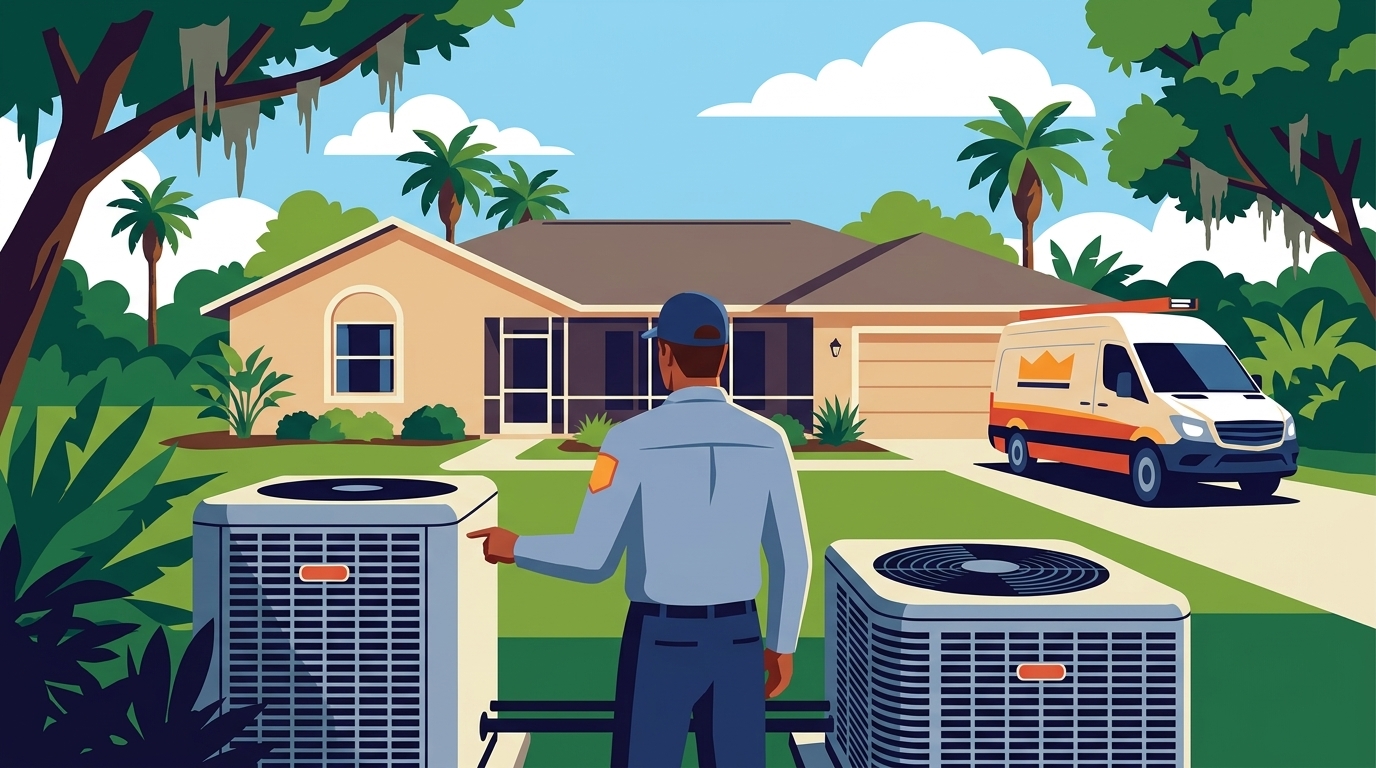
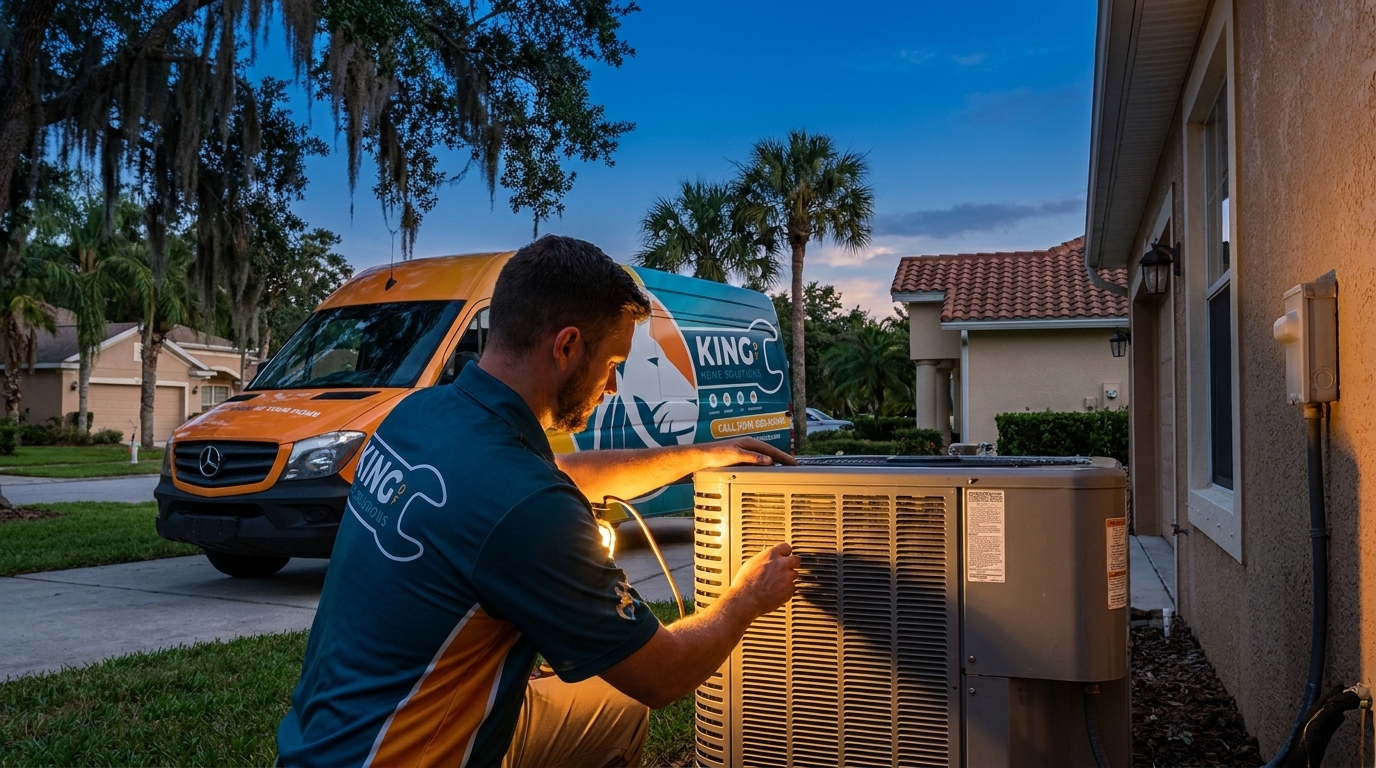
Walk outside to the condenser. Things to look for:
- Debris — leaves, grass clippings, or palm fronds blocking the fins.
- The fan — is it spinning? If the unit is humming but the fan isn't moving, that's often a failed capacitor.
- Ice on the lines outside, which mirrors an indoor freeze-up.
Gently rinse the exterior fins with a garden hose (top to bottom, low pressure). Never use a pressure washer — you'll bend the fins and make things worse.
When to Stop DIY and Call a Pro
Some problems aren't safe or practical to fix yourself. Call a licensed HVAC technician if:
- The breaker keeps tripping.
- You smell burning, hear grinding, or see scorch marks.
- The system freezes repeatedly even after a filter change.
- There's no refrigerant line cold-to-the-touch when the system runs (likely a refrigerant issue, which by Florida and federal law requires EPA Section 608 certification to handle).
Florida requires HVAC contractors to hold a state license through the Department of Business and Professional Regulation. Anyone working on your refrigerant system without that license is breaking the law — and likely doing your equipment no favors.
FAQ: Jacksonville AC Emergencies
How long can I safely stay in my home without AC during a Jacksonville summer?
On a typical July afternoon, indoor temps can hit unsafe levels within a few hours, especially for young children, elderly residents, and pets. If indoor temperatures climb past 85, consider relocating temporarily and running ceiling fans to keep air moving until help arrives.
Why does my AC keep freezing up even after I changed the filter?
Recurring freeze-ups usually point to low refrigerant, a failing blower motor, or undersized ductwork. All three need professional diagnosis — refrigerant work especially is legally restricted in Florida.
Is it cheaper to repair or replace an older AC unit?
A good rule of thumb: if your unit is over 12 years old and the repair quote is more than half the cost of a new system, replacement usually makes more financial sense — especially given Jacksonville's long cooling season and rising electricity rates.
How fast can I get same-day AC repair in Jacksonville?
During peak summer, most reputable local contractors are booked heavily. Calling first thing in the morning gives you the best shot at a same-day slot. Companies with strong communication practices — confirming arrival windows and giving honest ETAs — are the ones worth keeping in your contacts.
The Bottom Line
Most Jacksonville AC failures during summer come down to five things: thermostat settings, tripped breakers, clogged filters, frozen coils, and backed-up drain lines. Working through those steps in order solves a real percentage of emergency calls before they even need a truck rolled out.
For everything else — electrical faults, refrigerant issues, compressor problems, or simply a system too old to limp through another Florida summer — you'll want a licensed local pro. Homeowners in Jacksonville, FL who want this handled professionally can reach King of Home Solutions at https://kingofhomesolutions.com for a free estimate. The company holds a 4.9★ rating across Google reviews, with customers consistently noting clear communication, on-time arrivals, and fair pricing — qualities that matter most when you're sweating through a Jacksonville August and need answers fast.