Plumbing Emergency? Here's What to Do Before the Plumber Arrives
A practical Jacksonville, FL guide to handling plumbing emergencies — shut-off steps, damage control, and what to do before help arrives.
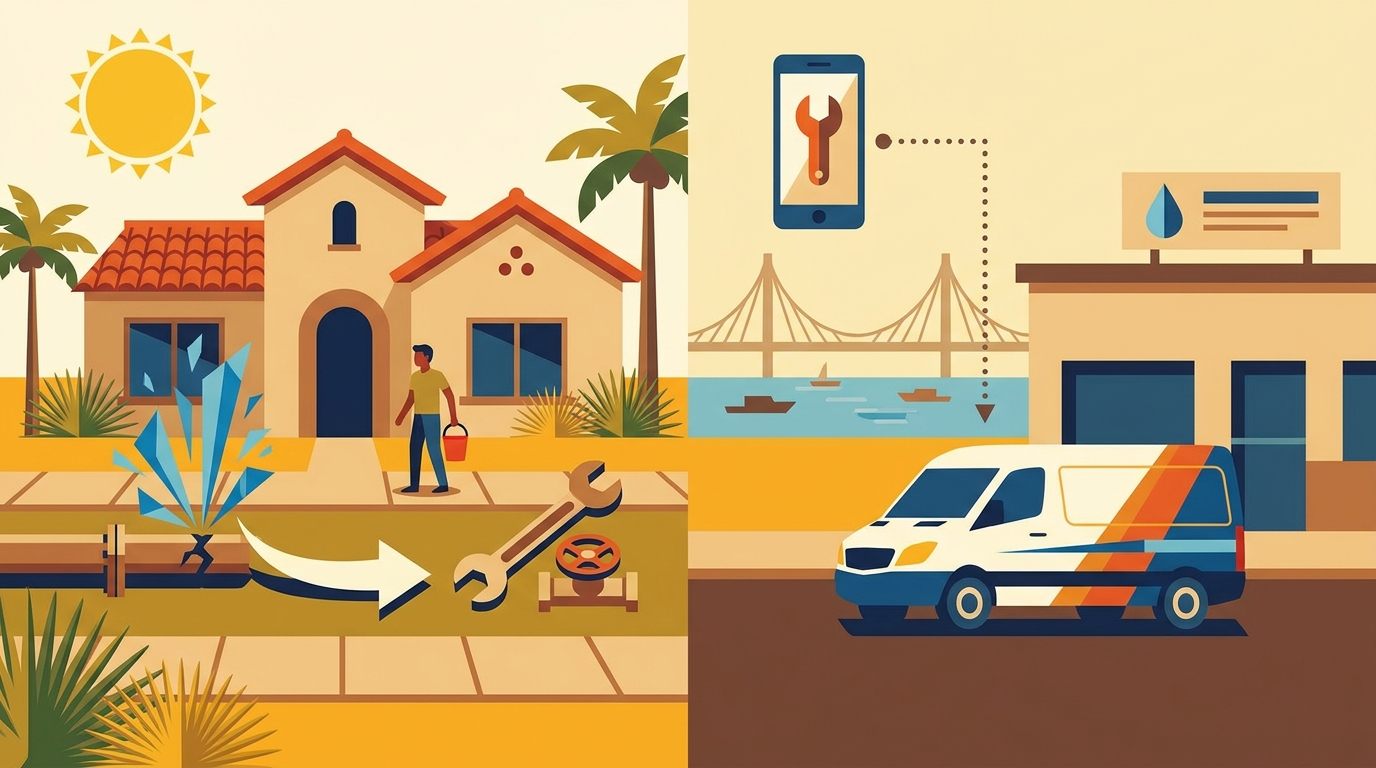
A pipe just burst under your kitchen sink. Or water is creeping across the laundry room floor. Or a toilet won't stop overflowing no matter how many times you jiggle the handle. In those first few minutes, what you do — or don't do — can be the difference between a manageable repair and a five-figure water damage claim.
Plumbing emergencies in Jacksonville, FL have their own rhythm. Older homes in Riverside and Avondale often hide galvanized pipes that corrode from the inside out. New builds in the Southside and Bartram Park push high water pressure through PEX and copper that can fail at the fittings. And every January, when a hard freeze rolls through North Florida, we see a wave of split pipes in unheated garages and crawl spaces because most local homes simply weren't built with deep frost in mind.
Here's the first-response playbook we'd want any homeowner in Jacksonville to follow before a plumber walks through the door.
Step 1: Shut Off the Water Immediately
This is the single most important thing you can do. Every second water keeps flowing is more drywall, flooring, and insulation that has to be torn out later.
Find your main shut-off valve. In most Jacksonville homes, it's in one of three places:
- Outside near the front hose bib or along the exterior wall closest to the street
- Inside the garage, often near the water heater
- At the water meter box near the curb (you may need a meter key to turn this one)
Turn the valve clockwise until it stops. If the leak is isolated to one fixture — a toilet, sink, or washing machine — you can shut off just that fixture's supply valve instead. Those are usually behind or beneath the appliance.
Walk your home this weekend and locate your main shut-off before you ever need it. Tag it with a bright zip tie so anyone in the household can find it in the dark.
Step 2: Cut the Power If Water Is Near Outlets or Appliances
Water and electricity are a serious combination. If a leak is anywhere near outlets, your water heater, HVAC air handler, or the breaker panel itself, flip the relevant breakers off before you start mopping.
If water has reached your electrical panel or you can't safely access it, leave the house and call JEA. Don't gamble on this one.
Step 3: Stop the Damage From Spreading
Once the water is off, your job is containment. Grab every towel you own, then move to buckets and a wet/dry vacuum if you have one.
- Move furniture, rugs, and electronics off wet flooring
- Lift drapes and bedskirts off the floor
- Open windows and run fans — Jacksonville's humidity makes mold growth fast, and standing water on hardwood can buckle planks within hours
- Place foil or plastic under wooden furniture legs to prevent staining
If the leak is in a ceiling, poke a small hole with a screwdriver at the lowest sagging point and place a bucket beneath it. A controlled drip is far better than a full ceiling collapse.
Step 4: Document Everything for Insurance
Before you start the cleanup in earnest, take photos and short videos. Capture the source of the leak, the affected rooms, ruined belongings, and the water line on walls or baseboards.
Florida homeowners' policies treat sudden, accidental water damage differently from gradual leaks. Clear documentation of when the failure happened — and that you took reasonable steps to limit damage — protects your claim.
Step 5: Relieve Pressure in the Lines
After the main is shut off, open the lowest faucet in the house (often an outdoor spigot or a tub on the ground floor) and a faucet on the highest level. This drains residual water out of the pipes and reduces the pressure pushing water out of the leak point.
For toilet overflows, lift the tank lid and push the flapper down to stop water from entering the bowl. Then shut the valve at the base of the toilet.
Common Jacksonville Plumbing Emergencies and Quick Fixes
Burst Pipe
Shut off the main, drain the lines, and locate the break. If it's accessible, wrap it tightly with a rubber patch, hose clamp, or even duct tape as a temporary measure. This isn't a repair — it's a holding pattern until a licensed plumber arrives.
Sewer Backup
If multiple drains are gurgling or backing up at once, stop using water entirely. This is often a main line clog or, in older neighborhoods like Springfield and San Marco, tree-root intrusion into clay sewer laterals. Keep everyone away from contaminated water and call for professional help.
Water Heater Leak
Shut off the cold water supply at the top of the tank and turn off the power (breaker for electric, gas valve for gas). Don't try to drain a hot tank yourself — wait for it to cool.
Overflowing Toilet
Close the supply valve at the base. If the bowl is rising, don't flush again. A plunger can clear simple clogs; anything deeper usually means a blockage in the branch line.
What to Avoid While You Wait
- Don't pour chemical drain cleaners into a clogged line — they can damage older pipes and create hazardous conditions for the plumber
- Don't run appliances connected to the affected lines
- Don't try to solder, glue, or permanently patch a pipe yourself unless you're trained — improper repairs can void insurance coverage
- Don't ignore a small leak just because you stopped the visible water. Hidden moisture inside walls breeds mold within 48 hours in Florida's climate
Frequently Asked Questions
How fast should a plumber respond to an emergency in Jacksonville?
For active leaks, sewer backups, or no-water situations, you want someone on the way within an hour or two. King of Home Solutions and other reputable Jacksonville providers prioritize true emergencies over scheduled service calls.
Will my homeowners insurance cover the damage?Florida policies typically cover sudden, accidental water damage but exclude gradual leaks and flood-related water (which requires separate flood insurance). Document the cause and the timeline carefully.Should I shut off the water heater during a leak?
Yes, if the leak is anywhere on the hot water side or near the heater itself. Shutting it off prevents the burner or heating element from running dry, which can damage the tank.
What if I can't find my main shut-off valve?
Use a meter key at the curb box, or call JEA to shut off service at the street. Then find and label your main valve before the next emergency.
When to Call a Professional
Some situations genuinely can wait until morning — a slow drip under a sink with a bucket beneath it, for example. But anything involving active flooding, sewage, gas-line concerns, or no water at all calls for licensed help right away. Florida requires plumbers performing repairs beyond minor fixture work to hold a state license, and that licensing matters when insurance claims and permits come into play.
Homeowners in Jacksonville, FL who want a plumbing emergency handled professionally can reach King of Home Solutions at https://kingofhomesolutions.com for a free estimate. The team's 4.9★ rating across Google reviews reflects what customers consistently describe as responsive, clearly communicated work — qualities that matter most when water is on your floor and the clock is ticking.