Signs of a Hidden Plumbing Leak in Your Ponte Vedra Beach Home
Spot hidden plumbing leaks early with this Ponte Vedra Beach homeowner's checklist. Learn the warning signs, what they mean, and when to call a pro.
How to Tell If You Have a Hidden Plumbing Leak in Ponte Vedra Beach
You walk into the laundry room and catch a faint musty smell. Your water bill jumped twenty dollars for no obvious reason. The drywall behind the toilet feels just a little soft. Is it your imagination — or is something leaking behind the walls?
Hidden plumbing leaks are one of the most common — and most expensive — problems we see in Ponte Vedra Beach homes. Between our coastal humidity, salt air, and the older slab-on-grade construction common in neighborhoods like Sawgrass and Old Ponte Vedra, leaks can hide for months before they ever show themselves. By the time you spot a stain on the ceiling, the damage underneath is usually well underway.
This checklist will help you catch the warning signs early, understand what they likely mean, and know when it's time to bring in a professional for leak detection.
The Warning Signs Checklist: 10 Clues You May Have a Hidden Leak
Go through this list slowly. If you check more than one or two boxes, there's a strong chance water is escaping somewhere it shouldn't.
1. Your water bill is creeping up for no reason
If your JEA water bill is climbing month over month without any change in household habits, that's clue number one. A pinhole leak in a pressurized line can waste hundreds of gallons a week — quietly, invisibly, and right through your bank account.
2. The water meter keeps moving when nothing is on
Here's a quick at-home test. Turn off every faucet, appliance, and ice maker in the house. Walk out to your meter and watch the small flow indicator. If it's still spinning, water is going somewhere. In Ponte Vedra Beach, where many homes sit on slabs, that "somewhere" is often underneath your foundation.
3. Musty smells that won't go away
Florida humidity already makes everything feel damp, but a persistent musty odor in a specific room — especially near a wall, vanity, or baseboard — is a red flag. Wet drywall and wet wood smell different from regular humidity, and your nose usually knows.
4. Warm spots on the floor
Slab leaks on the hot-water side often create noticeably warm patches on tile or LVP flooring. If you walk barefoot through your kitchen and feel an inexplicable warm zone, that's worth investigating right away.
5. Cracking, bubbling, or peeling paint
Paint and drywall don't lie. When moisture is trapped behind a wall, the finish starts to fail — bubbling, peeling, or developing hairline cracks that weren't there a few months ago.
6. Stains on ceilings or walls
Yellow, brown, or rust-colored rings on a ceiling almost always point to a leak above — either from plumbing on the second floor or from a roof penetration. In two-story homes near Marsh Landing and the Plantation, we see this regularly around upstairs bathroom plumbing.
7. Mold or mildew in unusual places
A little mildew in a shower grout line is normal in our climate. Mold growing on a baseboard, behind a toilet, inside a vanity cabinet, or along the bottom of drywall is not. Where there's hidden mold, there's almost always a hidden moisture source.
8. Sounds of running water when nothing is on
Stand in a quiet room and listen. A faint hissing, dripping, or trickling sound when no fixtures are running is a classic sign of a pressurized line leak. It can be subtle — easier to hear at night when the house is quiet.
9. Soft, spongy, or warped flooring
Walk your home barefoot. Any soft spot in hardwood, swollen laminate, or grout that has started to crumble around tiles can signal water working its way up from below.
10. Foundation cracks or shifting
Florida's sandy coastal soil already moves more than most. Add a long-term slab leak under it, and you can start to see new cracks in the foundation, exterior stucco, or driveway. This is the most serious sign on the list — and the most expensive to ignore.
Where Hidden Leaks Most Often Hide in Ponte Vedra Beach Homes
Our local housing stock has its own quirks. Knowing where to look helps you catch problems sooner.
- Under the slab: Older homes east of A1A and in original Ponte Vedra Beach neighborhoods often have copper supply lines running through the slab, which can corrode in our salt-influenced groundwater.
- Behind shower walls: Coastal humidity speeds up grout and caulk failure, letting water seep into the wall cavity.
- Around water heaters: Tanks in garages slowly weep from the bottom long before they fully fail.
- Outdoor irrigation lines: With many homes running extensive irrigation against St. Augustine lawns, underground line breaks are common and easy to miss.
- Refrigerator and ice maker lines: The small plastic supply line behind the fridge is one of the most common slow-leak culprits we find.
What to Do If You Suspect a Hidden Leak
If two or more of the signs above match what you're seeing at home, here's a sensible order of operations:
- Run the meter test described above to confirm water is moving when it shouldn't be.
- Shut off your main water valve if the leak appears active and damaging — usually located near the front hose bib or in a meter box at the curb.
- Document what you see — photos of stains, soft spots, or bills make diagnosis faster.
- Call a licensed plumber who handles professional leak detection. Florida requires plumbing work to be performed by a state-licensed contractor, and any repairs that involve opening walls or the slab will typically need a permit through St. Johns County.
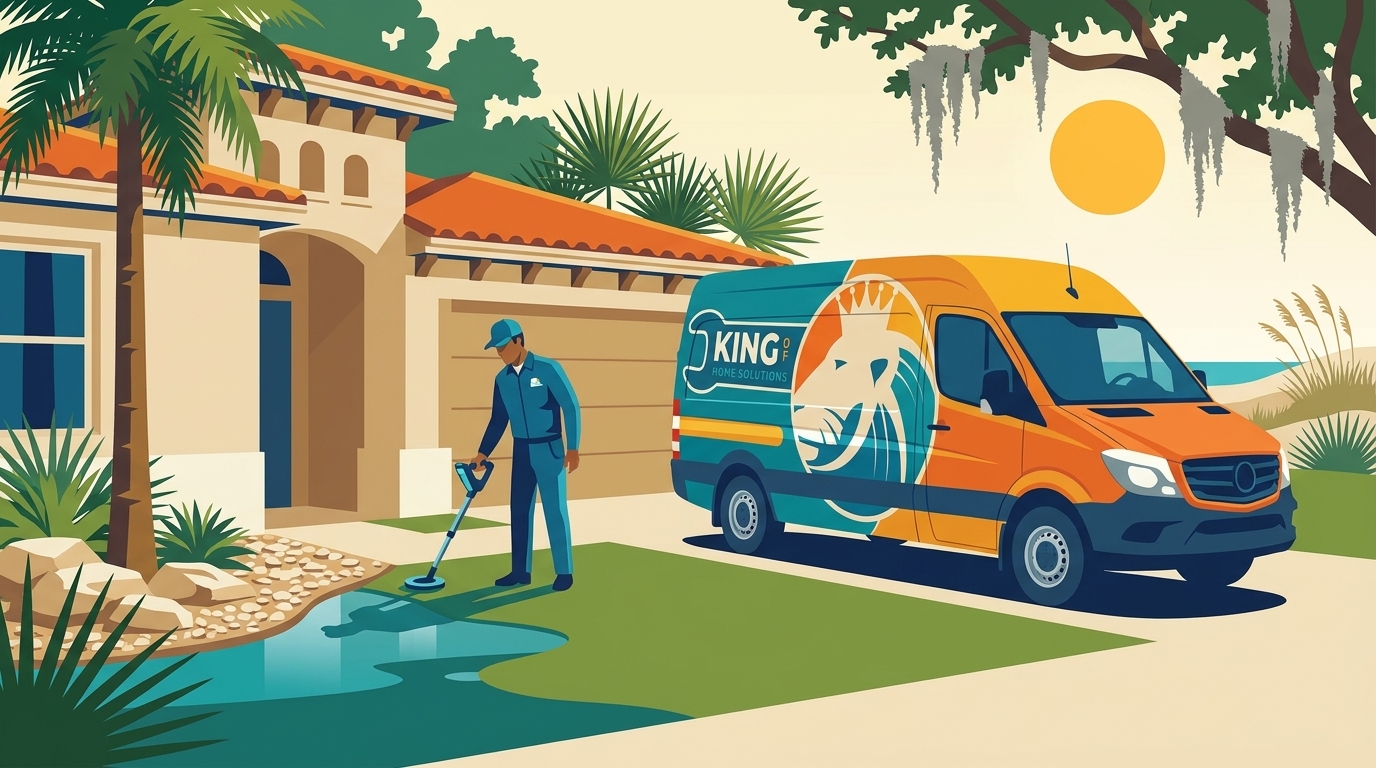
Professional leak detection uses acoustic listening equipment, thermal imaging, and pressure testing to find the leak without tearing up your home guessing. It's faster, cleaner, and far less expensive than the alternative.
Frequently Asked Questions
How much water can a hidden leak waste?
Even a slow pinhole leak can waste 100 to 200 gallons a day. A running toilet flapper — often the silent culprit behind unexplained bills — can waste several hundred gallons more.
Does homeowners insurance cover hidden plumbing leaks?
Most Florida policies cover sudden and accidental water damage but not the cost of repairing the leak itself, and not damage from leaks that have been gradual or long-standing. Document early and file promptly if damage occurs.
How long does professional leak detection take?
For most Ponte Vedra Beach homes, a thorough leak detection visit takes one to three hours, depending on home size and how accessible the suspected area is.
Is it safe to wait and see?
Generally, no. In our humid climate, mold can establish itself in wet drywall within 48 to 72 hours, and slab leaks only get more expensive the longer they run.
Getting Help Locally
Hidden leaks are sneaky by design, but they almost always leave a trail if you know what to look for. The checklist above is the same one we walk through with homeowners every week — and the earlier you catch a leak, the smaller the repair almost always is.
Homeowners in Ponte Vedra Beach who'd like a professional set of eyes on a suspected leak can reach King of Home Solutions at kingofhomesolutions.com for leak detection and repair. With a 4.9★ Google rating built on clear communication and clean workmanship — qualities one recent reviewer summed up as "professional, on time, excellent communication" — we're glad to help you figure out what's going on behind the walls.