Slab Leak Causes & Repair in Jacksonville, FL
What causes slab leaks under Jacksonville homes, how pros detect them, and the three repair methods — spot repair, reroute, or repipe — explained plainly.
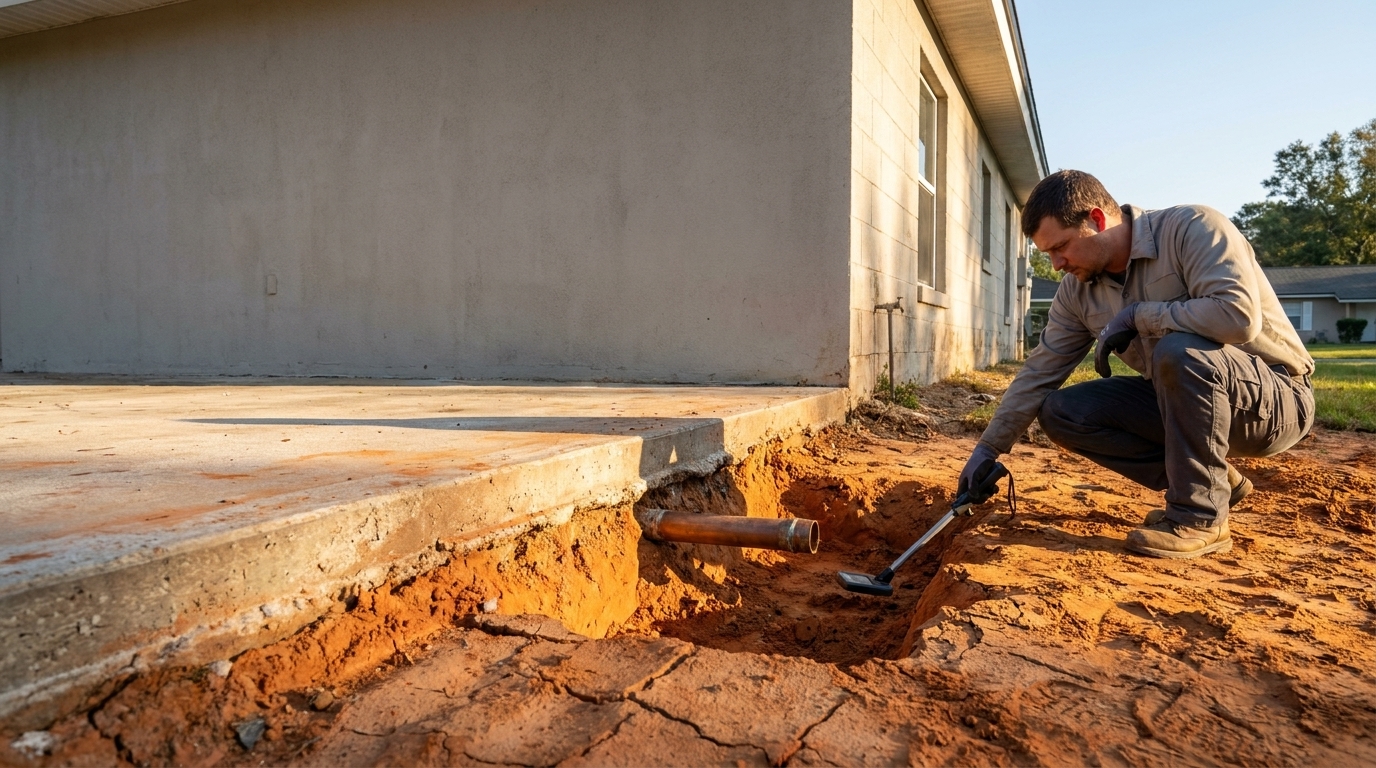
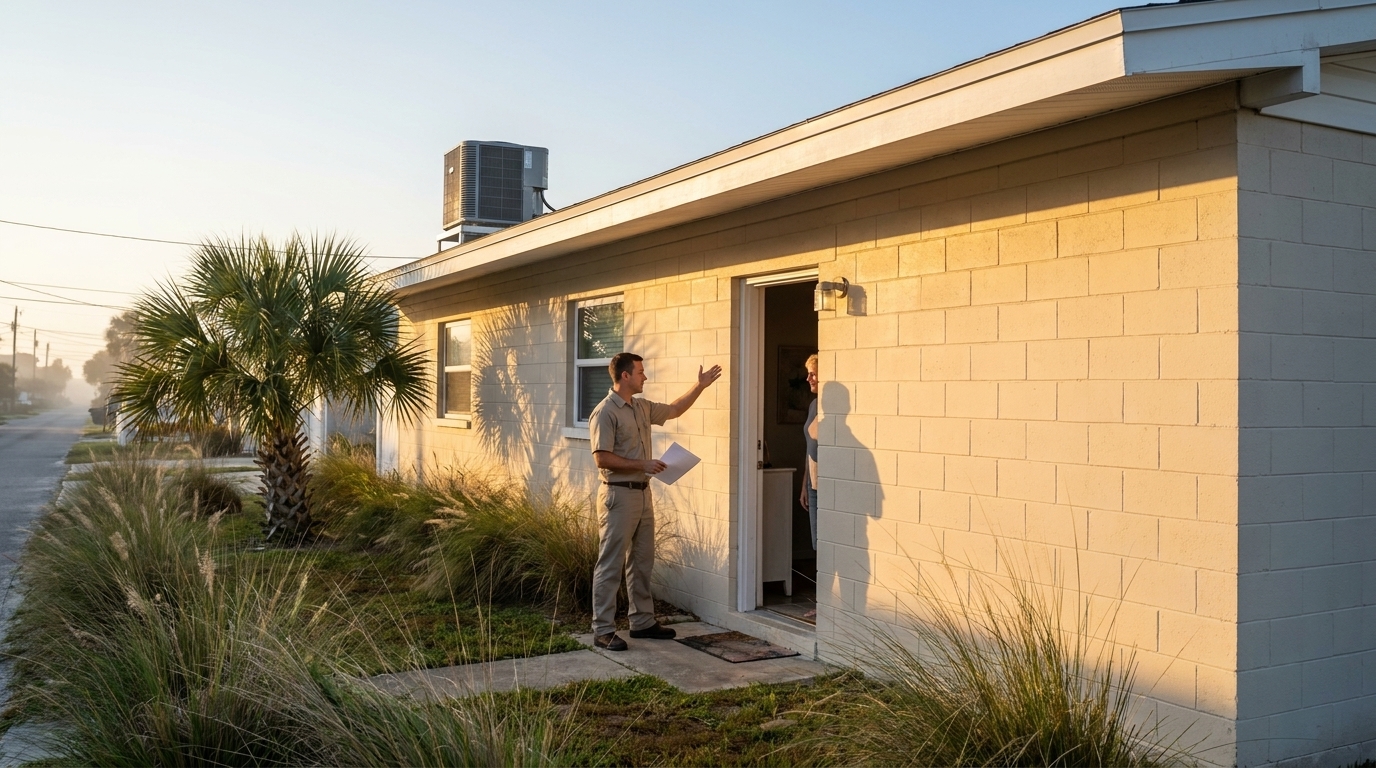
Slab leaks in Jacksonville are almost always caused by one of four things: corrosion of copper supply lines sitting in warm, wet soil; failed joints or fittings; physical damage from shifting or construction; or long-term abrasion where pipe rubs against concrete. They get fixed one of three ways — a spot repair that opens the slab at the leak, a reroute that abandons the bad section and runs new pipe overhead or through walls, or a whole-house repipe when the system has failed in multiple places.
Which fix is right depends on the age of your plumbing, how many leaks you've had, and how accessible the pipe is. Below is the plain-language version of how slab leaks happen under Jacksonville homes, how we confirm them, and what the repair process actually looks like.
What actually causes a slab leak under a Jacksonville home?
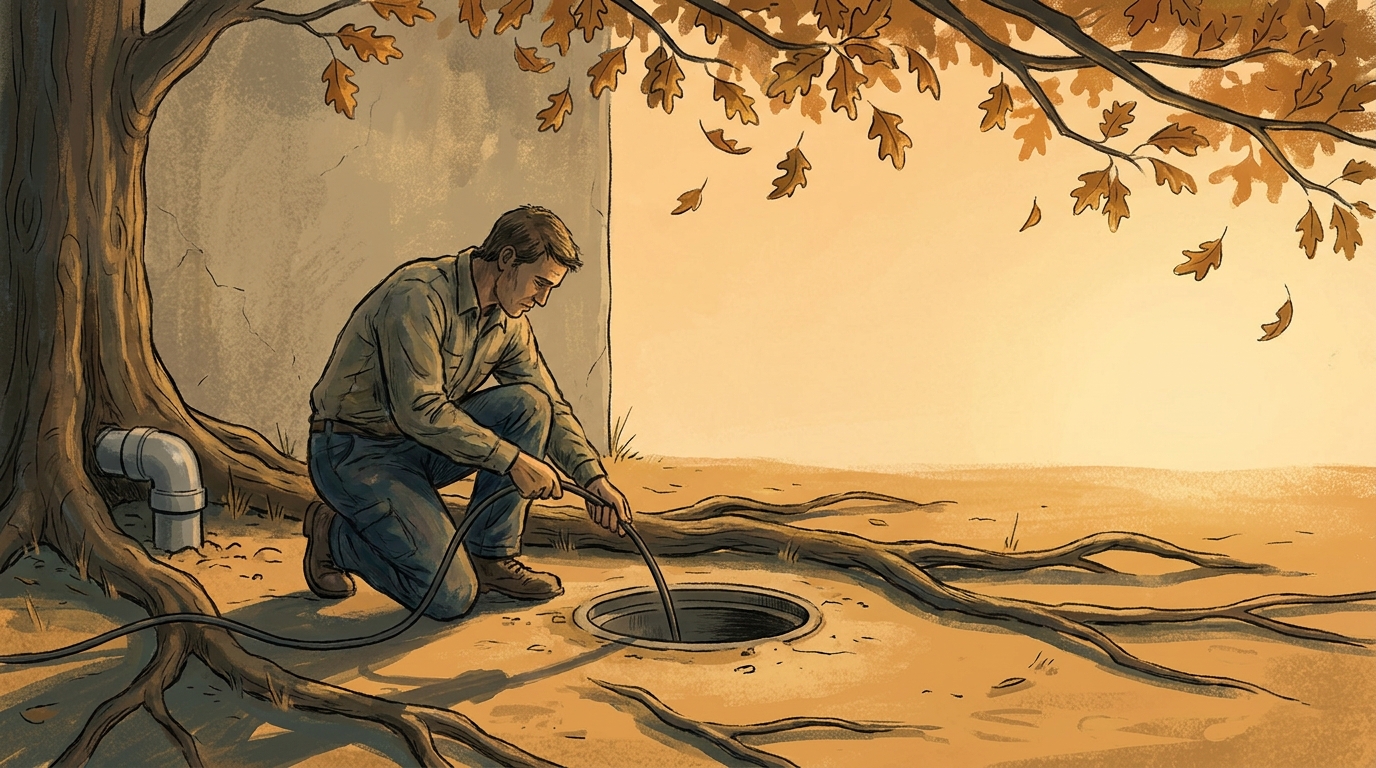
Slab leaks under Jacksonville homes are driven by pipe corrosion in warm, persistently damp soil, stress on buried copper from slab movement, bad solder joints or fittings on original construction, and physical nicks from past remodels or anchor bolts. Jacksonville's humid subtropical climate — with roughly 50 to 53 inches of annual rainfall concentrated in summer — keeps subsoil wet year-round, which can accelerate corrosion on older buried lines.
Older neighborhoods built on slab foundations — think mid-century ranch homes in Arlington, San Marco, and Murray Hill, plus the sprawling 1970s and 1980s subdivisions around Mandarin and the Southside — were plumbed with soft copper tubing run through or just under the slab. That copper has now been sitting in moist Florida soil for decades. Pinhole leaks are the predictable result.
Newer homes aren't immune. Builder-grade fittings, a nicked line from a post-tension cable or an anchor bolt, or a drain line that was glued cold on a humid install day can all fail years later. At King of Home Solutions, we see the full range — a 1960s ranch in Lakewood with pitted copper, and a ten-year-old home in Nocatee with a single bad coupling.
How do I know if I have a slab leak in Jacksonville?
The clearest signs of a slab leak are a water bill that jumps for no reason, a warm spot on the floor (hot-side leak), the sound of running water when nothing is on, unexplained damp or buckling flooring, a drop in water pressure, or mildew smell near baseboards. A meter test — shutting off every fixture and watching the meter dial — is the fastest DIY confirmation.
Jacksonville's rainy summers complicate this. Heavy summer rainfall can mask slab leak symptoms by introducing stormwater or groundwater intrusion that mimics a plumbing leak. If you see moisture after a storm, that's not automatically a slab leak — but if it stays wet during a dry stretch, it probably is.
Summer relative humidity in Jacksonville sits around 78%, which means a slab leak that goes undetected for even a few weeks can seed mold inside wall cavities and under flooring. That's why we push homeowners not to "wait and see" once they suspect one.
How is a slab leak actually located?
Plumbers locate slab leaks with a combination of pressure testing (isolating hot and cold lines to confirm which side is leaking), acoustic listening equipment, and sometimes thermal imaging or tracer gas. Acoustic detection works because pressurized pipes produce detectable sounds at a leak point that trained equipment and technicians can isolate.
Pinpointing the leak before opening the slab is what keeps a repair from becoming a demolition project.
Expect detection to be billed separately from the repair itself. Professional leak-detection services vary in price depending on home size, pipe layout, and how long it takes to isolate the leak. Jacksonville-specific published rates aren't available, so always get a written quote.
What are the three ways a slab leak gets fixed?
The three repair methods are spot repair (jackhammer through the slab at the leak point, cut out the bad pipe, replace the section, patch the concrete), reroute (abandon the leaking line and run new pipe through walls, ceiling, or attic to bypass the slab entirely), and whole-house repipe (replace all supply lines when the pipe system has multiple failures). The right choice depends on pipe age, access, and failure history.
Spot repair
Best for a single, well-located leak in otherwise sound pipe. The crew cuts through flooring and concrete directly above the leak, replaces the failed section, and restores the slab. Spot repairs carry costs that vary based on the extent of pipe damage, plus additional charges for concrete removal and flooring removal where applicable.
Reroute
Best when the leak is in a hard-to-reach spot, when the slab holds expensive tile or hardwood, or when the pipe segment is likely to fail again. New lines run overhead through the attic or inside walls, and the old slab line is capped and abandoned. Final costs depend on the distance the pipe must be rerouted and the amount of finish work required afterward.
Whole-house repipe
Best for homes with repeat leaks, visibly corroded copper, or original plumbing that's simply at the end of its life. A repipe replaces all supply lines with new copper or PEX. Total cost depends on home size and the complexity of the repipe.
| Repair method | Best when | Typical U.S. range |
|---|---|---|
| Leak detection | Confirming and pinpointing the leak | $150 – $600 |
| Spot repair | Single leak, accessible location | $500 – $4,000 |
| Pipe reroute | Hard access, premium flooring, aging line | $600 – $7,500 |
| Whole-house repipe | Multiple failures, end-of-life plumbing | $4,000 – $15,000 |
| Slab restoration | Concrete and finish rebuild after repair | $5,400 – $10,800 |
| Mold remediation | Moisture damage already present | $1,500 – $6,000 |
Ranges are broad U.S. consumer estimates, not verified Jacksonville rates. Get a written, itemized quote.
Are permits and licensing required for slab leak repair in Florida?
Yes — Florida regulates plumbing contractors at the state level through the Department of Business and Professional Regulation (DBPR), and homeowners should verify a contractor's license status before hiring. Whether a slab-leak repair requires a permit depends on the scope of work — pipe replacement, rerouting, and similar tasks — so confirm requirements with your local Building Inspection Division before the slab is opened.
Your written quote should spell out who pulls any required permits and schedules inspections. If a contractor waves off permitting entirely without checking the scope against local requirements, that's a flag.
Why acting quickly matters in Jacksonville's climate
A slow slab leak in a dry climate is a plumbing problem. The same leak in Jacksonville — with summer humidity around 78% and subsoil that stays damp for months — is a plumbing problem plus a mold problem plus a flooring problem. When moisture damage is already present, mold remediation adds a significant separate cost to the overall repair bill.
Delayed discovery is the single biggest driver of total cost. The repair itself may be modest; the water damage, flooring replacement, and remediation around it is where budgets break.
"Amazing service.. Very fast and done right.. They are my go to with all my plumping needs at my business and home."
Frequently asked questions
Can a slab leak fix itself?
No. Slab leaks don't self-heal — the pressure in a supply line and the ongoing corrosion or joint failure that caused the leak will keep water flowing. What can change is how the symptoms show up: a tiny pinhole may leak intermittently, giving the false impression it has stopped. Left alone, slab leaks grow and the surrounding damage compounds.
How long does slab leak repair take in Jacksonville?
A straightforward spot repair with good access can wrap in one day for the plumbing itself, with concrete and flooring restoration adding days to weeks depending on finish. A reroute typically takes one to three days. A whole-house repipe runs several days to a week. Jacksonville's humidity can slow post-repair drying before flooring goes back down.
Does homeowners insurance cover slab leak repair?
Coverage varies widely by policy and insurer. Many Florida policies cover the resulting water damage but exclude the cost of accessing and repairing the pipe itself; some endorsements add that coverage. Call your insurer before work starts, document everything with photos, and keep itemized invoices separating detection, access, repair, and restoration.
Is a reroute better than spot repair?
A reroute is better when the pipe is old enough that another leak is likely, when the leak sits under expensive flooring, or when access through the slab is difficult. A spot repair is better when the pipe is otherwise sound and the leak location is easy to open. The pipe's overall condition — not just the one leak — should drive the decision.
Will my floors be destroyed?
Not necessarily. Spot repairs do require cutting through flooring and concrete above the leak, so some demolition is unavoidable. A reroute avoids opening the slab at all, which is often why homeowners with tile, hardwood, or polished concrete choose it. Discuss the flooring tradeoff explicitly in your quote before work begins.
Does King of Home Solutions handle slab leaks in my area?
King of Home Solutions focuses exclusively on residential plumbing and serves Clay, Duval, and Saint Johns Counties in Florida, including Jacksonville, Atlantic Beach, Neptune Beach, Jacksonville Beach, Orange Park, Fleming Island, Nocatee, Ponte Vedra Beach, St. Augustine, and World Golf Village, among other communities. If your home is in that service area, slab leak work is in scope.
The bottom line for Jacksonville homeowners
Slab leaks under Jacksonville homes come down to a predictable set of causes — corroded copper in damp soil, failed joints, physical damage, slab stress — and three repair paths that scale with how bad the problem is. The fastest money-saver is catching it early, before mold and flooring damage multiply the bill.
Homeowners in Jacksonville who want this diagnosed and handled by a residential plumbing team can reach King of Home Solutions at (904) 865-4663 or https://kingofhomesolutions.com to get started.