Slow Water Heater Failure Effects on Pipes, Jacksonville FL
How a slowly failing water heater damages Jacksonville plumbing — sediment, anode rod depletion, pressure spikes — and the early signs worth catching.
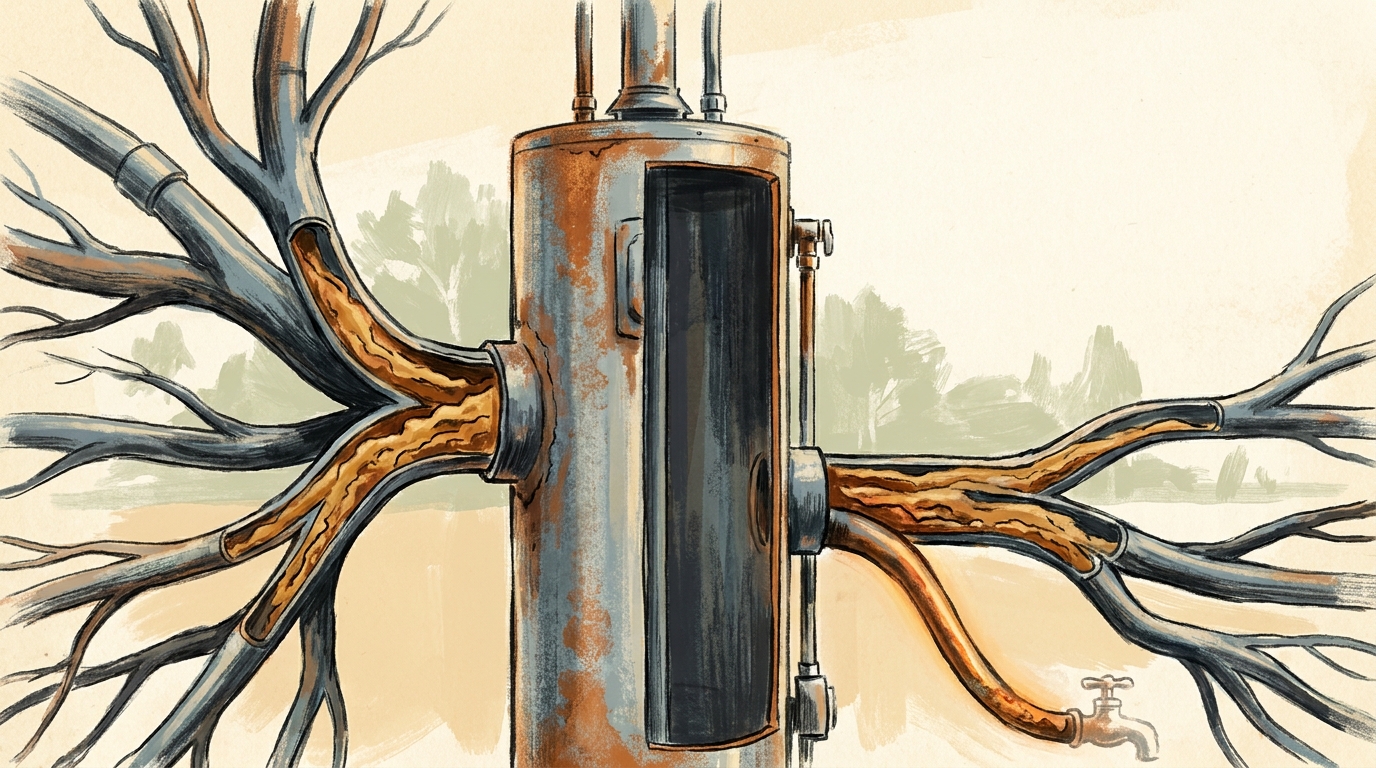
When a water heater fails slowly, it damages your plumbing in three distinct ways: sediment hardens in the tank and migrates into hot-water lines, the sacrificial anode rod depletes and lets the steel tank rust from the inside, and thermal expansion pushes pressure beyond what your pipes, valves, and fixtures are built to handle. In a Jacksonville, FL home on hard municipal water, all three happen faster than most owners expect — often years before the tank actually leaks.
That's the short answer. The rest of this guide walks through each mechanism, what it looks like at your faucets, and when it's time to bring in a plumber.
Why does a slowly failing water heater damage the rest of your plumbing?
A healthy tank is a closed, pressure-balanced appliance. A failing one quietly becomes a source of grit, rust, and pressure spikes that travel downstream through every hot-water line in the house. Because most traditional tank water heaters only last eight to twelve years, these problems tend to arrive on a predictable schedule — and they compound each other.
At King of Home Solutions, a residential plumbing company based in Jacksonville, FL, we see the same pattern across neighborhoods from Mandarin to Riverside: the heater isn't dead yet, but the plumbing it feeds is already paying the price.
How does sediment buildup damage pipes and fixtures in Jacksonville, FL?
Sediment buildup damages plumbing in two stages. First, minerals settle at the bottom of the tank, overheat against the burner or element, and harden — producing the loud popping or banging sounds you hear during heating cycles. Then loosened particles get pushed into your hot-water supply lines, where they clog aerators, foul mixing valves, jam shower cartridges, and shorten the life of dishwasher and washing-machine solenoids.
Jacksonville water is a big part of why this happens so quickly here. Jacksonville's municipal water is hard enough across much of Duval County that scale accumulates faster than in softer markets. Homes in older sections of town with original copper or galvanized hot lines feel it first: reduced flow at one faucet, then another, then a tankless-style whine from a fixture that used to be quiet.
What the noises actually mean
Popping and rumbling are not cosmetic. They mean water is flashing to steam under a hardened sediment layer, which overheats the tank bottom and accelerates metal fatigue. Once you hear it consistently, the sediment is already shedding into your pipes.
What happens when the anode rod wears out?
When the anode rod wears out, the steel tank starts corroding from the inside — and rust-colored or metallic-tasting water begins showing up at your hot taps. A water heater anode rod is a sacrificial metal bar, typically magnesium or aluminum, that corrodes in place of the steel tank to prevent rust. Replacing it every 3 to 5 years is recommended to extend the heater's life. Without a functioning anode rod, metal tanks rapidly succumb to rust, causing premature failure.
Brown, orange, or metallic-tasting water from hot taps may indicate internal tank corrosion, and once rust begins inside the tank, replacement is usually necessary. If the discoloration shows up on the cold side too, the issue is upstream of the heater — but hot-only discoloration points squarely at the tank.
Anode material matters in Jacksonville. Anode rods are typically made of magnesium or aluminum, and the right choice can depend on local water conditions. On JEA supply, aluminum (or aluminum-zinc) is often the more durable choice. Checking and replacing the rod on time is one of the most cost-effective ways to protect both the tank and the pipes it feeds.
How do pressure problems from a failing heater stress your plumbing?
In a closed plumbing system — where a backflow preventer or pressure-reducing valve stops water from flowing back into the main supply — heated water has nowhere to go, and pressure builds inside the water heater and pipes every time the unit heats water. That's what the expansion tank is there to absorb. Inside it, a rubber diaphragm separates the tank into two chambers: one with compressed air, one that receives the expanding water.
When the expansion tank fails, that cushion disappears. A failed water heater expansion tank can cause high water pressure, leaks, and unnecessary strain on pipes, valves, and plumbing fixtures because the tank can no longer absorb the extra pressure created when water heats up. Signs include water leaks, fluctuating water pressure, repeated temperature-and-pressure (T&P) relief valve discharge, rust or corrosion, unusual pipe noises, and a waterlogged tank. The expansion tank is typically installed on the cold water supply line above or near the water heater, which is where to look first.
The pressure regulator at your main is the other half of this story. A failing water pressure regulator can no longer hold incoming supply at a steady 40 to 60 PSI, causing faucets to sputter, showers to lose force, and pipes to bang — and most regulators last 10 to 15 years. Unchecked pressure spikes can compromise pipes and fittings throughout the house. A tired heater and a tired regulator together is the combination that cracks fittings and ruins fixtures.
What are the early warning signs Jacksonville homeowners should watch for?
The early signs of a failing water heater usually show up at the fixtures before they show up at the tank. Catching them early is the difference between a service call and a flooded garage.
| Symptom | Likely cause | What it threatens |
|---|---|---|
| Popping or banging during heating | Hardened sediment at tank bottom | Tank metal fatigue; clogged fixtures |
| Rust-colored or metallic hot water | Depleted anode rod; internal corrosion | Tank replacement imminent |
| T&P valve discharging repeatedly | Failed expansion tank; over-pressure | Pipe joints, valves, fixtures |
| Faucets sputtering; pipes banging | Failing pressure regulator | Whole-house plumbing |
| Repairs more than once a year | End-of-life unit | Everything downstream |
Needing repairs more than once a year is often a sign a water heater is nearing the end of its lifespan. The T&P relief valve on the heater should be tested by lifting and releasing the lever to ensure water flows out; if it sticks, it may need to be replaced.
What Jacksonville customers say about the work
Another wonderful fix by BJ and Brian. These two have been lifesavers! Ever since we moved into our new house we’ve had a few major plumbing issues and these two have helped us with everything. They are on time (even early!), professional and kind. We will continue using them for all future issues. Thank you both so much!!
Frequently asked questions
Do I need a permit to replace a water heater in Jacksonville, FL?
Yes. Water heater replacement in Jacksonville, FL is regulated work that requires a plumbing permit pulled through the City of Jacksonville's building division, and the installation must meet the Florida Building Code — including proper T&P discharge, expansion control on closed systems, and seismic/strapping requirements where applicable. A licensed plumber pulls the permit on your behalf and schedules the inspection.
How can I tell if sediment is already damaging my pipes?
Watch your fixtures. Reduced flow at hot taps only, gritty debris in faucet aerators, a shower that cycles hot and cold without you touching the handle, and dishwashers or washing machines that fail inlet valves earlier than expected are all downstream symptoms of sediment migration. If you also hear popping during heating cycles, the tank is actively shedding material into the lines.
How often should the anode rod be checked on a Jacksonville water heater?
Every 3 to 5 years is the general guideline, and Jacksonville's hard water pushes most homes toward the shorter end. Checking and replacing the rod on time can meaningfully extend the life of a conventional water heater. If you've never had yours inspected and the heater is more than five years old, it is almost certainly due.
Can a failing water heater raise my whole-house water pressure?
Indirectly, yes. On a closed plumbing system, thermal expansion from the heater has nowhere to go, and a failed expansion tank lets that pressure build throughout the system. Combined with a worn pressure regulator that can no longer hold a steady 40 to 60 PSI, unchecked pressure spikes can compromise pipes and fittings house-wide.
Is a plumber near me that works on weekends in Jacksonville, FL necessary for this kind of problem?
Not usually. Slow water heater failure gives you warning — noises, discoloration, pressure quirks — days or weeks before a true emergency. Addressing it on a scheduled weekday visit is cheaper and easier. Save after-hours or weekend calls for active leaks, no hot water in a full house, or a continuously discharging T&P valve you cannot stop.
When should I replace instead of repair a slowly failing heater?
Replace when the tank itself is compromised. Rust-colored hot water, a weeping tank seam, or repeated repairs within a single year all point to replacement rather than another fix. Most traditional water heaters last eight to twelve years, and once a unit crosses that window with symptoms, repair dollars are better spent on a new installation that resets the clock on your pipes too.
Getting it handled
A slowly failing water heater is one of the few plumbing problems where the appliance you ignore ends up damaging the plumbing you can't easily replace. Catching sediment before it migrates, swapping the anode rod on schedule, and keeping the expansion tank and pressure regulator healthy together add years to both the heater and the house.
Readers in Jacksonville, FL who want this handled professionally can reach King of Home Solutions — a residential plumbing company based at 5151 Sunbeam Road — at (904) 865-4663 or https://kingofhomesolutions.com to schedule an inspection or discuss replacement options.