Tankless vs. Traditional Water Heaters: Which Is Better for Jacksonville Homes?
Comparing tankless vs traditional water heaters for Jacksonville, FL homes — costs, efficiency, lifespan, and what works best in our humid coastal climate.
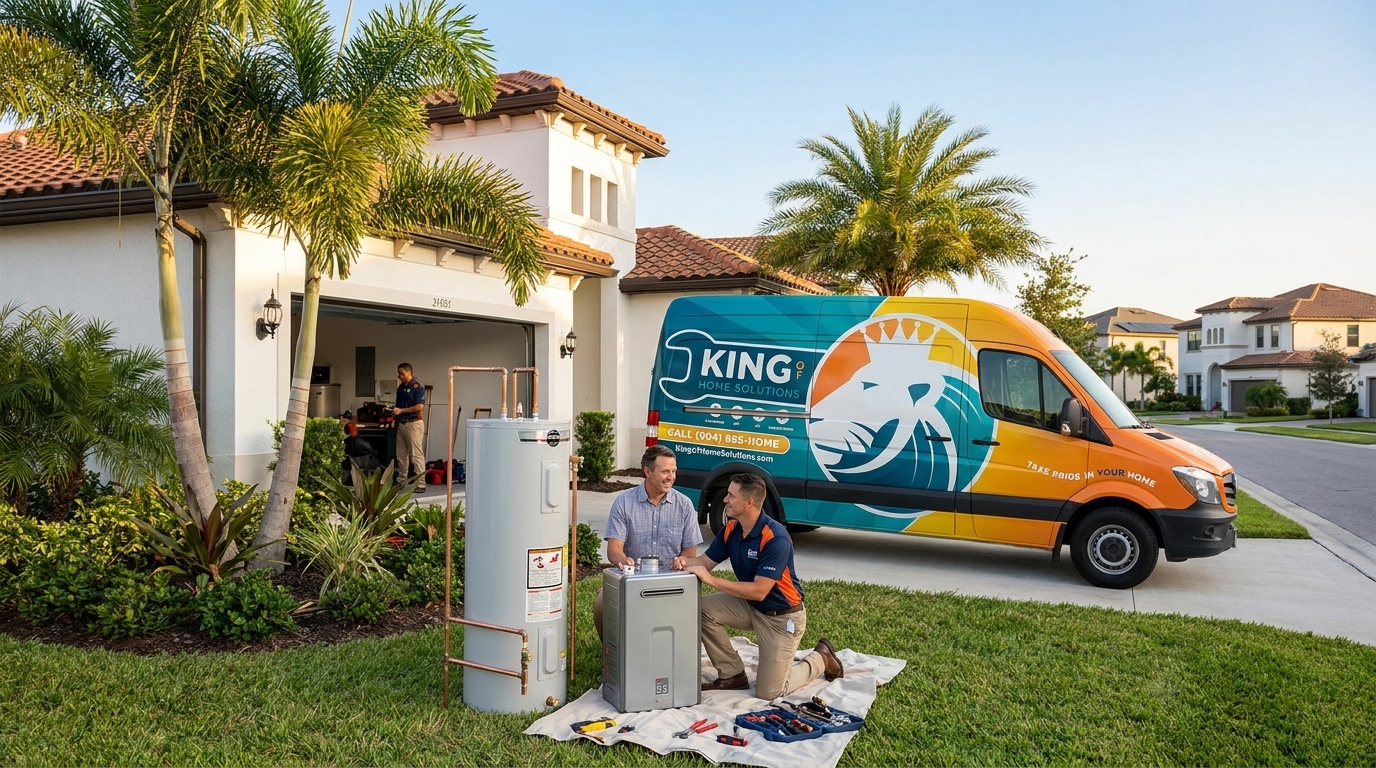
If your water heater is acting up — lukewarm showers, rusty water, a puddle in the garage — you're facing the same question thousands of Jacksonville homeowners face every year: should you replace it with another traditional tank, or make the jump to tankless? It's a bigger decision than most people realize, because the right answer depends on your home, your budget, and how long you plan to stay put.
Jacksonville's warm climate, widespread natural gas access, and humid coastal conditions all tilt the math in interesting ways. Here's an honest, side-by-side look at how the two options compare — and how to decide which makes sense for your house.
The Short Answer for Jacksonville Homeowners
A tankless water heater generally delivers better energy efficiency, a longer lifespan, and more space — but costs roughly 2 to 4 times more than a traditional tank to install. A traditional tank is cheaper upfront, simpler to swap out, and handles heavy simultaneous demand without sweating it, but it wears out faster and quietly wastes energy reheating water you're not using.
For Jacksonville homeowners planning to stay 10 or more years, tankless tends to be the stronger long-term value. For budget-focused buyers, landlords, or short-term owners, a traditional tank is often the more practical pick.
Upfront and Installed Cost
This is where the gap is widest. A traditional 40 to 50 gallon tank typically runs about $900 to $1,800 installed in Jacksonville, with the equipment itself costing $300 to $1,500 and labor roughly $600 to $800 when your existing gas, electric, and venting connections are compatible.
Tankless units land in the $2,500 to $4,500+ installed range. The unit itself costs $1,000 to $3,000, and installation can run $800 to $1,500 or more — especially if your home needs a larger gas line, new venting, or an electrical panel upgrade. Older homes in neighborhoods like Riverside, Avondale, and Springfield often need those upgrades, which can push the project toward the upper end of the range.
Verdict: Traditional tanks win on upfront cost, full stop.
Energy Efficiency in Florida's Climate
According to the U.S. Department of Energy, tankless water heaters are 24–34% more efficient than tank units for homes using 41 gallons or less of hot water per day, and 8–14% more efficient at around 86 gallons per day. Local contractor estimates in Jacksonville often land in the 20–30%+ savings range.
Why the gap? Traditional tanks suffer from standby heat loss — they're constantly reheating 40 to 50 gallons of water to keep it hot, whether you're home or not. Tankless units only heat water when you turn on a tap.
Jacksonville's warm groundwater is a bonus for tankless performance. The colder the incoming water, the harder a tankless unit has to work. Because our inlet temperatures are higher than in northern markets, tankless units here deliver more effective gallons per minute and reach peak efficiency more easily. Gas tankless units can reach a Uniform Energy Factor (UEF) of around 0.95, while standard gas tanks sit around 0.59 to 0.62 EF.
Verdict: Tankless wins on efficiency — and Jacksonville's climate widens the gap.
Lifespan and Long-Term Value
A traditional tank water heater typically lasts 10 to 15 years. A tankless unit lasts 20+ years, and many of its components are replaceable, which can stretch service life even further.
This matters more than it sounds. The end of a tank's life often involves a leaking tank — and in a Jacksonville home with a water heater tucked into a garage, closet, or second-floor utility room, that leak can mean drywall repairs, flooring damage, and an insurance claim. Tankless units don't store water, so catastrophic tank failures simply aren't part of the equation.
When homeowners ask us about water heater repair vs. replacement in Jacksonville, the age of the unit is usually the deciding factor. If your tank is past 10 years and needs a significant repair, replacement — and a serious look at tankless — is usually the smarter spend.
Hot Water Delivery: Continuous vs. Stored
Tankless units deliver continuous hot water up to their flow limit — typically 2 to 5 gallons per minute for whole-house gas units. You won't run out mid-shower, but if your family fires up two showers, the dishwasher, and the washing machine simultaneously, an undersized tankless can struggle.
Traditional tanks (40 to 80 gallons) handle simultaneous demand well, until the tank empties. Then you wait for recovery — anywhere from 20 minutes to over an hour depending on fuel type.
For a typical Jacksonville household with 2 to 4 people, a properly sized tankless unit handles real-world demand comfortably. For larger families or homes with multiple master suites — think bigger homes in Mandarin or out toward the Beaches — proper sizing (or even two tankless units in parallel) becomes critical.
Space and Installation Realities
Tankless units are wall-mounted and compact — a typical gas model is about 25 inches tall, 14 inches wide, and 10 inches deep, weighing around 54 pounds. That's a meaningful win in smaller homes, condos near Downtown or San Marco, and townhomes where every square foot of floor space matters.
Traditional tanks are bulky and floor-standing. They want a garage corner, a dedicated closet, or a utility room.
Installation complexity also differs sharply. A tank-to-tank replacement is straightforward — most plumbers can knock it out in a few hours using existing connections. A tank-to-tankless conversion is a bigger project: gas line resizing, new venting (often a sidewall vent), condensate drainage on high-efficiency units, and sometimes electrical work. That's where choosing an experienced local plumber matters most.
Is a Tankless Water Heater Worth It in Florida?
For most Jacksonville homeowners staying in their home long-term, yes. Warm inlet water, widespread natural gas availability, no risk of freeze damage to outdoor-mounted units in most years, and a 20+ year lifespan combine into a strong value case.
A tankless unit is probably worth it if you:
- Plan to stay in your home 10+ years
- Want lower monthly utility bills
- Have limited space or want to reclaim a closet or garage corner
- Care about avoiding the flood risk of a failed tank
- Have natural gas service already at the home
A traditional tank is probably the better pick if you:
- Are working with a tight upfront budget
- Own a rental property where simple replacement matters more than efficiency
- Expect to sell within 5 to 7 years
- Have very high simultaneous hot water demand and don't want to upsize tankless capacity
Choosing the Right Plumber in Jacksonville
Whichever route you go, the install matters as much as the equipment. A poorly sized or poorly vented tankless unit will frustrate you for years. A sloppy tank install can leak, fail early, or fail inspection.
When evaluating a plumber for water heater work in Jacksonville, look for:
- Florida state plumbing licensure and local permit familiarity (Jacksonville requires permits for water heater replacements)
- Experience with both tank and tankless installs — not just one
- Transparent, itemized quotes that account for gas line sizing, venting, and any electrical work
- Familiarity with North Florida's water conditions, which can be hard on equipment
- Honest guidance on repair vs. replacement when your existing unit is borderline
King of Home Solutions handles both traditional tank and tankless installations across Jacksonville, and we approach the recommendation the same way we'd approach our own homes — sizing the system to your household, walking through the real costs, and not pushing tankless on a homeowner who'd be better served by a straightforward tank swap.
Frequently Asked Questions
How long does a tankless water heater last in Florida?
Tankless units commonly last 20+ years, and Florida's warmer climate is generally easier on them than colder northern markets. Annual descaling and maintenance helps preserve that lifespan, especially given North Florida's hard water.
Should I repair or replace my water heater?
If your unit is under 8 years old and the repair is minor, repair usually wins. If it's over 10 years old, leaking, or needs a major component, replacement is typically the smarter spend — and a good moment to evaluate tankless.
Do tankless water heaters require permits in Jacksonville?
Yes. Water heater installations and replacements in Jacksonville require a plumbing permit, and gas tankless conversions often involve additional gas and mechanical permits. A licensed plumber will pull these for you.
The Bottom Line
For Jacksonville homeowners with the upfront budget and a long time horizon, a tankless water heater is a strong investment — better efficiency, longer life, more space, and continuous hot water. For homeowners prioritizing low upfront cost or simple like-for-like replacement, a quality traditional tank is still a perfectly sound choice.
The right answer is the one that fits your home, your timeline, and your budget. If you'd like a clear-eyed recommendation for your specific situation, the team at King of Home Solutions (kingofhomesolutions.com) offers free estimates for Jacksonville-area homeowners weighing the decision.