Water Heater Permit Requirements in Jacksonville, FL
Replacing a water heater in Jacksonville? Learn exactly when a permit is required, who can pull it, what inspectors check, and how to stay compliant.
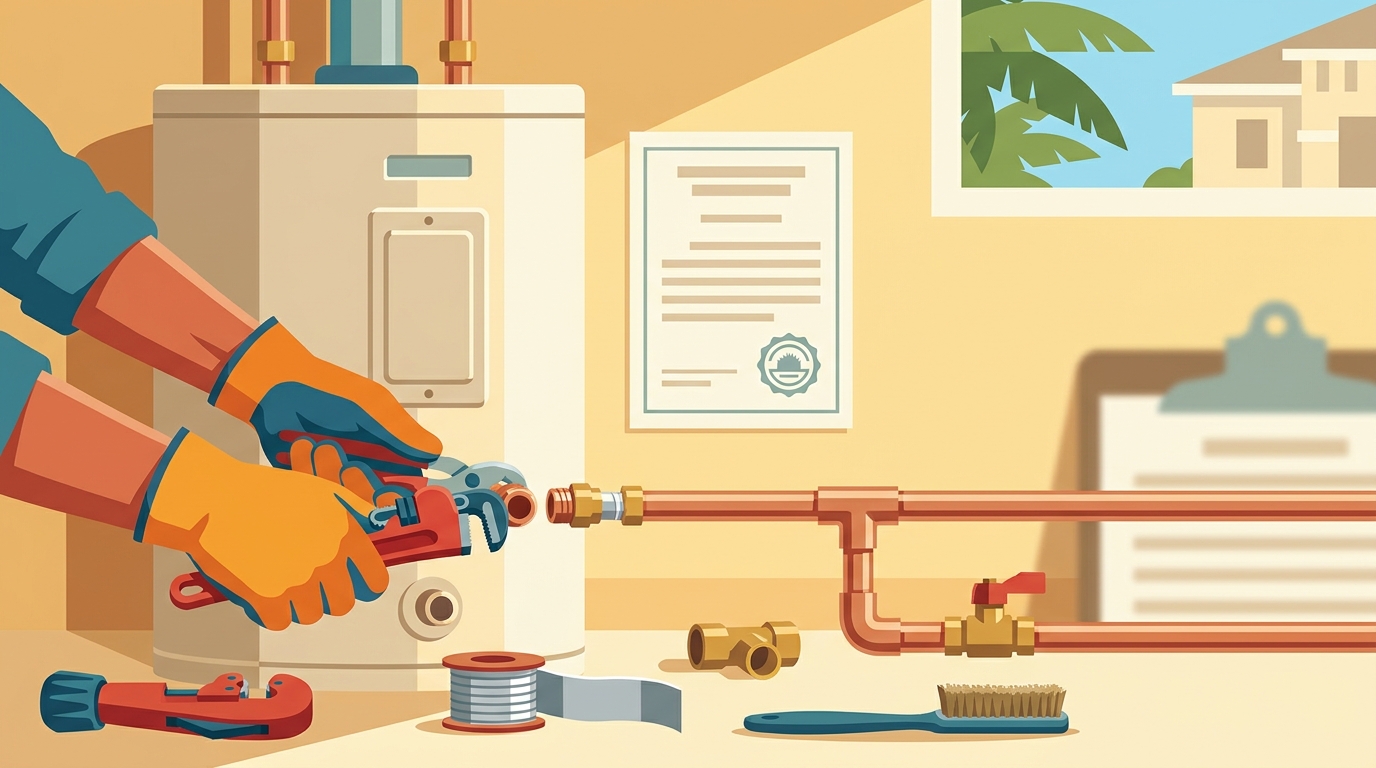
Yes — in Jacksonville and throughout Duval County, you need a plumbing permit to replace a water heater, even for a straightforward like-for-like swap. The permit is issued by the City of Jacksonville Building Inspection Division (BID), the work must be performed by a licensed plumbing contractor, and a final inspection is required before the permit can be closed.
That's the short answer. The longer answer matters, because water heater work touches gas lines, electrical circuits, pressure-relief safety devices, and venting — the exact systems Florida code takes most seriously. Here's what Jacksonville homeowners should understand before a tank goes in.
Do I need a permit to replace a water heater in Jacksonville?
Yes. A plumbing permit from the City of Jacksonville Building Inspection Division is required for any water heater installation or replacement in Duval County — gas or electric, tank or tankless, new construction or like-for-like swap. There is no dollar-value exemption for this type of work under Florida law. A final inspection is also required before the permit can be closed.
This catches a lot of homeowners off guard, especially those who assume swapping an old 50-gallon electric tank for the same model is too minor to bother with paperwork.
What about Florida HB 803?
Florida HB 803 takes effect July 1, 2026, and it adjusts permit-value thresholds for certain minor residential work. However, the bill explicitly does NOT exempt plumbing, electrical, HVAC, structural, or gas work from permitting. Water heater replacement remains permit-required after HB 803 goes into effect. If you've heard rumors that permits are going away for small jobs, this is the fine print that matters.
Who is legally allowed to pull the permit and do the work?
In Jacksonville, water heater replacement must be performed by either a Florida state-Certified Plumbing Contractor (CPC) licensed by the DBPR/Construction Industry Licensing Board, or a Registered Plumbing Contractor (RPC) holding a local certificate issued through Jacksonville's Construction Trades Qualifying Board (CTQB). This requirement comes from Florida Statutes §489.113(1). Handymen and unlicensed installers cannot legally do this work.
This is the licensing line that separates a legitimate plumber from someone who will disappear when an inspection fails. When you're searching for a licensed plumber in Jacksonville, FL who can pull the permit, verify their CPC or RPC status before signing anything — the DBPR license lookup and the Jacksonville CTQB are the two authoritative sources.
At King of Home Solutions, we pull the permit on your behalf as part of the job. That's the standard we hold ourselves to across Duval County — from Riverside and Avondale bungalows to newer builds out toward Nocatee and the Southside. You should never be asked to pull an owner-builder permit just so a contractor can dodge the licensing requirement.
The owner-builder exception
Florida law does allow homeowners to pull permits on their own primary residence under the owner-builder exemption. But there's a catch: you must personally supervise the work and cannot use the exemption as cover to hire an unlicensed installer. For safety-critical work involving gas venting or a 240V electrical connection, licensed contractor involvement is strongly expected in Jacksonville.
What does the plumbing inspection actually check?
The final plumbing inspection verifies that the installation meets the Florida Building Code Plumbing chapters. Inspectors specifically check the temperature and pressure relief (TPR) valve, TPR discharge piping and termination, venting for gas units, combustion air supply, required clearances, and the electrical or gas connections at the unit. All of this must pass before the permit closes.
These aren't arbitrary checkboxes. A misinstalled TPR discharge line can turn a failing tank into a scalding hazard. Improper venting on a gas unit can back-draft carbon monoxide into a Jacksonville home that's sealed up tight for eight months of the year running the AC. The inspection exists because water heaters cause real injuries when installed wrong.
Do I need additional permits beyond plumbing?
Sometimes yes. If your water heater replacement involves modifying electrical circuits, gas piping, or venting, you'll need separate electrical and/or gas/mechanical permits from Jacksonville BID in addition to the plumbing permit. A pure like-for-like swap that reuses the existing connections typically only needs the plumbing permit. Switching fuel types, relocating the unit, or converting tank-to-tankless usually triggers additional permits.
| Replacement Scenario | Permits Typically Required |
|---|---|
| Like-for-like electric tank swap, same location | Plumbing permit only |
| Like-for-like gas tank swap, same venting | Plumbing permit only |
| Electric tank to tankless (new circuit needed) | Plumbing + electrical |
| Gas tank to tankless (new venting/gas line) | Plumbing + gas/mechanical |
| Relocating unit to different area of the home | Plumbing + likely electrical or gas/mechanical |
How is the permit actually pulled in Jacksonville?
Permits are submitted through the City of Jacksonville e-permit portal operated by the Building Inspection Division. Simple like-for-like water heater replacements are commonly approved the same day. Your licensed plumbing contractor will submit the application under their CPC or RPC number, schedule the final inspection after installation, and close the permit once the inspector signs off.
Fees for water heater permits in Duval County are set by BID and are not published in a single fixed figure — they should be confirmed with BID at the time of application (904-255-8500). A reputable Jacksonville plumber will include the permit fee in an upfront, itemized quote so there are no surprises after the job.
What happens if the work is done without a permit?
Unpermitted water heater work in Jacksonville can result in a stop-work order from BID, a requirement to pull a retroactive permit, and mandatory exposure of concealed piping so inspectors can verify the installation. Unlicensed contracting is subject to administrative fines and potential misdemeanor or felony charges under Florida Statutes Chapter 489. Unpermitted work also creates problems in real estate transactions, home insurance claims, and appraisals.
The insurance angle is the one most homeowners underestimate. If an unpermitted water heater fails and floods a home in San Marco or Mandarin, the carrier has a real basis to reduce or deny the claim. What looked like a $200 savings on a cash install becomes a five-figure loss.
How do I find a licensed plumber near me in Jacksonville who handles the permit?
Look for three things: a verifiable Florida CPC or Jacksonville CTQB RPC license number, willingness to pull the permit under their license (not yours), and upfront written pricing that includes the permit fee. Real customer reviews and a track record in Duval County matter too — you want someone who has walked Jacksonville BID inspections before and knows what local inspectors look for.
That combination — licensed, communicative, and transparent about cost — is the standard to hold any Jacksonville plumber to.
Frequently Asked Questions
Can I replace my own water heater as a homeowner in Jacksonville?
You can pull an owner-builder permit for work on your primary residence in Florida, but you must personally do or directly supervise the work — you cannot use the exemption to hire an unlicensed installer. Given the gas venting, electrical, and TPR safety requirements inspected under the Florida Building Code, most Jacksonville homeowners hire a licensed plumbing contractor to handle both the permit and the installation.
How much does a water heater permit cost in Jacksonville, FL?
Water heater permit fees in Duval County are set by the Jacksonville Building Inspection Division and are not published as a single flat figure across all scenarios. Confirm the current fee directly with BID at 904-255-8500 or through the e-permit portal at the time of application. A reputable plumbing contractor will include the permit fee in the upfront written quote.
Does a tankless water heater installation need a permit in Jacksonville?
Yes. Tankless water heater installations require a plumbing permit in Jacksonville, and they frequently require additional electrical permits (for higher-amperage electric tankless units) or gas/mechanical permits (for gas tankless units, which need new venting and often upsized gas lines). Tankless conversions are rarely a single-permit job in Duval County.
How long does it take to get a water heater permit in Jacksonville?
Simple like-for-like water heater replacements submitted through the City of Jacksonville e-permit portal are commonly approved the same day, according to the Building Inspection Division. More complex jobs — fuel-type changes, relocations, or tankless conversions — may take longer because they involve additional trade permits and plan review.
Will unpermitted water heater work affect selling my Jacksonville home?
It can. Unpermitted work often surfaces during inspection or appraisal in Duval County real estate transactions and may require a retroactive permit and inspection before closing — which can involve exposing concealed piping so BID can verify the installation. It can also complicate homeowner's insurance coverage if the unit later fails and causes water damage.
What is the difference between a CPC and an RPC in Florida?
A Certified Plumbing Contractor (CPC) is licensed by the Florida DBPR and can work anywhere in the state. A Registered Plumbing Contractor (RPC) holds a local certificate issued through a local qualifying board — in Jacksonville, the Construction Trades Qualifying Board (CTQB) — and can work within that jurisdiction. Both are legal to perform water heater work in Duval County under Florida Statutes §489.113(1).
The bottom line for Jacksonville homeowners
Water heater replacement in Jacksonville is permit-required, license-required, and inspection-required — full stop. The rules exist because the systems involved (gas, electric, pressurized hot water) are the ones that hurt people when they're installed wrong. Getting the permit isn't paperwork friction; it's the mechanism that protects your home, your insurance coverage, and eventually the resale of the property.
If you're in Jacksonville and want this handled by a licensed plumbing contractor who pulls the permit, coordinates the inspection, and gives you upfront pricing before the work starts, King of Home Solutions can help — reach us at kingofhomesolutions.com to get scheduled.