Water Heater Stopped Working: Emergency Steps to Take — Glen Kernan Club
Water heater not working in Glen Kernan Club? Here's exactly what to do, what to check, and when to call a plumber in Jacksonville, FL.
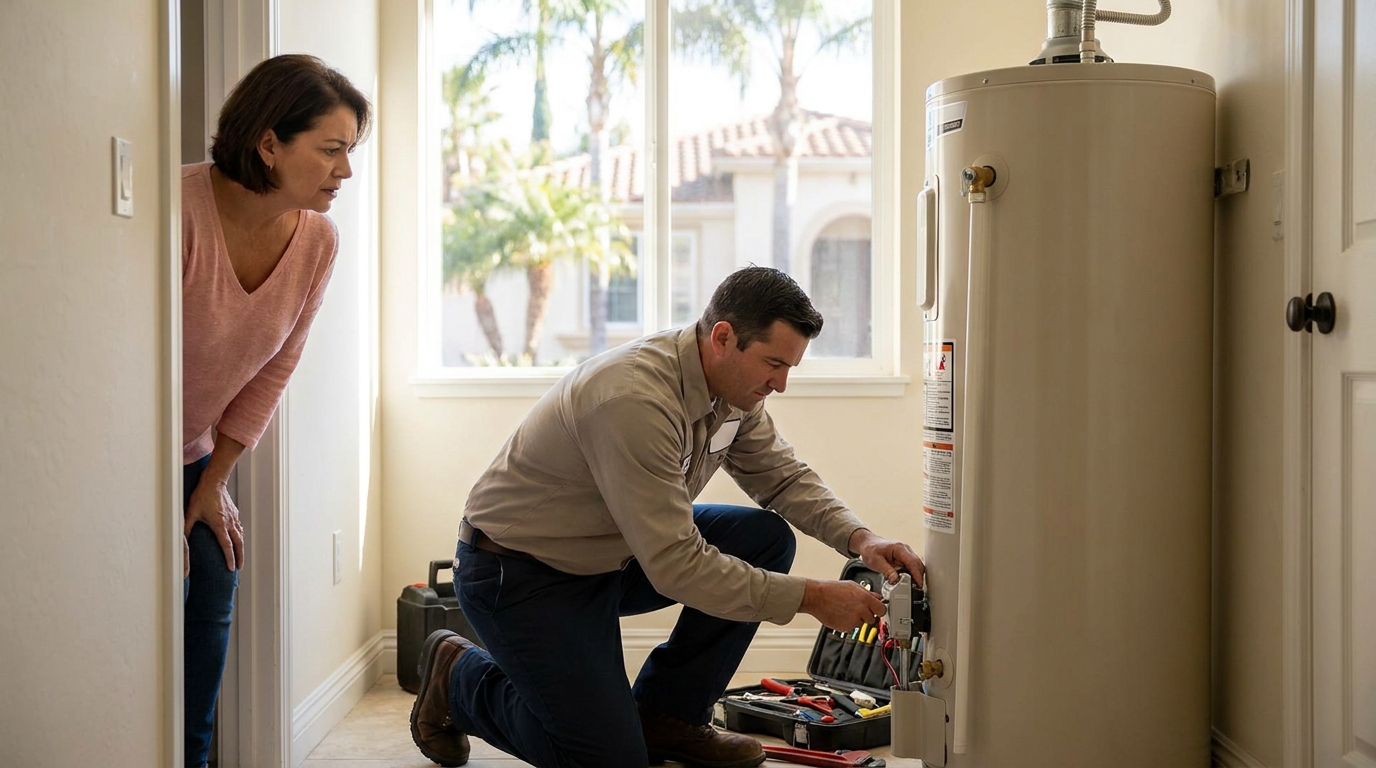
You woke up in your Glen Kernan Club home, turned on the shower, and got an ice-cold surprise. Or maybe you noticed water pooling around the base of the tank in the garage. Either way, a water heater that quits without warning is one of those household problems that goes from inconvenient to urgent fast — especially in a neighborhood where most homes are built around large family routines and morning schedules don't have much slack in them.
Here's exactly what to do when your water heater stops working, what you can safely troubleshoot yourself, and when it's time to bring in a professional.
First: Figure Out What Kind of Failure You're Dealing With
Not every "water heater not working" call is the same emergency. Before you do anything else, take 60 seconds to identify which of these you're facing:
- No hot water at all — likely a pilot light, heating element, thermostat, or gas/electric supply issue.
- Lukewarm water or running out fast — possible thermostat malfunction, sediment buildup, or a failing element.
- Water leaking from or around the tank — this is the urgent one. Tank corrosion or a failed pressure relief valve can cause significant damage quickly.
- Strange noises (popping, rumbling) — usually sediment, common in Jacksonville given our hard, mineral-heavy municipal water.
- Discolored or smelly hot water — anode rod or bacterial issue inside the tank.
The leak scenario is the one that turns into a real emergency. Many Glen Kernan Club homes have water heaters installed in garages or interior closets — both of which can flood drywall, baseboards, and flooring within hours.
Emergency Steps to Take Right Now
1. Shut Off the Power
For an electric water heater, go to your breaker panel and flip the dedicated water heater breaker to OFF. For a gas water heater, turn the gas control valve on the front of the unit to the "OFF" position. This is the single most important step — running a dry or damaged tank can ruin the heating elements or create a safety hazard.
2. Shut Off the Water Supply
Find the cold water shutoff valve on top of the tank (usually a lever or a round handle on the right side) and close it. If you can't reach it or it's seized, shut off the main water supply to the house. In most Glen Kernan Club homes, the main shutoff is near the front hose bib or in the irrigation control area.
3. If There's a Leak, Contain It
Towels, a wet/dry vac, and a tarp can buy you time. If water is reaching drywall or baseboards, move belongings out of the way immediately. Florida's humidity means anything that stays damp for more than 24–48 hours starts growing mold — this matters more here than it would in a drier climate.
4. Don't Relight a Pilot Light if You Smell Gas
If you smell rotten eggs or sulfur near a gas water heater, leave the house and call your gas utility from outside. Never attempt to relight a pilot when gas odor is present.
Troubleshooting You Can Safely Do Yourself
Electric Water Heater: No Hot Water
Check the breaker first. Water heater breakers trip more often than people realize, and a simple reset solves a surprising number of "dead" units. If the breaker trips again immediately, stop — that's an electrical fault that needs a pro.
Next, look for the red reset button on the upper thermostat (you'll need to remove a small access panel). One press can restore function if a high-limit switch tripped.
Gas Water Heater: No Hot Water
Check the pilot light through the small viewing window near the base. If it's out, follow the relighting instructions printed on the unit itself — every manufacturer is slightly different. If the pilot won't stay lit, the thermocouple is usually the culprit, and that's a repair call.
Lukewarm Water
Try raising the thermostat setting slightly (120°F is the standard safe setting). If nothing changes after an hour, one of the heating elements has likely failed — common on tanks past the 8-year mark.
When to Call a Plumber Immediately
Some situations aren't worth the DIY attempt. Call a Jacksonville plumber right away if you see any of the following:
- Water actively leaking from the tank body (not just fittings)
- Rust-colored water or visible corrosion around the base
- The pressure relief valve is discharging water
- A gas smell that doesn't dissipate
- Breaker trips repeatedly after reset
- The unit is more than 10–12 years old and showing any failure symptoms
Tank water heaters in Florida tend to age faster than the national average because of our humid garages and mineral-heavy water. A unit that would last 12 years in a dry climate often shows real wear at 8–10 here.
Permits, Code, and Why It Matters in Jacksonville
Water heater replacement in Jacksonville requires a permit through the City of Jacksonville Building Inspection Division, and the work must comply with the Florida Building Code. This isn't bureaucratic busywork — it covers seismic strapping (less relevant here), expansion tanks (very relevant, since Jacksonville's municipal water system uses closed plumbing systems that require thermal expansion control), drain pan requirements for interior installations, and proper T&P valve discharge routing.
An unpermitted swap is a real liability if you sell your Glen Kernan Club home later — it shows up in inspections and can derail a closing. This is one of the main reasons we don't recommend the cash-handshake handyman route for tank replacement.
Repair or Replace?
A rough rule of thumb: if your unit is under 8 years old, repair is usually the right call. If it's over 10 years old and the repair quote is more than 50% of replacement cost, replacement makes more sense. Between 8 and 10 years, it depends on the specific failure and whether you're considering moving to a tankless system — which is increasingly popular in newer Jacksonville builds because tankless units handle Florida's high hot-water demand from large homes well and don't take up garage square footage.
FAQ
How long should a water heater last in Jacksonville?
Tank units typically last 8–12 years here, on the shorter end of the national range because of mineral content in the water and humid garage conditions. Tankless systems can last 15–20 years with regular descaling.
Is a leaking water heater dangerous?
A small fitting leak isn't an immediate safety risk but causes water damage. A leak from the tank itself means the inner lining has failed and the unit needs replacement — it won't repair itself, and it will get worse.
Can I replace a water heater myself in Jacksonville?
Florida law generally requires licensed plumbers for water heater installation when permits are involved, and Jacksonville requires permits for replacement. DIY installation is also typically not covered by manufacturer warranties.
Why does my water heater make popping sounds?
Sediment buildup at the bottom of the tank. Annual flushing helps, but if it's been years, the sediment may be too compacted to flush effectively, and the tank's lifespan is already shortened.
Getting Professional Help
Water heater emergencies don't follow business hours, and the difference between a quick repair and a flooded garage often comes down to how fast you can get someone on-site. King of Home Solutions works with Glen Kernan Club homeowners on water heater diagnosis, repair, and replacement, and our 4.9★ rating across 48 Google reviews reflects what one recent reviewer described as "professional, on time, excellent communication."
Homeowners in Glen Kernan Club and the broader Jacksonville, FL area who want this handled professionally can reach King of Home Solutions at https://kingofhomesolutions.com for a free estimate. Shut the power and water off first, document any damage with photos for insurance, and then make the call.