Water Softener vs Whole-House Filter in Jacksonville, FL
Jacksonville homes face a real choice between softening and filtration. Here's the straight answer on which system solves which problem — and when you need both.
For most Jacksonville homes on JEA water, a water softener is the right first move if you're seeing scale, spotting, or dull laundry — hardness is the issue almost every home here notices. A whole-house filter is the right first move if your complaint is taste, smell, sediment, iron, or sulfur. They solve different problems, they are not interchangeable, and some homes genuinely need both.
The confusion is understandable. Both systems bolt onto your main water line, both are sold as "whole-house water treatment," and both get recommended by salespeople who don't always stop to ask what you're actually trying to fix. Below is the straight answer for Jacksonville, FL, broken down the way we'd walk a homeowner through it on a service call.
What's the difference between a water softener and a whole-house filter?
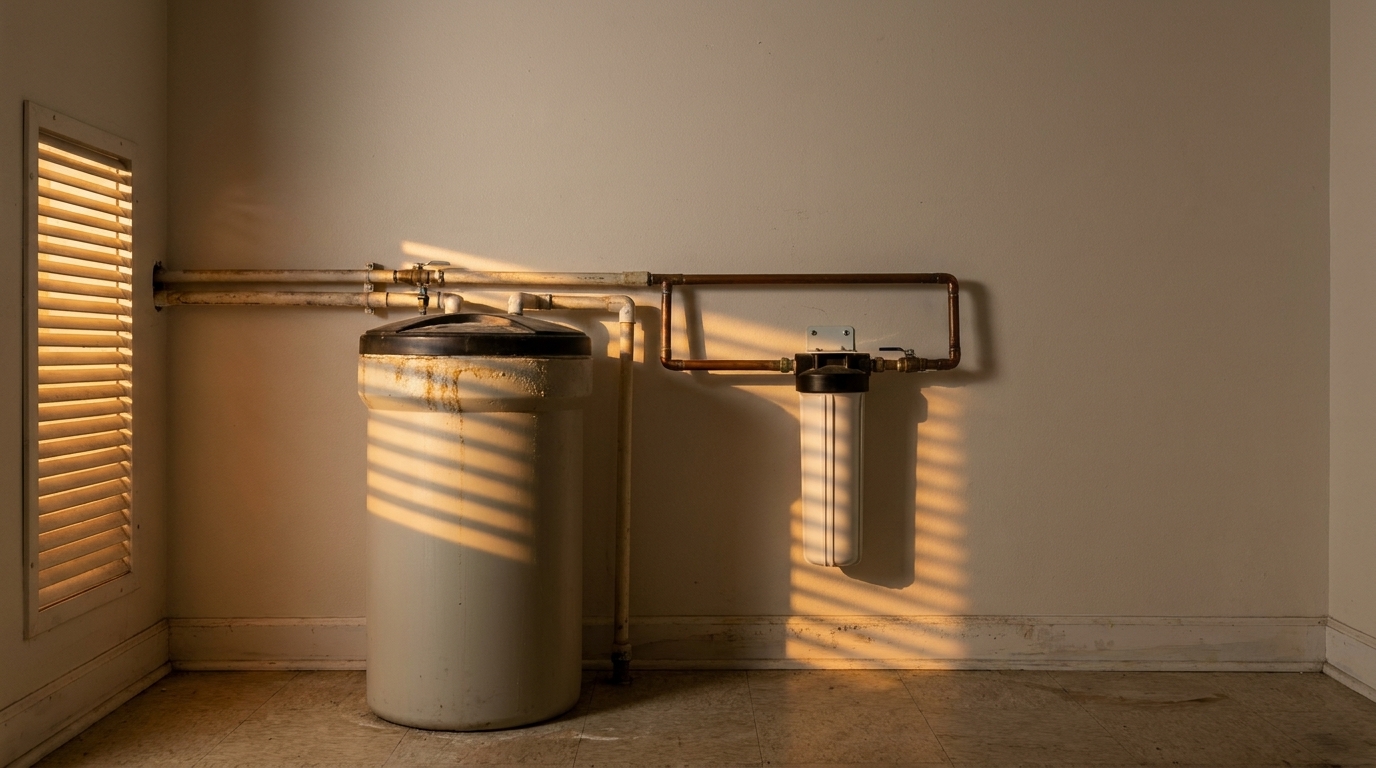
A water softener removes calcium and magnesium — the minerals that cause hardness, scale on fixtures, and poor soap lather — using ion-exchange resin regenerated with salt. A whole-house filter targets specific contaminants like chlorine taste and odor, sediment, iron, or sulfur, depending on the media inside. Softeners don't filter contaminants, and standard filters don't soften water.
Here's the short version we give homeowners in Mandarin, San Marco, Riverside, and out toward Nocatee: if the problem is what the water does (scale on your shower door, crusty faucets, laundry that never feels clean), you're looking at a softener. If the problem is how the water tastes, smells, or looks, you're looking at a filter. At King of Home Solutions, that's the first question we ask before we recommend anything.
Does Jacksonville water actually need softening?
For most JEA customers, yes — Jacksonville water is hard enough to cause the classic symptoms, though hardness varies by ZIP code across the service area. JEA notes that calcium and magnesium in local water may leave spots on dishes and windows but do not present a health risk. The deciding factor isn't whether your water is "hard enough on paper" — it's whether you're seeing the symptoms in your home.
JEA draws its water entirely from the Floridan aquifer, which is naturally mineral-rich — a key reason hardness shows up on so many Jacksonville service calls. That aquifer source is naturally mineral-rich, which is why hardness shows up on so many Jacksonville service calls. Before sizing a softener, check your specific ZIP-code hardness in JEA's annual Water Quality Report (published each year by July 1 at jea.com) — the number in Jacksonville Beach isn't the number in Fleming Island.
Ion-exchange is the mechanism: calcium and magnesium stick to resin beads inside the tank, and sodium or potassium ions are released into the water in their place. Periodically the resin regenerates itself using a salt brine, which flushes the hardness minerals to the drain.
When does a whole-house filter make more sense?
A whole-house filter makes more sense when the complaint is a specific water-quality issue rather than hardness — chlorine taste or smell at every tap, visible sediment, rotten-egg sulfur odor, orange iron staining in sinks and toilets, or low pH causing bluish-green stains on fixtures. These are media-specific problems, and the filter is only useful if its media is matched to the contaminant.
JEA water is sourced from the Floridan aquifer, aerated to remove sulfur compounds, and chlorinated for disinfection — so chlorine taste is the single most common filter-worthy complaint we hear in Duval County. Well-water homes in parts of Clay and Saint Johns Counties are a different story: iron, sulfur, and pH are all common, and we won't quote a system until the water has been tested.
Different media handle different problems: activated carbon for chlorine taste and odor, sediment cartridges for grit and rust flakes, oxidation media for iron and sulfur, neutralizers for low pH. One filter does not do all four jobs. Capacity and flow rate vary widely across whole-house filter systems — a reminder that "whole-house filter" covers a huge range, and the right size depends on your household's water use and the contaminant being targeted.
How do the two systems compare side by side?
Softeners and filters differ on function, maintenance, water use, and the problem they solve. Here's the quick comparison for Jacksonville homeowners deciding between them.
| Dimension | Water Softener | Whole-House Filter |
|---|---|---|
| Primary job | Removes calcium & magnesium (hardness) | Reduces specific contaminants (chlorine, sediment, iron, sulfur) |
| Technology | Ion-exchange resin, regenerated with salt | Carbon, sediment, oxidation, or specialty media |
| Ongoing maintenance | Add salt (sodium or potassium chloride); periodic service | Replace cartridges or media on a schedule |
| Water usage | Uses water to regenerate; brine goes to drain | No regeneration; no brine discharge |
| Certification to look for | NSF/ANSI 44 for hardness reduction | Claim-specific NSF certification for the targeted contaminant |
| Best for | Scale, spotting, soap-lather issues | Taste, odor, sediment, iron, sulfur |
A couple of practical notes: softener regeneration discharge may have local requirements worth checking before installation, and NSF/ANSI certifications are claim-specific and model-specific — verify the exact model and the specific contaminant, not just the brand.
Do some Jacksonville homes need both?
Yes — homes with confirmed hardness and a separate verified water-quality concern often benefit from both systems installed in series. A common Jacksonville setup is a sediment pre-filter, then a carbon filter for chlorine taste and odor, then a softener for hardness. The filter protects the softener resin from chlorine, and the softener handles the minerals the filter can't.
What you want to avoid is buying both out of habit. A whole-house filter doesn't soften water unless it's specifically designed and certified to do so, and a softener doesn't make your water taste better. If drinking-water taste is the main concern, a point-of-use under-sink filter at the kitchen is often a smarter spend than a whole-house system.
How should Jacksonville homeowners decide in 2026?
Start with the symptom, not the system. Pull your ZIP-code hardness from JEA's current Water Quality Report, note what you're actually seeing (scale, taste, smell, staining), and — for well-water homes in Clay or Saint Johns County — get a water test before anyone writes a quote. The right system is whichever one solves the problem you can describe in one sentence.
King of Home Solutions focuses exclusively on residential plumbing, so when we come out to look at a water-treatment question, we're sizing the system to your home's actual use, your fixtures, and your main-line plumbing — not selling you the biggest unit on the truck. That's especially useful for older Jacksonville housing stock where garage installations, slab penetrations, and loop locations all affect what's realistic.
Frequently asked questions
Is JEA water hard enough to need a softener in Jacksonville?
In many Jacksonville ZIP codes, yes — hardness from the Floridan aquifer is why so many homes see scale, spotting, and poor soap lather. JEA notes hardness minerals are not a health risk but can leave spots on dishes and windows. Hardness varies by ZIP code, so check JEA's annual Water Quality Report at jea.com for your specific address before sizing a softener.
Will a whole-house filter also soften my water?
No, not unless the system is specifically designed and certified to soften water. Standard whole-house filters use carbon, sediment, or oxidation media to reduce contaminants like chlorine, sediment, iron, or sulfur — they do not remove the calcium and magnesium that cause hardness. If you need both soft water and better taste, you'll typically install a filter and a softener in series.
Do I need to test my water before installing a system?
For JEA municipal customers, pulling your ZIP-code hardness and contaminant data from JEA's Water Quality Report is usually enough to decide between a softener and a filter. For well-water homes — common in parts of Clay and Saint Johns Counties — an independent water test is essential, because wells can have iron, sulfur, low pH, or bacterial issues that municipal water does not.
What certification should I look for on a water softener?
Look for NSF/ANSI 44 certification, which covers residential cation-exchange softeners for hardness reduction. The EPA also recommends choosing a model with an efficiency rating of no more than 5 gallons of water per 1,000 grains of hardness removed. Certifications are model-specific, so verify the exact model number, not just the brand name, before purchasing.
How often does a whole-house filter need maintenance?
It depends on the system, the media, and your household water use. Sediment cartridges may need replacement every few months, while large carbon tanks can run for years before service. Capacity varies widely depending on system size and media type, so replacement schedules and costs differ significantly from one system to the next.
Can a softener and filter be installed together?
Yes, and it's a common Jacksonville setup for homes with both hardness and a taste, odor, or sediment issue. The typical configuration places a sediment pre-filter and carbon filter upstream of the softener, so chlorine doesn't degrade the softener resin and the softener handles only the minerals the filter can't. A plumber will size and sequence the equipment to your main line.
The bottom line for Jacksonville homes
Pick the system that matches the problem you can actually describe. Scale and spotting point to a softener; taste, odor, iron, or sulfur point to a filter; some homes need both in series. Check your ZIP-code hardness in JEA's Water Quality Report, test well water independently, and verify the NSF certification on any specific model you consider.
Jacksonville homeowners who'd rather have a residential plumber walk the main line, review the symptoms, and recommend a right-sized system can reach King of Home Solutions at (904) 865-4663 or https://kingofhomesolutions.com. We serve Duval, Clay, and Saint Johns Counties, including Jacksonville, the Beaches, Nocatee, Ponte Vedra, Fleming Island, Orange Park, and St. Augustine.