What Happens During an AC Tune-Up in Jacksonville, FL
See exactly what a Jacksonville AC tune-up includes step by step, how long it takes, what it costs, and how often your system should be serviced.

An AC tune-up in Jacksonville is a 60-90 minute preventive visit where a licensed technician inspects, cleans, tests, and calibrates every major part of your cooling system — refrigerant charge, electrical connections, coils, blower, drain line, thermostat, and airflow. The goal is to catch small issues before they become breakdowns during Jacksonville's brutal summer humidity, and to keep your system running at the efficiency the manufacturer designed it for.
If you live anywhere from Riverside to San Marco to the Beaches, your AC works harder than systems in almost any other U.S. climate. Here's exactly what should happen when a technician shows up at your door — and what separates a thorough visit from a lick-and-a-promise.
What does a Jacksonville AC tune-up actually include, step by step?
A proper tune-up covers roughly 20 checkpoints across three areas: the outdoor condenser, the indoor air handler or furnace, and the thermostat and airflow system. The technician measures performance, cleans components that collect dirt and biological growth, tightens electrical connections, and confirms the refrigerant charge is within manufacturer spec — then walks you through what they found.
1. Outdoor condenser inspection and cleaning
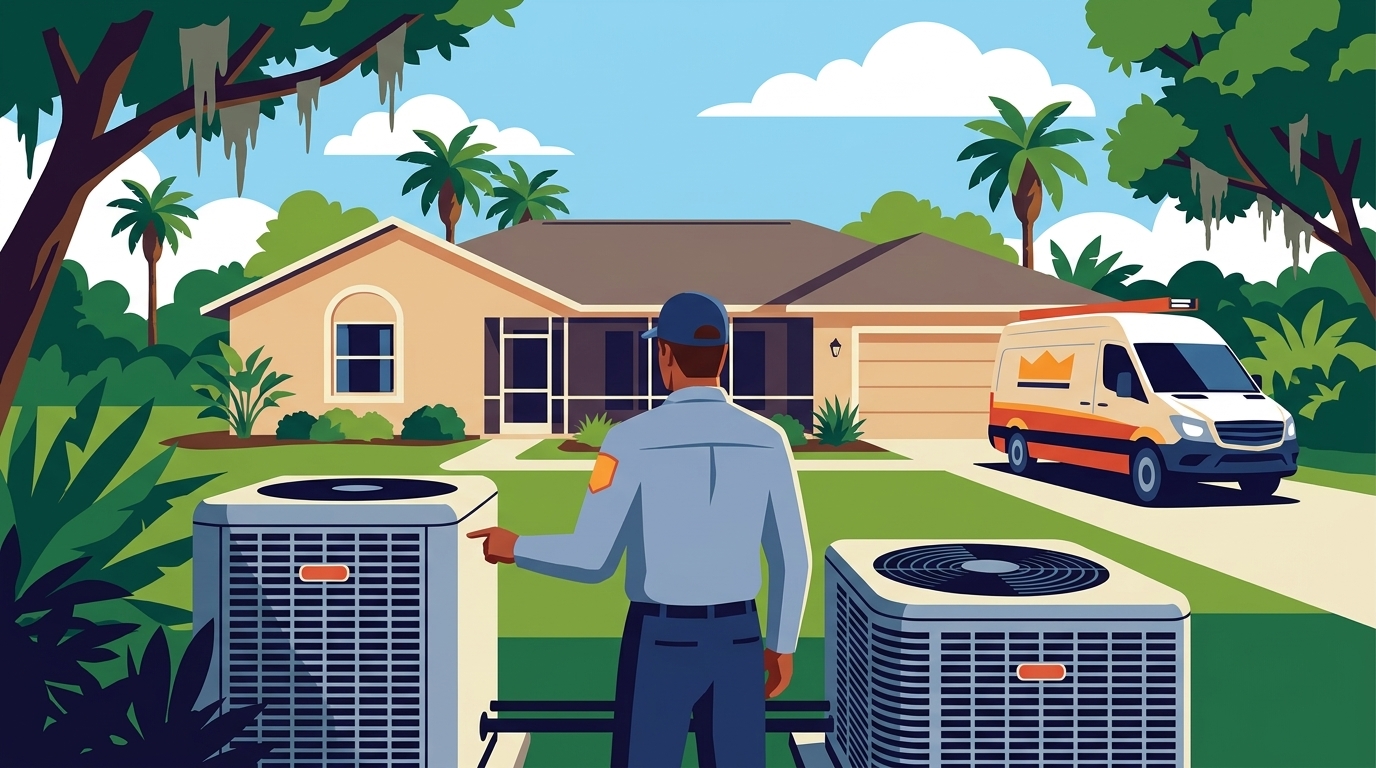
The tech starts outside at the condenser unit. They cut power at the disconnect, remove the top grille, and clear leaves, pollen, and grass clippings from the coil. In Jacksonville, the coil often carries a salt film from coastal air, which the tech rinses with a coil-safe cleaner. Fan blades are checked for balance, capacitor microfarads are measured against the rating stamped on the part, and contactor points are inspected for pitting.
2. Refrigerant charge and pressure test
Using gauges on the service ports, the technician reads suction and liquid line pressures and compares them against the target superheat or subcooling for the outdoor temperature that day. An undercharged system runs longer, freezes up, and wears the compressor. An overcharged system wastes energy. This is one of the tests homeowners can't do themselves, and it's often where the real value of a professional tune-up shows up.
3. Indoor coil, blower, and drain line service
Inside, the tech pulls the access panel on the air handler. They inspect the evaporator coil for dirt and biological growth (extremely common in humid Duval County attics), check the blower wheel for buildup, and clear the condensate drain line. A clogged drain is the #1 emergency call we see in July and August — water backs up, trips the safety float, and shuts the system down. A vacuum flush and a treatment tablet prevents it.
4. Electrical, thermostat, and airflow checks
Every wire connection at the air handler, disconnect, and thermostat is tightened. Amp draw on the compressor and blower motor is measured. The thermostat is tested for accurate temperature reading and proper cycle timing. Finally, the tech checks static pressure across the return and supply — if your ductwork is undersized or your filter is too restrictive, no amount of tune-up work fixes the underlying airflow problem, and you deserve to know that.
How long does a tune-up take, and what does it cost in 2026?
A single-system tune-up in Jacksonville typically takes 60 to 90 minutes and costs between $89 and $189 for a standalone visit in 2026. Annual maintenance plans, which usually include two visits (spring AC, fall heat) plus priority scheduling and repair discounts, run $180 to $300 per year. Multi-system homes and older R-22 units may run higher.
| Service Type | Typical Duration | 2026 Price Range (Jacksonville) |
|---|---|---|
| Single tune-up (one system) | 60-90 minutes | $89 - $189 |
| Annual maintenance plan (2 visits/year) | 60-90 min per visit | $180 - $300/year |
| Tune-up + coil deep clean | 2-3 hours | $250 - $450 |
| Multi-system home (2-3 units) | 2-3 hours | $160 - $350 |
Why does Jacksonville's climate make tune-ups more important than in most cities?
Jacksonville's cooling season stretches from March through October — roughly eight months of near-continuous AC use, with dew points regularly above 70°F. That means your system runs two to three times more annual hours than a system in a milder climate, and the humidity means your evaporator coil is constantly wet, which accelerates biological growth and drain-line clogs.
Add the salt air near Atlantic Beach, Neptune Beach, and Mayport, plus the pollen surge each spring, and Jacksonville condensers simply take more punishment than the national average. The team at King of Home Solutions sees this play out every summer: systems that get an annual tune-up routinely make it 15+ years, while neglected systems often fail at year 8-10, usually during the first 95°F stretch in July.
How often should you service your HVAC system in Jacksonville?
Once a year at minimum, and ideally twice — a spring AC tune-up before the humidity peaks, and a fall heat check before the first cold snap. Florida's cooling load is heavy enough that most manufacturers require documented annual maintenance to honor the parts warranty, which typically runs 10 years on newer systems.
If your home has heavy pet dander, you run the system year-round, or you're on the coast where salt exposure is high, twice-yearly service isn't optional — it's what keeps the warranty valid and the compressor alive.
What separates a thorough tune-up from a shortcut visit?
A real tune-up takes over an hour and produces a written report with measured values: capacitor microfarads, refrigerant pressures, amp draws, temperature split across the coil, and static pressure. A shortcut visit is a 20-minute filter change with a clipboard. If a technician doesn't put gauges on the system or open the air handler, you did not get a tune-up — you got a visual inspection.
King of Home Solutions built its reputation on the thorough version. One recent reviewer described the team as "professional, knowledgeable, and very thorough throughout the entire process," which mirrors the 4.9-star average across 55 Google reviews. That kind of consistency is what Jacksonville homeowners should look for when comparing HVAC companies — measured work, clear explanations, and a report you can actually read.
Frequently asked questions about AC tune-ups in Jacksonville
How often should I service my HVAC system in Florida?
At least once per year for AC-only service, and twice per year (spring and fall) if you have a heat pump or want to maintain manufacturer warranty coverage. Florida's long cooling season and high humidity put roughly double the annual runtime on your system compared to northern climates, which is why most HVAC manufacturers require documented annual maintenance to honor the 10-year parts warranty.
Do I really need a tune-up if my AC is working fine?
Yes. A tune-up is preventive, not reactive — its job is to catch the failing capacitor, the low refrigerant charge, or the clogged drain line before they shut your system down on a 96°F Saturday. Most breakdowns show measurable warning signs weeks or months in advance, and those signs only appear when someone puts gauges and meters on the equipment.
What's the best time of year to schedule an AC tune-up in Jacksonville?
February through April is ideal, before Jacksonville's humidity and heat push HVAC companies into peak-season backlogs in May and June. Scheduling in late winter means faster appointment windows, more time to address any repairs found, and a system that's ready for the summer load. Fall tune-ups on heat pumps are best done in October or early November.
Will an AC tune-up lower my Jacksonville power bill?
Usually yes, though the exact savings depend on how much dirt and inefficiency were present. A dirty condenser coil can raise energy use by 15-20%, and a low refrigerant charge or clogged filter can add another 10-15%. For a Jacksonville home running AC eight months a year, restoring the system to spec typically pays for the tune-up within one cooling season.
What licenses should a Jacksonville HVAC technician hold?
Florida requires HVAC contractors to hold a state-issued Certified or Registered Class A or Class B contractor license through the Florida Department of Business and Professional Regulation (DBPR). Technicians handling refrigerant must also carry EPA Section 608 certification. Ask for both license numbers before any work — legitimate companies provide them without hesitation.
How do I know if the tune-up was done properly?
You should receive a written or digital report listing measured values: refrigerant pressures, capacitor readings, amp draws, temperature drop across the coil (typically 16-22°F for a healthy Jacksonville system), and static pressure. If the paperwork is a generic checklist with no numbers, or the visit took less than 45 minutes, the work was almost certainly incomplete.
The bottom line for Jacksonville homeowners
An AC tune-up in Jacksonville is one of the highest-return maintenance items you can do for a Florida home — it protects your warranty, cuts your power bill, and dramatically reduces the odds of a July breakdown. What matters is that the visit is genuinely thorough: gauges on the ports, panels off the air handler, measured readings on paper. Readers in Jacksonville who want this handled professionally can reach King of Home Solutions at kingofhomesolutions.com to schedule a tune-up or ask questions about their system.