What to Do When Your AC Stops Working in Atlantic Beach, FL: A Homeowner's Checklist
AC stopped working in Atlantic Beach, FL? Follow this step-by-step checklist to troubleshoot, stay safe, and know when to call an HVAC pro.
It's a sticky August afternoon in Atlantic Beach, the salt air is heavy, and the thermostat in your living room is climbing past 82 degrees. Your AC has gone quiet — or worse, it's running but blowing warm air. If you've ever lived through a Florida coast summer without cooling, you know the clock starts ticking fast on comfort, indoor humidity, and even the health of your furniture and electronics.
Before you panic or assume the worst, there's a clear sequence of checks every homeowner can run through. We've put together this checklist based on the most common AC failures we see across Atlantic Beach neighborhoods like Selva Marina, Sea Turtle, and the Cove — and what actually helps you get cool air back fastest.
Step 1: Confirm It's Actually the AC (and Not the Power)
Florida's coastal storms knock out breakers more often than people realize. Salt-laden air, summer lightning, and aging electrical panels in older Atlantic Beach homes all play a role.
- Check your home's main electrical panel for any tripped breakers labeled "AC," "Air Handler," or "Condenser."
- Look for a separate disconnect box near your outdoor unit — sometimes a pulled disconnect is the only issue.
- Make sure your thermostat has power. If the screen is blank, replace the batteries before going further.
If a breaker trips again immediately after you reset it, stop. That's a sign of a deeper electrical issue and needs a licensed HVAC technician.
Step 2: Check the Thermostat Settings
It sounds obvious, but it's the #1 false alarm we get called out for. Confirm:
- The thermostat is set to Cool, not Heat or Off.
- The temperature setpoint is at least 3-5 degrees below the current room temperature.
- The fan is set to Auto (running it on "On" can make warm air feel like a system failure when it isn't).
Smart thermostats sometimes lose their Wi-Fi schedule after a storm and revert to default settings — worth a quick look.
Step 3: Inspect the Air Filter
A clogged filter is the single most common cause of an AC "stopping" in Atlantic Beach. Our coastal air carries fine sand, pollen, and salt particles that load filters faster than inland Jacksonville homes.
- Pull the filter out and hold it up to the light. If you can't see through it, replace it.
- During peak summer humidity, plan on changing filters every 30-45 days, not the standard 90.
- If the filter is soaking wet, you likely have a frozen evaporator coil — turn the system off and skip to Step 5.
Step 4: Look at the Outdoor Condenser Unit
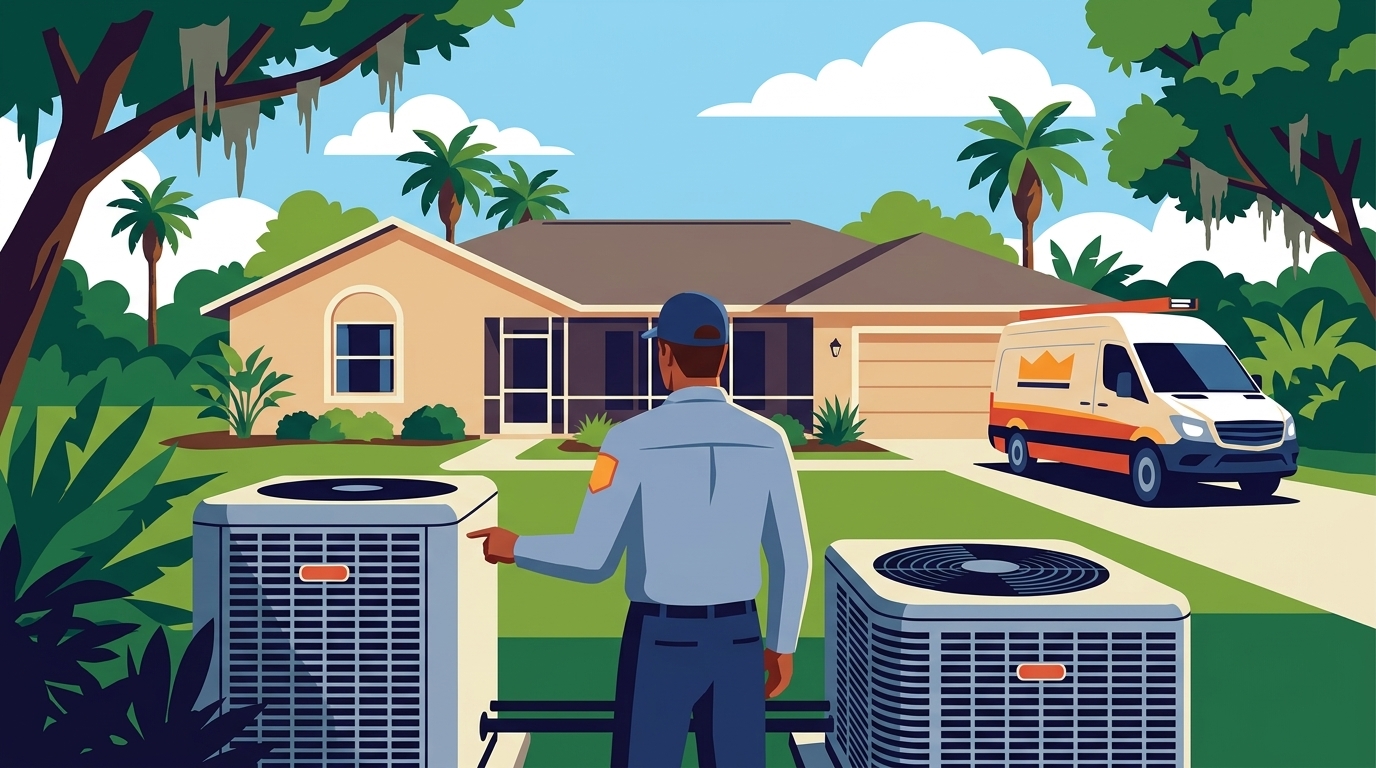
Walk outside and check the condenser. You're looking for:
- Debris around the unit — palm fronds, grass clippings, and storm debris block airflow. Clear at least two feet of space on all sides.
- Ice or frost on the lines — a clear sign of a refrigerant or airflow problem.
- Unusual sounds — grinding, buzzing, or clicking that wasn't there before.
- The fan — is it spinning? If the unit is humming but the fan is still, the capacitor is likely failed.
Coastal corrosion is brutal on outdoor units in Atlantic Beach. We routinely see condenser coils and electrical contacts deteriorate years faster here than in homes just a few miles inland near the St. Johns River.
Step 5: Check for a Frozen Evaporator Coil
Open the indoor air handler closet (usually in a garage, hallway closet, or attic) and look at the copper refrigerant lines. If you see ice buildup on the larger insulated line or on the coil itself:
- Turn the system OFF at the thermostat.
- Switch the fan to ON to help the ice melt faster.
- Let it thaw completely — usually 1 to 3 hours.
- Replace the filter if it hasn't been changed recently.
- Restart the system and watch for the issue to return.
If it freezes up again within a day, you likely have a refrigerant leak or a failing blower motor. That's a professional repair.
Step 6: Check the Condensate Drain Line
Florida's humidity means your AC pulls gallons of water out of the air daily. That water exits through a small PVC drain line — and when it clogs (usually with algae or mold), most modern systems shut themselves off as a safety measure.
- Look for a float switch near the air handler that may have tripped.
- Check the drain line outlet outside — often near a foundation wall — for standing water or backup.
- A wet/dry vacuum on the outdoor end of the drain line can clear minor clogs.
This is one of the most overlooked causes of AC failure in coastal Florida homes, especially during the rainy season from June through September.
Step 7: Protect Your Home While You Wait for Repair
If you've worked through the checklist and the AC still isn't cooling, you'll need professional help. While you wait:
- Close blinds and curtains on east and west-facing windows.
- Run ceiling fans and portable fans to keep air moving.
- Avoid using the oven, dryer, or other heat-generating appliances.
- Move pets and elderly family members to the coolest part of the house — usually a north-facing interior room.
- If indoor temperatures climb above 90°F and someone in the home is vulnerable, consider relocating temporarily. Heat illness is a real risk in Florida summers.
When to Call an HVAC Professional in Atlantic Beach
Call for service if any of the following apply:
- Breakers keep tripping after a reset.
- You hear grinding, screeching, or electrical buzzing from either unit.
- You smell something burning or musty coming from vents.
- The coil refreezes after thawing.
- The system is over 10 years old and this isn't the first failure this season.
Atlantic Beach homes — especially older ones near the oceanfront — often need HVAC service tailored to coastal conditions. Saltwater corrosion, humidity loads, and the volume of summer storms mean a technician who understands this microclimate will diagnose faster than one who only works inland.
King of Home Solutions services Atlantic Beach and the surrounding Jacksonville Beaches area, and customer feedback consistently points to clear communication and on-time arrivals — one recent reviewer noted the technician "explained everything in plain language," which matters when you're trying to make a decision under pressure.
FAQs: AC Failure in Atlantic Beach, FL
How quickly should I get my AC repaired in Atlantic Beach summer?
Same-day or next-day service is strongly recommended from May through October. Indoor humidity above 60% for extended periods can damage hardwood floors, cabinetry, and electronics, and promote mold growth — all common concerns in coastal Florida homes.
Can I run my AC if it's leaking water inside?
No. Turn it off at the thermostat. Continuing to run it can damage the air handler, soak drywall and insulation, and grow mold quickly in Florida's humidity. The most common cause is a clogged condensate drain.
How long should an AC unit last on the Florida coast?
In Atlantic Beach's salt-air environment, expect 10-12 years for outdoor condensers, sometimes less for oceanfront homes. Inland Florida systems often last 15+ years. Regular coil cleaning and maintenance extend that meaningfully.
Do I need a permit to replace my AC in Atlantic Beach?
Yes. The City of Atlantic Beach requires mechanical permits for HVAC replacement, and only licensed contractors can pull them. This protects you on resale and ensures the system meets Florida Building Code, which has specific requirements for coastal wind zones.
The Bottom Line
Most AC failures in Atlantic Beach trace back to a handful of culprits: clogged filters, tripped breakers, frozen coils, or backed-up drain lines. Working through this checklist will solve a real share of problems without a service call — and when it won't, you'll at least know exactly what to tell the technician, which usually means a faster repair.
Homeowners in Atlantic Beach, FL who want this handled professionally can reach King of Home Solutions at kingofhomesolutions.com for diagnosis and repair. The team works throughout the Jacksonville Beaches area and is familiar with the specific demands coastal conditions place on residential cooling systems.