When Your HVAC System Is Telling You It's Time for a Replacement
Wondering if your HVAC system is done? Here are the clearest signs your Jacksonville, FL home needs a full HVAC replacement — not just another repair.
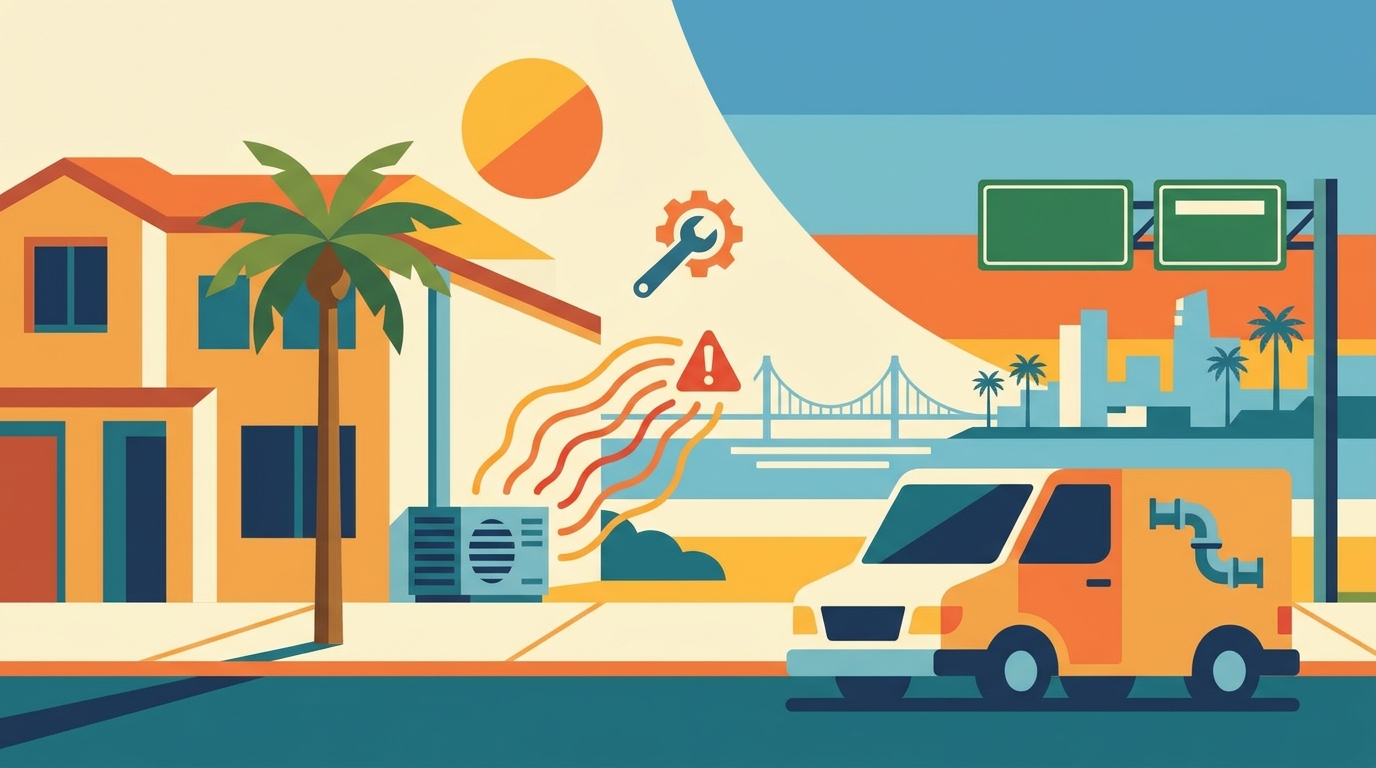
Your HVAC system rarely fails without warning. In a Jacksonville, FL home, where the air conditioner runs hard from March through October and the heat strips kick on during those brief January cold snaps, a tired system tends to send up flares for months before it finally gives out. The trick is knowing which signals point to a quick repair — and which ones mean it's time to plan for a full replacement.
This guide walks through the system-wide symptoms our team at King of Home Solutions sees most often in Duval County homes, plus what to weigh before you commit to a new HVAC system.
Why Jacksonville Homes Are Especially Hard on HVAC Equipment
Coastal Northeast Florida is brutal on heating and cooling equipment. Salt air from the Atlantic, sustained summer humidity, and cooling loads that run 8+ months a year all shorten the working life of a typical residential system.
In neighborhoods like Riverside, Avondale, San Marco, and Mandarin, we frequently see homes with original 1990s and early-2000s air handlers still limping along. The compressor may still hum, but the system as a whole — ductwork, refrigerant lines, thermostat, blower motor — has aged out together. That's the difference between an AC repair and a full HVAC replacement: the whole system is talking to you, not just one part.
The Clearest Signs Your HVAC System Needs Replacement in Jacksonville, FL
1. Your System Is 12+ Years Old and Still Using R-22 Refrigerant
If your outdoor unit was installed before 2026, there's a good chance it runs on R-22 (often called Freon). R-22 has been phased out of U.S. production, and the remaining supply is expensive and getting harder to source. A single refrigerant recharge on an older R-22 system in Jacksonville can run several hundred dollars — and it's a temporary fix on equipment already near the end of its life.
Most residential HVAC systems in our climate last 10 to 15 years. Past that window, replacement almost always beats sinking money into a fading unit.
2. Repair Bills Are Stacking Up
One $400 repair on a 14-year-old system is reasonable. Three repairs in two summers is a pattern. A common rule of thumb: if the cost of a single repair exceeds 50% of the price of a new system, replace it. If you're calling for service every cooling season, you're already paying for a new system in installments — just without the benefits.
3. Humidity Won't Come Down, Even When the AC Is Running
This is a Jacksonville-specific tell. A healthy HVAC system should hold indoor humidity around 45–55%. If your thermostat reads 74°F but the house still feels sticky, your system has lost the ability to dehumidify effectively. That usually points to an oversized or worn-out evaporator coil, a struggling compressor, or duct leakage pulling humid attic air into your return.
Sticky air at the right temperature is one of the most reliable failing HVAC system symptoms we see in Jacksonville homes.
4. Rooms Have Wildly Different Temperatures
If the front of your house is 72°F and the back bedrooms are 80°F, your system is no longer moving air the way it was designed to. This can be a duct issue, a blower problem, or a system that's simply undersized for additions made to the home over the years. In older Springfield bungalows and split-level homes in Arlington, we frequently see this after homeowners have enclosed a porch or added a room without resizing the system.
5. Energy Bills Are Climbing With No Lifestyle Change
JEA bills creep up every summer in Jacksonville, but a sudden 20–40% jump that can't be explained by weather or rate changes usually points to an HVAC system losing efficiency. Older systems running at SEER 10 or 12 simply can't compete with current 15+ SEER2 equipment. Many Jacksonville homeowners see meaningful monthly savings within the first cooling season after upgrading.
6. Strange Noises, Smells, or Short Cycling
Grinding, hissing, banging, a musty smell at startup, or the system turning on and off every few minutes — these are not quirks. Short cycling in particular wears equipment out faster and signals that the system can't maintain its setpoint. On equipment past the 10-year mark, these symptoms usually mean replacement, not another patch.
7. Your System Can't Keep Up During Heat Waves or Cold Snaps
When Jacksonville hits a stretch of 95°F days in July or a 30°F morning in January, your HVAC system gets stress-tested. A system that runs continuously and still can't hit setpoint on extreme days is telling you its capacity has dropped. That's a system-wide problem, not a thermostat issue.
Repair or Replace: How to Decide
Before committing to a new HVAC system in Jacksonville, FL, work through these questions:
- Age: Is the system older than 10 years?
- Refrigerant: Does it still use R-22?
- Repair history: Have you had two or more service calls in the last 24 months?
- Comfort: Are humidity, room-to-room temperatures, or air quality noticeably off?
- Bills: Have your cooling costs jumped without explanation?
Three or more "yes" answers usually tips the math toward replacement.
What to Know Before Replacing an HVAC System in Jacksonville
HVAC replacement in Duval County requires a permit and inspection through the City of Jacksonville's Building Inspection Division. Any contractor you hire should pull the permit in their name, not yours — that protects you and ensures the work is inspected. Florida also requires HVAC contractors to hold a state license (a Class A or Class B air conditioning contractor license), so verify licensing before you sign anything.
A few other Jacksonville-specific considerations:
- Sizing matters more here than in drier climates. An oversized unit will cool fast but won't run long enough to pull humidity out of the air. A proper Manual J load calculation is worth insisting on.
- Hurricane readiness. If you're replacing the outdoor condenser, ask about hurricane tie-downs and elevated pads, especially in flood-prone areas near the St. Johns River or in coastal neighborhoods like Atlantic Beach and Neptune Beach.
- Timing. Spring (March–April) is the easiest window to schedule replacement in Jacksonville. Waiting until July puts you in line behind every emergency call in the city.
Frequently Asked Questions
How long does an HVAC system last in Jacksonville, FL?
Most systems last 10 to 15 years in our climate. Heavy cooling loads, humidity, and salt exposure on coastal homes can shorten that. Systems given annual maintenance tend to land at the upper end of that range.
Is it worth repairing a 15-year-old HVAC system?
Usually not. Even if the repair is affordable, you're investing in equipment that's already past its expected lifespan. The efficiency gap between a 15-year-old system and a current model is large enough that replacement typically pays back through lower JEA bills.
How long does an HVAC replacement take?
A standard residential replacement is a one-day job. More complex installations — duct modifications, electrical upgrades, or zoning systems — can run two to three days.
Do I need a permit to replace my HVAC in Jacksonville?
Yes. The City of Jacksonville requires a mechanical permit for HVAC replacement, and the work must pass inspection. A licensed contractor will handle this as part of the install.
A Practical Next Step
If two or three of the signs above sound familiar, the next move is a straightforward in-home assessment — not a sales pitch, but an honest read on whether you're looking at one more repair or a full replacement. Homeowners in Jacksonville, FL who want this handled professionally can reach King of Home Solutions at kingofhomesolutions.com for a free estimate. Our 4.9★ Google rating reflects the approach customers have consistently described — on-time arrivals, clear explanations, and fair pricing — which is what you should expect from any HVAC contractor you bring into your home.