Why AC Loses Efficiency Faster in Atlantic Beach, FL
Salt air, humidity, and ocean exposure wear down coastal AC systems fast. Here's why Atlantic Beach homes lose cooling efficiency sooner than inland Florida.
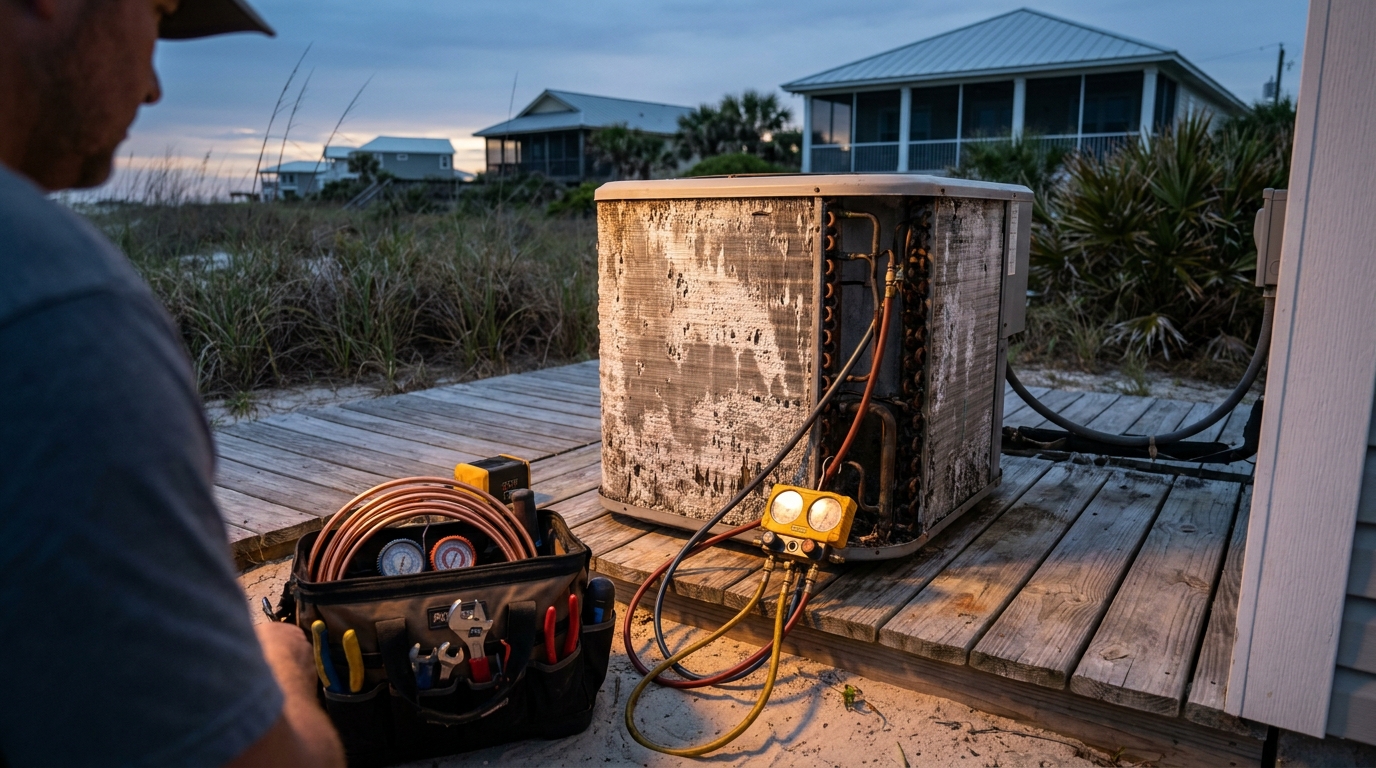
Atlantic Beach homes lose AC efficiency faster than inland Florida properties because airborne salt aerosols corrode the aluminum fins and copper coils of outdoor condenser units, restricting airflow and heat transfer within just a few years. Combined with higher year-round humidity off the Atlantic and constant ocean breezes carrying chloride particles inland, a beachside system often works 15-30% harder than an identical unit five miles west — and typically loses 3-5 years off its expected service life.
How does salt air actually damage an AC system in Atlantic Beach?
Salt air damages HVAC systems through galvanic corrosion: microscopic salt particles settle on aluminum condenser fins and copper refrigerant lines, absorb moisture from Atlantic Beach's humid air, and create an electrolyte that eats through metal. Within 2-4 years of oceanfront exposure, you'll see white powdery buildup on coils, pitted fin surfaces, and reduced heat exchange — the physical foundation of AC efficiency loss.
The problem compounds because corroded fins bend and collapse, blocking the airflow the condenser needs to release heat. Your system compensates by running longer cycles at higher amp draws, which stresses the compressor and drives up your electric bill.
At King of Home Solutions, we've pulled apart oceanfront condensers less than five years old with fin damage that looks closer to a 15-year-old inland unit. The distance from the shoreline matters more than most homeowners realize — corrosion severity drops noticeably even a mile or two inland toward Mayport Road.
How much faster do coastal AC units wear out compared to inland Florida?
A standard residential AC system inland typically lasts 12-15 years in Florida's climate. In Atlantic Beach — especially east of Mayport Road and along the oceanfront blocks near Beach Avenue — that lifespan often shortens to 8-10 years for unprotected units. Homeowners in Sea Turtle or the neighborhoods closest to the shore see the steepest drop, sometimes needing full replacement in under a decade.
The wear pattern is predictable. Efficiency drops of 10-15% by year five, visible fin degradation by year seven, and compressor strain or refrigerant leaks by year nine are common along the coast. Inland Jacksonville homes on the same equipment often don't hit those milestones until several years later.
| Location | Typical AC Lifespan | Recommended Service Frequency |
|---|---|---|
| Oceanfront Atlantic Beach (within 1/2 mile of shore) | 8-10 years | Every 6 months |
| Central Atlantic Beach | 10-12 years | Every 6 months |
| West of Mayport Road / inland Duval County | 12-15 years | Annually |
How often should I service my HVAC system in Atlantic Beach?
Atlantic Beach homeowners should service their HVAC system twice a year — once in spring before the summer humidity peaks and again in fall — rather than the annual tune-up that works fine for inland homes. Twice-yearly service lets a technician rinse salt buildup off the condenser coils, inspect for early corrosion, and catch capacitor or contactor wear before it turns into a July breakdown.
Coil rinsing is the single most valuable coastal-specific service. A gentle freshwater rinse of the outdoor unit every 3-4 months — something homeowners can do themselves between professional visits — dramatically slows the salt corrosion cycle. Just shut off power at the disconnect first and use low pressure.
Our technicians at King of Home Solutions build a coastal maintenance plan around this reality: two full service visits, coil treatment with a corrosion inhibitor, and an inspection of the refrigerant line insulation, which also degrades faster in UV-heavy oceanfront conditions.
What are the signs I need a new air conditioner in Atlantic Beach, FL?
The clearest signs an Atlantic Beach AC system needs replacement are: cooling cycles that run 30+ minutes without reaching setpoint, electric bills climbing year over year with no lifestyle change, visible green or white corrosion covering more than a quarter of the outdoor coil, repeated capacitor or contactor failures, and any refrigerant leak on a system older than eight years. Once corrosion reaches the compressor housing, replacement almost always beats repair.
Humidity is the other tell. If your home feels sticky at 74 degrees when it used to feel dry, your evaporator coil is likely losing its ability to pull moisture from the air — a common late-stage symptom in coastal systems. Florida's building energy code (part of the Florida Building Code, updated on a three-year cycle) also sets minimum efficiency ratings that make newer systems meaningfully cheaper to run than a struggling 10-year-old unit.
What can Atlantic Beach homeowners do to protect their AC longer?
Homeowners can extend coastal AC lifespan by choosing corrosion-resistant equipment upfront, rinsing the outdoor unit with fresh water every few months, keeping landscaping trimmed back at least two feet from the condenser, and scheduling twice-yearly professional maintenance. These four habits alone can add 3-5 years to a beachside system's service life.
When it's time to replace, ask specifically about units with coated coils — often marketed as "seacoast" or "coastal" models. The e-coating adds a protective barrier that slows salt penetration. It's a modest upcharge that pays back many times over in the Atlantic Beach environment.
Financing is worth asking about too. A high-efficiency coastal-rated system carries a higher sticker price, and local HVAC companies with financing in Atlantic Beach — including King of Home Solutions — can spread that investment across manageable monthly payments so the right equipment isn't out of reach. Given our 4.9-star rating across 55 Google reviews, homeowners consistently mention fair pricing and clear communication as part of the experience.
Frequently Asked Questions
Does salt air really reach homes several blocks from the ocean in Atlantic Beach?
Yes. Salt aerosols carried by prevailing easterly ocean winds reach well past the immediate beachfront in Atlantic Beach, with measurable chloride deposition documented up to a mile or more inland. Homes east of Mayport Road experience the heaviest exposure, but even properties near Atlantic Boulevard and Selva Marina see accelerated corrosion compared to inland Jacksonville neighborhoods.
Will a coastal-rated AC unit really last longer in Atlantic Beach?
Coastal or "seacoast" AC units use e-coated coils and often stainless steel hardware that resist salt corrosion significantly better than standard equipment. In Atlantic Beach's oceanfront zones, a coastal-rated system typically lasts 3-5 years longer than a standard model at the same location. The upgrade usually adds 10-20% to installation cost but pays back through delayed replacement and better sustained efficiency.
Can I rinse my outdoor AC unit myself?
Yes, homeowner rinsing is safe and effective when done correctly. Shut off power at the outdoor disconnect box, use a garden hose on a gentle spray setting, and rinse from the inside out if possible to push debris outward. Avoid pressure washers, which bend the delicate aluminum fins. A rinse every 3-4 months between professional service visits meaningfully slows salt buildup.
What's the best time of year to schedule AC maintenance in Atlantic Beach?
Schedule your first visit in March or April, before Atlantic Beach's summer humidity peaks and technician schedules fill up. Book the second visit in October or November after the worst of hurricane season, when salt spray and storm debris have accumulated. This timing catches problems before peak-cooling demand and prepares the system for continued year-round Florida use.
Is a rusty-looking condenser always a sign of major problems?
Not always. Surface discoloration on the outer cabinet is largely cosmetic and doesn't affect performance. The concern is when white powdery buildup or green corrosion covers the coil fins themselves, or when you can see pitting on refrigerant line connections. A licensed technician can distinguish surface wear from structural corrosion during a routine service visit.
Does homeowners insurance cover coastal AC corrosion damage?
Generally no. Standard Florida homeowners insurance policies exclude gradual wear, corrosion, and rust as covered perils, treating them as maintenance issues rather than sudden accidental damage. Coverage typically applies only when a named storm or covered event damages the unit. This makes preventive maintenance and financing options especially important for Atlantic Beach homeowners planning long-term.
The bottom line for Atlantic Beach homeowners
Coastal living comes with a cooling tax. Salt air, high humidity, and Atlantic breezes shorten AC lifespan and demand more frequent maintenance than inland Florida homes — that's simply the tradeoff for being minutes from the shore. The good news is that most of the damage is predictable and preventable with the right service rhythm and the right equipment choices.
Readers in Atlantic Beach, FL who want a licensed local team to build a coastal-appropriate maintenance plan, evaluate a struggling system, or price out a coastal-rated replacement can reach King of Home Solutions at https://kingofhomesolutions.com to get started.