Why Your AC Runs But Won't Cool in Jacksonville, FL
Jacksonville AC running but blowing warm air? Here's the ranked checklist of failure points behind Florida summer cooling problems — and how to fix them.
If your AC is running but not cooling in Jacksonville's summer heat, the most common culprits are a dirty air filter choking airflow, a frozen evaporator coil, a tripped outdoor disconnect, low refrigerant from a slow leak, or a condenser coil caked with dust and pollen. In our coastal climate, humidity overload and salt-air corrosion push these failures to the front of the list from June through September.
You come home to Riverside or San Marco after a 95-degree afternoon, the thermostat reads 82, and the system is humming away — but the vents feel lukewarm. That gap between "running" and "cooling" is where most Jacksonville homeowners lose their patience (and their electric bill). Let's walk through why it happens here specifically, and what to check before you pick up the phone.
Why does Jacksonville's summer climate make this problem so common?
Jacksonville sits in a humid subtropical zone where July and August dew points routinely exceed 75°F and afternoon heat indexes push past 105°F. That combination forces your AC to remove enormous amounts of moisture on top of cooling the air — a workload that exposes weak components fast, especially aging capacitors, marginal refrigerant charges, and clogged coils near the coast.
Homes from the Beaches through Mandarin and out to the Westside all share the same enemy: constant humidity plus salt air near the St. Johns River and Atlantic. King of Home Solutions technicians see the same summer failure patterns repeat every year, and the ranked list below reflects what actually shows up on service calls — not textbook theory.
What is the #1 reason an AC runs but blows warm air in Florida summer?
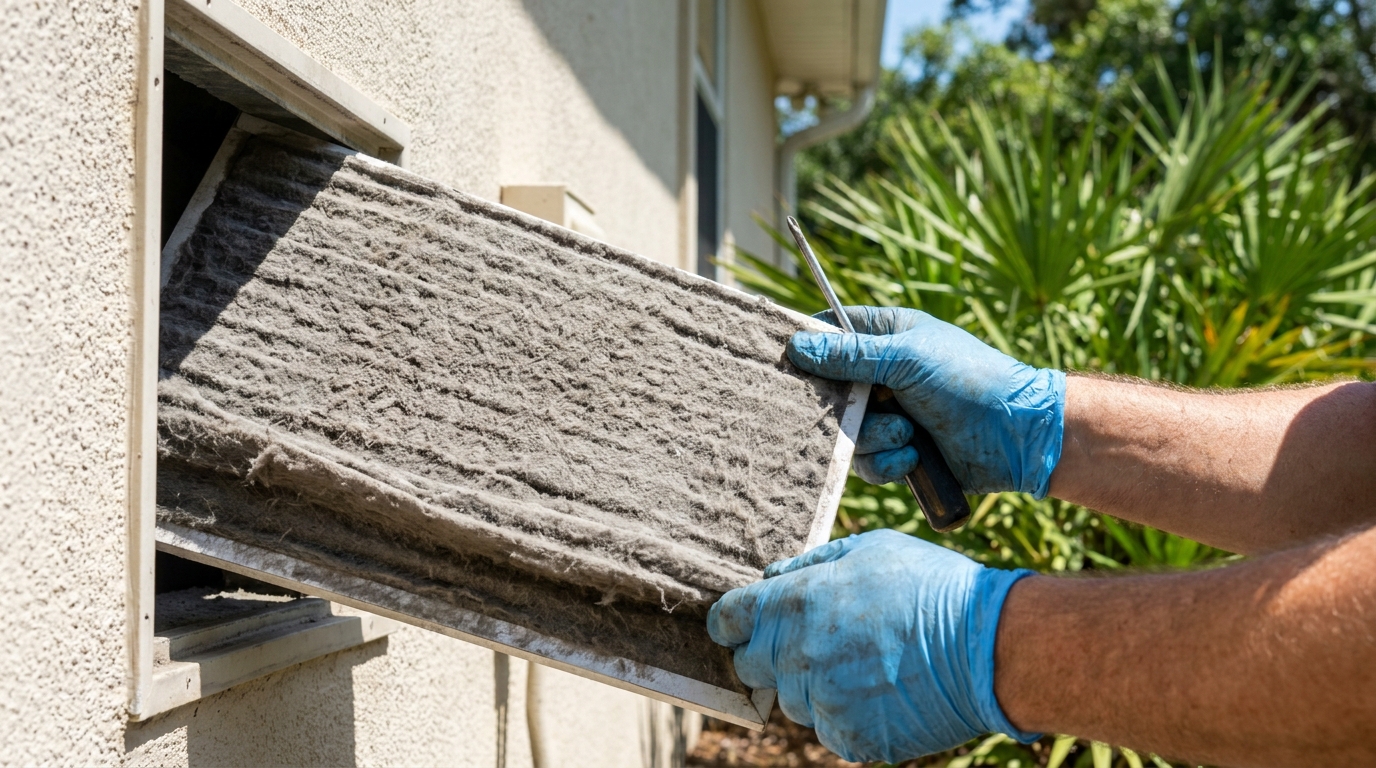
The single most common cause is restricted airflow from a dirty filter or blocked return, which starves the evaporator coil and causes it to freeze into a solid block of ice. Once frozen, the system keeps running but cannot transfer heat — so the air coming out of your vents feels warm or barely cool, even though the outdoor unit sounds normal.
Check your filter first. In Jacksonville, pollen season overlaps with summer humidity, and filters that would last 90 days in a dry climate often clog in 30. If you pull the filter and it looks gray or fuzzy, replace it and shut the system off for two to three hours to let the coil thaw before restarting.
What are the ranked failure points to check before calling a technician?
Work through these in order — they're arranged from most common to least, based on what Jacksonville HVAC crews actually find during summer service calls. The first four you can inspect yourself; the last three require a licensed tech.
| Rank | Failure Point | Symptom | DIY or Pro? |
|---|---|---|---|
| 1 | Clogged air filter | Weak airflow, warm vents, possible ice on refrigerant line | DIY |
| 2 | Frozen evaporator coil | Ice visible on indoor unit or copper line; warm air | DIY thaw, pro diagnosis |
| 3 | Tripped breaker or outdoor disconnect | Indoor fan runs, outdoor unit silent | DIY reset once |
| 4 | Dirty condenser coil (outdoor unit) | System runs constantly, high electric bill, weak cooling | DIY rinse |
| 5 | Failed capacitor | Humming outdoor unit, fan not spinning | Pro |
| 6 | Low refrigerant / slow leak | Gradual loss of cooling over weeks | Pro (EPA-certified) |
| 7 | Failing compressor | Loud clicking, hot air, breaker trips | Pro |
How do you check the outdoor condenser unit safely?
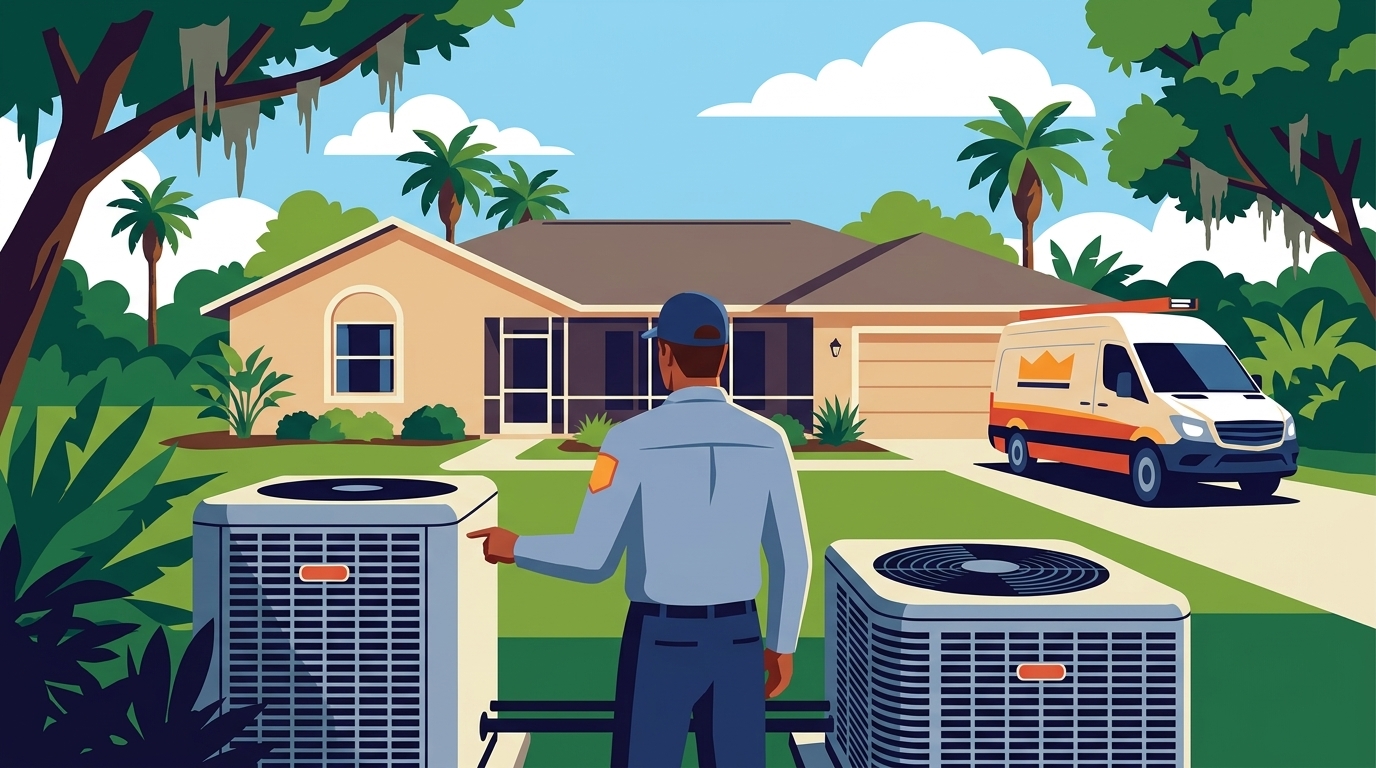
Turn the system off at the thermostat, then flip the outdoor disconnect switch beside the unit. Use a garden hose on gentle spray to rinse the outside of the condenser coil from the top down, washing out grass clippings, pollen, and the fine salt residue that builds up on Jacksonville systems within a mile or two of the ocean. Let it dry 15 minutes, restore power, and restart.
If the outdoor fan hums but doesn't spin, or the unit is completely silent while the indoor blower runs, you're likely looking at a failed capacitor — a $15 part that fails constantly in Florida heat because sustained high temperatures cook the electrolyte inside. That's a pro repair; capacitors hold a dangerous charge even after power is cut.
Is refrigerant loss really that common in Jacksonville systems?
Yes — refrigerant leaks account for a significant share of "runs but doesn't cool" calls, especially on systems older than eight years. Salt air corrodes copper line sets and coil fins along the coast from Atlantic Beach through Jacksonville Beach, creating pinhole leaks that release refrigerant slowly over months. You don't consume refrigerant the way you consume gas; if it's low, there is a leak, period.
Under EPA Section 608, only certified technicians can legally purchase and handle refrigerant. Topping off a leaking system without finding the leak is throwing money away and is discouraged by federal guidance. A proper repair means locating the leak, repairing or replacing the component, pulling a vacuum, and recharging to manufacturer spec.
When should you stop troubleshooting and call a pro?
Call a licensed HVAC contractor if: the outdoor unit is silent after resetting the breaker once, you see ice on refrigerant lines that returns after thawing, cooling has degraded gradually over weeks, the breaker trips repeatedly, or you smell anything electrical or chemical. Repeatedly resetting a tripped breaker is a fire risk, and running a frozen or low-charge system damages the compressor — a repair that can exceed $2,000.
King of Home Solutions serves Jacksonville homeowners across Duval County and holds a 4.9-star rating across 55 Google reviews. One recent reviewer described the team as "professional, knowledgeable, and very thorough," which matches how summer diagnostic calls should go: filter check, coil inspection, capacitor test, refrigerant pressure reading, and a clear explanation before any work begins.
Frequently Asked Questions
Why is my AC running constantly but the house won't cool below 78 in Jacksonville?
When outdoor temperatures exceed 95°F with high humidity, most residential AC systems can only maintain about a 20-degree difference from outdoor air. If your unit is undersized, low on refrigerant, or has a dirty condenser coil, that gap shrinks further. Check the filter and rinse the outdoor coil first; if the house still won't drop below 78, have a technician verify refrigerant charge and airflow.
How long does it take a frozen AC coil to thaw?
A fully frozen evaporator coil typically takes two to three hours to thaw with the system off and the indoor fan running on "on" instead of "auto." Running the fan without the compressor circulates warm indoor air across the ice and speeds thawing. Do not chip ice off — you'll puncture the coil. Once thawed, replace the filter before restarting cooling.
Can I add refrigerant to my AC myself in Florida?
No. EPA Section 608 requires certification to purchase or handle refrigerants like R-410A, and adding refrigerant without fixing the underlying leak violates federal environmental rules. Even DIY "top-off" kits sold online are legally restricted for licensed technicians. Overcharging a system can also damage the compressor, turning a $300 repair into a full replacement.
How often should I change my AC filter during Jacksonville summer?
Change 1-inch pleated filters every 30 days from June through September in Jacksonville. Summer combines heavy pollen carryover, high humidity, and near-constant system runtime, which loads filters much faster than in cooler months. Media filters (4- or 5-inch) can go 60 to 90 days. Homes with pets or near unpaved areas should check monthly year-round.
Why does my AC cool at night but not during the afternoon?
This pattern almost always points to a marginal refrigerant charge, an undersized system, or a dirty condenser coil. At night, lower outdoor temperatures reduce the workload, so a weakened system still cools. In afternoon heat, the same system can't keep up. A technician can measure superheat and subcooling to confirm whether the charge is correct for current conditions.
Is it worth repairing an older AC or should I replace it?
The general rule is to replace if repair costs exceed 50% of a new system's price and the unit is over 10 years old. In Jacksonville's salt-air, high-humidity environment, coastal systems often show corrosion by year 12 to 15. Systems using older R-22 refrigerant are increasingly expensive to service since R-22 production ended, making replacement the more economical choice.
The bottom line for Jacksonville homeowners
Most "AC runs but doesn't cool" problems in Jacksonville summer trace back to airflow restriction, a frozen coil, or a coastal-corrosion refrigerant leak — in that order. Walk through the ranked checklist above before scheduling service, and you'll either fix it yourself or arrive at the pro call with a much clearer picture of what's happening.
Readers in Jacksonville who want the diagnosis handled professionally can reach King of Home Solutions at https://kingofhomesolutions.com to schedule a summer cooling inspection. Bring the checklist with you — a technician who knows what you've already ruled out can work faster and quote more accurately.