Why Your Electric Bill Spikes in Brierwood, Jacksonville's Summer Heat
Wondering why your electric bill is so high in Jacksonville, FL summer? Here's what's driving Brierwood cooling costs — and how to bring them down.

You opened your JEA bill in July, saw the number, and had to look twice. If you live in Brierwood, you're not alone — summer electric bills in this pocket of Jacksonville's Southside routinely land 40% to 70% higher than what you paid back in March. The question most homeowners here ask is the same one: why is my electric bill so high in Jacksonville, FL summer, and what can I actually do about it?
The short answer: your air conditioner is doing more work than you realize, in a climate that's more punishing than most of the country understands, inside a house that may not be helping. Let's walk through what's actually happening — and where the real savings live.
Why Summer Bills Hit Brierwood Homes Especially Hard
Brierwood is a mature neighborhood off Old Kings Road South, and much of its housing stock dates to the 1950s and 1960s. That matters. Homes from that era were built before modern insulation standards, before radiant barriers were common in attics, and before ductwork was routinely sealed at the joints. Many original single-story ranch and block homes here still have their first-generation duct runs in hot attics — and every one of those factors compounds when the outdoor temperature hits 94°F with 75% humidity.
Jacksonville summers put HVAC systems through something the rest of the country rarely sees: a five-month stretch (roughly May through October) where your AC essentially never stops running. Overnight lows in July often stay above 75°F, which means your system gets no real recovery window. In drier climates, a house cools down after sunset and the AC coasts. In Brierwood, it doesn't.
The result is simple physics — more runtime equals more kilowatt-hours, and cooling is by far the largest line item on a Jacksonville home's summer energy use.
The Real Culprits Behind Your High Electric Bill
1. An Aging or Undersized AC System
The average residential AC in Northeast Florida lasts 10 to 15 years, and Jacksonville's salt air and humidity tend to push systems toward the shorter end of that range. If your unit is over a decade old, its SEER (Seasonal Energy Efficiency Ratio) rating is likely half of what a modern high-efficiency system delivers. You're paying to run yesterday's technology through today's heat.
2. Duct Leaks in the Attic
In older Brierwood homes, we routinely see ductwork losing 20% to 30% of cooled air before it ever reaches a supply vent. That's cold air you paid for, dumped into a 130°F attic. Sealed and insulated duct systems are one of the highest-ROI fixes available for homes of this vintage.
3. Thermostat Habits
Setting your thermostat to 68°F when it's 95°F outside doesn't cool your home faster — it just guarantees your system runs continuously and may never reach the setpoint. Most efficiency experts recommend 76°F to 78°F during peak summer hours, with a programmable or smart thermostat handling adjustments while you're away.
4. Dirty Coils and Clogged Filters
Jacksonville's pollen, humidity, and coastal dust load up evaporator and condenser coils faster than in drier markets. A coil coated in grime forces your system to work harder for less output. A dirty filter does the same, and many homeowners forget the 60- to 90-day replacement cadence Florida really requires.
5. Humidity, Not Just Temperature
This is the one out-of-state transplants underestimate. Your AC isn't only cooling air — it's pulling gallons of water out of it every day. If your system is oversized (a surprisingly common issue), it cools quickly but doesn't run long enough to dehumidify. The result: a home that feels clammy at 74°F, tempting you to drop the setpoint further and drive the bill higher.
What You Can Do Right Now to Reduce Cooling Costs
- Change your filter monthly during summer. Not every 90 days — monthly, from May through September.
- Set your thermostat to 78°F when home, 82°F when away. Every degree lower can add roughly 6% to 8% to cooling costs.
- Close blinds on west-facing windows from mid-afternoon on. Brierwood's tree canopy helps, but afternoon sun through glass still adds real load.
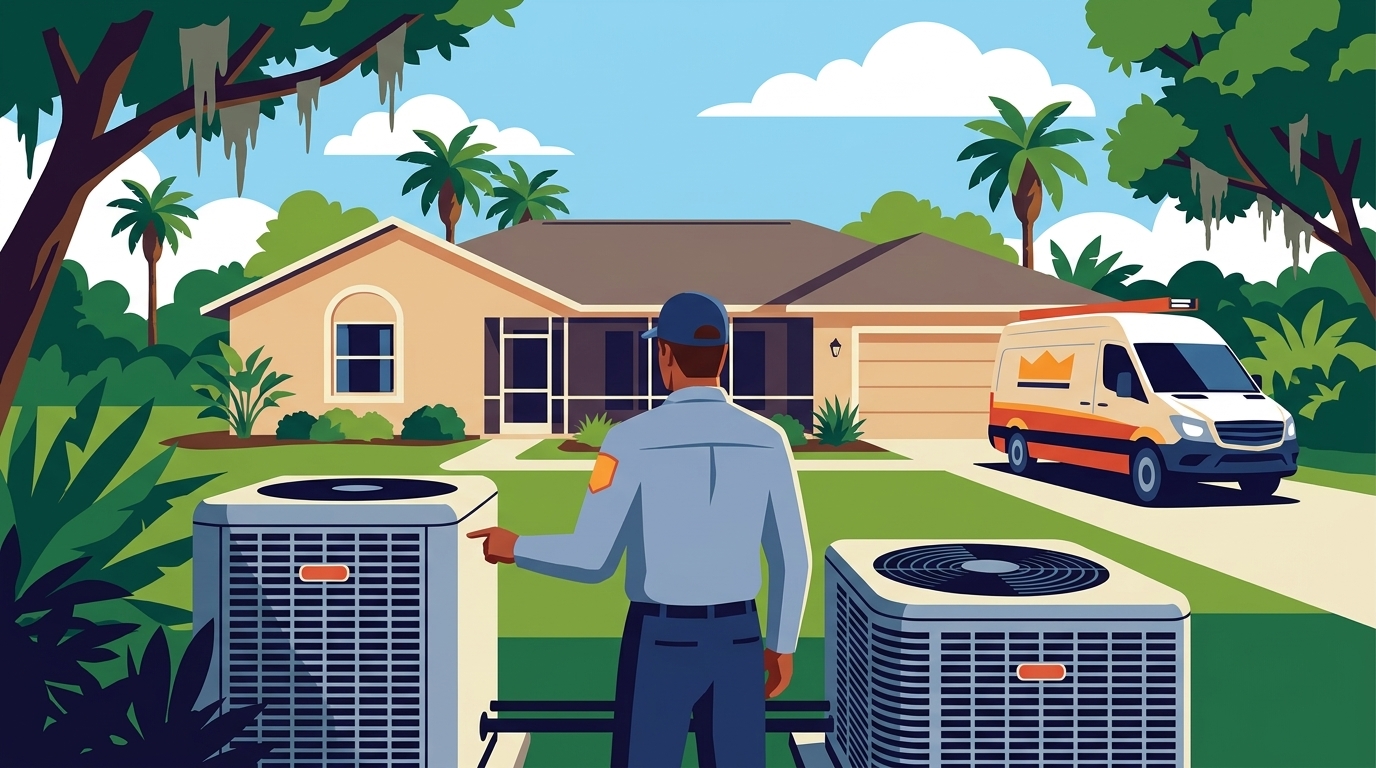
- Have your outdoor condenser cleared of grass clippings, leaves, and shrubs — it needs at least two feet of clearance to breathe.
- Run ceiling fans in occupied rooms only. Fans cool people, not rooms, so running them empty just adds to the bill.
- Schedule a summer tune-up if you haven't had one in the last 12 months. A properly cleaned and calibrated system can regain 10% to 15% of lost efficiency.
When It's Time to Consider a System Upgrade
If your system is over 12 years old, uses R-22 refrigerant (phased out and now prohibitively expensive to service), or struggles to hold your setpoint on 95°F afternoons, repair costs start losing to replacement math quickly. Modern variable-speed systems, particularly those matched with proper duct sealing, can cut cooling costs by 30% or more in a Brierwood home — and they dehumidify far better, which means you're comfortable at a higher thermostat setting.
Florida also requires that any HVAC replacement be permitted through the local jurisdiction — in Jacksonville, that's the City of Jacksonville Building Inspection Division. A licensed contractor pulls that permit; a handyman deal that skips it puts your future home sale and insurance claims at risk. That's worth remembering when a quote seems too cheap to be real.
Frequently Asked Questions
How much should I be paying to cool a Brierwood home in summer?
It varies by square footage, insulation, and system age, but a typical 1,600 to 2,000 sq ft Brierwood home with an efficient system generally sees July JEA bills in the $180 to $260 range. Bills north of $350 usually indicate a system or envelope problem worth investigating.
Does a smart thermostat actually save money in Jacksonville?
Yes, when used correctly. Smart thermostats save most when they raise the setpoint during unoccupied hours. In Jacksonville's humidity, avoid letting the home climb above 82°F for long stretches — you'll spend more re-cooling and re-dehumidifying than you saved.
Is it cheaper to leave the AC running all day or turn it off?
In dry climates, turning it off wins. In Jacksonville, it usually doesn't. Humidity re-infiltrates a shut-down home quickly, and your system has to remove all that moisture again when you get back. A modest setback (78°F home, 82°F away) is the sweet spot for most Brierwood homes.
How often should I service my AC in Jacksonville?
Twice a year is the standard recommendation for Florida — once in spring before cooling season, once in fall before the brief heating season. Homes near the coast or with heavy pollen exposure benefit from the more frequent schedule.
Getting Real Answers About Your Bill
A high summer electric bill in Brierwood is rarely one single problem — it's usually a stack of small inefficiencies compounding across a five-month cooling season. The good news is that most of them are fixable, and the fixes tend to pay for themselves faster than homeowners expect.
If you'd like a professional set of eyes on your system, ductwork, or the gap between your bill and your comfort, the team at King of Home Solutions works throughout Brierwood and the wider Jacksonville area on tune-ups, efficiency assessments, and system replacements. Their 4.9★ Google rating reflects the kind of straightforward communication and quality workmanship homeowners here tend to look for. You can reach them at https://kingofhomesolutions.com for a free estimate or to schedule a summer efficiency check.