Why Your Garage Door Keeps Sticking in Jacksonville, FL
Garage door keeps getting stuck? Learn the top causes of binding, midway stopping, and rough travel — plus fixes tailored for Jacksonville homes.
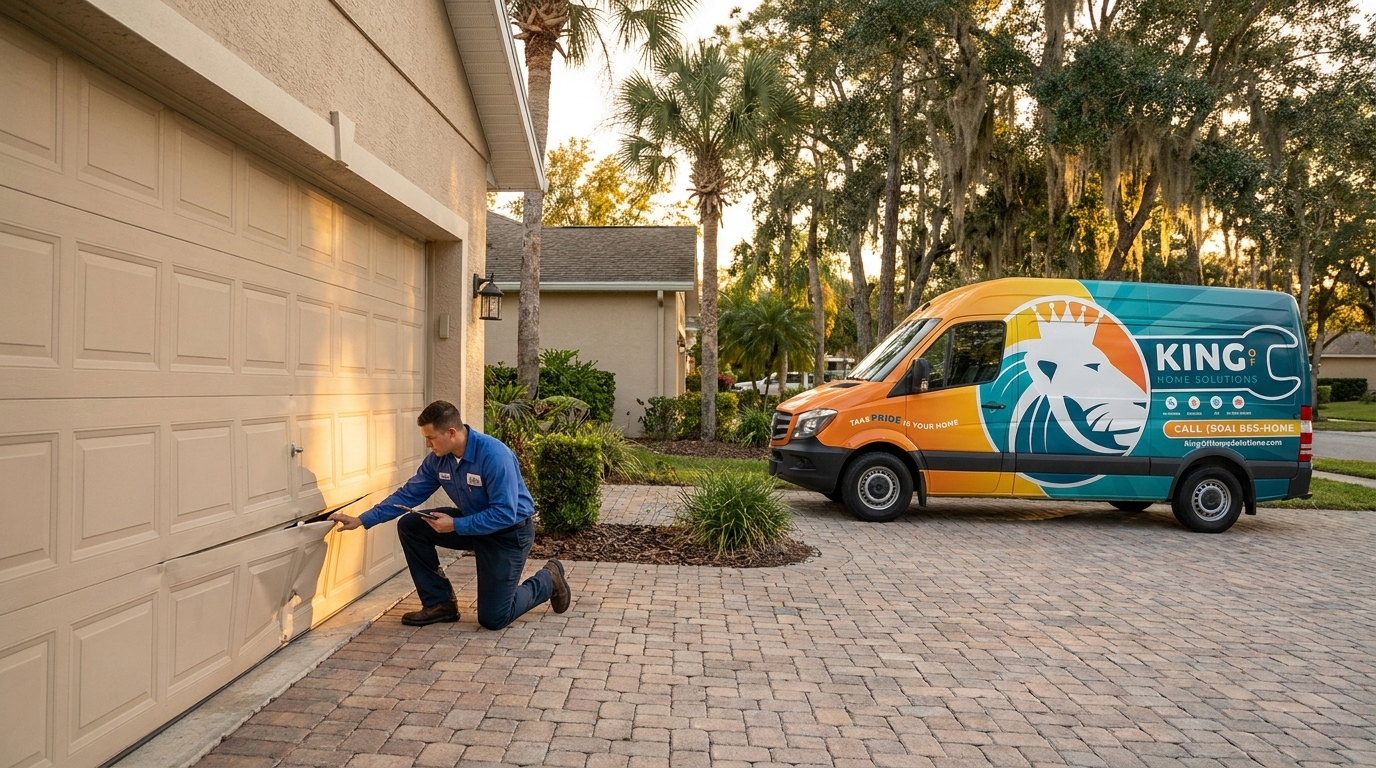
If your garage door keeps getting stuck — opening halfway, hesitating on the way down, or binding in the tracks — the culprit is almost always one of five things: dirty or misaligned tracks, worn rollers, spring tension issues, a safety sensor problem, or humidity-related swelling on wood doors. Intermittent sticking is different from a door that won't open at all. It's a warning sign that something is wearing out or drifting out of spec, and it usually gets worse before it gets better.
Here in Jacksonville, FL, the mix of coastal salt air, heavy summer humidity, and sudden thunderstorms puts extra stress on garage door hardware. Below, we'll walk through why your door keeps sticking, what you can safely check yourself, and when it's time to call a pro.
Why does my garage door keep getting stuck?
A garage door that repeatedly gets stuck is almost always fighting friction, imbalance, or an electronic misread — not a total mechanical failure. The door still wants to work; something is just interfering with smooth travel.
The most common causes we see in Jacksonville homes are:
- Debris or corrosion in the tracks — sand, leaves, and salt residue build up fast in coastal zip codes.
- Worn or dry rollers — especially older steel rollers that haven't been lubricated in years.
- Misaligned tracks — even a quarter-inch shift causes binding.
- Spring tension loss — torsion springs weaken over thousands of cycles.
- Safety sensor interference — a smudged or bumped photo-eye stops the door midway.
- Swelling on wood or composite panels — Jacksonville's humidity can literally make panels grow.
Garage door keeps stopping midway: what that specifically means
When a door stops midway — either up or down — the opener is hitting a resistance threshold and shutting off to protect itself. That's a safety feature, not a defect. The question is why it's hitting resistance.
On the way down, midway stopping is usually a sensor problem. The photo-eyes near the floor may be misaligned, dusty, or blocked by a spider web (extremely common in Duval County garages during the rainy season).
On the way up, midway stopping usually points to spring or roller trouble. The opener is designed to lift a balanced door. When springs weaken, the motor is suddenly doing all the work, and it taps out before finishing the cycle.
Quick test you can do safely
Pull the red emergency release cord with the door closed. Lift the door by hand about halfway and let go. A properly balanced door should stay put. If it slams down or shoots up, your springs are out of balance — and that's a job for a technician, not a DIYer. Torsion springs store enormous force and cause serious injuries every year.
Garage door binding in Jacksonville: the humidity factor
Binding is what happens when the door physically catches or scrapes as it travels. In Jacksonville, humidity is a major contributor that homeowners in drier climates never have to think about.
From late May through September, indoor garage humidity in Northeast Florida can sit above 70% for weeks at a time. Wood and wood-composite doors absorb that moisture and expand. Steel hardware — hinges, brackets, roller stems — can also flash-rust in coastal neighborhoods like Atlantic Beach, Neptune Beach, and San Marco, where salt air travels farther inland than people expect.
The result: a door that opened fine in March starts binding in July. If your sticking problem is seasonal, humidity and corrosion are your prime suspects.
Garage door won't move smoothly: the rollers and lubrication story
If your door moves but sounds like a freight train and hesitates in spots, worn rollers are the likely cause. Standard builder-grade steel rollers last roughly 10,000–15,000 cycles — about 5 to 7 years for a typical family that opens the door four times a day.
Nylon rollers with sealed bearings last significantly longer, run quieter, and don't need frequent lubrication. Upgrading rollers is one of the highest-return repairs we recommend on older Jacksonville homes, especially in neighborhoods like Riverside, Ortega, and Mandarin where a lot of the housing stock has original 1990s-era hardware still in place.
For lubrication, use a garage-door-specific silicone or lithium spray on rollers, hinges, and springs — never WD-40, which is a solvent and actually strips protective lubricant off.
What you can check yourself before calling a technician
- Wipe the photo-eye sensors on both sides of the door near the floor. Make sure the small LEDs are solid, not blinking.
- Look down the tracks for dents, debris, or bolts that have worked loose.
- Listen for grinding at specific points in the travel — that pinpoints a bad roller or hinge.
- Check the springs visually for gaps in the coils. A gap means a broken spring.
- Test the balance using the manual-lift method described above.
If everything looks clean and the door still sticks, the problem is mechanical (springs, cables, opener force settings) and needs a professional.
Why intermittent sticking gets worse — and more expensive — the longer you wait
An intermittent problem is a door telling you it's out of balance. Every cycle in that state puts extra strain on the opener's motor and gears. A $200 spring adjustment ignored for six months can become a $500 opener replacement.
In hurricane-prone areas like Jacksonville, there's a second reason not to wait: a door that isn't tracking smoothly may not seal properly, and a compromised garage door is one of the most common failure points during a named storm. Florida Building Code has specific wind-load requirements for garage doors in coastal counties, and a door that's binding often isn't sitting correctly in its rated position. Getting hardware sorted before hurricane season — ideally by early June — is the smart play.
FAQ
How often should a garage door be serviced?
Once a year for most Jacksonville homes, and every six months if you live within a few miles of the coast where salt exposure accelerates wear. A tune-up typically includes lubrication, hardware tightening, balance check, and sensor alignment.
Can I fix a stuck garage door myself?
You can safely clean tracks, wipe sensors, and apply lubricant. Do not attempt spring, cable, or drum repairs — these components are under extreme tension and are the leading cause of DIY garage door injuries.
How much does it cost to fix a garage door that keeps sticking in Jacksonville?
Costs vary by cause. A basic tune-up and roller replacement typically runs a few hundred dollars; spring replacement is a mid-range repair; opener replacement is the highest tier. A reputable local company will diagnose first and quote before doing the work.
Is a sticking garage door a safety issue?
Yes. A door that stops midway, reverses unexpectedly, or moves unevenly is showing signs of imbalance or sensor failure — both of which can cause the door to fall or fail to reverse on an obstruction.
Getting it handled
Intermittent sticking is one of those problems that rewards early attention. Cleaning tracks, replacing worn rollers, and getting springs balanced are straightforward jobs when caught early, and they extend the life of the opener significantly.
Homeowners in Jacksonville, FL who'd rather have this diagnosed and fixed properly can reach King of Home Solutions at kingofhomesolutions.com for a free estimate. The company's 4.9★ Google rating reflects the kind of communication and craftsmanship customers describe — one recent reviewer noted the "quality of craftsmanship was outstanding" after a garage door install, and that's the standard we'd want anyone working on our own home to meet.