Why Your HVAC Drain Line Keeps Clogging in Jacksonville
Jacksonville HVAC drain lines clog fast thanks to Florida humidity. Learn the real causes, how to clear them, and when to call a pro for lasting fixes.
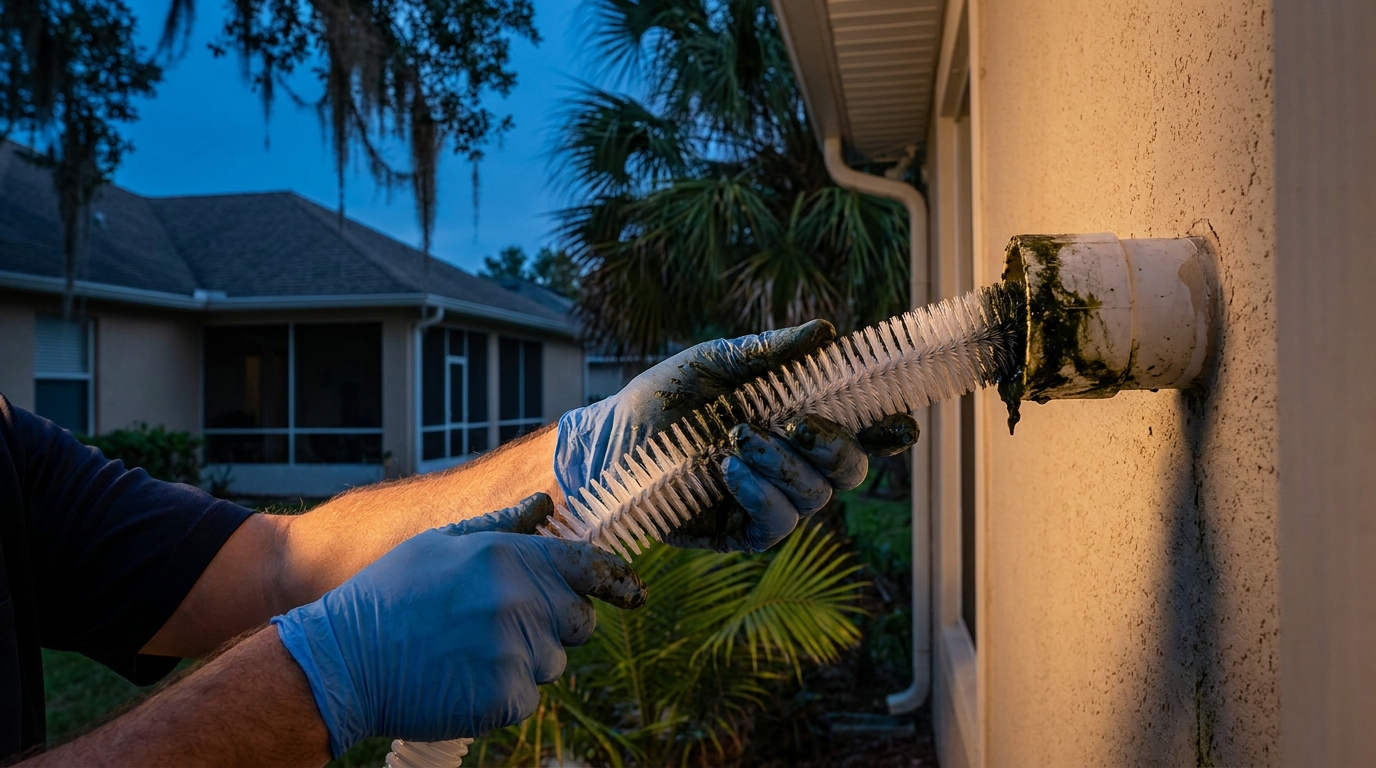
Your HVAC drain line keeps clogging in Jacksonville because Florida's constant humidity forces your air conditioner to pull gallons of moisture out of your home every day, and that warm, wet, dark PVC pipe is the perfect breeding ground for algae, mold, and biofilm. Add in dust, pet dander, and the fine sand that drifts in from coastal air, and the line turns into a sludge trap that backs up fast — often two or three times a cooling season if it isn't treated.
If your ceiling is staining, your air handler is leaking, or your system just shut itself off, a clogged condensate drain is the most likely culprit. Here's what's actually happening inside that pipe, why Jacksonville homes get hit harder than most, and what you can do about it.
What causes an HVAC condensate drain line to clog in Jacksonville?
The main cause is biological growth. Your evaporator coil pulls warm humid air across a cold surface, water condenses, and drips into a pan that drains outside through a PVC line. That standing moisture, combined with organic dust, grows algae and mold slime that thickens over weeks until it blocks the pipe entirely.
In Jacksonville, this happens faster than in drier climates for one simple reason: your AC runs longer and pulls more water. A typical 3-ton system in Duval County can remove 5 to 20 gallons of condensate per day during summer. That's a constant food source for microbial growth inside the drain.
Other common triggers we see at King of Home Solutions include:
- Dust and drywall debris from recent remodeling settling in the pan
- Insects — especially palmetto bugs — nesting near the outdoor drain termination
- Improperly sloped drain lines that let water pool instead of flow
- Missing or failed float switches that never warned you the line was slow
- Rust flakes from an aging drain pan mixing with slime
Why does Jacksonville's climate make this worse than other cities?
Jacksonville sits in a humid subtropical zone where average summer humidity often stays above 75%, and your cooling season effectively runs from April through October. That's roughly seven months of heavy dehumidification — nearly double what homes in drier Sun Belt cities deal with — which means twice the condensate volume feeding twice the biological growth.
Homes near the St. Johns River, in Riverside, San Marco, and the coastal stretches around Atlantic Beach and Neptune Beach see it even worse. Salt air, pollen from live oaks, and a longer cooling season all compound the problem. Add attic-mounted air handlers — extremely common in Jacksonville's ranch and two-story stock — and any overflow drops straight into your ceiling.
We routinely see drain lines clog within 60 to 90 days of a professional cleaning if no preventive treatment is in place. That's not a defect. That's Florida.
What are the warning signs your drain line is clogging?
Catch it early and you avoid water damage. Watch for water pooling near the indoor air handler, a musty smell coming from vents, an AC system that shuts off unexpectedly (the float switch doing its job), gurgling sounds from the drain, or brown ceiling stains below an attic unit. Any one of these means the line is already restricted.
The float safety switch is your best friend here. Florida building code generally requires a secondary drain safety device on air handlers installed above finished spaces, and that switch will cut power to the system before water overflows. If your AC won't turn on and the coil area feels wet, don't just reset the switch — the drain needs to be cleared first.
How do you clear a clogged AC drain line yourself?
You can clear a mild clog with a wet/dry shop vac. Find the outdoor PVC drain termination (usually a white pipe near your condenser), press the vac hose against the opening, seal it with a rag or your hand, and run it for two to three minutes. Then pour a cup of distilled white vinegar into the indoor access port to kill remaining growth.
A few ground rules:
- Never use bleach on metal drain pans — it corrodes them. Vinegar is safer.
- Don't use a garden hose to push water backward through the line. You'll flood the pan.
- If the vac doesn't pull out debris within a few minutes, the clog is deeper and needs professional tools.
- If your ceiling is already stained or the air handler pan is overflowing, stop and call a technician — water damage compounds fast.
When should you call a professional in Jacksonville?
Call a pro when DIY clearing doesn't restore flow within one attempt, when you see water damage on drywall or flooring, when the clog returns within a few weeks, or when your system is more than eight years old and has never had a professional drain service. A technician can pressure-flush the line, inspect the pan for rust-through, verify slope, and treat the system with a time-release algaecide tab.
This is the kind of recurring, humidity-driven issue where a local team matters. King of Home Solutions works on Jacksonville homes every week and knows how attic air handlers, coastal salt exposure, and long cooling seasons interact — details a national dispatcher won't factor into the visit. Reviewers consistently point to the team being "on time" with "excellent communication," which matters when you've got water dripping through a ceiling and need someone who'll actually show up when they said they would.
How much does drain line service cost, and how often should it be done?
Standard condensate drain clearing in Jacksonville typically runs $75 to $200 for a straightforward clog, and $200 to $450 if the line needs re-piping, a new float switch, or pan replacement. Most Florida HVAC pros recommend a professional drain flush once a year, ideally in early spring before summer humidity peaks, plus a homeowner vinegar treatment every one to three months.
| Service | Typical Cost (2026) | Recommended Frequency |
|---|---|---|
| DIY vinegar flush | Under $10 | Every 1–3 months |
| Professional drain clearing | $75–$200 | Annually |
| Drain line re-pipe or re-slope | $200–$450 | As needed |
| Float switch install | $100–$250 | One-time (verify yearly) |
| Full annual AC tune-up | $100–$250 | Annually, spring |
For emergency after-hours calls, expect a diagnostic fee on top. If the clog caused ceiling or drywall damage, that's a separate repair — another reason catching it early is worth the annual maintenance cost.
Frequently asked questions
Can I pour bleach down my AC drain line?
You can, but distilled white vinegar is the safer choice for most Jacksonville systems. Bleach can corrode metal drain pans and degrade certain PVC glue joints over time, and if your system has any metal components in the drain path, repeated bleach use shortens their life. Vinegar kills algae and biofilm effectively without the corrosion risk. Use about one cup, once every one to three months.
Why does my AC keep shutting off by itself?
The most common cause in Florida is a tripped float safety switch on a clogged condensate drain. When water backs up in the drain pan, the float rises and cuts power to prevent overflow damage. If your AC shuts off and the area around the indoor air handler feels damp or you see standing water, clear the drain before resetting anything. Other causes include frozen coils or a failing capacitor.
Where is my AC drain line located?
Your primary condensate drain line is a white PVC pipe attached to the indoor air handler, running to an outdoor termination point — usually a stub of pipe near your outdoor condenser unit or along an exterior wall. Attic air handlers also have a secondary emergency drain that typically exits through a soffit or above a window, which is a visible warning sign when it starts dripping.
How often should I have my HVAC drain line cleaned professionally in Jacksonville?
Once a year is the standard recommendation for Jacksonville homes, ideally in spring before the cooling load ramps up. Homes with attic air handlers, systems over ten years old, or homeowners who've had past clog issues should consider a mid-summer check as well. Between professional visits, monthly vinegar treatments significantly extend the time between clogs.
Does homeowners insurance cover water damage from a clogged AC drain?
It varies by policy and carrier. Many Florida homeowners policies exclude damage caused by lack of maintenance, and a clogged drain line often falls into that category. Sudden and accidental water damage from a failed component may be covered, but slow leaks from a neglected drain typically are not. Review your policy language and document annual HVAC maintenance to protect any future claim.
Can a clogged drain line damage my AC compressor?
Not directly, but the ripple effects can. A clog that trips your float switch shuts the system off, which is protective. However, if the switch fails or isn't installed, overflowing water can short out control boards, rust the drain pan through, and — in attic installations — cause thousands of dollars in ceiling and insulation damage. The compressor itself is usually safe, but the surrounding components are not.
The bottom line for Jacksonville homeowners
Condensate drain clogs aren't a sign your AC is failing — they're a sign it's working hard in a climate that demands a lot of it. A monthly vinegar flush, an annual professional cleaning, and a working float switch will keep 90% of these problems from ever reaching your ceiling.
Readers in Jacksonville who'd rather have this handled professionally — or who are already dealing with a leak, a stained ceiling, or a system that keeps shutting off — can reach King of Home Solutions at https://kingofhomesolutions.com to schedule service. The team's 4.9-star rating across 55 Google reviews reflects the kind of responsive, communicative work that matters most when water is where it shouldn't be.