AC Not Cooling in Arlington Hills, Jacksonville, FL
Arlington Hills AC not cooling? Learn the real reasons Jacksonville systems fail in summer heat, what you can check yourself, and when to call a pro.
If your Arlington Hills AC is running but your Jacksonville home won't cool, the most common culprits are a clogged air filter, a frozen evaporator coil, a tripped breaker, a failed capacitor, or low refrigerant from a leak. In our humid Duval County summers, any one of these can turn a 90°F afternoon into an 82°F indoor slog within hours.
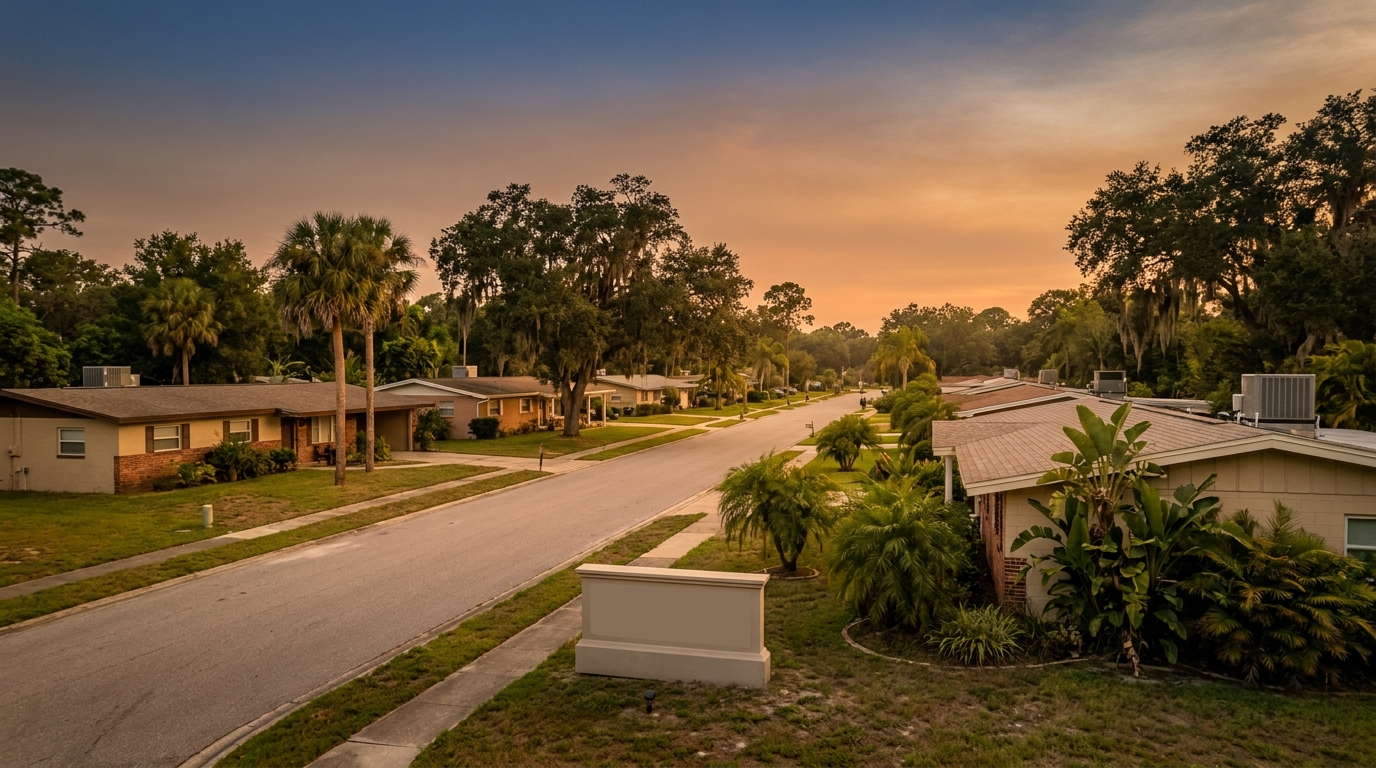
Arlington Hills sits east of the St. Johns River, where mid-century ranches and 1970s-era block homes dominate the housing stock. Many of those systems were sized and installed decades ago, then patched over time. That combination — older equipment, salty coastal air drifting in from the coast, and Jacksonville's brutal June-through-September heat index — is why cooling calls spike here every summer. Below is how to think about the problem under the hood, what you can safely check, and when to bring in a licensed pro.
Why is my AC not cooling my Jacksonville home?
Your AC isn't cooling because something is interrupting one of three things: airflow across the coils, heat transfer through the refrigerant loop, or electrical power to the compressor or fan. In Jacksonville's climate, restricted airflow (dirty filter, frozen coil, blocked return) causes the majority of no-cool calls, followed by capacitor failure and refrigerant leaks.
Every central AC works on the same principle: warm indoor air blows across a cold evaporator coil, the refrigerant absorbs that heat, and the outdoor condenser dumps it into the air outside. Break any link in that chain and your thermostat keeps calling for cool while your house keeps warming up. Arlington Hills homes with 15- to 25-year-old systems are especially vulnerable because small inefficiencies compound.
What should I check before calling for AC repair in Jacksonville, FL?
Before calling a technician, check five things: the air filter, the thermostat setting and batteries, the breaker in your electrical panel, the outdoor unit for debris or ice, and the indoor evaporator coil for frost. Fixing a dirty filter or a tripped breaker takes minutes and saves a service fee.
The air filter
A filter clogged with dust, pet hair, or pollen chokes airflow across the evaporator coil. Without enough warm air moving over it, the coil gets too cold, condensation freezes, and the system stops cooling. Arlington Hills homes near heavily wooded lots off Fort Caroline Road or Merrill Road tend to load filters faster in spring pollen season. Change 1-inch filters every 30-60 days during summer.
The thermostat
Confirm it's set to COOL (not FAN), the setpoint is below room temperature, and — for battery-powered thermostats — the batteries are fresh. A dead thermostat can leave the blower running while the compressor never engages.
The breaker and disconnect
Central AC systems typically have two breakers: one for the air handler indoors and one for the condenser outdoors. Jacksonville's afternoon thunderstorms and JEA voltage sags can trip either. Reset once. If it trips again, stop — that's an electrical fault a pro needs to diagnose.
The outdoor unit
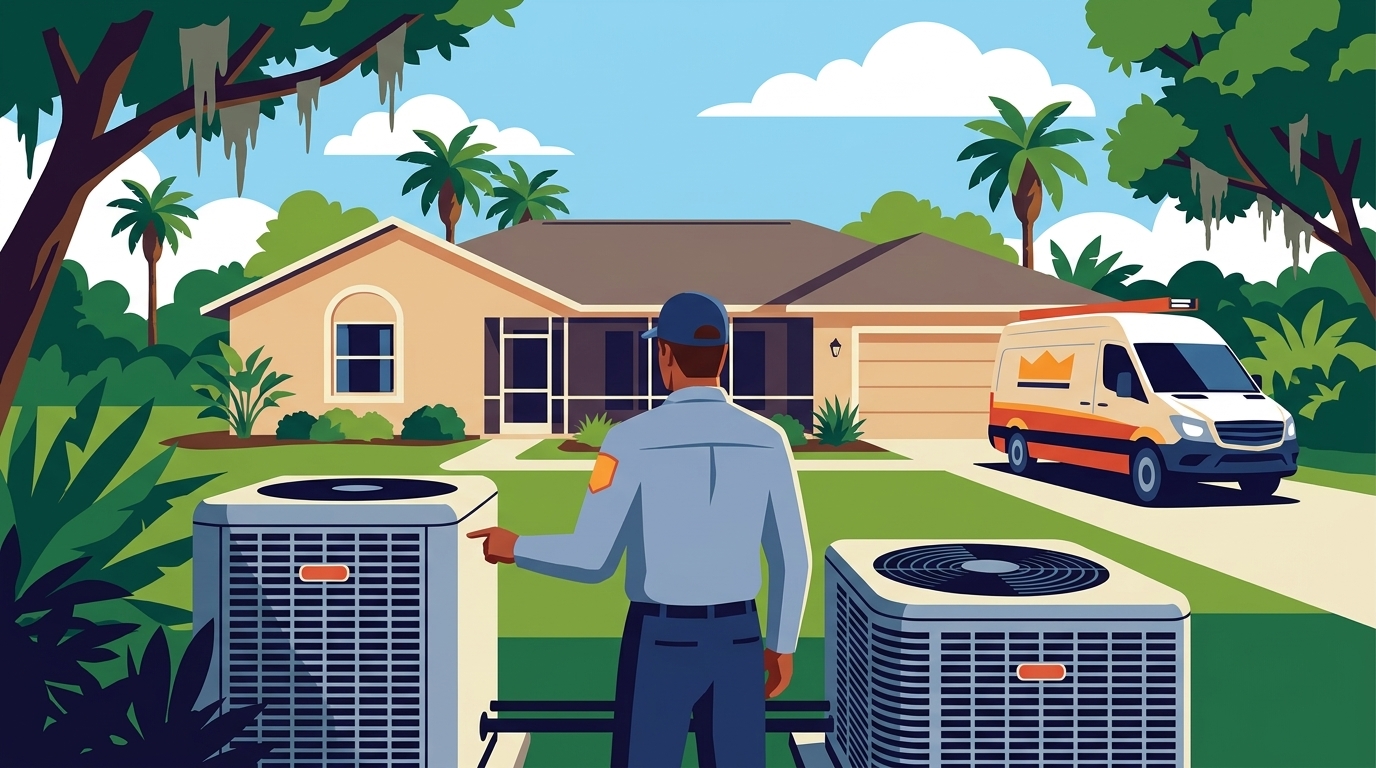
Walk out to your condenser. Look for oak leaves, grass clippings, or lovebug residue matted against the coil fins. The fan should be spinning when the system calls for cool. If it's silent but humming, you're likely looking at a failed capacitor — a $15 part that fails constantly in Jacksonville heat.
The evaporator coil
Open the air handler closet (often in the garage or a hallway in Arlington Hills homes) and look for ice on the copper lines or the coil itself. If you see frost, shut the system off at the thermostat and run the fan only for two to three hours to thaw it before running cool again.
What are the most common AC failures in Arlington Hills homes?
The five failures we see most in Arlington Hills are: failed run capacitors, refrigerant leaks in aging copper line sets, clogged condensate drains, corroded contactor relays, and undersized or aged systems that simply can't keep up with a 95°F day. Coastal humidity and salt air accelerate every one of these.
| Symptom | Likely Cause | DIY or Pro? |
|---|---|---|
| Outdoor fan humming, not spinning | Failed capacitor | Pro (electrical) |
| Warm air from vents, outdoor unit running | Low refrigerant / leak | Pro (EPA-certified) |
| Ice on refrigerant lines or coil | Airflow restriction or low charge | DIY thaw, then Pro |
| System short-cycles on and off | Dirty coil, bad thermostat, or oversized unit | Pro |
| Water pooling near air handler | Clogged condensate drain | DIY flush or Pro |
| Nothing runs at all | Tripped breaker or blown fuse | DIY reset once |
Failed capacitors
Capacitors give the compressor and fan motor the jolt they need to start. In Florida's heat, they routinely fail after 5-8 years — faster if the unit sits in full afternoon sun. This is the single most common summer no-cool call.
Refrigerant leaks
If your Arlington Hills system is running R-22 (phased out by the EPA in 2026) or aging R-410A, small leaks at flare fittings and coil joints are common. Refrigerant is not consumed — if you're low, you have a leak. Under Section 608 of the Clean Air Act, only EPA 608-certified technicians may handle refrigerant, so this is never a DIY fix.
Clogged condensate drains
Jacksonville's humidity means your AC pulls gallons of water out of the air every day. Algae grows in the PVC drain line, backs up, trips the safety float switch, and the system shuts down to prevent flooding your ceiling. A cup of distilled vinegar in the drain line every few months prevents most of these calls.
When should I call an HVAC pro instead of troubleshooting further?
Call a licensed HVAC contractor if the breaker trips twice, you see ice that returns after thawing, you smell burning or hear grinding, refrigerant is suspected, or the house won't drop below 78°F on a normal Jacksonville summer day. Florida requires HVAC contractors to hold a state license through the Department of Business and Professional Regulation — verify the license before anyone touches your system.
King of Home Solutions handles no-cool diagnostics across Arlington Hills and the broader Jacksonville market, and holds a 4.9-star rating across 55 Google reviews. One recent reviewer described the team as "professional, knowledgeable, and very thorough throughout the entire process" — the kind of methodical diagnosis that separates a real repair from a parts-cannon guess. When a technician arrives, expect them to check static pressure, superheat and subcooling, capacitor microfarad readings, and amp draw before quoting parts.
Frequently Asked Questions
How much does an AC repair cost in Jacksonville, FL?
Most Jacksonville AC repairs fall between $150 and $650 depending on the part. Capacitor replacements typically run $150-$300, contactors $200-$400, condensate pump or drain clearing $150-$300, and blower motor replacement $400-$900. Refrigerant leak repairs vary widely — a simple valve replacement may be $400 while a full coil replacement can exceed $2,000.
How long can I run my AC with a frozen coil?
You should not run it at all until the ice fully thaws — typically 2 to 4 hours with the system off and the fan running. Operating a frozen system can damage the compressor, a repair that often costs $1,500 or more. Once thawed, if it freezes again within a day, you have an airflow or refrigerant problem that needs a technician.
Why is my AC blowing warm air in Jacksonville even though it's running?
Warm air from the vents while the system runs almost always points to a refrigerant issue, a frozen coil restricting airflow, or the outdoor condenser not running (often a capacitor or contactor failure). Check whether the outdoor fan is spinning; if it isn't, the indoor blower is just circulating uncooled air through your ductwork.
How often should I service my AC in Arlington Hills?
Once a year at minimum, ideally in spring before Jacksonville's cooling season peaks in June. Homes near the St. Johns River or in older Arlington Hills neighborhoods with heavy tree canopy often benefit from twice-yearly service because pollen, humidity, and salt air accelerate coil fouling and electrical component wear.
Do I need a permit to replace my AC in Jacksonville?
Yes. The City of Jacksonville and Duval County require a mechanical permit for HVAC replacements and most major repairs, and the work must be performed by a Florida state-licensed contractor. Any company that offers to skip the permit is a red flag — unpermitted work can complicate home insurance claims and future sales.
Is it worth repairing an older AC or should I replace it?
A common rule: if the repair cost exceeds 50% of a new system's price and the unit is over 10-12 years old, replacement usually makes more financial sense. Jacksonville's cooling load means older, lower-SEER systems run nearly year-round, so a modern 15+ SEER2 unit often pays back through lower JEA bills within a few summers.
Getting your Arlington Hills home cool again
Most no-cool calls in Arlington Hills come down to a handful of predictable failures — a filter, a capacitor, a drain line, or a refrigerant leak on an aging system. Working through the checks above will either solve the problem or tell you clearly that it's time for a licensed technician. Homeowners in Arlington Hills and across Jacksonville who want the diagnosis handled professionally can reach King of Home Solutions at https://kingofhomesolutions.com to schedule a service call.