Central Air vs Mini-Split: Which Is Right for a Jacksonville Home?
Comparing central air vs mini-split installation in Jacksonville, FL? Here's an honest breakdown of cost, efficiency, and comfort for Florida homes.

If you're cooling a home in Jacksonville, you already know the stakes. Our summers are long, humid, and unforgiving, and the difference between the right AC system and the wrong one shows up on every utility bill from May through October. So when it comes time to replace or upgrade, the big question many homeowners ask is simple: central air or a ductless mini-split?
The honest answer is that both can work beautifully in a Florida home — but they shine in very different situations. Let's walk through how they compare so you can make a confident choice for your house, your budget, and your comfort.
The Short Answer for Jacksonville Homeowners
If your home already has good ductwork and you want whole-home cooling at the lowest upfront cost per square foot, central air is usually the smart pick. If your home doesn't have ducts, or you're dealing with a room addition, a Florida room conversion, a garage workshop, or hot spots a central system can't fix, a ductless mini-split often wins.
That's the short version. The details matter, especially in our climate, so let's dig in.
How Each System Works
Central Air Conditioning
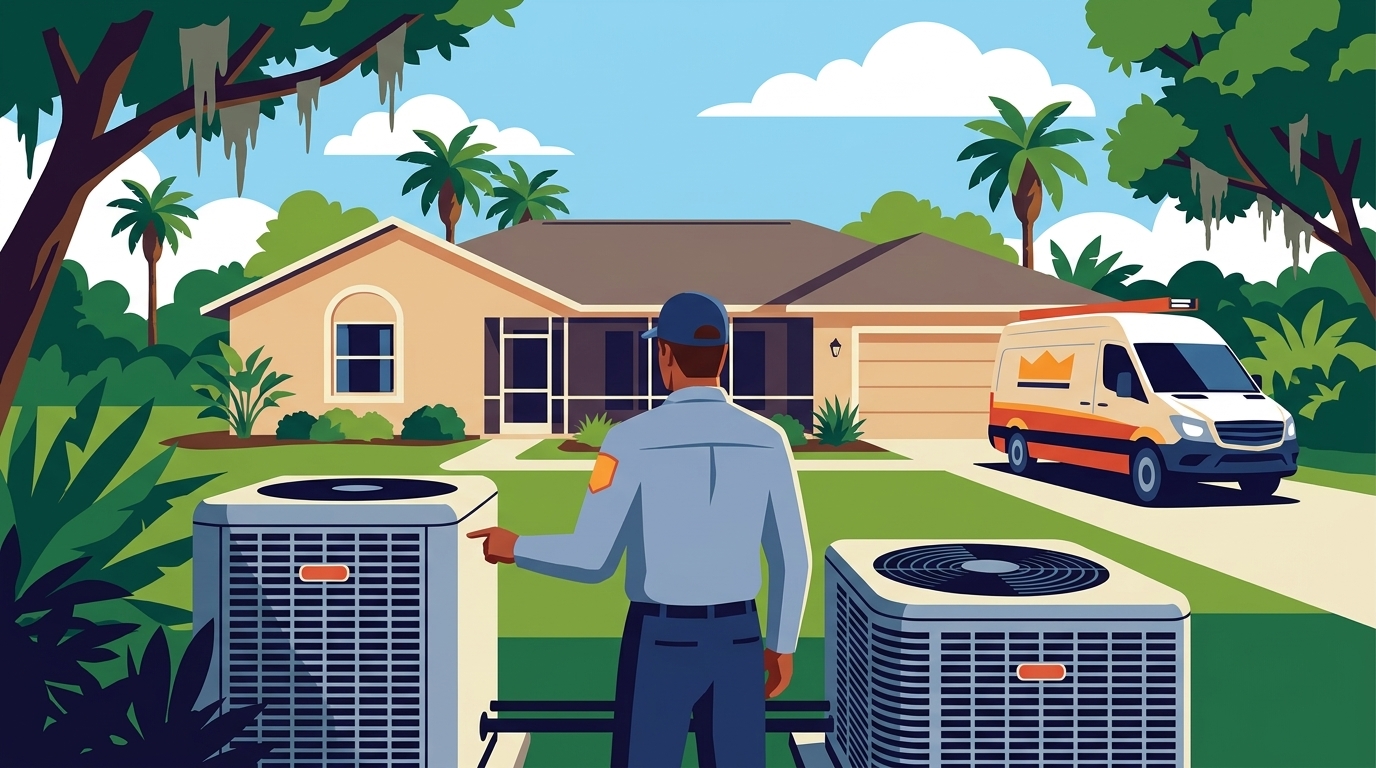
A central system uses an outdoor condenser paired with an indoor evaporator coil and air handler, pushing cooled air through a network of ducts to every room. One thermostat (or sometimes two in zoned systems) controls the whole house. For typical Jacksonville homes, units are sized between 2 and 5 tons (24,000 to 60,000 BTU/h).
Ductless Mini-Splits
A mini-split skips the ductwork entirely. An outdoor heat pump connects to one or more indoor air handlers — usually wall-mounted — through small refrigerant lines. Each indoor head cools its own zone independently, and most units sold in Florida are heat pumps, meaning they handle our occasional January cold snaps too.
Installed Cost: What You'll Actually Pay
If You Already Have Ductwork
For homes with ducts in good shape, central air installation in Jacksonville typically runs about $8,000 to $15,000. A whole-home multi-zone ductless system covering the same square footage often lands between $10,000 and $18,000 or more, because you're paying for multiple indoor heads instead of leveraging existing ducts.
Winner here: central air, by a meaningful margin.
If You Don't Have Ductwork
This is where the math flips. Adding new ductwork to a home that wasn't built for it can push a central installation to $18,000 or higher — and in some older Jacksonville homes (think the historic bungalows in Riverside or Avondale), retrofitting ducts through plaster walls and tight crawl spaces isn't even practical.
A single-zone mini-split runs roughly $3,500 to $7,500 installed. A multi-zone system covering several rooms typically falls between $10,000 and $15,000. No ducts required, just refrigerant lines and a small wall penetration.
Winner here: ductless, often by thousands of dollars.
Energy Efficiency in Florida's Climate
This is where mini-splits flex the hardest. Central systems in the typical Jacksonville home run at about 15 to 18 SEER, and that's before duct losses — which can be significant when ducts run through a hot Florida attic that hits 130 degrees in July.
Mini-splits typically achieve 20+ SEER, with premium models reaching 25+ SEER. Because there are no ducts, there are no duct losses. Switching from a conventional central system to ductless can cut cooling bills by roughly 30 to 40 percent when zoning is used thoughtfully.
Power draw tells the same story. A 12,000 to 18,000 BTU central setup pulls roughly 3,000 to 3,500 watts. An equivalent mini-split sips about 800 to 2,000 watts thanks to inverter-driven variable-speed compressors. Over a Jacksonville summer, that adds up.
Comfort, Humidity, and Zoning
Humidity is the silent comfort killer in Northeast Florida. A system that cools quickly but doesn't dehumidify well leaves your home feeling clammy at 76 degrees. Mid- to upper-tier equipment with variable-speed technology — available in both central and ductless — handles humidity much better than basic single-stage units. If you're shopping the entry tier, ask specifically about humidity performance.
Mini-splits also give you room-by-room control. If your kids' bedrooms upstairs are always hotter than the downstairs living room (a classic two-story problem in neighborhoods like Mandarin or the Beaches), individual zones solve that without overcooling the rest of the house.
Central air, on the other hand, is the simpler experience: one thermostat, one consistent temperature, no indoor units on your walls. For larger, well-ducted homes, that simplicity is genuinely valuable.
Aesthetics and Noise
Central systems are visually discreet — just low-profile vents and a closet or attic air handler. Mini-split indoor heads are visible, mounted high on a wall or ceiling. Modern units are slimmer and quieter than older models, but some homeowners simply don't love the look. If you've spent years designing your living room, that's worth weighing honestly.
On the noise side, mini-split indoor units are notably quieter than central air registers and return grilles. In a bedroom, that difference matters.
What About Florida's Permit and Code Requirements?
Both system types require permits and licensed installation in Duval County. HVAC work falls under Florida's contractor licensing rules, and any replacement or new install needs to meet the current federal minimum efficiency standard of 13.4 SEER2 for central systems. Mini-splits routinely exceed that floor, and many qualify for ENERGY STAR certification at 20+ SEER.
For coastal properties closer to Atlantic Beach or Neptune Beach, salt-air corrosion protection on the outdoor unit is worth asking about regardless of which system you choose. It's a small upgrade that pays for itself.
How to Choose: A Simple Framework
- Existing ductwork in good shape + whole-home cooling needed: Central air is almost always the better value.
- No ductwork or ducts that need major repair: Mini-split likely wins on cost and efficiency.
- Room addition, garage conversion, sunroom, or one stubborn hot room: Single-zone mini-split is the cleanest solution.
- Older home where running ducts is impractical: Ductless, without question.
- Large multi-story home with a family that wants set-it-and-forget-it comfort: Central air keeps things simple.
- Energy efficiency is your top priority and you'll actively use zoning: Mini-split, especially a premium inverter model.
Frequently Asked Questions
Can I mix both systems in one home?
Absolutely, and it's a smart move in many Jacksonville homes. A central system handles the main living areas while a mini-split conditions a bonus room, garage workshop, or addition the ducts don't reach well.
How long do these systems last in Florida?
With proper maintenance, both system types generally last 12 to 15 years in our climate, though salt air near the coast can shorten outdoor unit life. Annual service makes a real difference.
Which is better for hurricane season?
Neither has a strong advantage. Outdoor units for both systems should be secured and, ideally, mounted on a pad above potential flood levels. After major storms, have any system inspected before running it.
Do mini-splits really save 30–40% on cooling bills?
That figure assumes you actually use zoning — cooling only occupied rooms — and that you're replacing an older, less efficient central system. Real-world savings depend on your habits, your home, and how the system is configured.
A Practical Next Step
Every Jacksonville home is different. Ceiling heights, attic conditions, sun exposure, insulation quality, and family routines all shift the math. The best comparison isn't a national average — it's two real, itemized quotes for your specific house, walked through by someone who's actually been inside it.
Homeowners in Jacksonville, FL who want this evaluated in person can reach King of Home Solutions at kingofhomesolutions.com for a free estimate. We're happy to look at both options, explain the tradeoffs for your specific home, and give you honest numbers so you can decide with confidence.