Electric Tankless Water Heaters in Jacksonville, FL
A 2026 buyer's guide to electric on demand hot water heaters for Jacksonville homes — sizing, savings, installation, and when they make sense.
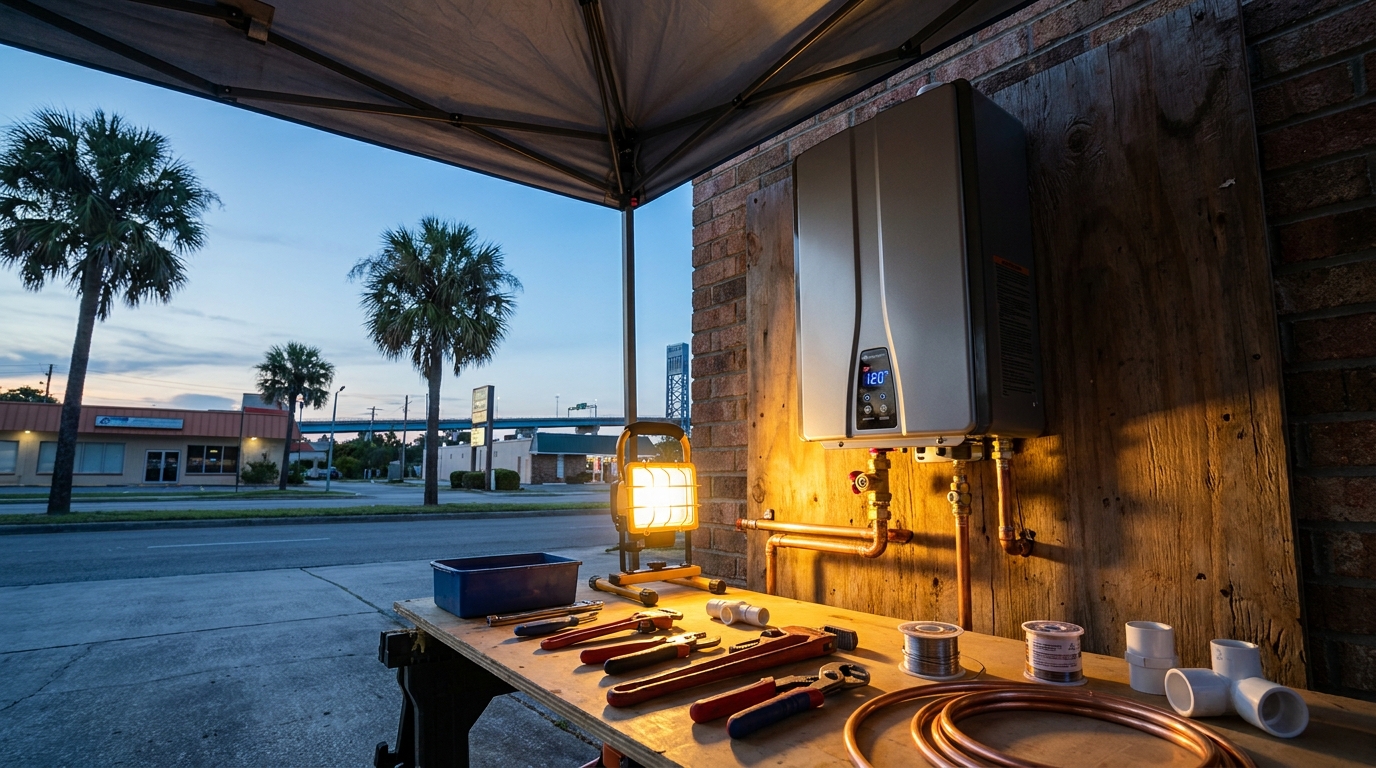
Electric on demand hot water heaters — also called electric tankless units — heat water instantly as it flows through the unit, so your home never stores 40 or 50 gallons of hot water it isn't using. For most Jacksonville, FL homes, they can be a smart upgrade if your electrical panel can support the load and your household hot water demand is moderate. The right fit depends on flow rate, incoming water temperature, and how many fixtures run at once.
How does an electric on demand water heater work?
An electric on demand water heater uses high-powered heating elements to warm water only when a hot tap is opened. Cold water enters the unit, passes over the elements, and exits at your set temperature — usually within seconds. There is no storage tank, no standby heat loss, and no waiting for a tank to recover after heavy use.
Because heating happens on the fly, the unit's capacity is measured in gallons per minute (GPM) at a given temperature rise, not in tank gallons. That single shift changes how you shop for one.
Are electric tankless water heaters a good fit for Jacksonville, FL homes?
For many Jacksonville, FL homes, yes — electric tankless units perform well here because incoming groundwater is relatively warm most of the year, which means the unit doesn't have to work as hard to reach shower temperature. Homes in neighborhoods like Riverside, San Marco, and the Southside typically see incoming water in the 70s°F for much of the year, keeping the required temperature rise low.
The main caveats are winter cold snaps and electrical capacity. During January freeze events — Jacksonville has seen groundwater temperatures drop into the low 60s and briefly cooler — the temperature rise needed for a hot shower increases, which reduces the GPM the unit can deliver. At King of Home Solutions, our team sizes units around the coldest realistic incoming temperature, not the annual average, so your showers don't turn lukewarm the week of a hard freeze.
What size electric tankless water heater do I need?
Sizing an electric instant hot water heater comes down to two numbers: peak GPM (how many fixtures run at once) and temperature rise (desired temperature minus incoming water temperature). A typical shower uses 1.5–2.5 GPM, a kitchen faucet around 1.5 GPM, and a washing machine 1.5–2 GPM. Add up your realistic simultaneous demand, then match it to a unit rated for that GPM at your local temperature rise.
For a Jacksonville, FL home, a temperature rise of about 45°F is a reasonable planning target for winter, and roughly 30°F for most of the year.
| Household Size | Typical Peak Demand | Recommended Electric Tankless Capacity | Approx. Amp Draw (240V) |
|---|---|---|---|
| 1–2 people, 1 bath | 2–3 GPM | 18–24 kW | 75–100 amps |
| 2–3 people, 2 baths | 3–4 GPM | 24–27 kW | 100–120 amps |
| 3–4 people, 2+ baths | 4–6 GPM | 27–36 kW | 120–160 amps |
| Whole-house, 4+ baths | 6–8 GPM | 36 kW + or dual-unit | 160+ amps |
How much does a whole house electric on demand water heater cost in Jacksonville, FL?
In Jacksonville, FL, installed costs for a whole house electric on demand water heater typically run from about $1,800 to $4,500, depending on unit size, panel upgrades, and how much rewiring the job requires. The unit itself is often $600–$1,500; the rest is electrical work, permitting, and plumbing modifications.
Older homes in areas like Avondale or Ortega often need a panel evaluation, because a 27 kW unit alone can pull well over 100 amps at peak — more than some existing 150- or 200-amp panels can spare. A load calculation is not optional; it's what separates a clean install from a tripping breaker.
Do you save energy with an electric instant hot water heater?
Yes, in most cases. According to the U.S. Department of Energy, demand (tankless) water heaters can be 24%–34% more energy efficient than conventional storage tank water heaters for homes that use 41 gallons or less of hot water daily, and about 8%–14% more efficient for higher-use homes. The savings come from eliminating standby losses — the energy a tank spends keeping 40–50 gallons hot around the clock.
Electric tankless units also last longer than typical tank heaters — often 20+ years versus 10–15 for a tank — which matters when you factor in replacement cost over the life of the home.
What are the installation considerations for Jacksonville homes?
Installing an electric on demand water heater in Jacksonville, FL almost always requires a permit and inspection through the City of Jacksonville's Building Inspection Division, and the work must be performed by a Florida state-licensed plumbing and/or electrical contractor. Beyond permitting, the three factors that make or break the install are electrical capacity, wire sizing, and proper water shutoffs.
- Electrical panel: Many 27–36 kW units require multiple dedicated 40- or 60-amp double-pole breakers. A 100-amp panel is usually a non-starter for whole-house electric tankless.
- Wire runs: Short, correctly-sized runs matter — voltage drop cuts performance.
- Water quality: Jacksonville's municipal water is moderately hard in some areas; a sediment filter or softener extends element life.
- Location: Garage or interior wall installs are common; the unit is small enough to free up closet space where an old tank once stood.
Our team at King of Home Solutions handles the load calculation, permit, install, and inspection as one job — so homeowners aren't coordinating between separate electricians and plumbers.
Electric tankless vs. gas tankless vs. traditional tank: which makes sense?
Electric tankless is usually the right pick for Jacksonville, FL homes without existing gas service, for smaller households, or for point-of-use applications. Gas tankless delivers higher GPM and suits large households with existing gas lines. A traditional tank is the lowest upfront cost but the highest lifetime energy waste.
| Type | Upfront Cost (Installed) | Lifespan | Best For |
|---|---|---|---|
| Electric tankless | $1,800–$4,500 | 20+ years | All-electric homes, moderate demand |
| Gas tankless | $2,500–$5,500 | 20+ years | Large families, existing gas service |
| Traditional tank | $1,200–$2,500 | 10–15 years | Lowest upfront budget |
Frequently asked questions
Can one electric tankless water heater serve a whole house in Jacksonville, FL?
Yes, if it's properly sized. A 27–36 kW electric on demand unit can serve most 2–3 bathroom Jacksonville homes, especially given the region's relatively warm groundwater. Larger homes with simultaneous demand across 3+ bathrooms may need a higher-capacity unit or two smaller units plumbed in parallel. A load calculation based on your actual fixture count is the only reliable way to decide.
Will my electrical panel support an electric on demand water heater?
It depends on your panel's amperage and existing load. A whole-house 27 kW unit can draw well over 100 amps at peak, so homes with 100- or 150-amp panels often need an upgrade to 200 amps. A licensed electrician or plumbing contractor should perform a load calculation before you buy the unit — it prevents tripped breakers and code violations at inspection.
How long do electric tankless water heaters last?
Electric tankless units typically last 20 years or more with basic maintenance, compared to 10–15 years for a traditional tank water heater. Heating elements are replaceable, which extends useful life further. Annual flushing to remove mineral buildup — especially important given Jacksonville's water hardness — is the single biggest factor in reaching that 20-year mark.
Do I need a permit to install one in Jacksonville, FL?
Yes. Water heater replacements and new installations in Jacksonville, FL require a permit through the City of Jacksonville Building Inspection Division, and both the plumbing and electrical work must be performed by Florida state-licensed contractors. Skipping the permit can create issues at resale and voids most manufacturer warranties. Reputable installers pull the permit as part of the job.
Are electric tankless water heaters worth it during Jacksonville cold snaps?
They can be, but sizing matters. During January freeze events, incoming water temperature drops and the unit's effective GPM decreases. A unit sized only for average conditions may deliver lukewarm water during a cold snap. Sizing for a 45°F temperature rise — rather than the milder annual average — keeps performance steady through the coldest weeks of the year.
Who installs electric on demand water heaters in Jacksonville, FL?
A Florida state-licensed plumbing contractor with electrical capability — or a plumber working alongside a licensed electrician — should handle the install. King of Home Solutions performs electric tankless installations across Jacksonville, FL, including load calculations, permitting, and inspection coordination. The company holds a 4.9-star rating across 55 Google reviews, with customers citing on-time arrivals, clear communication, and fair pricing.
The bottom line for Jacksonville homeowners
Electric on demand hot water heaters make strong sense for a lot of Jacksonville, FL homes — warm groundwater, no gas line required, long service life, and real energy savings over a storage tank. The two questions that decide whether one is right for your home are simple: does your electrical panel have room, and is the unit sized for your peak demand at winter temperature rise?
Homeowners in Jacksonville, FL who want this evaluated properly — load calculation, sizing, permit, and install handled as one job — can reach King of Home Solutions at https://kingofhomesolutions.com. One reviewer described the experience as "great service, professional, on time, excellent communication and great price," which is a fair snapshot of how the work is meant to go.