Heat Pump vs Central AC in The Hills, Jacksonville, FL
Comparing heat pump and central AC installation for homes in The Hills, Jacksonville — 2026 pricing, JEA rebates, efficiency, and which system fits best.

For most homes in The Hills, Jacksonville, a central air conditioner has a lower upfront cost while a heat pump adds efficient electric heating and often better humidity control for a few hundred to roughly $1,800 more installed. If your home already has a working gas furnace, a straight AC usually wins on price; if you're all-electric or planning solar, a heat pump is typically the smarter long-term choice.
The Hills sits in a pocket of Jacksonville where mid-size single-family homes on modest lots dominate, and many of those homes are still running original or first-replacement HVAC systems. That makes the central air vs heat pump decision an active one for a lot of neighbors right now — and the right answer genuinely differs from what a homeowner in Atlanta or Charlotte would choose.
What's the short answer for homes in The Hills?
In The Hills, a heat pump is usually the better long-term choice for all-electric homes and comfort-focused owners, while a central AC paired with an existing gas furnace remains the cheapest solid option. Both systems handle Jacksonville's roughly 2,000–2,400 annual cooling hours; the deciding factors are your current heating setup, budget, and how long you plan to stay.
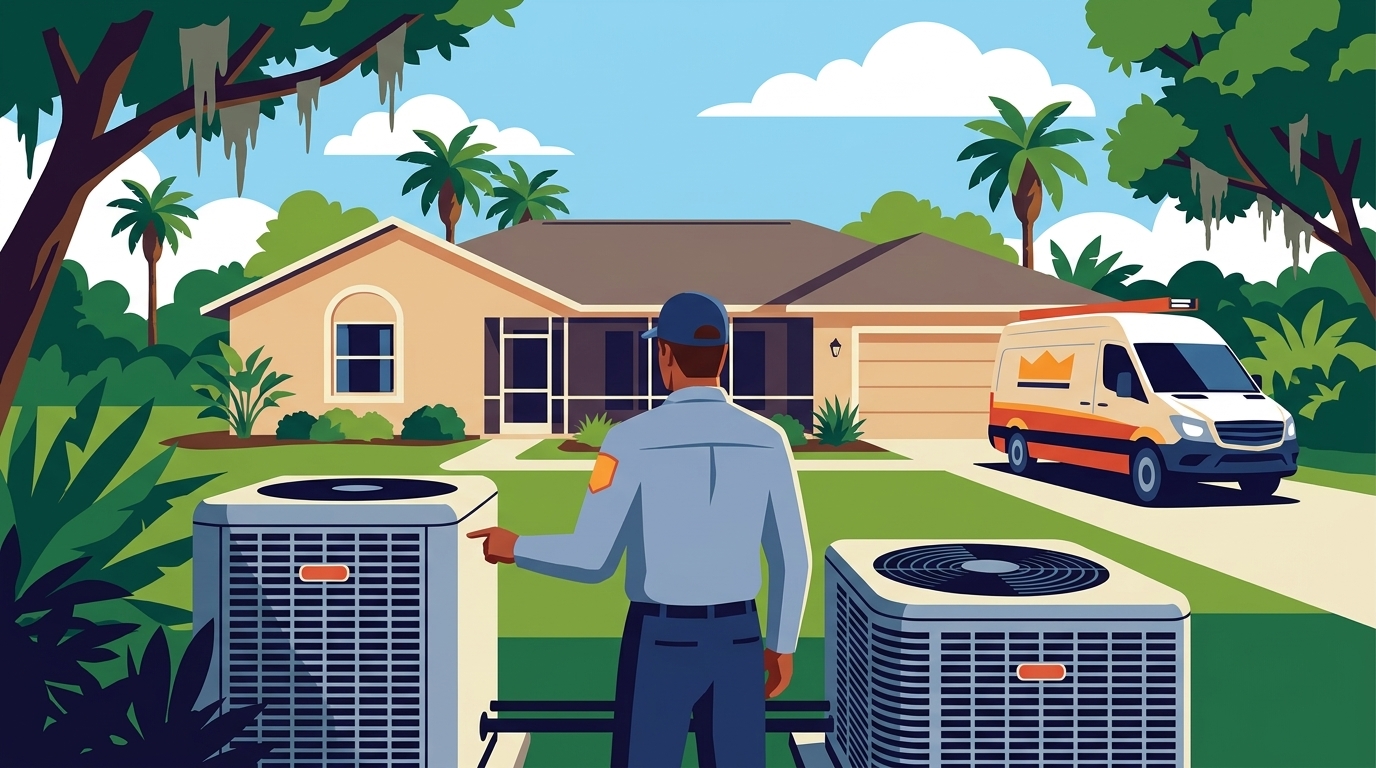
Because Florida sizes both systems around cooling first, the equipment inside your home looks nearly identical. The heat pump simply adds a reversing valve that lets the same outdoor unit produce heat on the handful of cool nights each winter. Our team at King of Home Solutions walks Jacksonville homeowners through this decision daily, and the honest answer almost always comes down to two things: what's heating your house today, and what you want your energy bills to look like in five years.
How do central AC and heat pumps compare on cost in 2026?
In Jacksonville, central AC installations typically run $2,900–$5,500 for basic jobs, $5,500–$9,800 for mid-range systems, and $10,500–$17,500+ for high-end or complex work. Heat pump versions of the same brand and efficiency tier generally cost $400–$1,800 more installed. Statewide, Florida heat pump systems run $5,000–$13,500 installed depending on size and features.
Here's how the numbers break down by size and efficiency tier for a typical central AC replacement in Florida:
| System Size | 14–15 SEER | 16–17 SEER | 18+ SEER |
|---|---|---|---|
| 2-ton (1,100–1,400 sq ft) | $5,800 | $6,900 | $8,400 |
| 3-ton (1,500–2,000 sq ft) | $7,200 | $8,500 | $10,400 |
| 4-ton (2,000–2,500 sq ft) | $8,900 | $10,200 | $12,500 |
Most 3-ton central AC jobs in Florida land around $8,500 in 2026. The heat pump equivalent of a mid-tier 3-ton system typically runs roughly $7,500–$9,500 before incentives, depending on brand and whether you choose single-stage or variable-speed. These are ranges, not quotes — actual bids swing with ductwork condition, electrical upgrades, and permit requirements.
How does each system handle Jacksonville's heat and humidity?
Both central AC and heat pumps dehumidify by cooling air below its dew point using the same indoor coil design. Heat pumps in Florida often deliver better dehumidification because they're frequently sold as higher-efficiency, variable-speed systems that run longer low-stage cycles. Single-stage builder-grade AC units can short-cycle in shoulder seasons, leaving humidity higher than comfortable.
For The Hills specifically, this matters. Homes in this pocket of Jacksonville see the same brutal August dew points as the rest of Duval County, and undersized or oversized equipment struggles all summer. Whether you go AC or heat pump, the biggest comfort gains usually come from moving up from a single-stage 14 SEER2 unit to a two-stage or variable-speed system at 16–18 SEER2.
What about heating on those cool Jacksonville nights?
This is where the two systems genuinely diverge. A central AC paired with electric strip heat delivers about 3,412 BTU per kWh (COP ~1.0), while a heat pump typically delivers 2–3 times more heat per kWh in Jacksonville's mild winter temperatures. Over the 3–4 dozen cool nights the area sees each year, a heat pump uses noticeably less electricity than resistance strips for the same comfort.
If you currently heat with a gas furnace, the math changes. A new central AC bolted to your existing furnace keeps your heating operating costs flat and avoids the heat pump premium. If you heat with electric strips today, upgrading to a heat pump usually pays back its extra cost through winter savings alone.
What incentives are available in The Hills right now?
JEA offers a $200 rebate for ENERGY STAR-certified central air conditioners, air-source heat pumps, or ductless mini-splits, plus an additional $50 rebate for a smart thermostat installed at the same time. The program runs October 1, 2026 through September 30, 2026, with applications due within 90 days of install and no later than October 10, 2026. Equipment must meet ENERGY STAR standards, generally SEER2 15.2+.
The federal Energy Efficient Home Improvement Credit (Section 25C), which offered up to 30% of installation cost capped at $2,000 for qualifying heat pumps, expired on December 31, 2026. New installations in 2026 are no longer eligible for that credit, so the heat pump price premium is felt more directly at the point of sale than it was a year ago. Florida has not yet launched the HEEHRA Home Energy Rebates program that would offer up to $8,000 for qualifying heat pump installs.
Because JEA's $200 rebate applies equally to central AC and heat pumps, it narrows the price gap without eliminating it. The credit still helps, and it stacks with occasional manufacturer rebates from Carrier, Trane, Lennox, and Rheem.
Which trim level makes sense for a typical The Hills home?
For most homes in The Hills — mid-size, single-story or two-story, with existing ductwork in reasonable shape — a mid-tier 16–17 SEER2 two-stage system hits the sweet spot. Basic 14–15 SEER2 single-stage units cost less but sacrifice humidity control; premium 18+ SEER2 inverter systems deliver the best comfort but take longer to pay back in Jacksonville's cooling-dominated climate.
The three practical tiers look like this:
- Basic (14–15 SEER2, single-stage): Lowest cost, adequate cooling, weaker humidity control. Good for rentals or short-hold properties.
- Mid-tier (16–17 SEER2, two-stage or basic inverter): Variable-speed indoor blower, quieter operation, meaningfully better dehumidification. Best value for most owners.
- Premium (18+ SEER2, full inverter): Wide-modulation compressor, advanced humidity modes, smart-thermostat integration. Worth it for long-term owners or paired with solar.
Who should choose central AC, and who should choose a heat pump?
Central AC fits budget-conscious buyers, homes with newer gas furnaces, landlords, and short-term owners in The Hills. Heat pumps fit all-electric homes, comfort-focused owners, long-term residents, and anyone planning rooftop solar. If your gas furnace is under 10 years old and working well, replacing only the AC is almost always the cheaper, cleaner move.
Homeowners in The Hills planning to stay five or more years, or those already looking at solar to offset Jacksonville's high summer cooling loads, usually come out ahead with a heat pump even without the expired federal credit. King of Home Solutions typically recommends getting bids for both a straight AC and a heat pump in the same brand and efficiency tier — the price delta will tell you exactly what you're paying for the added heating flexibility.
Frequently asked questions
Do heat pumps work well in Jacksonville's climate?
Yes. Jacksonville's mild winters are actually ideal for air-source heat pumps because temperatures rarely drop low enough to force the system into resistance backup. On the 3–4 dozen cool nights per year, a heat pump delivers 2–3 times more heat per kWh than electric strips, and it handles cooling just as effectively as a central AC the rest of the year.
How much can I expect to pay for HVAC installation in The Hills?
Central AC installations in Jacksonville typically run $2,900–$5,500 for basic jobs, $5,500–$9,800 for mid-range systems, and $10,500–$17,500+ for high-end or complex projects. Heat pumps generally cost $400–$1,800 more than the equivalent AC. A mid-tier 3-ton system for a typical home in The Hills lands around $7,000–$9,500 installed before rebates.
Is the federal heat pump tax credit still available in 2026?
No. The Section 25C Energy Efficient Home Improvement Credit, which offered up to 30% of installation cost capped at $2,000 for qualifying heat pumps, expired on December 31, 2026. Installations completed in 2026 are not eligible. Homeowners who installed in 2026 may still claim the credit on their tax filing for that year.
What JEA rebates apply to a new HVAC system?
JEA offers a $200 rebate for ENERGY STAR-certified central air conditioners, air-source heat pumps, or ductless mini-splits, plus a $50 bonus for a smart thermostat installed at the same time. The current program window runs October 1, 2026 through September 30, 2026, and applications must be submitted within 90 days of installation and by October 10, 2026 at the latest.
Should I replace my AC and furnace at the same time?
If both units are 12+ years old, replacing them together usually costs less than two separate jobs and lets the installer properly match capacity, refrigerant lines, and controls. If your furnace is under 10 years old and working well, replacing only the AC is typically the more cost-effective choice. A heat pump would let you eliminate the furnace entirely if you prefer an all-electric home.
How long does a heat pump or central AC installation take?
A standard central AC or heat pump replacement in a Jacksonville home takes one to two days for straightforward jobs where the existing ductwork, electrical, and pad are reusable. More complex installs — new duct runs, electrical upgrades, or difficult attic access — can stretch to three days. Permits through the City of Jacksonville are required for HVAC replacements and are typically pulled by the contractor.
Getting the right system for your home
The central air vs heat pump choice in The Hills comes down to your current heating setup, how long you'll own the home, and whether you value the lowest upfront price or the lowest long-term operating cost. Both systems cool Jacksonville homes equally well; the heat pump simply adds efficient electric heating and often better humidity control for a modest premium.
Homeowners in The Hills who want an honest side-by-side comparison for their specific home can reach King of Home Solutions at https://kingofhomesolutions.com to get quotes for both options. With a 4.9-star rating across 55 Google reviews and a reputation neighbors describe as professional, responsive, and fairly priced, we're happy to walk through the tradeoffs so you can make the call with all the numbers in front of you.