How a Bathroom Remodel Plumbing Rough-In Actually Works in Atlantic Beach
What a bathroom remodel plumbing rough-in actually involves in Atlantic Beach, FL — drain slope, vent stacks, pressure testing, inspection, and timing.
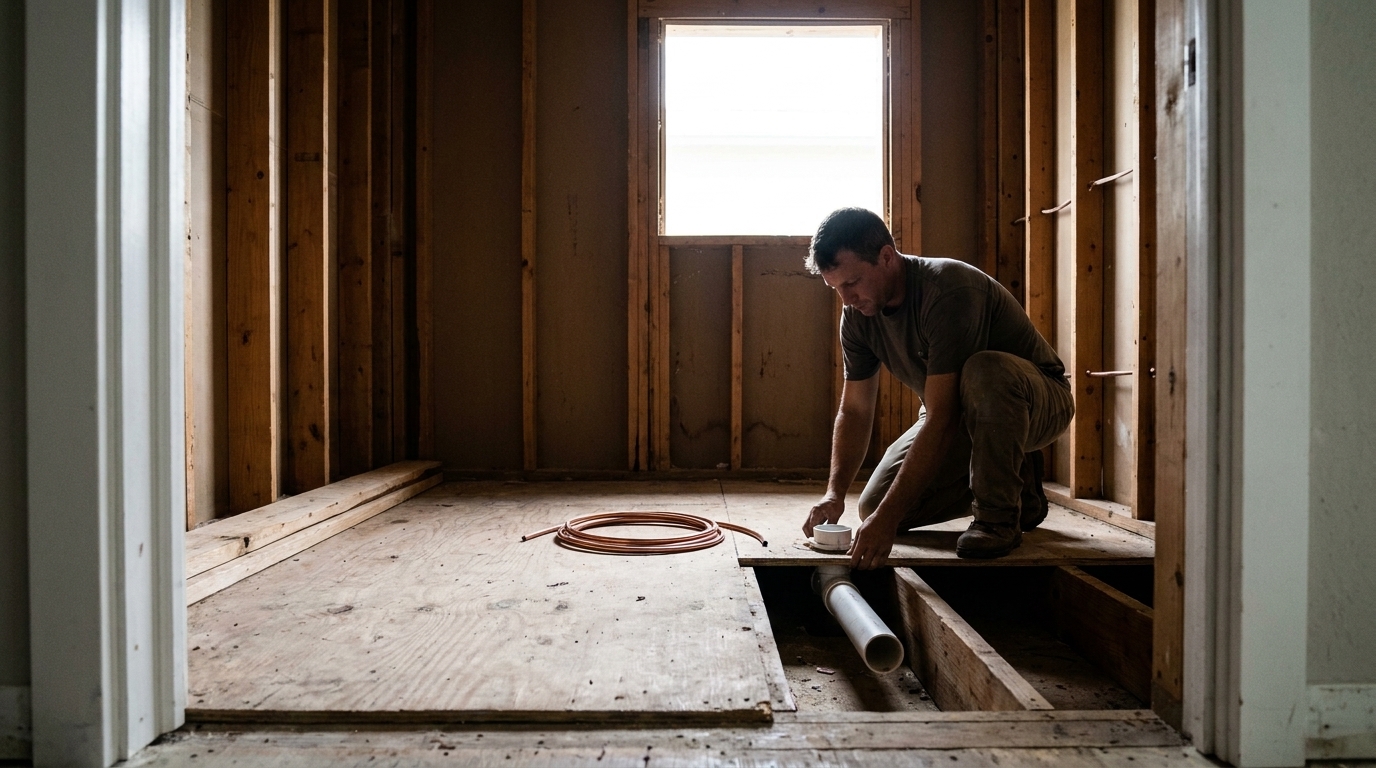
A bathroom remodel plumbing rough-in is the stage where your plumber installs all the drain, waste, vent, and water supply lines inside open walls and floors — before any drywall goes up and before a single fixture is set. In Atlantic Beach, FL, that work must be pressure-tested and signed off by a local building inspector before the walls can close and finish plumbing can start.
It is the quietest, least glamorous phase of your remodel, and also the one that decides whether the finished bathroom works for the next thirty years or starts leaking inside a wall by year three. Here is exactly what to expect.
What is a plumbing rough-in, and where does it sit in the remodel?
A plumbing rough-in is the installation of vents, drain and waste lines, water supply lines, shutoff valves, drain traps, and cleanouts after framing is complete but before fixtures are installed. It happens between framing and drywall; once the walls close, whatever is behind them stays there, which is why this phase is the critical catch-point for problems.
Home plumbing moves through three phases: underground rough-in, above-ground rough-in (also called top-out or stack-out), and finishing. Most Atlantic Beach bathroom remodels on an existing slab deal mainly with the above-ground phase, unless you are relocating a toilet or shower drain and have to open the slab.
What does a plumber actually install during the rough-in?
During a bathroom rough-in, your plumber installs water supply lines, drain pipes, waste pipes, pipeline connections, shutoff valves, vent stacks, drain traps, cleanouts, and — where the layout requires it — a sewage ejector pump. Everything that lives behind the finished wall or under the finished floor gets set, secured, and tested in this phase.
At King of Home Solutions, which focuses exclusively on residential plumbing, the sequence inside the wall typically runs drain first, vent next, then hot and cold supply, with every penetration measured off the finish floor and finish wall rather than the subfloor and stud. Those few extra measurements are what keep the toilet flange centered, the vanity drain hidden, and the shower valve at the right height once tile goes on.
How are drain slope and vent stacks sized for a bathroom?
Horizontal drain lines need a consistent downward slope so solids and water flow together instead of separating. Horizontal drain lines must maintain a consistent downward slope so solids and water flow together instead of separating — your plumber will size and pitch each run to meet code requirements. Trap arms are also length-limited by code, which is why a vanity relocated across a long wall often needs a new vent.
Vent stacks let air into the drain system so water can leave it. Every fixture needs a vent within code distance of its trap, or the trap siphons dry and sewer gas comes up through the drain. In older Atlantic Beach homes near the coast, we often find vents that were legal when the house was built but no longer serve a relocated shower or added double vanity — the rough-in is when that gets corrected.
Why does pressure testing matter before the walls close?
Pressure testing of every joint and connection is required to confirm the system is air- and water-tight before it gets buried behind drywall or under tile. Supply lines are typically pressurized with water or air and held; drain and vent systems are capped and filled or air-tested. A joint that holds for the test will hold for decades; a joint that fails the test gets rebuilt while it is still reachable, which is the whole point of running the test now.
Skipping or shortcutting this step is the single most expensive mistake in a bathroom remodel. A pinhole supply leak behind new tile can mean tearing out the shower surround you just paid for.
What does the Atlantic Beach rough-in inspection look like?
Once the rough-in is complete, a local building inspector visits the site to check the work. The inspector verifies pipe sizing, slope, venting, support, fire-blocking around penetrations, and that the pressure test is holding. Only after the rough-in passes can drywall be hung, walls closed and taped, and finish plumbing — toilets, faucets, the vanity, the shower trim — begin.
Permit fees, inspection scheduling windows, and specific code amendments vary by jurisdiction, so verify those directly with the City of Atlantic Beach or Duval County building department for your address. The rough-in inspection is a formal checkpoint — the project does not move forward until it passes.
How does the rough-in fit into the overall remodel timeline and cost?
Rough-in plumbing sits after demolition and framing and before drywall — it is the critical middle phase of the remodel sequence. The plumber returns weeks later for the finish phase to set fixtures.
Cost framing: according to usacabinetstore.com, the 2026 national average bathroom remodel runs about $16,500, with most homeowners spending between $8,000 and $45,000 depending on bathroom size, quality level, and regional location. Those are national estimates and may not reflect current Atlantic Beach market conditions — coastal Duval County labor and material pricing tends to run its own way, so verify current costs locally. Your plumber's share of the total depends on how much is being moved (relocated toilet, new shower drain, second vanity) versus swapped in place.
Rough-in cost drivers at a glance
| Cost driver | Why it matters | Impact on rough-in |
|---|---|---|
| Fixture relocation | Moving a toilet or shower drain means new drain + vent routing | High |
| Slab vs. crawlspace access | Slab work requires cutting and patching concrete | High |
| Existing pipe material | Old galvanized or cast iron often needs replacement at tie-ins | Medium |
| Added fixtures (double vanity, bidet) | Each new fixture needs its own supply, drain, and vent | Medium |
| Like-for-like swap | Reusing existing drain and supply locations | Low |
How does the plumbing rough-in coordinate with the rest of the trades?
The plumbing rough-in has to coordinate with electrical rough-in, HVAC rough-in, and any structural work affecting the same wall and floor cavities. Three trades fighting for the same stud bay is how you end up with a vent stack notched through a load-bearing header or a drain line crossing a duct run.
On a well-run Atlantic Beach bathroom remodel, the plumber walks the framed space with the general contractor and the electrician before the first pipe goes in. Sequence usually runs HVAC first (ducts are least flexible), plumbing second, electrical last — because wire bends around pipes far more easily than pipes bend around wire.
Why does the rough-in matter so much for coastal homes?
Atlantic Beach sits on sandy coastal soil with a shallow water table and salt-laden air, which is hard on exposed metallic connections and makes any under-slab drain repair a bigger project than it would be inland. Homes closer to the ocean also see occasional hard freezes that can split supply lines in exterior walls — a rough-in is the right time to insulate or reroute vulnerable runs, and to confirm shutoff valves are accessible for the next freeze event.
Mid-range bathroom remodels are reported to deliver 65–80% ROI, per usacabinetstore.com, but that payback assumes the work holds up. In a coastal environment, the rough-in is where that assumption is earned or lost.
Frequently asked questions
How long does a bathroom plumbing rough-in take?
For most Atlantic Beach bathroom remodels, the rough-in itself takes place once framing is complete, plus time to schedule and pass the inspection. Rough-in sits inside the overall 5–8 week remodel timeline. Fixture relocations, slab cuts, or replacing old galvanized or cast iron tie-ins can add days; a straight like-for-like layout runs on the faster end.
Do I need a permit for bathroom rough-in plumbing in Atlantic Beach, FL?
Yes. Any work that alters drain, waste, vent, or supply lines requires a plumbing permit and a rough-in inspection in Atlantic Beach, FL. The specific permit fee and inspection scheduling window depend on the City of Atlantic Beach and Duval County rules in force for your address, so verify current requirements with the applicable building department before work begins.
What happens if the rough-in fails inspection?
If the inspector flags an issue, the plumber corrects it and the inspection is rescheduled — drywall and finish work pause until the rough-in passes. Common fail items include incorrect drain slope, missing or undersized vents, unsupported pipe runs, and failed pressure tests. A corrected and re-inspected rough-in is still cheaper and faster than tearing out finished walls to fix the same problem later.
Can I move a toilet or shower during a remodel?
Yes, but it is the single biggest cost driver in a bathroom rough-in. Moving a toilet means a new drain line, new vent routing, and often cutting the slab in Atlantic Beach homes built on grade. Moving a shower is similar. If the budget is tight, keeping the toilet and shower drains in place while changing everything else above the floor gives you the most visual change for the least plumbing cost.
What pipe material is used for a modern bathroom rough-in?
Most Atlantic Beach bathroom rough-ins today use PEX for hot and cold supply lines and PVC for drain, waste, and vent lines. PEX handles the coastal environment well, flexes through tight framing, and resists the pinhole corrosion that affects older copper in high-humidity homes. PVC is standard for DWV. If your home still has galvanized supply or cast iron drains, the remodel is often the right time to replace them at tie-in points.
Who should I call for a bathroom remodel plumbing rough-in in Atlantic Beach, FL?
Hire a licensed and insured plumbing company that handles residential bathroom remodels regularly and can coordinate with your general contractor, electrician, and HVAC trade on the inspection timeline. Confirm they will handle the permit, run the pressure test, and be on site for the inspection. King of Home Solutions is a residential plumbing company serving the Atlantic Beach, FL area and handles bathroom remodel rough-ins directly.
Getting your rough-in handled in Atlantic Beach
The rough-in is where a bathroom remodel is quietly made or quietly broken. Done right, you forget it exists; done wrong, you remember it every month for years. Readers in Atlantic Beach, FL who want this phase handled by a residential plumbing specialist can reach King of Home Solutions at (904) 865-4663 or https://kingofhomesolutions.com to talk through the scope of their project.