Low Water Pressure in Miramar, Jacksonville: Causes and Fixes
Low water pressure in Miramar, Jacksonville? Learn the common causes, easy fixes, and when to call a licensed plumber for same-day repair.
You turn on the shower in your Miramar home and the water trickles out instead of pouring. The dishwasher takes forever to fill. Watering the lawn feels like waiting for paint to dry. If this sounds familiar, you're not alone — low water pressure is one of the most common calls we get from homeowners in this corner of Jacksonville, FL.
Miramar is one of Jacksonville's older established neighborhoods, tucked along the St. Johns River south of San Marco and within easy reach of the Southbank. That history is part of its charm — and part of the reason water pressure issues show up here more than in newer subdivisions on the city's outskirts. Below, we'll walk through why your water pressure is low, what you can check yourself, and when it's time to bring in a licensed plumber.
Why Is My Water Pressure Low in Jacksonville?
Low water pressure usually comes down to one of three categories: an issue with the municipal supply coming into your home, a problem with your home's plumbing system, or a fixture-level clog. In Miramar specifically, several local factors stack the deck.
1. Aging Municipal Infrastructure
Much of Miramar's housing stock dates from the 1920s through the 1950s, and the water mains feeding the neighborhood have aged right along with it. JEA (Jacksonville's municipal utility) has been steadily replacing older cast iron and galvanized lines across the city, but in established neighborhoods south of downtown, you can still encounter sections of original distribution piping. When those lines corrode internally, the effective diameter shrinks and pressure drops — especially during peak morning and evening usage.
If your neighbors are noticing the same dip at the same times of day, the issue may be upstream of your property line. A quick call to JEA can confirm whether there's known work or a pressure-zone issue in your area.
2. Mineral Buildup From Hard Water
Jacksonville's water is drawn primarily from the Floridan Aquifer, and while it's safe and well-treated, it carries a meaningful amount of dissolved minerals — calcium, magnesium, and iron in particular. Over years and decades, those minerals build up inside pipes, water heaters, faucet aerators, and showerheads.
In older Miramar homes with original galvanized steel plumbing, that buildup can dramatically narrow the inside of the pipe. We've cut open sections of 60-year-old pipe in this neighborhood where the usable opening was roughly the diameter of a pencil. That's a leading cause of low water pressure in Jacksonville's older neighborhoods.
3. A Failing Pressure Regulator
Many Jacksonville homes have a pressure-reducing valve (PRV) where the main line enters the house. When it fails, pressure can drop across every fixture at once. PRVs typically last 10 to 15 years, so if yours hasn't been touched in a while and pressure dropped suddenly, this is a strong suspect.
4. Hidden Leaks
Miramar's mature trees are beautiful — and their roots love old water lines. A slab leak or a leak in the service line between the meter and your house can quietly bleed off pressure (and run up your JEA bill) for months before you notice damp spots or hear running water.
5. Partially Closed Shutoff Valves
This one's surprisingly common. If you've had any plumbing work done recently, or if your home's main shutoff was turned during a hurricane prep cycle and not reopened fully, you may simply have a valve that isn't all the way on.
What You Can Check Yourself
Before calling a professional, there are a few quick tests worth running:
- Test multiple fixtures. If only one faucet is weak, the issue is almost certainly local — an aerator, cartridge, or supply line at that fixture.
- Check hot vs. cold separately. If only hot water is weak, sediment in your water heater is the likely cause. Flushing the tank can help.
- Unscrew and clean aerators. The little mesh screens at the tip of your faucets clog with mineral deposits. Soak them in white vinegar overnight.
- Verify your shutoff valves are fully open. Check the valve at the meter and the main valve where the line enters your home.
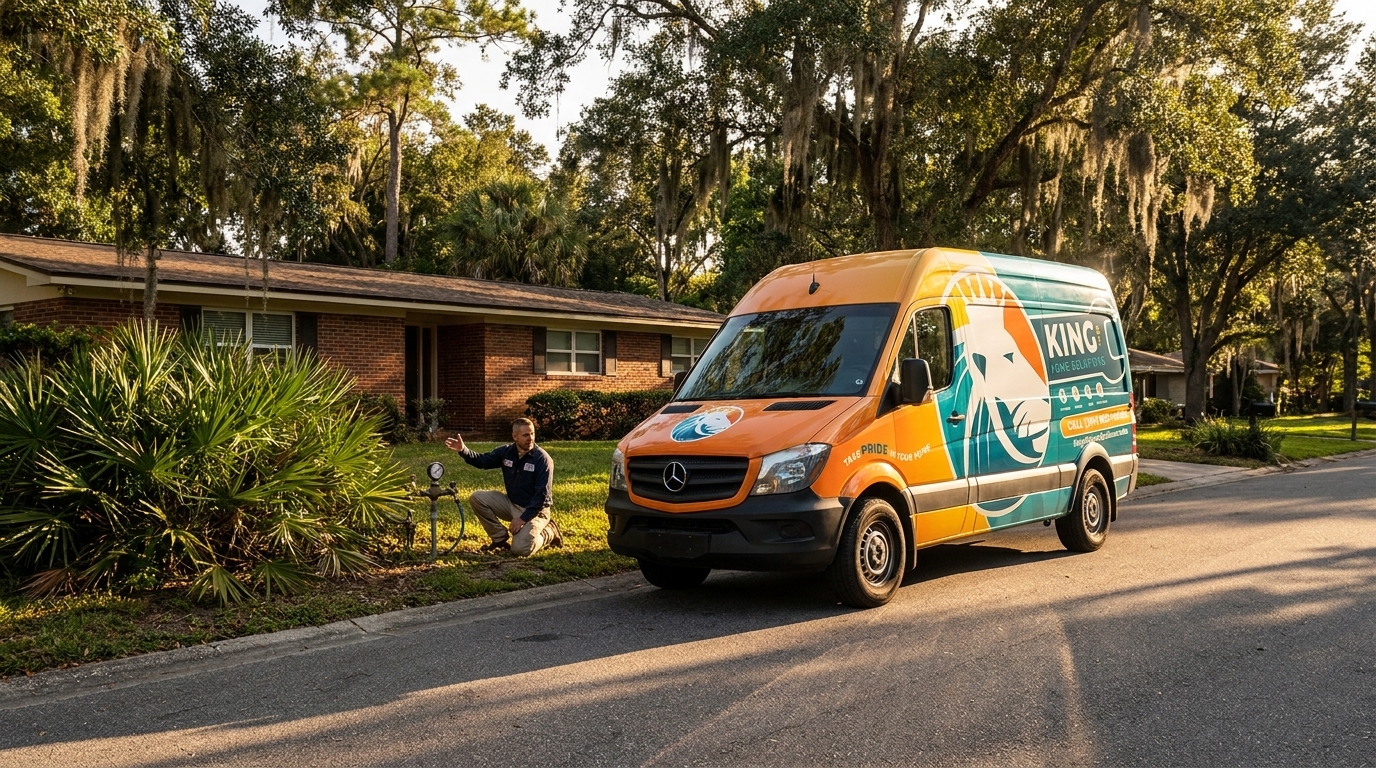
- Use a pressure gauge. A $15 gauge that screws onto an outside hose bib will tell you exactly what you're working with. Healthy residential pressure runs roughly 45 to 70 psi. Below 40 psi, something is wrong.
When to Call a Licensed Plumber
If you've worked through the checklist and pressure is still low — or if you suspect a leak, a failing PRV, or corroded supply lines — it's time for a professional diagnosis. Pipe replacement, PRV swaps, and slab leak detection aren't DIY territory, and in Jacksonville they require a licensed plumber. Florida requires plumbers to hold a state license issued through the Department of Business and Professional Regulation (DBPR), and any work that involves opening walls or altering supply lines will need a permit through the City of Jacksonville's Building Inspection Division.
How to Find a Licensed Plumber Near You in Jacksonville
A few things to verify before you hire:
- A current Florida state plumbing license (you can look it up on the DBPR website)
- Active liability insurance and workers' compensation coverage
- Familiarity with older Jacksonville housing stock, especially if you're in Miramar, Avondale, Riverside, or San Marco
- Clear, written estimates before work begins
- Genuine reviews from local homeowners
King of Home Solutions serves Miramar and the surrounding Jacksonville neighborhoods, and our 4.9-star Google rating reflects the kind of communication and follow-through homeowners look for on a job like this. One recent reviewer described the experience as "professional, on time, excellent communication and great price." That's the standard we aim for on every pressure diagnosis and repair.
Same-Day Plumbing Repair in Jacksonville
Some pressure problems can wait a few days. Others — a burst supply line, a major leak, no water at all — can't. If you've lost pressure suddenly, shut off the main valve to your home and call for same-day service. The longer water runs unchecked through a compromised line, the more damage it does to drywall, flooring, and the wood-frame construction common in older Miramar homes.
FAQ: Low Water Pressure in Miramar, Jacksonville
How much does it cost to fix low water pressure in Jacksonville?
It depends entirely on the cause. Replacing a clogged aerator costs nothing. Swapping a pressure-reducing valve typically runs a few hundred dollars. Repiping a section of corroded supply line is more involved. A licensed plumber should give you a written estimate before starting work.
Can low water pressure damage my home?
Low pressure itself isn't damaging, but the underlying causes often are. Hidden leaks rot framing and feed mold. Heavy mineral buildup eventually leads to pinhole leaks. Getting a diagnosis early usually saves money.
Does Jacksonville's water hardness really affect plumbing that much?Yes. Over decades, the mineral content in Floridan Aquifer water meaningfully reduces the inside diameter of older pipes and shortens the life of water heaters and fixtures. A whole-home water softener is worth considering, especially in older homes.Is low pressure throughout the house always a serious issue?
Not always — but house-wide low pressure points to something systemic: the PRV, the main line, the meter, or municipal supply. Those are worth investigating rather than ignoring.
The Bottom Line
Low water pressure in Miramar usually traces back to one of a handful of culprits: aging infrastructure, mineral buildup, a failing pressure regulator, or a hidden leak. Some you can troubleshoot in an afternoon. Others need a licensed plumber with experience in Jacksonville's older neighborhoods. Homeowners in Miramar and the surrounding Jacksonville, FL area who want this diagnosed and fixed professionally can reach King of Home Solutions at https://kingofhomesolutions.com for a free estimate.