How to Fix Low Water Pressure in Gilmore, Jacksonville
Why is your water pressure low in Gilmore, Jacksonville? A plumber's diagnostic guide to causes, fixes, and when to call for professional help.
You turn on the kitchen faucet and get a sad trickle. The shower feels more like a light rain than a rinse. If you're a homeowner in Gilmore wondering why your water pressure has gone soft, you're not imagining it — and you're not alone.
Low water pressure is one of the most common calls we hear about in this pocket of Jacksonville. The good news: most causes are diagnosable, and many are fixable without tearing your home apart. Here's how to think through it.
Why Is My Water Pressure Low in Jacksonville?
Water pressure problems in Jacksonville homes usually trace back to one of five places: the city supply, your pressure regulator, your pipes, your fixtures, or your water heater. The trick is figuring out which.
Gilmore sits in an older residential pocket of Jacksonville, and the housing stock here skews toward mid-century construction. That matters. Homes built before the 1980s often still carry their original galvanized steel supply lines, and after decades of Florida's mineral-heavy water moving through them, the interior diameter narrows from corrosion. A pipe that started at three-quarters of an inch can effectively become a quarter-inch straw.
If you've noticed your pressure dropping gradually over months or years rather than overnight, aging pipes are a likely suspect.
The Five Most Common Low Water Flow Causes
1. A Failing Pressure Reducing Valve (PRV)
Most Jacksonville homes have a pressure reducing valve where the city main enters the house. It's usually a bell-shaped brass fitting near the meter or where the line comes through the foundation. These valves wear out — typically every 10 to 15 years.
When a PRV fails, pressure can swing in either direction. You might get a trickle, or you might suddenly get pounding pressure that stresses every fixture in the house. Either way, it's a relatively contained repair.
2. Corroded or Clogged Pipes
This is the big one for older Gilmore homes. Galvanized pipes corrode from the inside out. Copper holds up better but can develop pinhole issues over time. If only your hot water has low pressure, the problem may be sediment in the water heater or scaling in the hot lines.
3. Clogged Aerators and Fixture Screens
The cheapest fix in plumbing. Faucet aerators trap mineral deposits, and Jacksonville's water carries enough calcium and magnesium to clog them faster than you'd expect. Unscrew the tip of your faucet, soak the screen in white vinegar for an hour, and reinstall. If pressure returns at that fixture, you've found it.
4. A Partially Closed Main Shutoff
Sounds silly, but it happens constantly — usually after a recent repair or inspection. Someone closes the main valve, reopens it, but not all the way. Walk over to your shutoff and make sure it's fully open.
5. Municipal Supply Issues
JEA (Jacksonville's utility) occasionally performs main flushing, repairs, or pressure adjustments that affect specific neighborhoods. If your neighbors are seeing the same drop at the same time, the issue may not be in your house at all. A quick call to JEA can confirm whether work is happening on your line.
How to Diagnose Low Water Pressure Yourself
Before calling anyone, run through this short checklist. It'll save you time and help any plumber you do call get to the answer faster.
- Test multiple fixtures. Is it only one faucet, or the whole house? One fixture points to an aerator or supply line. Whole house points to PRV, main valve, or supply.
- Check hot vs. cold separately. Hot-only issues usually mean water heater sediment or hot-side scaling.
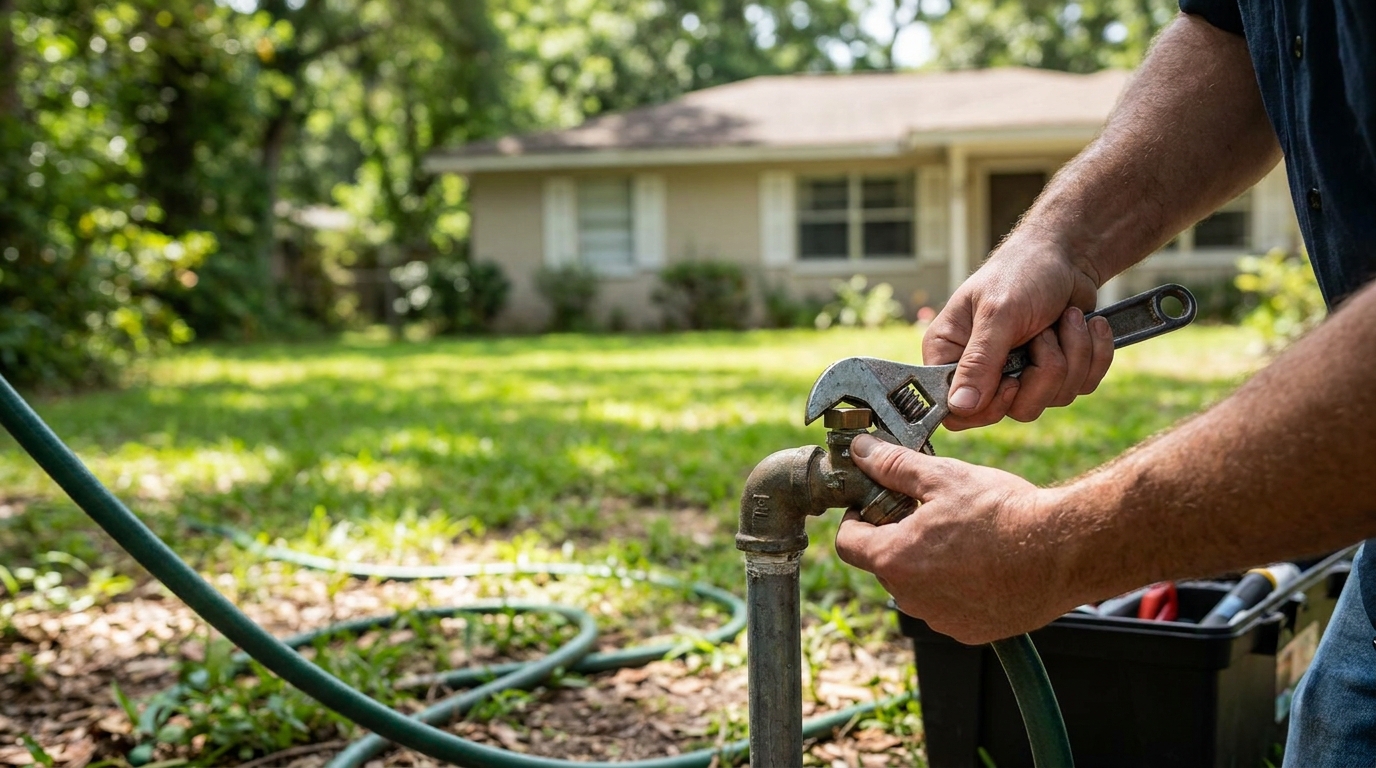
- Gauge the pressure. A $12 pressure gauge from a hardware store screws onto any hose bib. Healthy residential pressure runs 45–70 PSI. Below 40 PSI means something's restricting flow.
- Ask the neighbors. Especially in Gilmore, where homes share similar infrastructure age, neighbors are a great control group.
- Look for leaks. A hidden slab leak can drop whole-house pressure while quietly running up your water bill.
Plumbing Pressure Issues Specific to Gilmore Homes
A few patterns we see repeatedly in this part of Jacksonville:
Slab foundations and hidden leaks. Many Gilmore homes are built on slab. When supply lines run through or under that slab and develop a leak, you may see a pressure drop, hear water running when nothing's on, or notice warm spots on the floor. Slab leaks need professional diagnosis — they're not a DIY situation.
Hard water buildup. Duval County's water is moderately hard. Over years, scale accumulates in water heaters, valves, and pipe interiors. If your home has never had a water softener and you're in an older property, expect some flow restriction from mineral deposits.
Permit-required repairs. Any plumbing work in Jacksonville that involves replacing supply lines, the water heater, or work behind walls typically requires a permit through the City of Jacksonville's Building Inspection Division. Reputable plumbers pull these permits as a matter of course. If someone offers to skip the permit to save you money, that's a flag.
When to Call a Plumber
Clean an aerator yourself. Confirm your main shutoff is open. Beyond that, most low pressure diagnostics benefit from a pro with a pressure gauge, a camera scope, and experience reading what the symptoms add up to.
Call a plumber when:
- The drop happened suddenly with no clear cause
- Only hot water is affected and your heater is more than 8 years old
- You suspect a leak (rising water bill, damp spots, running meter with everything off)
- The PRV is original to a home built before 2026
- You're seeing discolored water along with pressure changes
FAQ: Water Pressure Problems in Jacksonville
How much does it cost to fix low water pressure?
It depends entirely on the cause. A clogged aerator costs nothing. A PRV replacement typically runs a few hundred dollars. A whole-home repipe is a multi-thousand-dollar project. A proper diagnostic visit is the only honest way to scope the work.
Can low water pressure damage my plumbing?
Low pressure itself usually doesn't damage pipes, but the underlying cause might. A slab leak, for example, will get worse — and more expensive — the longer it runs.
Is low water pressure covered by homeowners insurance?
Generally no, unless the cause is a sudden covered event like a burst pipe. Gradual issues from corrosion or wear aren't covered. Check your specific policy.
How long does a typical repair take?
Aerator cleanings take minutes. PRV swaps are usually a few hours. Repipes can take several days. Most Gilmore homes we visit get a same-day diagnosis even if the repair is scheduled out.
Getting It Handled
Low water pressure is rarely just one thing, and the cost of getting the diagnosis wrong is usually higher than the cost of having someone qualified take a look. Homeowners in Gilmore and across Jacksonville who want this handled professionally can reach King of Home Solutions at kingofhomesolutions.com for a free estimate. The company holds a 4.9★ rating across Google reviews, with customers regularly noting clear communication and on-time service — both useful qualities when you're trying to figure out why your shower has gone soft.