What Causes Low Water Pressure in a House in Atlantic Beach, FL
Weak water pressure in your Atlantic Beach home? Learn the common causes, quick checks, and when to call a plumber for a lasting fix.
You turn on the shower and get a trickle. The washing machine takes forever to fill. The kitchen faucet sputters when someone flushes upstairs. If that sounds familiar, you're not imagining things — low water pressure is one of the most common calls plumbers get from homeowners in Atlantic Beach, FL, and it usually points to something specific and fixable.
The tricky part is that "weak water pressure" can mean a dozen different things. It might be a single faucet, a whole bathroom, or the entire house. It might come and go, or it might have been slowly getting worse for months. Each pattern tells a different story about what's really happening behind your walls.
Here's what we typically see causing low water pressure in Atlantic Beach homes, how to narrow down the source, and when it makes sense to bring in a pro.
Why Water Pressure Issues Are So Common in Atlantic Beach
Coastal North Florida is a tough environment for plumbing. The salt air, high humidity, and sandy soil all take a toll on pipes, fittings, and fixtures. Older homes near the ocean — think the beachside blocks east of Mayport Road — often deal with mineral buildup and corrosion faster than inland homes.
Atlantic Beach also has a mix of housing stock. You'll find mid-century block homes, 1980s subdivisions in areas like Selva Marina, and newer builds closer to the Intracoastal. Each era used different pipe materials, and each material fails in its own way. Galvanized steel corrodes from the inside. Older polybutylene becomes brittle. Even copper eventually pinholes in humid, salty conditions.
Add in the region's hard water and periodic pressure fluctuations from the municipal supply, and you have a recipe for pressure problems that sneak up on you over years.
The Most Common Causes of Low Water Pressure in a House
1. A Failing Pressure Regulator
Most homes have a pressure-reducing valve (PRV) where the main line enters the house. It keeps incoming city pressure at a safe level — usually around 50 to 70 psi. When a PRV starts to fail, pressure can drop across the entire home, sometimes overnight, sometimes gradually.
If every fixture in your house feels weak at the same time, the regulator is often the first suspect. It's a relatively straightforward replacement for a licensed plumber, but diagnosing it correctly matters — replacing a good PRV won't fix a different underlying issue.
2. Clogged or Corroded Pipes
In older Atlantic Beach homes, especially those built before the 1980s, galvanized steel supply lines are still surprisingly common. Over decades, the inside of those pipes fills with rust and mineral scale. The opening you started with may now be the diameter of a pencil.
The telltale sign: pressure that has slowly declined for years, often worse on the hot side because heat accelerates scaling. A repipe with modern PEX or copper is usually the permanent fix, and it's one of the more common jobs plumbers handle in the older neighborhoods around town.
3. A Hidden Leak
A leak somewhere between the meter and your fixtures will bleed off pressure before it reaches the tap. In Atlantic Beach's sandy soil, underground leaks can go unnoticed for a long time because the water disappears without pooling on the surface.
Warning signs include a water bill creeping up for no obvious reason, a soggy spot in the yard, or the sound of running water when nothing is on. If you suspect a leak, shut off every fixture and check whether your water meter is still moving. If it is, you have a leak somewhere.
4. Municipal Supply Issues
Sometimes the problem isn't in your house at all. Atlantic Beach's water utility occasionally runs maintenance, flushes hydrants, or has a main break that temporarily drops neighborhood pressure. If your neighbors are also complaining, or if the drop coincided with construction nearby, the utility is worth a quick call before you tear anything open.
5. Clogged Aerators and Fixture Cartridges
If only one or two fixtures are weak, the problem is almost always at the fixture itself. Aerators clog with sediment and calcium — extremely common with our hard water. Cartridges inside single-handle faucets get gummed up. Showerheads develop mineral crust that closes off the spray holes.
Unscrewing the aerator and soaking it in vinegar overnight fixes a surprising number of "low pressure" complaints. It's the first thing worth trying before assuming something bigger.
6. A Partially Closed Shutoff Valve
It sounds simple, but it happens more than you'd think. The main shutoff at the house or the meter valve at the street can get bumped, partially closed after a service call, or corroded in a half-open position. If pressure dropped suddenly and nothing else has changed, check the valves first.
7. Water Heater Sediment (Hot Side Only)
If your cold water is fine but your hot water pressure is weak, the water heater is often the culprit. Sediment builds up at the bottom of the tank and can partially block the outlet, or the shutoff on top of the heater may be restricted. Annual flushing helps, but older tanks eventually need replacement.
How to Narrow Down the Cause Yourself
- Test every fixture. Whole-house issue or one-room issue? That single answer eliminates half the possibilities.
- Check hot vs. cold separately. If it's only hot, look at the water heater.
- Look at your water bill. A jump without a lifestyle change often means a leak.
- Test the meter. Shut everything off and watch the meter for movement.
- Ask a neighbor. If they're weak too, it's the utility.
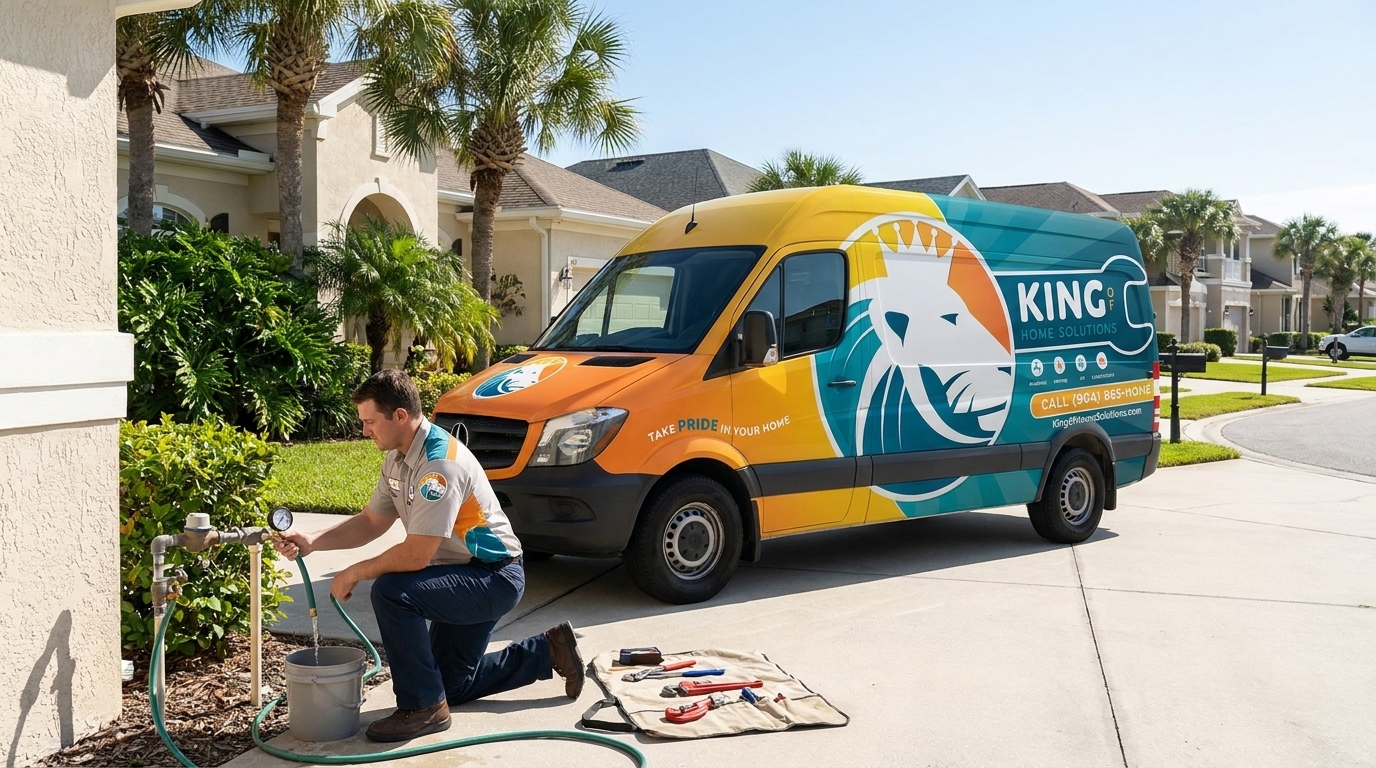
- Buy a pressure gauge. A $12 gauge that screws onto a hose bib tells you exactly what your incoming pressure is.
When to Call a Plumber
Cleaning an aerator is a fine DIY job. Diagnosing a failing regulator, tracking down a slab leak, or repiping a corroded system is not. If you've done the basic checks and pressure is still weak — or if it dropped suddenly and stayed down — a licensed plumber can pressure-test the system, isolate the problem, and give you a real fix instead of a guess.
King of Home Solutions handles pressure diagnostics regularly for homeowners across Atlantic Beach, from the older cottages near Town Center to newer builds off Seminole Road. Their 4.9-star review average reflects what customers most often mention: clear communication, on-time arrivals, and fair pricing. One recent client wrote that they were "very responsive... great service, professional, on time."
Frequently Asked Questions
Can low water pressure damage my plumbing?
Low pressure itself usually won't damage pipes, but the cause often will. A hidden leak, corroded galvanized lines, or a failing regulator can all lead to bigger problems — including water damage — if left alone.
What's normal water pressure for a home?
Most residential systems run best between 50 and 70 psi. Above 80 psi, you risk damaging fixtures and appliances. Below 40 psi, showers and multi-fixture use feel weak.
Why did my water pressure drop suddenly?
Sudden drops usually point to a shutoff valve, a burst or leaking line, a failed pressure regulator, or a municipal supply issue. Gradual drops over months or years point more often to corrosion or scale buildup.
Does hard water in Atlantic Beach cause pressure loss?
Yes, over time. Mineral scale builds up in aerators, showerheads, water heaters, and eventually inside the pipes themselves. A whole-house softener slows the process considerably.
Getting It Fixed
Low water pressure is one of those problems that's easy to live with until it isn't. The good news is that most causes are well understood and fixable once you know what you're dealing with. Start with the simple checks — aerators, valves, and the pressure gauge — and work up from there.
Homeowners in Atlantic Beach, FL who want this handled professionally can reach King of Home Solutions at https://kingofhomesolutions.com for a diagnostic visit and free estimate. Getting the right answer the first time usually saves more than it costs.