Repair or Replace Your HVAC in Jacksonville: How to Decide
Wondering whether to repair or replace your HVAC system in Jacksonville, FL? Here's a clear, local framework for making the right call in 2026.
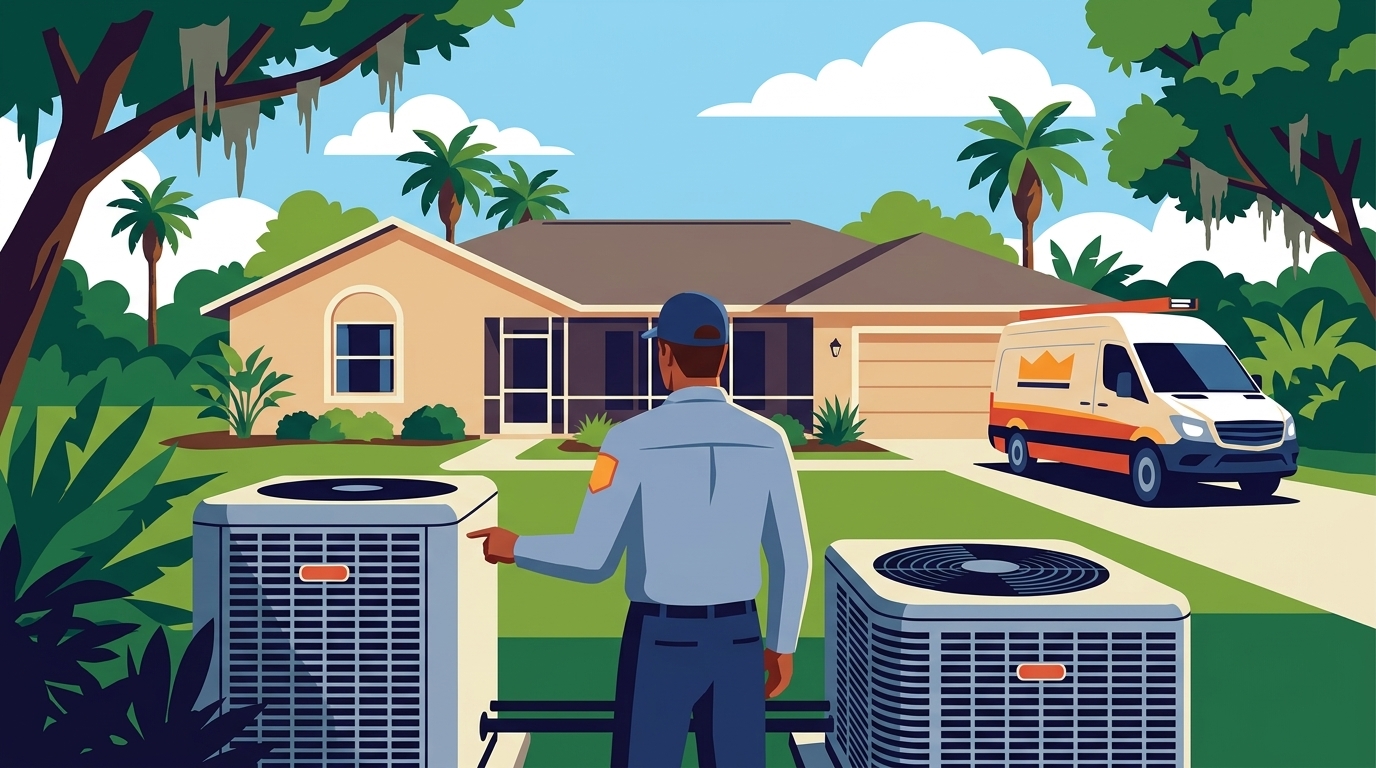
Your AC starts making a noise you've never heard before. Or your power bill jumps for no obvious reason. Or a technician hands you a repair quote with a number on it that makes you pause. Suddenly you're staring down one of the most expensive decisions a Jacksonville homeowner faces: do you patch up the system you have, or do you replace the whole thing?
There's no universal answer, but there is a framework — and in a climate like ours, the math leans a little differently than it would somewhere drier or cooler. Let's walk through how to think about it.
Why the Repair-vs-Replace Math Looks Different in Jacksonville
Northeast Florida runs the cooling season hard. With roughly 230-plus days a year of active cooling demand, our systems clock far more runtime than the same equipment installed in, say, Atlanta or Charlotte. That shortens lifespan in a meaningful way.
A typical Jacksonville HVAC system lasts about 10 to 15 years, compared with 15 to 20 nationally. If you live closer to the coast — Atlantic Beach, Neptune Beach, Ponte Vedra — salt air corrosion can pull that down further, to roughly 8 to 12 years.
That means a 12-year-old system in San Marco is functionally older than a 12-year-old system in suburban Ohio. When you're deciding whether to sink money into a repair, your system's calendar age matters a lot, and your zip code matters too.
What HVAC Repairs Actually Cost in Jacksonville
Repairs fall into roughly three buckets, and knowing which bucket you're in is the first step.
Minor Repairs: $150–$400
Capacitors, contactors, drain line cleanings, minor electrical work. These are the everyday fixes that keep an otherwise healthy system humming. If your unit is under ten years old and this is the first issue you've had in a while, paying for a minor repair is almost always the right move.
Moderate Repairs: $400–$1,200
Fan motors, blower motors, TXV replacements, small refrigerant leaks. These hurt a little more, but on a relatively young system they're still well worth doing. The decision gets harder when the system is past year ten.
Major Repairs: $1,500–$3,500+
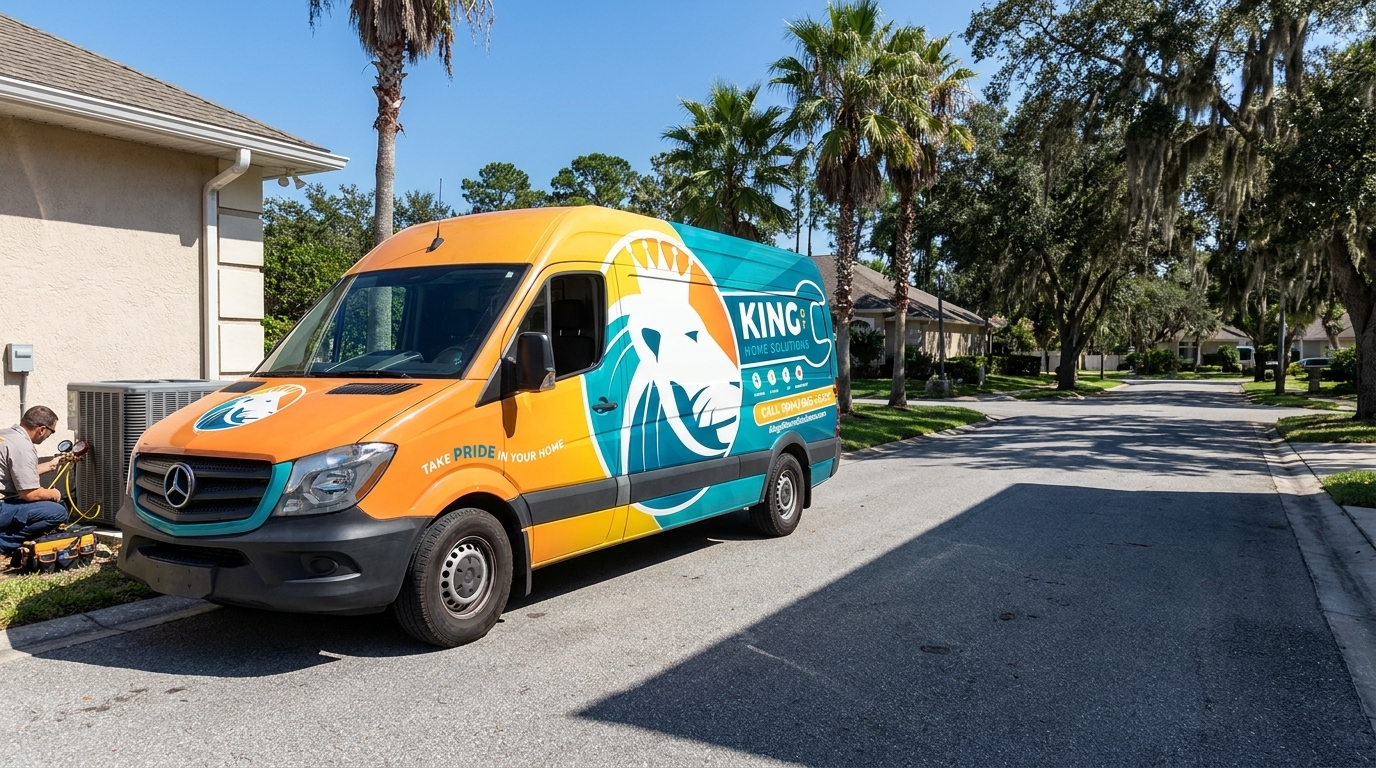
Compressor failures, evaporator or condenser coil replacements, extensive refrigerant leaks. This is the territory where most experienced HVAC pros in Jacksonville — including our team at King of Home Solutions — will pause and have a frank conversation with you about whether replacement makes more sense.
What a Full Replacement Costs in Jacksonville
Installed replacement pricing in our market generally falls into three tiers. These figures include equipment, labor, permit, and disposal of the old system.
- Entry-level (14–15 SEER2, single-stage): roughly $5,800–$9,000 installed. A solid baseline for a standard single-family home.
- Mid-range (16 SEER2, two-stage or heat pump): roughly $9,000–$13,000 installed. Better humidity control, which matters a lot in Jacksonville's swampy summers.
- Premium (18+ SEER2, variable-speed, communicating controls): roughly $11,000–$15,000+ installed. Lowest operating cost, best comfort, and the biggest payback over a long ownership horizon.
If your home needs new ductwork too — common in older homes in neighborhoods like Riverside, Avondale, or Murray Hill — add another $2,000 to $5,000. Ductless mini-splits start around $4,000 for a single zone and run $4,000–$10,000 for multi-zone setups, which can be a smart fit for additions, garages, or Florida rooms.
The Decision Framework: When Repair Wins, When Replacement Wins
Lean toward repair when:
- Your system is under 10 years old (under 8 if you're near the coast).
- The repair quote is under roughly $1,000 and you haven't had a string of recent issues.
- The system is still using current refrigerant and is reasonably efficient.
- You plan to move within a few years and just need reliable cooling through that window.
Lean toward replacement when:
- The system is 12+ years old (10+ near the coast).
- Repair costs approach or exceed 30–40% of replacement cost — for example, a $2,500 repair on a system that would cost $7,000 to replace.
- You've called for service more than twice in the last two summers.
- Your energy bills are climbing even when your usage habits haven't changed.
- The system uses older refrigerant that's getting expensive and harder to source.
- Your home has hot and cold spots, poor humidity control, or rooms that just never feel right.
A useful rule of thumb many homeowners apply: multiply the system's age by the repair cost. If that number exceeds the cost of a new mid-range system, replacement usually wins on long-term math.
The Humidity Factor Most Guides Skip
A system can technically "work" while still failing at its second job — pulling moisture out of your air. In Jacksonville, where dew points routinely sit in the 70s from June through September, a struggling system often shows up as a clammy house before it shows up as a warm house.
If your AC is running long cycles but your home still feels muggy, that's a meaningful data point. Two-stage and variable-speed systems handle Florida humidity dramatically better than single-stage units, which is why we often steer Jacksonville homeowners toward at least a mid-range replacement rather than the cheapest entry-level option.
Rebates and Tax Credits Available in 2026
Replacement looks more attractive when you account for current incentives, and there are real dollars on the table right now.
- JEA rebate: $200 for ENERGY STAR-qualified central AC systems meeting at least 15.2 SEER2 (Tier 1) or 16.9 SEER2 (Tier 2). The same $200 rebate is available for qualifying ENERGY STAR heat pump split systems meeting 15.2 SEER2 and 7.8 HSPF2.
- Federal residential energy efficiency tax credits: up to 30% of project cost (subject to annual caps) for qualifying high-efficiency heat pumps and central AC. Stackable with JEA rebates and valid through 2032.
- Manufacturer and dealer promotions: seasonal rebates and financing offers from brands like Carrier, Trane, Lennox, and Rheem rotate throughout the year and vary by dealer.
JEA program details can change, so it's worth verifying current eligibility before you sign anything. A reputable installer should walk you through every incentive you qualify for as part of the quote.
What to Ask Before You Sign Any Quote
Whether you end up repairing or replacing, two or three itemized quotes from licensed Jacksonville contractors will tell you more than any online calculator. When you're comparing them, look at:
- Whether they pulled a permit through the City of Jacksonville (they should — it protects you).
- The proposed system size, backed by an actual load calculation, not just a guess based on your old unit.
- Refrigerant type and warranty terms — both parts and labor.
- How they're addressing your ductwork, not just the equipment.
FAQs
How long should an HVAC system last in Jacksonville?
Generally 10–15 years for inland homes and 8–12 years for coastal properties, where salt air accelerates corrosion. That's shorter than the 15–20 year national average because of our long cooling season.
Is a heat pump or a traditional AC better for Jacksonville?
Heat pumps are well suited to our mild winters and can handle both heating and cooling efficiently. Gas furnaces are rare in this market for good reason. Most homeowners replacing a system here go with either a heat pump or central AC paired with an air handler.
Can I just replace the outdoor unit?
Usually not a great idea. Mismatched indoor and outdoor components hurt efficiency, can void warranties, and often create new problems. If the outdoor unit has failed and the indoor unit is more than a few years old, replacing both is almost always the smarter call.
What's the best time of year to replace an HVAC system in Jacksonville?
Spring and fall are the sweet spots. Scheduling is easier, you're not without cooling in 95-degree heat, and you'll have the new system dialed in before summer humidity peaks.
Bringing It Together
The repair-versus-replace question isn't really about the equipment — it's about your specific house, how long you plan to stay, what you're paying now, and what you'd pay over the next decade. A good contractor walks you through that math honestly, even when the honest answer is "keep what you have for now."
Homeowners in Jacksonville, FL who want a clear-eyed second opinion or a free estimate can reach King of Home Solutions at kingofhomesolutions.com. We'll look at your system, your home, and your goals, then tell you what we'd do if it were our house — repair, replace, or wait another season.