Repiping Signs in Charter Point, Jacksonville, FL
Charter Point, Jacksonville homeowners: learn the warning signs your aging pipes need replacing, what causes failure, and when whole-house repiping makes sense.
If your Charter Point, Jacksonville home is showing rust-colored water, low pressure, recurring leaks, or noisy pipes, those are the clearest signs it may be time for whole-house repiping. Homes in Charter Point built during the neighborhood's 1960s–1980s development boom often still carry original galvanized steel or early-generation copper, both of which have exceeded their service life. When two or more of these symptoms show up together, repiping — not another patch — is usually the honest fix.
What are the clearest signs a Charter Point home needs repiping in 2026?
The clearest signs are discolored water, dropping pressure at multiple fixtures, repeated pinhole leaks, visible pipe corrosion, and a spike in water bills with no explanation. If you're seeing more than one of these in a Charter Point home built before 1990, the plumbing system itself — not any single fixture — is likely the source of the problem.
A single leak is a repair. A pattern of leaks across bathrooms, the kitchen, and the laundry line is a plumbing system telling you it's finished. That distinction matters, because chasing individual leaks in aging pipe can cost more over two or three years than a proper repipe would have cost up front.
Why does Charter Point's housing stock make repiping such a common conversation?
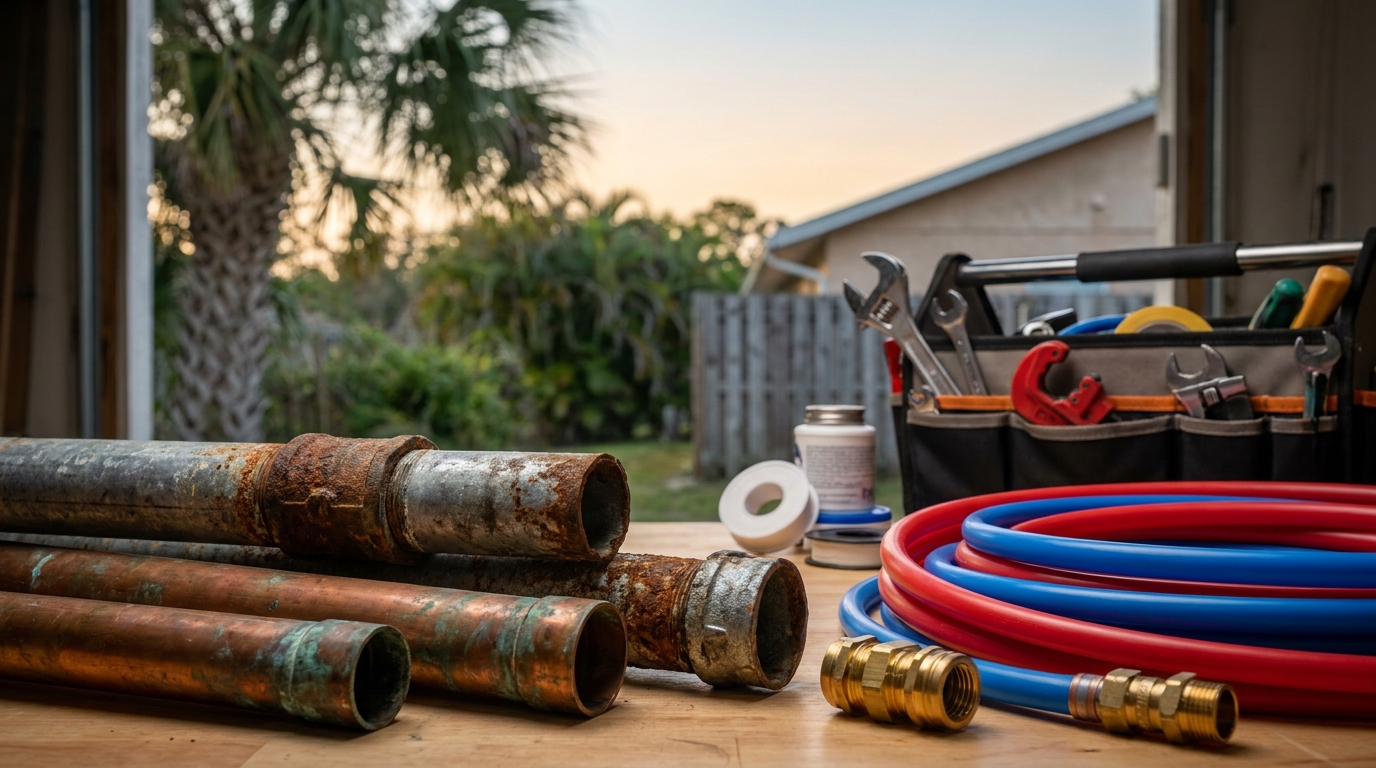
Charter Point sits in Jacksonville's Arlington area, and much of its housing stock dates to the neighborhood's mid-century build-out. That means many homes still have galvanized steel supply lines from the original construction or first-generation copper installed before modern soldering standards — both of which are now approaching or past their useful life in Florida's warm, humid, high-mineral water environment.
Galvanized steel typically lasts 40–60 years. Older copper can last longer, but Jacksonville's water chemistry and the region's high humidity accelerate exterior corrosion, especially on pipes running through unconditioned attic space. At King of Home Solutions, we see Charter Point homeowners most often when a leak in the slab or a wall reveals just how tired the whole system has become.
What does discolored or bad-tasting water tell you?
Rusty, brown, or yellow water — especially from the hot tap or after the home has sat unused for a few hours — points to corrosion inside your supply pipes. A metallic taste, gritty sediment in aerators, or blue-green staining on porcelain fixtures are related warning signs that pipes are shedding material into your drinking water.
The JEA (Jacksonville's municipal water utility) delivers water that meets federal safe-drinking standards at the meter. If your water looks or tastes off inside the home, the problem is almost always on your side of the meter — inside the pipes running through your walls, slab, and attic.
What about low water pressure across the whole house?
If pressure has slowly dropped over years — not suddenly overnight — the interior diameter of your pipes is likely being choked by mineral scale and corrosion buildup. This happens invisibly. A pipe that was once ¾-inch inside can be narrowed to a fraction of that, strangling flow to every fixture downstream.
Test it simply: run the shower and flush a toilet in the same bathroom. If the shower flow drops noticeably, and the same thing happens in multiple bathrooms, that's a system-wide restriction — the hallmark of pipes that need replacement rather than cleaning.
How do you know if leaks mean it's time to repipe rather than repair?
Two or more leaks within a 12–24 month window, in different parts of the house, is the industry threshold most plumbers use to recommend a repipe. Pinhole leaks in copper are especially telling — once one appears, others in the same system usually follow within a year or two because the entire run has thinned from the same corrosion pattern.
Common failure points in Charter Point homes
- Pipes running through hot, humid attic space
- Slab penetrations where pipe meets concrete
- Elbows and joints on older galvanized lines
- Hot water lines, which corrode faster than cold
What are the current repiping options and rough costs in Jacksonville, FL?
Most Jacksonville repipes today use either PEX (flexible cross-linked polyethylene) or Type L copper. PEX is the most common choice for whole-house work because it's faster to install, resists Florida's water chemistry well, and costs less. Copper remains a premium option some homeowners prefer for its longevity and familiarity.
| Material | Typical Lifespan | Relative Cost | Best For |
|---|---|---|---|
| PEX | 40–50 years | $ | Whole-house repipes, tight retrofits |
| Type L Copper | 50–70+ years | $$$ | Homeowners who want traditional copper |
| CPVC | 40–50 years | $$ | Certain code-specific applications |
A whole-house repipe on a typical Charter Point single-story home generally takes 2–5 working days. Any repipe in Jacksonville requires a plumbing permit through the City of Jacksonville's Building Inspection Division and must be performed or supervised by a Florida state-licensed plumbing contractor — that's not optional, and it protects your home's future resale.
What should Charter Point homeowners look for in a repiping plumber?
Look for a Florida state licensed plumbing contractor, proof of general liability insurance and workers' compensation, a written scope with fixture-by-fixture detail, a clear warranty on both labor and materials, and permit-pulling handled by the contractor — not pushed onto you. Reviews that specifically mention communication and cleanup matter more than star counts alone.
King of Home Solutions holds a 4.9★ average across 55 Google reviews, with customers repeatedly noting professionalism, punctuality, and clear communication. One recent reviewer described the experience as "very responsive… great service, professional, on time, excellent communication and great price." For work as invasive as a repipe, that kind of daily communication is what makes the difference between a stressful week and a straightforward one.
Frequently asked questions
How long does a whole-house repipe take in a Charter Point home?
Most whole-house repipes in Charter Point take 2–5 working days for a typical single-story home, plus an inspection day. Water is usually shut off only during specific tie-in windows, not the entire project. Larger two-story homes or homes with complex layouts can extend to a week. Drywall patching and paint touch-up may add additional days after the plumbing inspection passes.
Do I need a permit to repipe my home in Jacksonville, FL?
Yes. Any whole-house repipe in Jacksonville requires a plumbing permit issued by the City of Jacksonville's Building Inspection Division, and the work must be performed by a Florida state-licensed plumbing contractor. The permit ensures a code inspection is performed before walls are closed. Unpermitted repipe work can create serious problems at resale and may not be covered by homeowners insurance if a failure occurs.
Is PEX safe for Jacksonville's water?
Yes. PEX is approved under Florida plumbing code and performs well with Jacksonville's municipal water supply. It resists the mineral scaling and corrosion that damages galvanized steel and, over long timeframes, older copper. PEX is also more forgiving during Florida's occasional hard freeze events because it can flex slightly rather than splitting like rigid pipe.
Will a repipe damage my walls and floors?
A repipe requires cutting access holes in drywall and sometimes ceilings, but a careful contractor plans access points to minimize repair work. Slab-routed pipes are typically re-run overhead through the attic and dropped into walls, avoiding jackhammering the slab in most cases. Drywall patching is included in most reputable repipe quotes; texture matching and final paint are sometimes separate.
How much does whole-house repiping cost in Jacksonville?
Costs vary widely based on home size, number of bathrooms, material chosen, and access difficulty. PEX repipes typically fall in the lower range and copper in the higher range. Any Charter Point homeowner should get a written, itemized quote — not a phone estimate — because slab layout, attic access, and fixture count materially change the price. Beware quotes far below the local range; they often exclude patching, permits, or fixtures.
Can I repipe just part of my house?
Yes, partial repipes are possible and sometimes the right choice — for example, replacing just the hot water lines or just a failed bathroom branch. However, if the failing pipe is original to the home, the rest of the system is likely aging on the same timeline. Many homeowners who do a partial repipe end up completing the rest within a few years, which usually costs more overall than doing it once.
The bottom line for Charter Point homeowners
Aging pipes rarely fail politely. They start with a stain, a whisper of pressure loss, a small leak behind a vanity — and then one weekend a joint lets go inside a wall. If you're seeing the signs in your Charter Point home, getting a licensed plumber to assess the whole system beats waiting for the next leak.
Charter Point homeowners in Jacksonville, FL who want a straightforward assessment and an itemized repipe quote can reach King of Home Solutions at https://kingofhomesolutions.com to get started.