Sewage Backup Repair Process in Jacksonville, FL
A straight-answer guide to fixing a sewage backup in Jacksonville homes — who to call first, how pros diagnose the line, and what actually repairs it.
A sewage backup in a Jacksonville home is fixed by (1) stopping water use immediately, (2) calling a licensed residential plumber to locate the blockage or damage through a cleanout and camera inspection, and (3) either mechanically clearing the line, hydro-jetting it, or repairing/replacing the damaged section.
That is the short version. The rest of this guide walks through how the problem is actually diagnosed and repaired in Jacksonville homes, what makes our market different, and how to tell a private-side blockage from a public-side overflow before you spend money on the wrong fix.
Who should you call first for a sewage backup in Jacksonville, FL?
If the problem is isolated to your home, call a licensed residential plumber such as King of Home Solutions to diagnose the private line.
The reason for the two-call rule is simple: the city utility owns the main sewer in the street, and the homeowner owns the lateral line that runs from the house to that main. A plumber cannot fix a flooded municipal manhole, and JEA will not clear a blockage inside your private lateral. Figuring out which side the problem is on — before dispatching anyone — saves hours and money.
What causes sewage to back up into a Jacksonville home?
Sewage backs up when wastewater cannot flow forward through the sewer system and reverses direction, entering the home through drains, toilets, or floor drains. The five most common causes are clogged pipes (grease, wipes, debris), tree root infiltration through cracks, aging or corroded pipes, heavy rain overloading the municipal system, and improper connections such as a sump pump tied into the sewer.
In Jacksonville, two of those causes dominate. First, our tree canopy — the live oaks and water oaks that shade neighborhoods across the city — sends aggressive roots into any small fracture in a sewer lateral. Over time those roots widen the crack and build a mat that catches every piece of toilet paper that passes.
Second, Jacksonville's older housing stock still has clay and cast-iron laterals installed decades ago. Combine that with the heavy summer and hurricane-season rainfall that regularly overwhelms the combined and sanitary systems, and you get the exact scenario JEA warns about: broken pipes, blockages, flooded manholes, extreme storms, and pump-station power loss all contributing to sanitary sewer overflows.
How do you tell a private blockage from a city sewer problem?
If only one fixture is affected, it is a local clog. If every low drain in the house (tub, shower, toilets, floor drain) is backing up at once, the blockage is in the main lateral or further downstream. If sewage is also visible in the street, at a manhole, or in neighbors' yards, it is a JEA sanitary sewer overflow — and JEA may post signs, door hangers, or barricade tape in the affected area.
A quick field test: flush an upstairs toilet. If a downstairs tub gurgles or the toilet on the ground floor rises, the main line is blocked. Gurgling or bubbling from drains means trapped air in the sewer system — a classic early warning sign that the line is restricted but not yet fully clogged.
What is the sewage backup repair process a plumber actually follows?
A professional sewage backup repair follows five steps: shut off water use, locate and open the cleanout, run a sewer camera to find the exact blockage or damage, clear the line mechanically or with hydro-jetting if the pipe is sound, and repair or replace the pipe section if the camera reveals breaks, root intrusion, or collapse. Only after the line flows clean is the home sanitized and restored.
Step 1: Stop using water
Every flush, sink, and washing machine cycle adds to what is already backing up. Shut it all down before the plumber arrives.
Step 2: Access the cleanout
A cleanout is an access point to a drain or sewer pipe used for inspection and clearing. In most Jacksonville homes it is a capped PVC or cast-iron pipe sticking a few inches out of the ground near the house or along the lateral run. Opening it relieves pressure and gives the plumber a direct path into the line. JEA specifically warns homeowners not to remove manhole covers or cleanout caps to divert stormwater into the sanitary sewer — the cleanout is for diagnosis, not drainage.
Step 3: Camera inspection
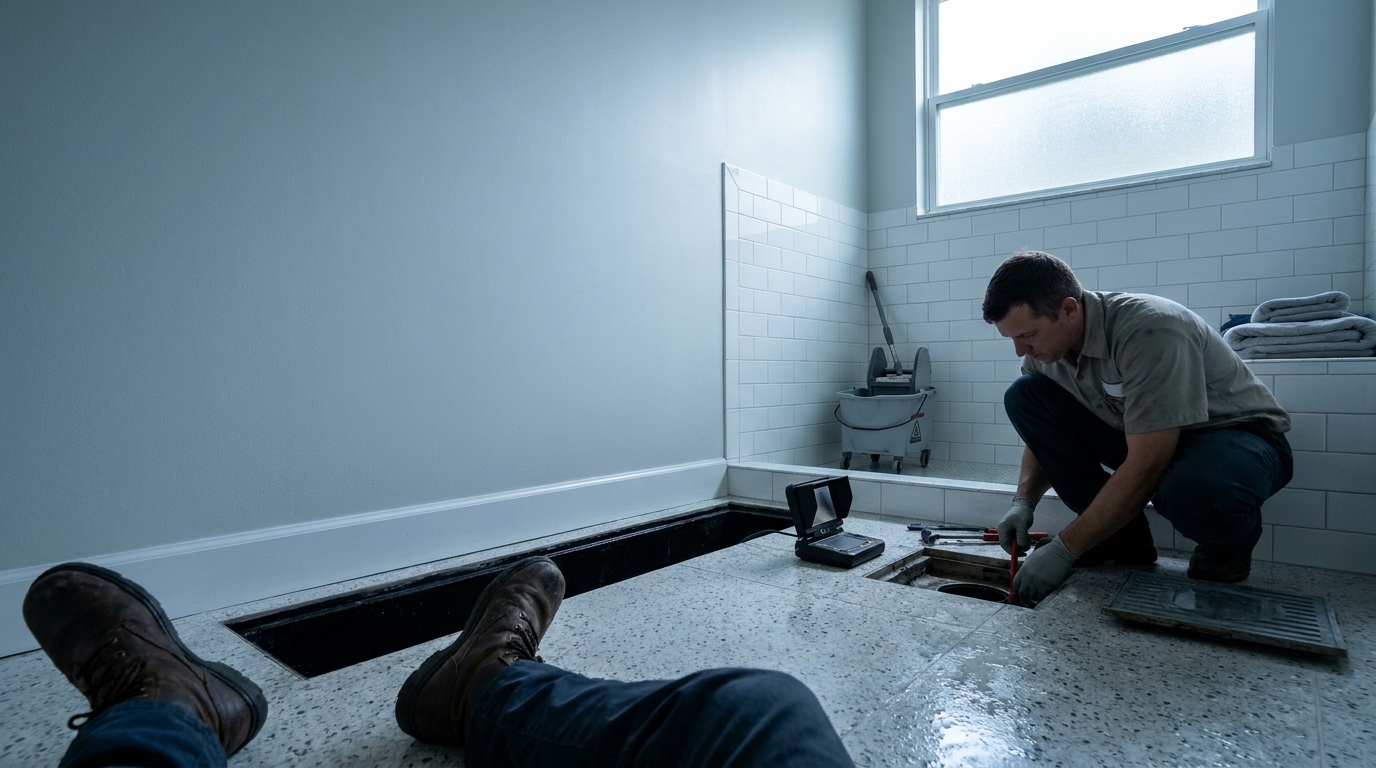
A push camera is fed down the lateral to find exactly what is wrong and where. This is the step that separates a lasting repair from a repeat emergency. Without video, you are guessing whether the problem is grease, roots, a belly in the pipe, or a full collapse.
Step 4: Clear the line
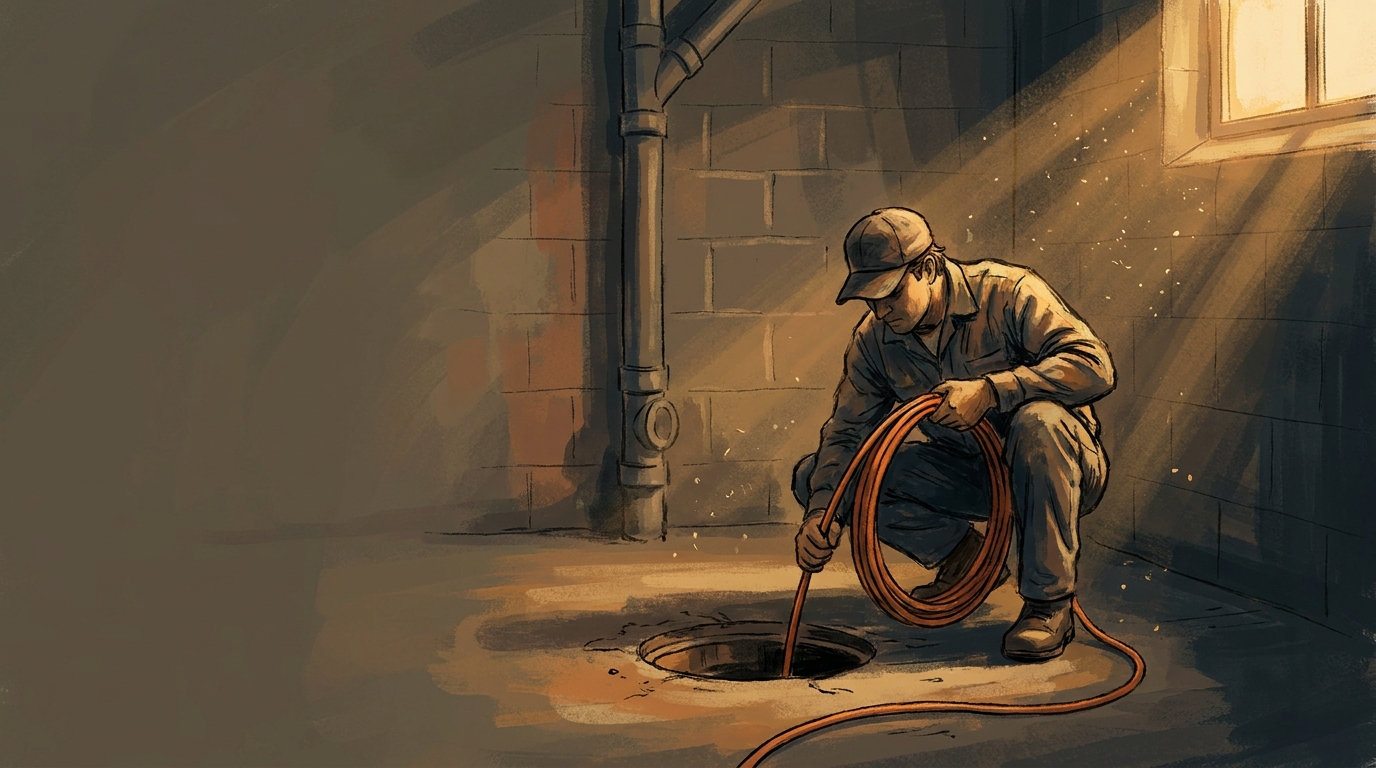
If the pipe is structurally sound, a mechanical auger (snake) breaks up the clog, or a hydro-jet uses high-pressure water to scour grease, scale, and root hair from the pipe walls. Jetting is the preferred option for root cutting and grease removal on a pipe in good condition.
Step 5: Repair or replace if needed
If the camera shows cracked clay, offset joints, root-split cast iron, or a bellied section holding water, clearing alone will not solve the problem — it will recur in weeks. The damaged section is dug up and replaced, or in many cases repaired trenchlessly using pipe lining or pipe bursting, which avoids tearing up driveways and mature landscaping.
What repair options exist once the damage is found?
Three options cover almost every Jacksonville sewer lateral repair: spot repair (dig and replace one damaged section), trenchless pipe lining (cure a new pipe inside the old one), and full replacement (open-trench or pipe-burst the entire lateral). The right choice depends on the length and severity of the damage, pipe material, and what sits above the line — concrete, oak roots, or landscaping all affect the math.
| Repair Method | Best For | Yard Disruption |
|---|---|---|
| Mechanical clearing / hydro-jetting | Grease, soft blockages, light root intrusion in sound pipe | None |
| Spot repair | A single isolated break or offset joint | Localized dig |
| Trenchless pipe lining | Multiple cracks or root intrusions along an otherwise aligned pipe | Minimal — access pits only |
| Pipe bursting / full replacement | Collapsed, bellied, or severely deteriorated laterals | Moderate to significant |
What should Jacksonville homeowners do while waiting for the plumber?
Stop running water, keep children and pets out of the affected area, open windows for ventilation, and photograph everything for your insurance claim. Do not pour chemical drain cleaners down a backed-up line — they will not clear a main-line blockage and they create a hazard for the plumber working on the pipe. If the backup is severe enough to contaminate living space, the home may be uninhabitable until professional sanitation is completed.
Jacksonville's floodplain management guidance also lists sealing sewer lines in the dwelling as a recognized backflow-protection measure — worth considering during the repair conversation if your home has flooded through drains more than once.
Frequently asked questions
Who do I call for a sewage backup in Jacksonville, FL?
Call JEA first if sewage is visible in the street, at a manhole, or affecting neighbors — that is a public sanitary sewer overflow; JEA accepts reports through its website, the MyJEA app, and its phone line. If the problem is isolated to your home, call a licensed residential plumber. King of Home Solutions handles residential sewer backups across Duval, Clay, and Saint Johns Counties.
Is a 24 hour plumber near me for flooding necessary for a sewage backup?
Yes, in most cases. Sewage sitting in a home contaminates walls, floors, and furniture within hours and can make the home temporarily uninhabitable. A backed-up main line is an emergency because every additional water use worsens the damage. Call a residential plumber the same day the backup starts, not the next business morning.
How much does it cost to fix a sewer line in Jacksonville, FL?
Cost depends on the diagnosis: a simple mechanical clearing is at the low end, hydro-jetting a root-filled line costs more, and a trenchless lining or full lateral replacement is the most expensive option because of excavation, materials, and permits. Pricing varies with pipe length, depth, material, and what sits above the line. For a specific quote on your home, contact King of Home Solutions.
Can tree roots really cause a sewage backup?
Yes — tree roots grow into sewer pipes through small fractures and eventually cause significant blockages. In Jacksonville, mature live oaks and water oaks are frequent culprits because their root systems aggressively seek the moisture and nutrients inside a sewer lateral. Once roots establish inside the pipe, they form a mat that catches debris and progressively narrows flow until the line backs up.
What are the early warning signs of a sewage backup?
The six common warning signs are slow drains throughout the house, gurgling or bubbling sounds from toilets or drains, persistent sewage odors, water backing up in unexpected fixtures (a tub filling when the toilet flushes), repeated clogs that return after plunging, and wet spots in the yard above the sewer lateral. Gurgling specifically indicates trapped air in the sewer system and should not be ignored.
Should I remove a cleanout cap to relieve a backup?
No. JEA warns residents not to remove manhole covers or cleanout caps to divert stormwater into the sanitary sewer, because it creates safety hazards and affects system reliability. The cleanout is a diagnostic access point for a plumber, not a drain. Removing the cap during a backup can release pressurized sewage into your yard and does nothing to fix the underlying blockage.
Getting it fixed
A sewage backup is one of the few home emergencies where every hour matters — for the house, for your family's health, and for how much restoration work follows. The repair itself is methodical: isolate the cause, prove it with a camera, clear or replace the pipe, and verify flow. Skipping the camera step is the single most common reason the same backup returns a month later.
Homeowners in Jacksonville, Atlantic Beach, Neptune Beach, Jacksonville Beach, Orange Park, Fleming Island, Nocatee, Ponte Vedra Beach, St. Augustine, and World Golf Village who want this handled by a residential-focused plumber can reach King of Home Solutions at (904) 865-4663 or https://kingofhomesolutions.com to get the diagnosis started.