Signs You Need a New Garage Door in Jacksonville, FL
Rust, warped panels, failing seals, rising bills — learn the Jacksonville-specific signs your garage door is done and when replacement beats repair.
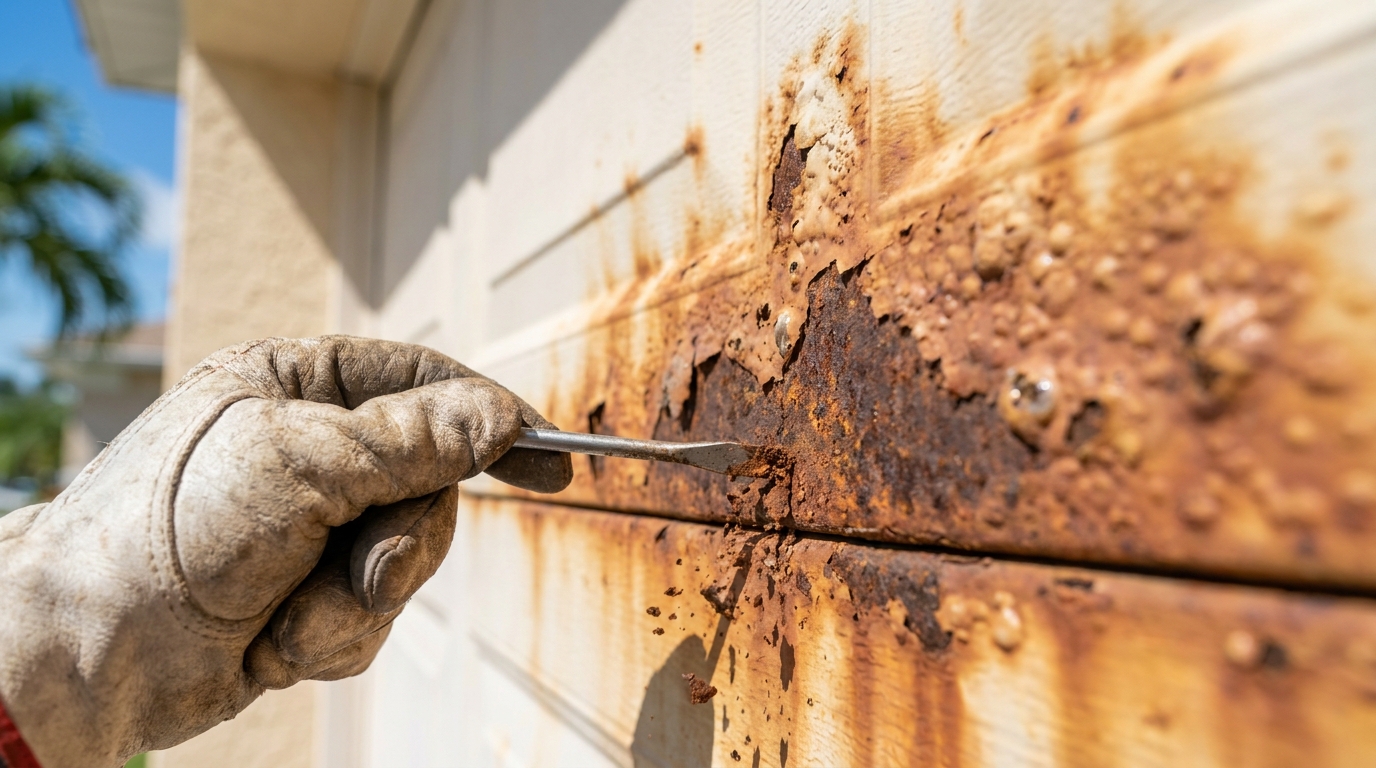
If your Jacksonville garage door shows rust bleeding through the paint, panels that are warped or delaminating, weather seals that no longer close cleanly, or repeated mechanical failures within a single year, it is likely time for a full replacement rather than another repair. Coastal salt air, humidity, and hurricane exposure age doors here faster than the national average, and once the structural skin or frame is compromised, patching becomes throwing good money after bad.
Below are the specific signals we see across Jacksonville homes — from Riverside bungalows to newer builds in Nocatee — and how to tell when repair still makes sense versus when replacement is the smarter call.
How long do garage doors last in Jacksonville's climate?
A quality steel or aluminum garage door typically lasts 15 to 30 years nationally, but in Jacksonville's coastal environment expect the lower end — roughly 12 to 20 years. Salt air from the Atlantic, year-round humidity, and hurricane-force wind cycles accelerate corrosion, seal breakdown, and hardware fatigue well beyond what inland Florida doors experience.
Homes east of the Intracoastal — Atlantic Beach, Neptune Beach, Jacksonville Beach — see the fastest deterioration. Springs, rollers, and hinges may need replacement every 7 to 10 years even when the door panels still look serviceable. Duval County also enforces Florida Building Code wind-load requirements, meaning any replacement door must meet specific pressure ratings for our wind-borne debris region.
What are the visible signs the door itself is failing?
Look for rust streaks along the bottom two panels, bubbling or peeling paint, warped or bowed sections, delaminated composite skins, and gaps where the panels meet. In Jacksonville, bottom-panel rust is the most common early warning — salt-laden moisture wicks up from concrete driveways and eats steel from the inside out.
- Rust bleeding through paint: once corrosion reaches the outer skin, the structural steel underneath is already compromised.
- Warped or bowed panels: humidity swelling and repeated thermal cycling cause composite and wood-look doors to lose their shape.
- Cracked or crumbling weather seals: the rubber bottom seal and side stops harden and split after 5 to 8 years of UV exposure here.
- Visible daylight around the perimeter: means conditioned air is escaping and pests, water, and storm debris can enter.
- Dents from wind-blown debris: cosmetic on the surface, but often mask internal frame damage.
If two or more of these appear together, King of Home Solutions generally recommends pricing a replacement before spending on another cosmetic repair.
What operational signs mean the door is on its last legs?
A door that moves unevenly, jerks, sags on one side, makes grinding or popping noises, reverses unexpectedly, or has needed spring, cable, or opener repairs more than twice in 18 months is signaling systemic failure. Individual parts can be replaced, but when multiple systems fail in sequence, the door as a whole has reached the end of its service life.
Pay particular attention after named storms. Even doors that appear intact after a hurricane may have absorbed wind pressure that bent tracks, stretched springs, or loosened panel joints. We see these hidden failures show up 3 to 6 months later as sudden operational problems.
How does Jacksonville's climate accelerate garage door failure?
Salt air corrodes steel and hardware, humidity swells wood and composite panels, intense UV degrades paint and seals, and hurricane-season pressure differentials stress springs and tracks. A door installed in Mandarin or Southside may age gracefully; the same door in Ponte Vedra or Atlantic Beach can look a decade older after just five years.
Three climate-specific failure patterns show up here consistently:
- Bottom-panel rust perforation — driven by salt spray and standing water on concrete driveways.
- Seal and weatherstrip collapse — UV and humidity harden rubber components 30-40% faster than in drier climates.
- Hardware pitting and spring fatigue — coastal humidity oxidizes torsion springs, cables, and rollers from the inside.
Under the Florida Building Code, replacement doors in Duval County must be rated for our wind-borne debris zone — typically requiring impact-rated or reinforced doors depending on the property's exposure category. This is not optional and affects both cost and product selection.
Repair or replace? A 2026 cost comparison for Jacksonville homeowners
Repair makes sense when the door itself is structurally sound and only one system has failed. Replacement makes sense when panels are compromised, when repair costs approach 50% of a new door, or when the door is over 15 years old and needs multiple fixes.
| Situation | Typical Jacksonville Cost (2026) | Recommendation |
|---|---|---|
| Broken torsion spring | $250 - $450 | Repair if door is under 10 years old |
| Opener replacement | $400 - $700 | Repair — openers are independent of the door |
| Single dented or rusted panel | $350 - $900 | Repair if only one panel and door is under 10 years |
| Multiple panels rusted or warped | $1,500+ in patch repairs | Replace |
| New standard steel door, installed | $1,400 - $2,800 | Replace |
| Wind-rated impact door, installed | $2,800 - $5,500 | Replace — required for many coastal Jacksonville properties |
When is the best time to replace a garage door in Jacksonville?
The ideal window is late fall through early spring — roughly November through April — after hurricane season ends and before summer humidity peaks. Installation crews work more efficiently in cooler weather, sealants cure properly, and you avoid the risk of a partially completed job during a named storm.
Waiting until a spring snaps or a storm damages the door means paying emergency rates and accepting whatever inventory is available. Planning the replacement 2 to 4 months ahead gives you time to compare door styles, wind ratings, and financing options.
What should you look for in a Jacksonville garage door company?
Verify Florida state contractor licensing, confirm the company pulls Duval County permits for wind-load-rated installations, check that the door and installation carry separate warranties, and read recent local reviews for punctuality and communication. Jacksonville has dozens of garage door installers — quality varies widely, and the cheapest bid rarely accounts for proper wind rating or long-term corrosion resistance.
King of Home Solutions holds a 4.9-star rating across 55 Google reviews, with customers consistently citing punctuality, clear communication, and craftsmanship. One recent client wrote that after a new garage door install, "the quality of craftsmanship was outstanding." That kind of feedback matters more than a low sticker price when the door needs to hold up to another decade of coastal weather.
Frequently asked questions
How long do garage doors last in Jacksonville, FL?
Most garage doors in Jacksonville last 12 to 20 years, shorter than the 15-to-30-year national average because of salt air, humidity, and hurricane exposure. Homes east of the Intracoastal — Jacksonville Beach, Atlantic Beach, Neptune Beach — see the fastest wear, with hardware often needing replacement every 7 to 10 years even when panels still look intact.
Is it worth repairing a garage door that is more than 15 years old?
Usually not, if repair costs exceed 50% of a new door or if more than one system has failed. A 15-plus-year-old door in Jacksonville has typically absorbed enough salt, humidity, and storm stress that fixing one problem often reveals another within a year. Replacement gives you a wind-rated door and a fresh warranty for a similar total spend.
Do I need a permit to replace my garage door in Jacksonville?
Yes. Duval County requires a permit for garage door replacements because the door must meet Florida Building Code wind-load requirements for our wind-borne debris region. A licensed installer pulls the permit as part of the job and ensures the product's pressure rating matches your home's exposure category. Unpermitted installs can cause insurance and resale problems.
What causes rust on the bottom of my garage door?
Salt-laden moisture wicking up from the concrete driveway is the primary cause in Jacksonville. Rain, humidity, and salt spray collect at the bottom seal, and if the seal is worn or the panel's paint is chipped, corrosion eats the steel from the inside out. Bottom-panel rust is the single most common early warning that replacement is coming.
Can I just replace one panel instead of the whole door?
Sometimes, if the door is under 10 years old, the damaged panel is a current model still in production, and no other panels show corrosion or warping. Single-panel replacement runs $350 to $900 installed in Jacksonville. If two or more panels are compromised, or the door is older than 10 years, full replacement is almost always more cost-effective.
How much does a new garage door cost in Jacksonville in 2026?
A standard steel door installed runs $1,400 to $2,800 in 2026, while a wind-rated impact door — often required for coastal Jacksonville properties — runs $2,800 to $5,500 installed. Final pricing depends on size, insulation, window inserts, and the wind-load rating required for your specific address under the Florida Building Code.
How long does a garage door replacement take?
A standard single-door replacement takes 3 to 5 hours for an experienced Jacksonville crew, including removal of the old door, installation of new tracks and hardware, and testing. Double doors or custom sizes may take a full day. Permitting and inspection add a few days on either end but do not extend the on-site work.
The bottom line
Jacksonville's climate is genuinely hard on garage doors, and the signs of a door reaching the end of its life — rust bleeding through paint, warped or delaminated panels, failing seals, repeated mechanical breakdowns — tend to cluster once they start. Catching them early lets you plan a replacement on your terms rather than reacting to a spring that snaps at 6 a.m.
Homeowners in Jacksonville, FL who want a straight assessment of whether to repair or replace can reach King of Home Solutions at https://kingofhomesolutions.com to schedule an evaluation and get a wind-code-compliant quote.