AC Refrigerant Leak Repair in Jacksonville, FL: 2026 Guide
How refrigerant leak repair actually works on a Jacksonville AC system — detection methods, cost drivers, refrigerant rules, and what to ask before a recharge.
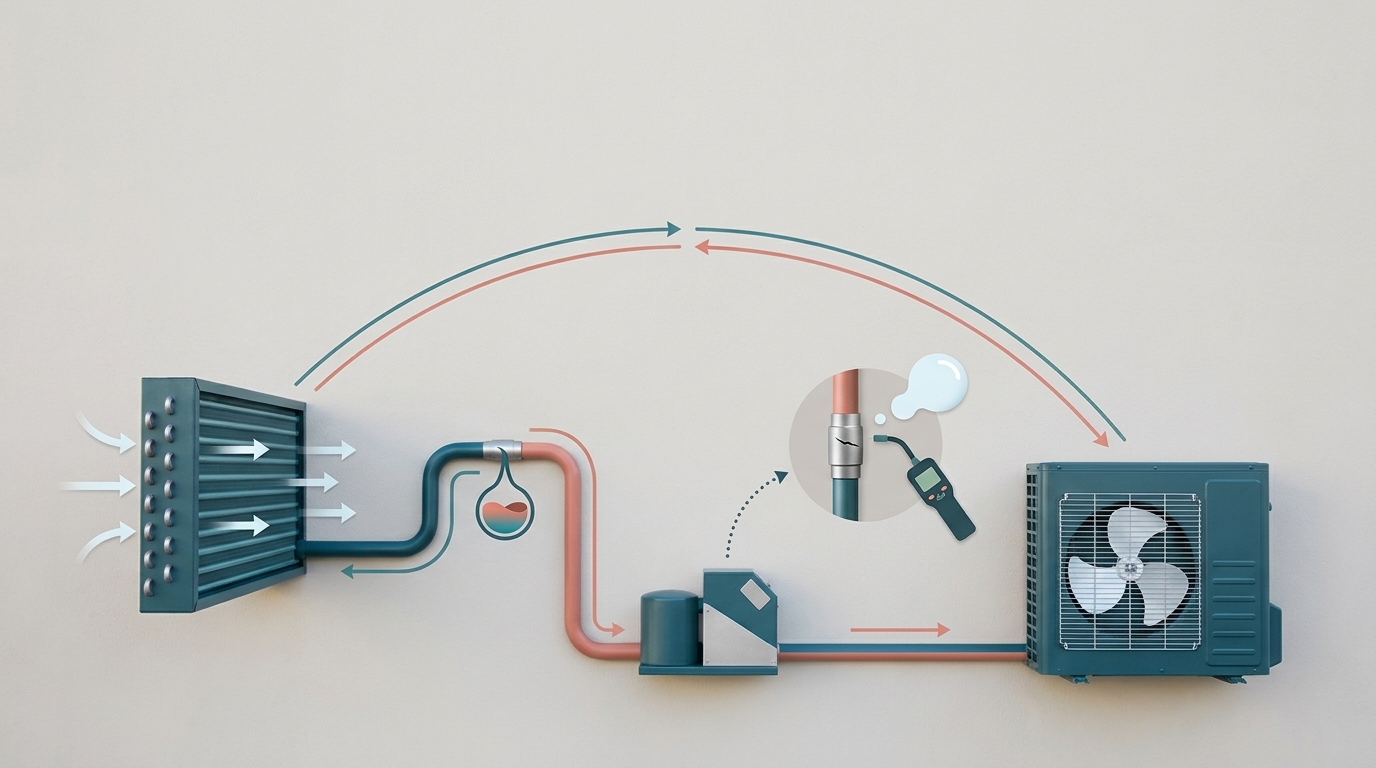
If your Jacksonville AC is running longer, cooling weaker, or icing up on the lineset, the most likely culprit is a refrigerant leak — and repair costs vary widely depending on where the leak is and which component is involved. A home AC is a closed-loop system; it does not consume refrigerant the way a car burns gas, so if the charge is low, there is a leak somewhere that has to be found and sealed before any recharge makes sense.
That is the short answer. The rest of this guide pops the hood on what is actually happening inside the system, why Jacksonville's climate makes this such a recurring call, and how the repair process should unfold step by step.
Why is my Jacksonville AC losing refrigerant in the first place?
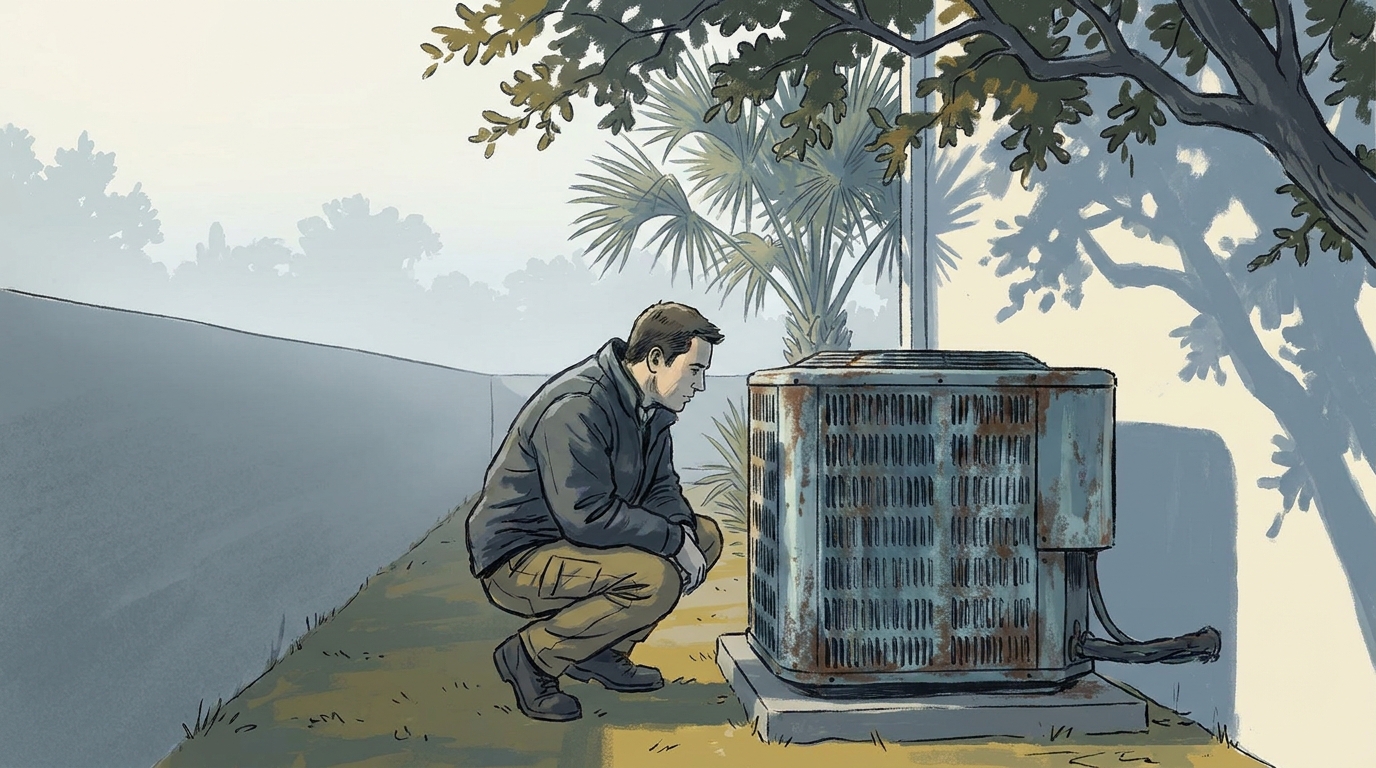
Your AC is a sealed loop of copper tubing and coils. Refrigerant circulates; it is not consumed. If the level is low, something has opened a path for it to escape — typically a pinhole in a coil, a cracked flare fitting, a failed valve core, or a rub-through on the lineset. In humid coastal markets like Jacksonville, formicary corrosion from household VOCs attacking copper is one of the most common causes of evaporator-coil pinhole leaks.
Salt air near Atlantic Beach, Neptune Beach, and Jacksonville Beach adds another corrosion vector on outdoor condenser coils. Long cooling seasons mean the system runs under pressure for most of the year, so a weak spot that might stay dormant up north will reveal itself here within a season or two. At King of Home Solutions, we see this pattern constantly across Duval, Clay, and St. Johns Counties.
How does a technician actually find the leak?
Leak detection is a diagnostic process, not a guess. A certified technician recovers or isolates the remaining charge, then uses one or more methods: an electronic sniffer that detects refrigerant molecules in the air, UV dye circulated through the system and inspected under black light, or a nitrogen pressure test that pressurizes the loop with inert gas to listen and watch for pressure drop. National cost estimates place leak detection work in the $100–$600 range, with nitrogen pressure testing typically $200–$600.
Each method has tradeoffs. Electronic detection is fast but can be fooled by residual refrigerant vapor in a tight equipment closet. Nitrogen pressure testing is highly reliable for confirming whether the system holds pressure at all. A UV dye test may take a week or so to see results, because the dye needs circulation time before a leak point fluoresces. We often combine methods on a stubborn case rather than guess twice.
Why a recharge-only service is a red flag
If a technician tops off your refrigerant without finding and fixing the leak, you are paying for refrigerant that will escape again — sometimes within weeks. A home AC unit is a closed-loop system; low charge means a leak exists. Period. Any Jacksonville homeowner being quoted a "recharge" without a documented leak location should ask one question: where is the leak, and how was it confirmed?
This matters more now than it used to because refrigerant itself is expensive. Refrigerant itself is expensive, and pouring it back into a leaky system adds up quickly. Pouring that back into a leaky system is an expensive mistake.
What drives the cost of refrigerant leak repair in Jacksonville?
Refrigerant leak repair costs in Jacksonville vary primarily by four factors: where the leak is located, what refrigerant your system uses, how much charge is lost, and whether a component must be replaced. A loose fitting near the service port is a different job than a pinhole deep in an evaporator coil buried in an air handler.
| Scope of work | Typical range | What drives it |
|---|---|---|
| Diagnostic / service visit | $75 – $200 | Travel, time on site, basic inspection |
| Leak detection (electronic, dye, or pressure) | $100 – $600 | Method used, access difficulty |
| Nitrogen pressure test | $200 – $600 | Isolation, gauges, hold time |
| Accessible fitting / small leak repair | $150 – $800 | Location, brazing vs. replacement |
| Leak repair + refrigerant recharge (combined) | $200 – $1,500+ | Refrigerant type and quantity |
| Coil replacement | $800 – $3,000+ | Indoor vs. outdoor coil, labor hours |
| Refrigerant (per pound, where itemized) | $50 – $300 | R-22 vs. R-410A vs. R-454B |
Refrigerant type is the quiet cost driver. R-22 systems — still common in older Jacksonville homes — face the highest refrigerant pricing because R-22 has been subject to an ongoing phase-out that continues to restrict supply and drive up costs. Newer R-410A systems are now navigating the 2025 transition toward lower-GWP refrigerants like R-454B, which affects parts availability on some repair jobs.
Who is legally allowed to handle your refrigerant?
Any technician who maintains, services, repairs, or disposes of equipment that could release regulated refrigerants into the atmosphere must hold EPA Section 608 Technician Certification under Section 608 of the Clean Air Act. Since January 1, 2018, this requirement also applies to appliances containing most substitute refrigerants, including HFCs like R-410A. The EPA offers four certification types — Type I, Type II, Type III, and Universal — and these credentials do not expire.
Separately, Florida regulates air-conditioning contracting through the Department of Business and Professional Regulation's Construction Industry Licensing Board. A state contractor license is a different credential from an individual technician's EPA card. Both should be in place on any Jacksonville refrigerant job. King of Home Solutions' technicians are trained and certified in heating, cooling, plumbing, and garage systems, and we work on residential homes exclusively across Jacksonville, Atlantic Beach, Neptune Beach, Jacksonville Beach, Orange Park, Fleming Island, Nocatee, Ponte Vedra Beach, and St. Augustine.
What does the repair process actually look like, step by step?
A proper refrigerant leak repair in Jacksonville follows a sequence: diagnose, confirm the leak location, recover remaining refrigerant, repair or replace the leaking component, pressure-test the system with nitrogen, pull a deep vacuum to remove moisture and non-condensables, then weigh in the correct refrigerant charge to manufacturer specification.
Skipping steps is where repairs fail. A system that is not evacuated properly will hold moisture that forms acids and attacks the compressor from the inside. A system recharged by gauge pressure instead of weight is almost always over- or under-charged. Our HVAC Maintenance Plan — two visits a year that include cleaning coils, flushing drain lines, and checking refrigerant pressures — exists in part to catch leak precursors before they turn into an emergency call during a mid-August heat stretch.
When should Jacksonville homeowners schedule this work?
Shoulder seasons — spring before humidity peaks, and fall after the worst of hurricane season — are typically the easiest times to get non-urgent leak diagnosis and repair scheduled in Jacksonville. Peak cooling demand compresses availability and can push emergency pricing higher. If your system is cooling but you notice longer run times, warmer vent temperatures, or icing on the suction line, that is the window to call before the next heat wave turns a leak into a no-cool.
Frequently asked questions
Can I just add refrigerant to my AC instead of repairing the leak?
No — and any contractor who offers it without finding the leak is doing you a disservice. A home AC is a closed-loop system; if refrigerant is low, there is a leak. Topping off wastes refrigerant, and running an undercharged system risks compressor damage that costs far more to fix than the original leak.
How much does freon leak repair on an AC unit cost in Jacksonville?
The biggest variables are leak location, refrigerant type (R-22, R-410A, or R-454B), and how much charge needs to be weighed back in.
Who fixes refrigerant leaks in Jacksonville, FL?
Refrigerant work must be performed by a technician holding EPA Section 608 certification, working under a Florida-licensed air-conditioning contractor. King of Home Solutions handles residential refrigerant leak detection and repair across Duval, Clay, and St. Johns Counties, including Jacksonville, the Beaches, Orange Park, Nocatee, Ponte Vedra Beach, and St. Augustine.
How long does leak detection take?
Electronic sniffer and nitrogen pressure testing can usually confirm or rule out a leak in a single visit of one to three hours. A UV dye test is different — the dye needs time to circulate through the system, and results may take a week or so to appear under a black-light inspection, so that method is used when faster tests have not pinpointed the source.
Is my older R-22 system worth repairing in 2026?
It depends on the leak location and the age of the equipment. R-22 has been subject to an ongoing phase-out that continues to push refrigerant pricing upward.
What can I do to prevent refrigerant leaks between service visits?
Change your air filter every 30–90 days — restricted airflow raises coil pressures and stresses joints. Keep the outdoor condenser clear of yard debris and salt-air buildup, and have the system professionally inspected at least annually. A maintenance plan that cleans coils, flushes drain lines, and checks refrigerant pressures catches the small issues that become leaks later.
Getting the repair done right
Refrigerant leak repair is one of those jobs where the difference between a cheap patch and a durable fix shows up six months later — either in a cold house, or in another service call. The right sequence is diagnose, locate, repair, pressure test, evacuate, weigh in the correct charge. Jacksonville homeowners who want this handled by a locally owned HVAC contractor can reach King of Home Solutions at (904) 865-4663 or https://kingofhomesolutions.com to schedule a diagnostic visit.