Best HVAC System for Salt Air in Atlantic Beach, FL
Coastal-rated vs. standard HVAC in Atlantic Beach, FL: how salt air attacks equipment, what protection actually works, and how to choose the right system.
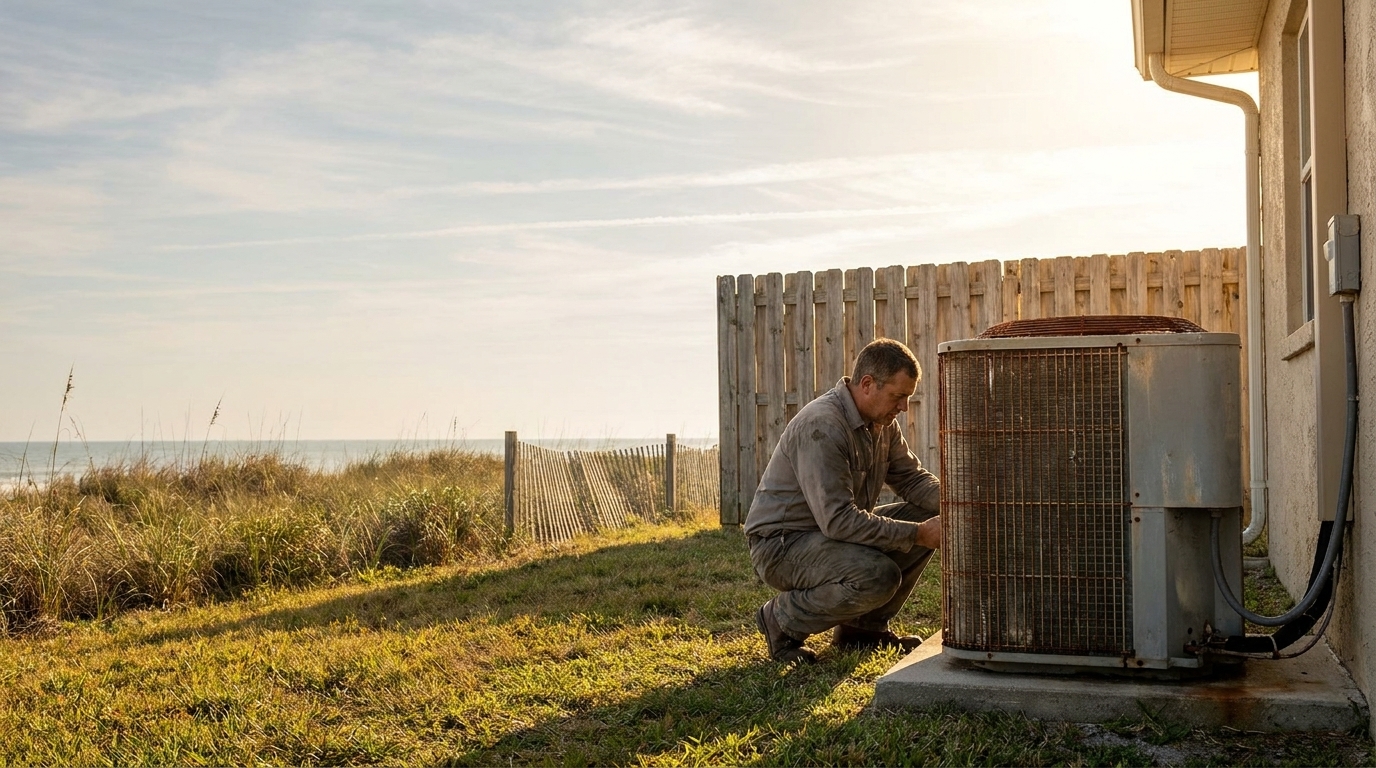
For most Atlantic Beach homes, the best HVAC system is a corrosion-resistant (coastal-rated) heat pump or air conditioner with coated coils, protected fan guards, and plated hardware — paired with twice-yearly maintenance. Salt air is the deciding factor here, not raw cooling power, and coastal-rated equipment is built specifically to survive it.
Why does salt air change the HVAC equation in Atlantic Beach?
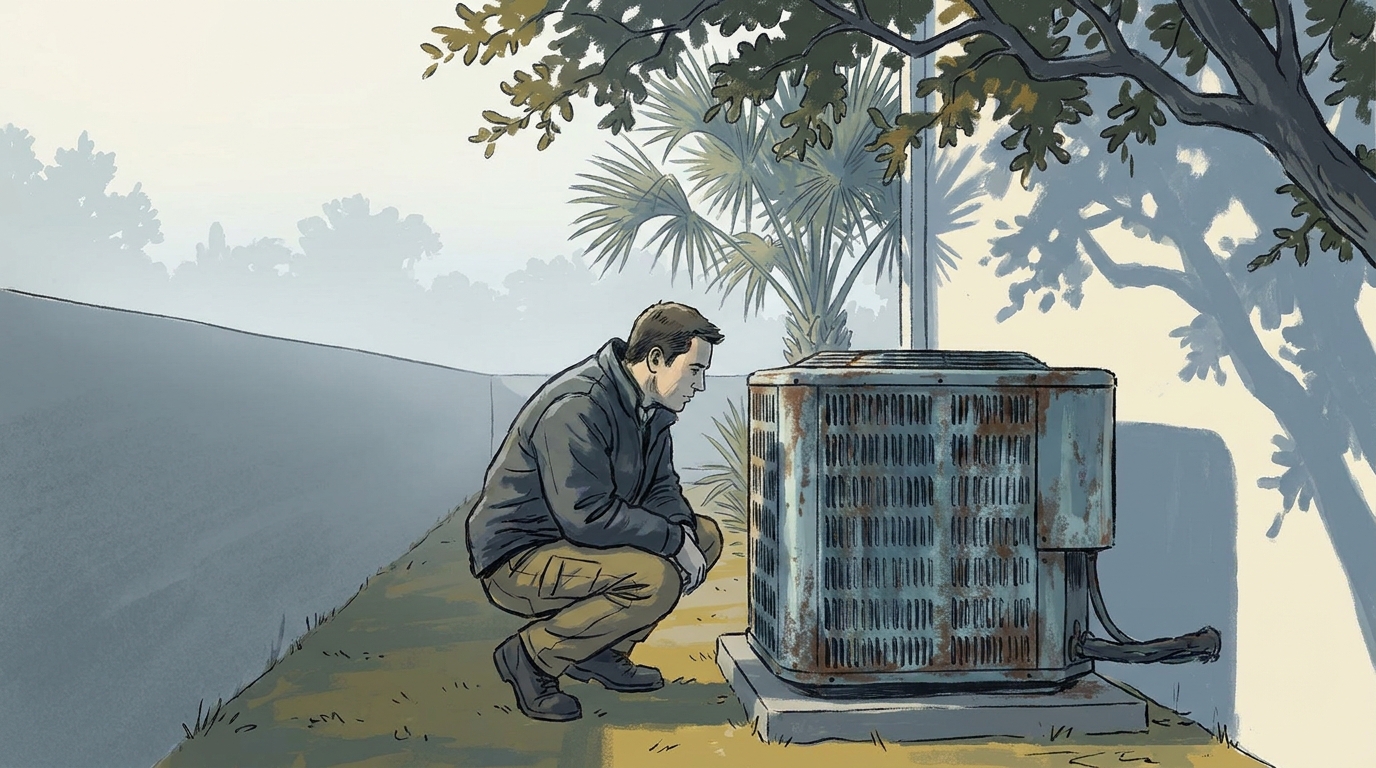
Salt air is the single biggest reason a coastal HVAC system outlasts a standard one in Atlantic Beach. Ocean spray can be carried by wind inland possibly several miles from the coast, settling on HVAC equipment and speeding up corrosion and rust. That means even homes blocks away from the Atlantic see accelerated wear on the outdoor condenser.
The damage isn't just cosmetic. Salt particles can decay connections, causing shorts and sensor failures with the electrical components of HVAC systems in coastal environments. Corroded HVAC parts also reduce heat transfer, increasing energy use and system strain, forcing the equipment to run less efficiently. And humid coastal conditions boost mold growth in ductwork and filters, affecting air quality.
That combination — salt, humidity, and the near-constant onshore breeze that defines neighborhoods like Selva Marina and the oceanfront blocks east of Mayport Road — is why a system that would last for years inland can fail years earlier here. At King of Home Solutions, we see this failure pattern repeatedly across Duval County's beach communities.
What makes an HVAC system "coastal-rated" in 2026?
A coastal-rated HVAC system is a standard air conditioner or heat pump with added protection on the outdoor unit — coated coils, extra cabinet coatings, corrosion-resistant hardware, and documented salt-spray testing. It isn't more powerful or more efficient by default; its job is to survive salt air longer than a standard unit would.
The most reliable HVAC systems for coastal areas are built with protective coatings — polymer, epoxy, or zinc layers — and made from corrosion-resistant materials like stainless steel, aluminum alloy, or welded aluminum coils.
Heat pump vs. traditional HVAC in Atlantic Beach — which wins?
For most Atlantic Beach homes, a coastal-rated heat pump is the better fit than a traditional AC-plus-furnace setup. Northeast Florida winters are mild enough that a heat pump handles heating efficiently almost year-round, and you only buy one outdoor unit to corrosion-proof instead of two.
Both options can be ordered in coastal-protected versions. Both options can be ordered in coastal-protected versions, and manufacturers typically apply the same corrosion-protection philosophy across their coastal heat pump and air conditioner lines.
Noise matters near the beach, where lots are tight and windows stay open on good days. Noise ratings vary by model and are worth comparing when the condenser sits a few feet from a bedroom window.
How does coastal-rated equipment compare to standard?
Coastal-rated equipment costs more upfront but is designed to resist the specific corrosion patterns that shorten HVAC life in Atlantic Beach. Standard equipment is cheaper and widely available, but its exposed metal parts weren't tested or coated for salt spray. The table below shows how the two approaches compare on the dimensions that matter most here.
| Dimension | Standard HVAC | Coastal-rated HVAC |
|---|---|---|
| Coil & cabinet protection | Ordinary finish and materials | Polymer, epoxy, or zinc coatings; welded aluminum or coated coils |
| Hardware | Standard fasteners | Plated or corrosion-resistant fasteners and guards |
| Efficiency | Varies by model (SEER2 / EER2) | — |
| Salt-spray durability | Not specifically tested | — |
| Warranty on parts | Standard manufacturer terms | — |
| Best fit | Lower exposure, inland lots | Oceanfront, Intracoastal, and wind-exposed homes |
A couple of notes on the warranty row: "coastal-rated" is not a uniform specification, so always confirm the exact warranty document for the specific model your contractor is quoting, including what counts as a covered failure and what exclusions apply. Always confirm the exact warranty document for the specific model your contractor is quoting.
What should Atlantic Beach homeowners prioritize when choosing a system?
Prioritize corrosion protection, right-sizing, and a maintenance plan — in that order. Efficiency ratings matter, but a 18 SEER2 unit that corrodes out in six years costs more over its life than a modest coastal-rated system that lasts 12. Match the equipment to your actual exposure, not to a brochure.
- Site exposure first. Oceanfront and waterfront homes, and anything in the coastal zones east of Seminole Road, should default to coastal-rated. Homes further west with tree cover and less direct wind have more flexibility.
- Get the model number. "Coastal-grade" is a marketing term without a universal standard. Ask for the exact outdoor-unit model number and the written list of corrosion features.
- Compare SEER2 and EER2 like-for-like. A coastal unit can match a standard unit's efficiency; don't let a salesperson swap efficiency for protection without flagging it.
- A licensed contractor pulls this as part of the job.
- Lock in maintenance. Coastal protection buys time; rinsing salt off the coil twice a year buys more. Our HVAC Maintenance Plan at King of Home Solutions includes two service visits per year, covering coil cleaning, drain-line flushing, electrical and refrigerant checks, and proactive recommendations.
How does maintenance extend the life of a coastal HVAC system?
Scheduled maintenance roughly doubles the useful life of a coastal HVAC system by removing salt deposits before they eat through coatings and connections. Two visits a year — one before summer humidity peaks and one after hurricane season — catches corrosion early and keeps efficiency ratings close to what the manufacturer published.
The King of Home Solutions HVAC Maintenance Plan includes cleaning evaporator and condenser coils, flushing drain lines and drain pans, checking wiring, compressor, thermostat, refrigerant pressures, safety devices, and providing proactive system recommendations. Plan members also receive 15% off all repairs, which adds up quickly on coastal systems where small electrical fixes are more common.
"King of home solutions was right there when we lost AC in a heat wave! Quick response time, professional workers and easy to deal with. They knew what they were doing and fixed our AC the same day! Highly recommend them."
Frequently asked questions
How far inland does salt air damage HVAC equipment in Atlantic Beach?
Ocean spray can travel inland possibly several miles from the coast on prevailing winds, settling on HVAC equipment and accelerating corrosion. In Atlantic Beach, that means nearly every home — from oceanfront blocks to properties west of Mayport Road — sees some level of salt exposure. The intensity drops with distance and tree cover, but no address in town is truly "inland" for HVAC purposes.
Is a coastal-rated HVAC system worth the extra cost?
For homes within direct onshore wind of the Atlantic or other coastal waterways, yes. Further inland or in sheltered lots, a standard system with disciplined maintenance can be a reasonable choice. Compare installed quotes for both before deciding.
Heat pump or traditional AC — which is better for Atlantic Beach?
A heat pump usually makes more sense in Atlantic Beach. Mild Northeast Florida winters are well within a heat pump's efficient range, and you only have one outdoor unit to protect from salt air instead of a separate AC and furnace. Coastal-rated heat pumps are typically built with the same corrosion protection as their coastal AC counterparts.
What does "SEER2" mean and how high should I go?
SEER2 is the current seasonal efficiency rating for air conditioners and heat pumps, replacing the older SEER standard. Higher numbers mean lower cooling bills. Top coastal models can reach high SEER2 ratings; compare the specific figures on any model you are considering. For most Atlantic Beach homes, 15 to 18 SEER2 is the sweet spot where efficiency gains justify the price step-up.
Do I need a permit to replace my HVAC system in Atlantic Beach?
Yes. A reputable contractor pulls the permit as part of the job and schedules the required inspection. Avoid any contractor who suggests skipping the permit — it affects insurance, resale, and warranty eligibility.
How often should a coastal HVAC system be serviced?
Twice a year is the standard for coastal systems — once before summer humidity peaks and once after hurricane season. These visits should include coil cleaning, drain-line flushing, electrical checks, and refrigerant verification. Salt rinses, corrosion inspections, and filter changes are what separate a coastal maintenance plan from a generic one, and they're what keeps the system near its original efficiency.
The bottom line for Atlantic Beach homeowners
Salt air shortens HVAC life in coastal zones, and the simplest hedge is a coastal-rated heat pump installed by a contractor who understands the environment. Match the protection to your site exposure, confirm the model number and warranty in writing, and commit to twice-yearly maintenance from day one.
Homeowners in Atlantic Beach, Neptune Beach, and Jacksonville Beach who want this handled professionally can reach King of Home Solutions at (904) 865-4663 or https://kingofhomesolutions.com to walk through options, pull the proper permit, and set up a maintenance plan built for the coast.