Heater and AC Repair in Jacksonville, FL: How to Choose
A Jacksonville homeowner's guide to vetting HVAC technicians for heating and AC repair — what to check, what to ask, and what fair pricing looks like.
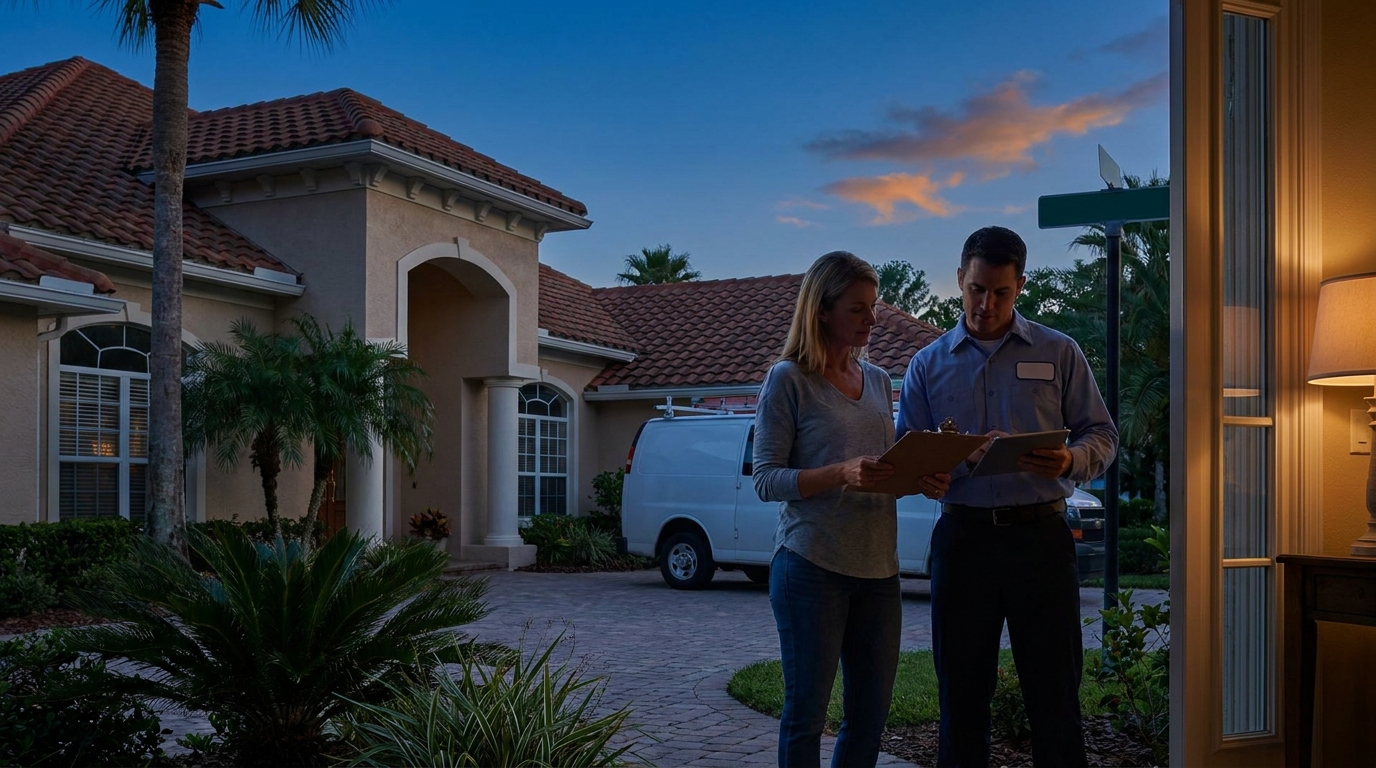
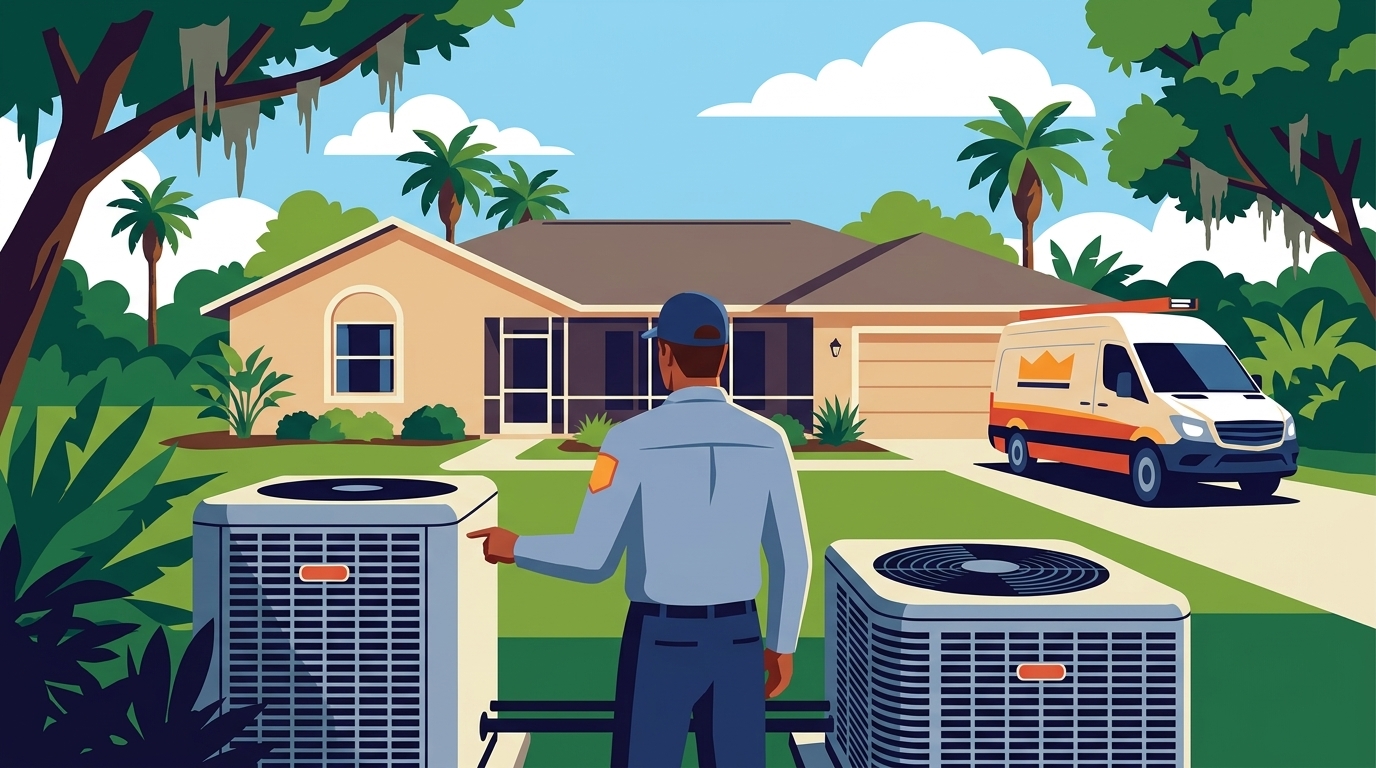
When your AC quits in a Jacksonville August or your heat pump stalls during a January cold snap, the right technician is the one who is licensed in Florida, EPA-certified for refrigerant, transparent about pricing, and able to reach your home the same day. Start by verifying the contractor's license through the Florida Department of Business and Professional Regulation (DBPR), confirm flat-rate or written estimates before work begins, and prioritize local companies familiar with the humidity and salt-air conditions that shape repair priorities here.
That's the short answer. The longer answer — how to actually find and vet a technician you'll be glad you called — is what the rest of this guide walks through, with Jacksonville specifics that generic HVAC articles skip.
Why is HVAC repair in Jacksonville different from other markets?
Jacksonville's hot, humid climate and long cooling season make AC repair far more frequent and urgent than heating repair, and coastal salt air accelerates corrosion on outdoor condenser units. That combination — heavy cooling load plus corrosive air — means components fail sooner here than in drier inland cities, and it's why humidity-related indoor air quality issues like mold routinely show up alongside standard repair calls.
If you live in Riverside, Avondale, San Marco, or the beaches communities like Atlantic Beach and Neptune Beach, salt exposure is a real variable in how long your outdoor equipment lasts. Homes closer to the St. Johns River and Intracoastal see it too. At King of Home Solutions, we see this pattern constantly: a capacitor or contactor that might last a decade in Atlanta can give out in five or six years on a Jacksonville coastal property. A local technician who understands that context makes better repair-versus-replace recommendations than an out-of-market call center.
What credentials should a Jacksonville HVAC technician have?
At minimum, look for an active Florida DBPR contractor license (HVAC work is regulated through the Construction Industry Licensing Board), EPA Section 608 certification for anyone handling refrigerant, and current liability insurance. NATE certification and factory-authorized dealer status for brands like Carrier or Trane are strong signals of ongoing training, though not legally required.
The DBPR license is the non-negotiable one. Florida law requires it for HVAC contracting, and you can verify any license number online through the state's portal before you approve work. Refrigerant handling under Section 608 of the federal Clean Air Act is a separate federal requirement — a technician touching your refrigerant lines without it is a liability problem for you as the homeowner.
Beyond licensing, ask two practical questions: Are your technicians NATE-certified? And do you carry factory authorization for the brand of equipment I own? Neither is mandatory, but both correlate with technicians who see enough volume to diagnose quickly and correctly.
What does heater and AC repair actually cost in Jacksonville?
Most standard component-level HVAC repairs in Jacksonville run $150 to $600, depending on the part — capacitors and contactors sit at the lower end, blower motors and control boards toward the middle, and compressor or refrigerant work higher. Diagnostic fees are common in this market and are often credited toward the repair if you approve the work the same day.
Promotional pricing is common in this market: seasonal tune-ups have been advertised in the $69 range, and some providers waive diagnostic fees on repairs above a certain threshold. Federal tax credits of up to $2,000 are available on qualifying heat pump installations, though eligibility depends on the specific equipment and your tax situation — verify with a tax professional before assuming the credit.
| Repair type | Typical Jacksonville range | Notes |
|---|---|---|
| Capacitor / contactor replacement | $150 – $300 | Common failure in coastal/humid conditions |
| Blower motor | $300 – $600 | Varies by ECM vs. PSC type |
| Refrigerant leak repair & recharge | $400 – $600+ | Requires EPA-certified tech |
| Seasonal tune-up | $69 – $150 | Promotional pricing common |
| Heat pump replacement (whole system) | Quoted per home | Up to $2,000 federal tax credit may apply |
Ranges reflect verified pricing patterns from Jacksonville providers. Your actual invoice depends on the specific part, labor time, and whether the call happens during normal hours or after-hours. Ask for a written flat-rate estimate before work begins — it's the single best protection against surprise charges.
How fast can you actually get a technician to your home?
Same-day and 24/7 emergency dispatch are standard in the Jacksonville market because cooling failures during peak summer humidity are health-and-safety issues, not inconveniences. Most reputable local providers commit to same-day arrival for no-cool calls during business hours, with true 24/7 emergency response for after-hours failures — often without an after-hours surcharge if you ask upfront.
Response time in Jacksonville is a legitimate differentiator. From Mandarin to Southside to the beaches, drive times vary, and a provider based on the wrong side of town at 6 p.m. on a Friday may quote you same-day but not actually arrive same-day. When you call, ask specifically: "Where is the technician coming from, and what's the realistic arrival window?" That question separates promises from schedules.
How should you vet a heating and cooling repair company?
Verify the DBPR license, confirm EPA certification if refrigerant is involved, read recent reviews for consistency (not just star count), and require a written flat-rate estimate before work starts. Ask whether the diagnostic fee credits toward the repair, what the warranty covers on both parts and labor, and whether the same technician handles both heating and cooling — you want one relationship, not two.
Review patterns matter more than review counts. When reading reviews for any provider you consider, look for recurring themes — punctuality, clear communication, fair pricing, and thorough work — rather than focusing solely on the overall star count. That combination of responsiveness and follow-through is what separates a repair you'll forget about from one you'll call back to fix.
Watch for red flags too: no written estimate, pressure to replace an entire system on a first visit, refusal to itemize parts and labor, or a diagnostic that magically finds multiple expensive problems. A good technician tells you what's failing, what's fine, and what's coming — in that order.
Should you repair or replace an aging system?
The general rule most Jacksonville technicians use: if the repair cost is high relative to the cost of a replacement system, and the system is aging, replacement often wins on total cost of ownership. Coastal salt exposure and heavy cooling hours mean Jacksonville systems often reach end-of-life sooner than the national average, so age alone deserves weight in the decision.
Refrigerant type matters as well. Older R-22 systems are expensive to service because the refrigerant itself is phased out and increasingly costly. If your unit still runs on R-22 and needs a refrigerant-related repair, replacement math shifts hard toward a new heat pump — especially with federal tax credits of up to $2,000 available on qualifying units.
Frequently asked questions
How do I check if a Jacksonville HVAC contractor is licensed?
Use the Florida Department of Business and Professional Regulation (DBPR) online license lookup. Search by the contractor's name or license number to confirm the license is active, in the correct classification for HVAC work, and not subject to disciplinary action. Any legitimate Jacksonville contractor will provide their license number on request and often lists it on their website and invoices.
Is a $69 AC tune-up in Jacksonville too good to be true?
Not necessarily. Promotional tune-ups in the $69 range are common in the Jacksonville market and are typically used as goodwill offers or to build customer relationships. The value depends on what's included — a thorough tune-up covers coil inspection, refrigerant pressures, electrical connections, capacitor testing, and drainage. Ask for the checklist before booking so you know what you're getting.
How quickly can I get emergency AC repair in Jacksonville?
Most established Jacksonville HVAC companies offer 24/7 emergency dispatch and same-day response for no-cool calls during peak season. Actual arrival windows vary depending on demand, time of day, and where in the metro area you live — Riverside and Southside are typically faster than outlying areas like Nocatee or northern Duval County during peak summer weeks.
Do Jacksonville HVAC contractors charge extra for after-hours calls?
Some do and some don't. Several Jacksonville providers explicitly advertise no after-hours surcharge, while others add a premium for nights, weekends, and holidays. Always ask about after-hours pricing before the technician is dispatched. If a diagnostic fee applies, confirm whether it credits toward the repair when you approve work the same visit.
What are the signs my heat pump needs professional repair rather than DIY troubleshooting?
Call a professional if you notice weak or warm airflow, unusual electrical smells, ice on the outdoor unit, tripped breakers that reset and trip again, hissing sounds suggesting a refrigerant leak, or humidity that stays elevated indoors even when the system runs. DIY is reasonable for filter changes, thermostat batteries, and clearing outdoor unit debris — anything involving refrigerant or electrical components requires a licensed, EPA-certified technician.
Does homeowners insurance cover HVAC repair in Florida?
Standard Florida homeowners policies typically cover HVAC damage from sudden covered perils — lightning strikes, fallen trees, fire — but not wear-and-tear, age-related failure, or corrosion. Coverage varies significantly by policy and carrier, so review your specific policy or ask your agent before assuming a repair is covered. Separate home warranty or service contracts can cover mechanical breakdown that homeowners insurance excludes.
Bringing it together
Finding the right heater and AC repair technician in Jacksonville comes down to a few honest checkpoints: verified DBPR licensing, EPA certification for refrigerant work, transparent flat-rate pricing, realistic arrival windows, and a review pattern that reflects consistent professionalism rather than a lucky streak. The climate and coastal conditions here make those checkpoints more consequential than they'd be in a milder market.
Readers in Jacksonville who want heating and cooling repairs handled by a licensed local team can reach King of Home Solutions at https://kingofhomesolutions.com to schedule service or get a written estimate. Whether it's a mid-August AC failure or a January heat pump issue, the goal is the same — a technician who shows up on time, explains what's happening in plain language, and leaves your home comfortable again.