How to Improve Indoor Air Quality in Florida's Humidity — Sans Souci
A practical guide to improving indoor air quality in Sans Souci, Jacksonville FL — dehumidification, filtration, and HVAC tips for humid Florida homes.
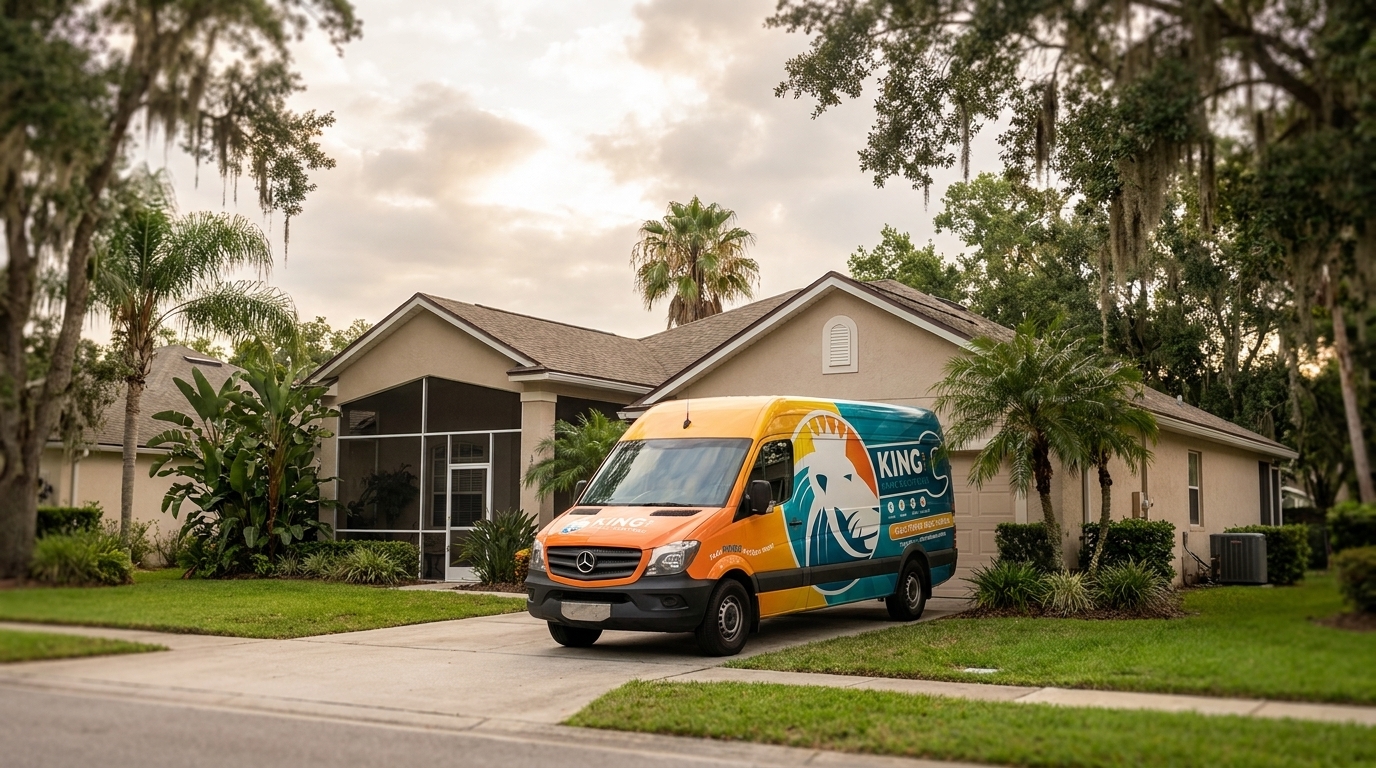
If you live in Sans Souci, you already know the feeling. You walk inside on a July afternoon, the AC is running, and yet the air feels thick. Maybe there's a faint musty note near the return vent. Maybe your hardwood floors are cupping a little. Maybe your allergies have decided your living room is the enemy.
Welcome to indoor air quality in a Florida humid climate. Sans Souci sits in Jacksonville's Arlington-area corridor, close to the river and shaded by mature trees — beautiful, but moisture-friendly. The neighborhood's mix of mid-century ranch homes and updated single-stories means a lot of original ductwork, original insulation, and HVAC systems that were never really sized for today's humidity loads.
Here's how to actually improve indoor air quality in a humid climate like ours, and what to prioritize first.
Why Sans Souci Homes Struggle With Indoor Air Quality
Jacksonville averages around 75% relative humidity year-round, with summer dew points that routinely climb into the mid-70s. That's not just uncomfortable — it's the exact environment where mold spores, dust mites, and bacteria thrive. The EPA target for healthy indoor humidity is 30–50%. Most Sans Souci homes we walk into in August are sitting at 60% or higher indoors, even with the AC running.
Why? A few reasons specific to this pocket of Jacksonville:
- Older housing stock. Many Sans Souci homes were built between the 1950s and 1970s. Original ductwork often has gaps, crushed sections, or aging insulation that lets humid attic air seep in.
- Tree canopy and shade. The mature oaks that make the neighborhood feel like Sans Souci also keep roofs damp longer after summer storms, raising attic moisture.
- Proximity to the St. Johns River. Waterfront and near-water blocks deal with even higher ambient humidity than inland Jacksonville neighborhoods.
- Oversized AC systems. A common mistake we see: a system that's too large cools the house fast, shuts off, and never runs long enough to pull moisture out of the air.
Step 1: Get Your Humidity Under Control
Air filtration without dehumidification is like mopping with the faucet on. In a Florida home, humidity is the root problem — solve it first.
Right-size your AC system
An AC unit isn't just a cooler; it's also your primary dehumidifier. If your system is oversized for your home's actual load (a frequent issue in Sans Souci homes that have been re-insulated or had windows replaced), it short-cycles and leaves moisture behind. A proper Manual J load calculation tells you what size system you actually need. If your house never feels dry even when it's cool, this is almost always why.
Add a whole-home dehumidifier
For homes in Jacksonville's humid climate, a whole-home dehumidifier tied into your existing ductwork is one of the highest-impact upgrades you can make. It runs independently of the AC, so you can pull humidity down to 45–50% without overcooling the house. This matters most during shoulder seasons — April, May, October, November — when it's humid but not hot enough for the AC to run often.
Seal the duct system
If your ducts run through an unconditioned attic (most Sans Souci homes), every leak pulls hot, humid attic air into your supply. Sealing and insulating ductwork is unglamorous work, but it can drop indoor humidity by 5–10 percentage points on its own.
Step 2: Upgrade Your Filtration
Once humidity is in the right range, filtration starts doing real work. Wet filters and wet coils grow biofilm — dry ones don't.
Move beyond the basic 1-inch filter
The fiberglass filter from the hardware store catches large dust but lets fine particles, pollen, and mold spores through. For Florida homes, we recommend at least a MERV 11 pleated filter, ideally a 4- or 5-inch media filter housed in a dedicated cabinet. They last longer, restrict less airflow, and capture far more.
Consider UV light at the coil
Your evaporator coil is dark, cold, and wet — perfect conditions for microbial growth. A UV-C light installed near the coil keeps it clean and prevents the musty smell that often blows out of supply vents in older Jacksonville homes.
Look at active air purification for sensitive households
If anyone in your home has asthma, severe allergies, or is immunocompromised, technologies like bipolar ionization or photocatalytic oxidation systems installed in the ductwork can address particulates, VOCs, and biological contaminants together. These aren't for every home, but for the right household they're worth discussing with an HVAC professional.
Step 3: Address the Building Envelope
Your HVAC system can only do so much if humid outdoor air is freely entering the house. A few low-cost moves make a real difference:
- Seal gaps around plumbing penetrations, recessed lights, and attic hatches.
- Make sure bathroom and kitchen exhaust fans actually vent to the outside — not into the attic, a common shortcut in older builds.
- Check that your dryer vent is clear and properly routed outdoors.
- Keep crawl space vents and any wall vents in good repair.
Florida Building Code has tightened envelope and mechanical ventilation requirements significantly over the last decade. If your home hasn't been touched since the original build, there's almost certainly room to improve.
Step 4: Maintain What You've Installed
Every system above degrades without maintenance. In our climate, that means:
- Change filters every 1–3 months (more often during pollen-heavy spring weeks).
- Have the system professionally serviced twice a year — once before the cooling season, once before the brief heating season.
- Keep the condensate drain line clear. Clogged drains are the single most common summer service call in Jacksonville, and they back up moisture into the system.
- Replace UV bulbs annually — they lose effectiveness long before they burn out.
Frequently Asked Questions
What humidity level should I keep my Jacksonville home at?
Aim for 45–55% relative humidity year-round. Below 40% gets uncomfortably dry; above 60% invites mold and dust mites. A simple hygrometer (under $20) tells you where you stand.
Will a portable dehumidifier solve my problem?
For a single room — maybe. For a whole house in Florida's humidity, no. Portable units can't keep up with the moisture load coming through ducts, walls, and openings. A whole-home unit tied into the HVAC system is the practical solution.
Is mold in the AC system common in Sans Souci homes?
Unfortunately, yes. The combination of older ductwork, humid climate, and oversized systems creates ideal conditions. If you smell a musty odor when the AC kicks on, have the system inspected — coil and blower cleaning, plus a UV light, usually resolves it.
How often should I have my HVAC system inspected?
Twice a year is the standard recommendation, with the spring tune-up being the most important in our climate. Catching a refrigerant or drain issue in April is much cheaper than discovering it in August.
The Bottom Line
Improving indoor air quality in a Sans Souci home is less about gadgets and more about sequence: get humidity under control, then filter aggressively, then seal the envelope, then maintain everything you've installed. Each step makes the next one work better.
Homeowners in Sans Souci and the wider Jacksonville, FL area who want this handled professionally can reach King of Home Solutions at kingofhomesolutions.com for an assessment. The team's 4.9★ rating across Google reviews reflects what customers consistently mention — clear communication, on-time service, and HVAC repairs explained in plain language. For a humidity-driven problem that touches both health and comfort, that's the kind of straightforward help most homeowners want.