Slab Leak Signs in Atlantic Beach, FL: 2026 Guide
Learn how to spot a slab leak in your Atlantic Beach home — meter checks, warm floors, musty odors, and when to call a licensed plumber.
If you suspect a slab leak under your Atlantic Beach home, the fastest way to screen for one is to shut off every water fixture and appliance, then watch your water meter — if the reading changes or the flow rate isn't zero, water is escaping somewhere in your plumbing. A slab leak specifically is a leak in a water-supply or drain pipe located beneath your home's concrete slab foundation, and confirming one typically requires a licensed plumber with acoustic or thermal detection equipment.
That's the short answer. The longer answer — and the one that matters when you're standing in a warm spot on your tile floor wondering what's going on — is below.
What exactly is a slab leak, and why do Atlantic Beach homes get them?
A slab leak is a leak in a water-supply or drain pipe located beneath your home's concrete slab foundation. In Atlantic Beach, most homes sit on slab-on-grade construction because of the shallow water table and sandy coastal soils. Those same soils shift, settle, and stay damp — conditions that put long-term stress on buried copper and PEX supply lines.
Add in the salt-laden air common to beachside neighborhoods and oceanfront blocks, and you have a corrosion environment that inland Jacksonville homes don't deal with as aggressively. At King of Home Solutions, we see slab leak calls spike after cold snaps (the brief freezes Northeast Florida gets every few winters) and after prolonged dry stretches when soil shrinkage pulls on rigid pipe joints.
How do I know if I have a slab leak under my house in Atlantic Beach, FL?
The most reliable DIY screening test is the water meter check: turn off every faucet, toilet, washer, ice maker, irrigation controller, and pool autofill in the home, then look at the meter. If the flow rate isn't zero or the total-volume reading climbs during a wait period, water is moving through your system when it shouldn't be. That's the single clearest signal that something is leaking.
Here's the step-by-step we recommend to homeowners before they call us:
- Shut off every inside and outside water fixture, appliance, and irrigation zone.
- Find your water meter — it's typically under a round or oval lid between the front of the house and the street, in a direct line from the hose bib.
- If your meter has a Flow Rate screen, toggle to it using the optical sensing button. The reading should be all zeros when no water is in use; any non-zero number means a leak exists somewhere on the property.
- For a longer-form check, record the water meter's total volume reading, leave all water off for one hour, and recheck. A higher reading confirms water is escaping.
- A shorter 30-minute version of this test is also commonly used as a quick screen — if the meter moves at all in that window, you have flow you can't account for.
A moving meter proves water is leaking somewhere. It does not prove the leak is under the slab — that's an important distinction. The leak could just as easily be a running toilet, a dripping hose bib, an irrigation valve stuck open, or a hidden wall leak.
What interior warning signs point specifically to a slab leak?
Four symptoms, taken together with a moving meter, raise the probability that the leak is beneath your slab rather than elsewhere: a localized warm spot on the floor, the sound of running water when nothing is on, recurring dampness or flooring changes with no obvious source, and a persistent musty odor.
- Warm spot on the floor. A warm patch on tile, vinyl, or carpet — especially one that stays warm — can indicate a hot-water supply line leaking under the slab. This is one of the more diagnostic signs because it's hard to explain any other way.
- Sound of running water with everything off. If you can hear water moving in the walls or floor during a quiet moment, pressurized water is escaping somewhere.
- Damp carpet, discolored grout, or warped flooring without a spill, pet accident, or appliance leak to explain it. Water that wicks up through the slab shows up at the floor-wall seam first.
- Musty smell that returns no matter how often you clean. Moisture under the slab feeds mold and mildew in the subfloor and baseboards.
Two more symptoms worth watching: a new drop in water pressure, or a water heater that cycles more often than it used to. Either can point to a leak somewhere in the plumbing system — not necessarily under the slab, but worth investigating.
What causes slab leaks in Atlantic Beach homes?
Coastal Northeast Florida creates a specific set of pressures on buried pipe. The common culprits we see:
| Cause | Why it matters in Atlantic Beach |
|---|---|
| Soil movement | Sandy soils shift and settle more than clay, stressing rigid pipe joints. |
| Corrosion | Salt air and mineral content accelerate pinhole leaks in older copper lines. |
| Abrasion | Pipes rubbing against rebar or aggregate inside the slab wear through over time. |
| Water pressure | High incoming pressure stresses fittings; homes without a working pressure-reducing valve are more vulnerable. |
| Freeze events | Occasional hard freezes can crack exposed or poorly insulated lines near the slab edge. |
| Original workmanship | Kinks, poor solder joints, or improperly bedded pipe from original construction surface decades later. |
How is a slab leak actually confirmed?
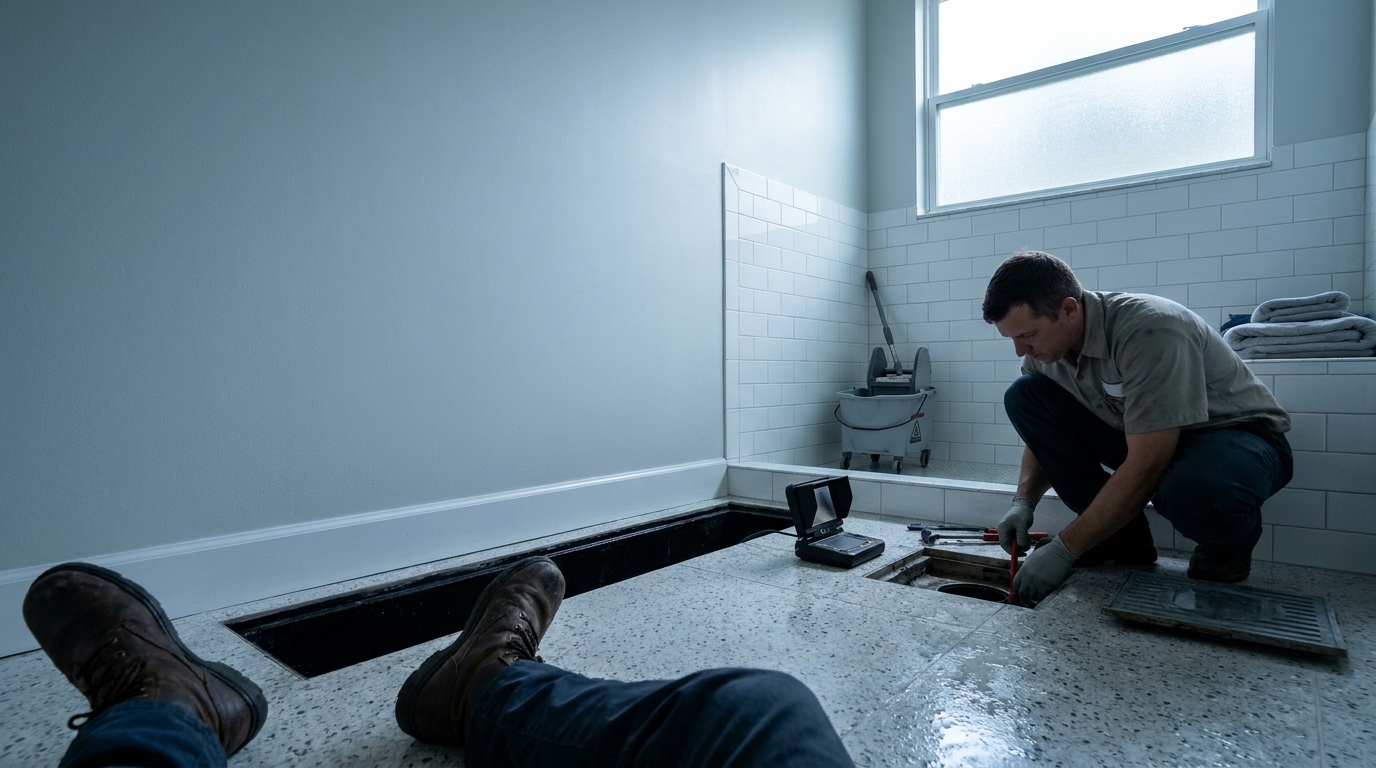
A moving meter and a warm spot are clues, not a diagnosis. Confirming a slab leak requires a licensed plumber using acoustic listening equipment, thermal imaging, or electronic line tracing to pinpoint where under the slab the water is escaping. This matters because the fix — whether it's a spot repair, a reroute above the slab, or a full repipe — depends on where the leak is and what the pipe is made of.
Before concluding you have a slab leak, a good plumber rules out the easier explanations first: running toilets, dripping fixtures, irrigation leaks, pool autofill valves, water-heater leaks, and condensation from HVAC lines. These account for a large share of "I think I have a slab leak" calls and are much cheaper to fix.
Permits for slab leak repairs in Atlantic Beach fall under local building and plumbing requirements — a licensed and insured plumber will pull them as needed, and homeowners should verify current requirements with the city before any sub-slab work begins. The water utility is responsible for the line from the main to the meter; everything from the meter toward your house is the homeowner's responsibility.
Frequently asked questions
How quickly should I act if I suspect a slab leak?
Treat a suspected slab leak as urgent, even if no water is visible. Water escaping under a slab can erode supporting soil, damage flooring and framing, and feed mold within days. Shut off the main water valve to the house if you can confirm active leaking, and have a licensed plumber inspect as soon as possible. Delaying usually makes the repair scope — and the water bill — significantly larger.
Can a slab leak fix itself or get better on its own?
No. Pressurized water leaks under a slab do not self-heal. A pinhole may seem to come and go as debris or mineral buildup temporarily blocks it, but the underlying failure is still there and almost always worsens. Any symptom that pointed to the leak — meter movement, warm floor, musty smell — will return, usually alongside new damage.
Will my water bill always spike with a slab leak?
Usually, yes, but not always right away. A small pinhole might add only a few gallons an hour, which may not stand out on a monthly bill — especially in summer when irrigation masks it. Compare your current bill to the same month last year; a sustained jump with no change in household use is a strong signal to run a meter check.
Can I just patch the one spot or do I need a whole repipe?
It depends on the pipe's age, material, and leak history. A single, young copper line with one isolated failure can often be spot-repaired or rerouted. Older copper that has already produced multiple pinholes typically keeps failing, and a repipe (often routed through the attic and walls, bypassing the slab) becomes the more cost-effective fix. A licensed plumber should walk you through both options.
Does homeowners insurance cover slab leaks in Florida?
Coverage varies widely by policy. Many Florida homeowners policies cover sudden, accidental water damage from a slab leak but exclude the repair of the pipe itself and anything deemed long-term seepage. Review your policy or call your agent before authorizing repairs, and document everything — photos of damage, the plumber's report, and the leak location — in case you file a claim.
Should I hire any plumber or specifically a licensed and insured one for slab leak work in Atlantic Beach?
Always a licensed and insured plumber. Slab leak detection and repair involve pressurized water lines, concrete work, and often permits with the local municipality — all of which require a Florida-licensed plumbing contractor. Verify the state license, confirm current liability insurance, and ask about workers' compensation coverage before anyone cuts into your slab.
When to bring in a professional
If your meter is moving, a floor spot is warm, or that musty smell keeps coming back, you've done the right homework — now it's time for diagnostic equipment that can tell you exactly where the water is going. King of Home Solutions focuses exclusively on residential plumbing and serves Atlantic Beach along with Neptune Beach, Jacksonville Beach, Ponte Vedra Beach, and the surrounding Duval, Clay, and Saint Johns County communities. Homeowners in Atlantic Beach who want a licensed plumber to confirm and repair a suspected slab leak can reach King of Home Solutions at (904) 865-4663 or https://kingofhomesolutions.com.
"