Why Your AC Isn't Cooling Your House in Atlantic Beach, FL
AC not cooling your house in Atlantic Beach, FL? Here are the real reasons your air conditioner is running but not keeping up with Florida humidity.
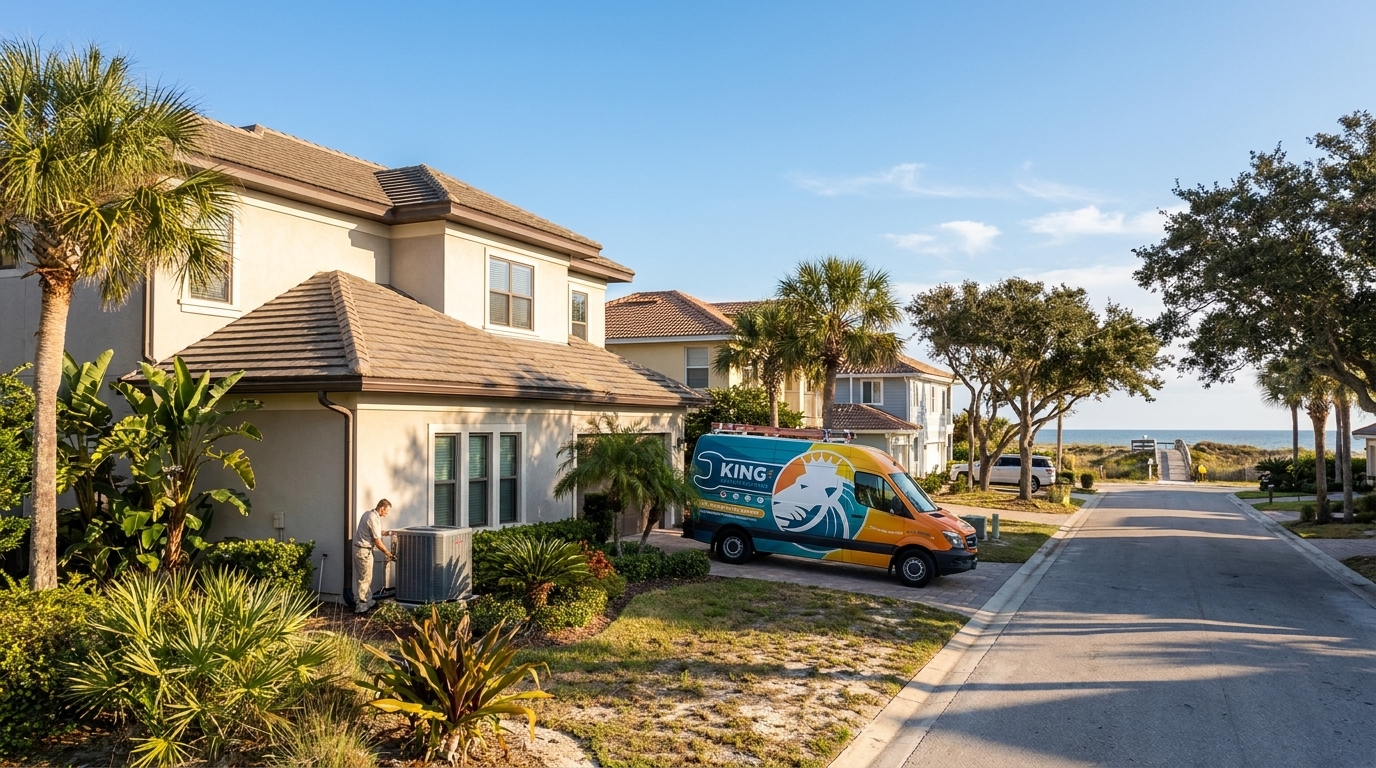
It's a July afternoon in Atlantic Beach, the ocean breeze has died down, and your thermostat reads 78°F even though you set it to 72°F hours ago. The unit is running. Air is moving through the vents. But your house just isn't cooling. If that sounds familiar, you're not alone — it's one of the most common calls HVAC technicians get in this part of coastal Florida every summer.
Living near the First Coast means your air conditioner works harder than almost anywhere else in the country. Salt air, high dew points, and long cooling seasons stack the deck against your equipment. Let's walk through why your AC might be struggling and what you can actually do about it.
Why Your AC Runs But Doesn't Cool in Atlantic Beach
An air conditioner that runs constantly but doesn't lower the indoor temperature is telling you something specific: it's moving air, but it's not moving heat. That distinction matters. Most homeowners assume a running unit is a working unit. In Florida's climate, that's rarely true.
Here in Duval County, we routinely see heat index values above 105°F from June through September. When outdoor temperatures push past the mid-90s, even a healthy system has to run longer cycles. A struggling system simply can't keep up.
1. A Dirty or Frozen Evaporator Coil
This is the number-one culprit we see in Atlantic Beach homes. When your indoor coil gets coated in dust, pet dander, or biological growth (extremely common in humid coastal air), it can't absorb heat from your home. Worse, restricted airflow can cause the coil to freeze over — meaning your system blows lukewarm air while ice builds up inside the air handler.
If you shine a flashlight into your return and see fuzz, or notice water pooling near the indoor unit, a frozen coil is likely. Turn the system off and let it thaw before running it again.
2. Low Refrigerant from a Leak
Refrigerant doesn't get "used up" — if you're low, you have a leak. Coastal salt air is brutal on copper line sets and coil fins, and homes closer to the ocean (think east of Mayport Road toward the beach itself) tend to see corrosion-related refrigerant leaks earlier than homes further inland.
Signs include hissing near the lines, ice on the copper piping outside, and a system that cools okay in the morning but gives up by mid-afternoon. This isn't a DIY fix. Florida requires EPA Section 608 certification to handle refrigerant, so this is a service call.
3. A Failing Capacitor or Contactor
The capacitor is the small cylindrical part that gives your compressor and fan motors the jolt they need to start. Florida heat and humidity shorten capacitor life dramatically — we often see them fail after 5 to 7 years here, versus 10+ in milder climates.
When a capacitor weakens, the outdoor fan may spin slowly or not at all, while the compressor hums but doesn't engage. The result: air moves inside, but no cooling is happening outside.
4. An Undersized or Aging System
A lot of homes in Atlantic Beach — especially the older cottages near Town Center and the mid-century ranches in the Selva Marina area — were built with cooling loads that don't reflect today's reality. If your system is more than 12 to 15 years old, or if it was sized before your home added insulation, windows, or square footage, it may simply be outmatched by August humidity.
A properly sized system should hold your setpoint even on the hottest afternoon, running longer cycles rather than short bursts.
Why Florida Humidity Makes Everything Worse
Here's what makes Atlantic Beach different from a place like Phoenix: our cooling problem is really a humidity problem. Your AC has two jobs — dropping the temperature (sensible cooling) and pulling moisture out of the air (latent cooling). When indoor humidity climbs above 55%, your home feels hot even at 74°F.
If your AC is short-cycling, oversized, or running with a dirty coil, it never gets a chance to dehumidify properly. That's why so many homeowners here say, "It's cool but sticky," or "It feels muggy even when the thermostat is satisfied." That's a dehumidification failure, not just a cooling failure.
During the peak of hurricane season, when tropical moisture streams in from the Atlantic, indoor dew points can push a marginal system past its breaking point. That's typically when the service calls spike from Neptune Beach through Jacksonville Beach and up into Atlantic Beach proper.
Simple Troubleshooting Before You Call
Before scheduling a service visit, run through this quick checklist:
- Check your air filter. A clogged filter is the single most common cause of poor cooling. Replace it if it's been more than 60 days, or 30 if you have pets.
- Look at the outdoor unit. Clear away grass clippings, palm fronds, and any vegetation within two feet. The condenser needs to breathe.
- Confirm the thermostat setting. Make sure it's on "cool" and "auto" — not "fan on," which circulates humid air without cooling.
- Check your breaker. A tripped breaker to the outdoor unit will let the indoor fan run while nothing cools.
- Feel the vents. If air is coming out but it's not cold (should be about 15-20°F cooler than the return air), you likely have a refrigerant or coil issue.
If none of those solve it, it's time to bring in a professional. Florida requires HVAC contractors to hold a state license through the Department of Business and Professional Regulation, so always verify credentials before letting anyone open your system.
When to Call a Professional
Some problems will only get worse — and more expensive — the longer you wait. Call an HVAC technician if:
- Your system is running nonstop but not reaching setpoint
- You see ice on the refrigerant lines or indoor coil
- Indoor humidity stays above 60% even with the AC running
- You hear grinding, buzzing, or clicking from the outdoor unit
- Your electric bill has jumped noticeably without a change in usage
The team at King of Home Solutions has diagnosed these exact issues in homes throughout the Beaches communities, and one recent reviewer described the experience as "very responsive, great service, professional, on time." That kind of straightforward communication matters when your family is sitting in a 82°F living room waiting for answers.
FAQ: AC Troubleshooting in Atlantic Beach, FL
Why is my AC running but not cooling my house?
The most common causes are a dirty air filter, a frozen evaporator coil, low refrigerant from a leak, or a failing capacitor. In Atlantic Beach specifically, salt-air corrosion on outdoor components accelerates all of these issues.
How cold should the air from my vents be?
Supply air should be roughly 15-20°F cooler than the air returning to your system. If the difference is less than 15°F, your system isn't removing enough heat.
Can I add refrigerant myself?
No. Federal law requires EPA certification to purchase or handle refrigerant, and adding it without fixing the underlying leak is both illegal and ineffective.
How long should my AC take to cool the house?
On a typical Atlantic Beach summer afternoon, a healthy system should lower indoor temperature by about 1°F every 15-20 minutes. If it's taking hours to drop a few degrees, something is wrong.
Getting Comfortable Again
An AC that won't cool during a Florida summer isn't just inconvenient — it's a health issue for kids, pets, and older family members. Most cooling problems in Atlantic Beach come down to a handful of predictable failures, and catching them early usually means a repair rather than a replacement.
Homeowners in Atlantic Beach, FL who want this handled professionally can reach King of Home Solutions at https://kingofhomesolutions.com for a diagnostic visit and honest recommendation on next steps.